Hookito

Andorra · Books

Books from Andorra

6 books from and about Andorra: what each is about, the plot, and a note from Professor Kogi.

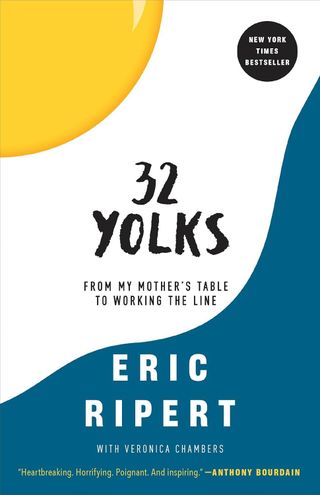
Cover of 32 Yolks: From My Mother's Table to Working the Line

32 Yolks: From My Mother's Table to Working the Line

Eric Ripert, Veronica Chambers

Original language: English · Paperback · ISBN 978-0812983067

Eric Ripert's memoir opens in the south of France, where his parents' divorce, when he was five, left him living with his mother and a stepfather named Serge who treated him with open hostility. Food became the one steady comfort. His mother cooked elaborate meals to lift his mood, though the relief faded once the plates were cleared.

A local chef and restaurant owner named Jacques took an interest in the boy, opening his kitchen to him after school, teaching him to make real chocolate mousse and telling him about his travels. Watching that pride in daily work, Ripert began to imagine a future in which cooking was something he could give to other people.

The book follows him from those years into the demanding kitchens of Paris, where he cooked under chefs including Joel Robuchon and Dominique Bouchet, and through time in Andorra, the small country in the Pyrenees between France and Spain. At twenty-four he moved to the United States. Written with Veronica Chambers, it traces the mentors and working rules that shaped him.

Plot

The winner of four James Beard Awards, co-owner and chef of a world-renowned restaurant, and recipient of countless Michelin stars, Ripert embodies elegance and culinary perfection. But before the accolades, before he even knew how to make a proper hollandaise sauce, Eric Ripert was a lonely young boy in the south of France whose life was falling apart. Taking us from Eric Ripert’s childhood in the south of France and the mountains of Andorra into the demanding kitchens of such legendary Parisian chefs as Joël Robuchon and Dominique Bouchet, until, at the age of twenty-four, Ripert made his way to the United States, 32 Yolks is the tender and richly told story of how one of our greatest living chefs found himself—and his home—in the kitchen.
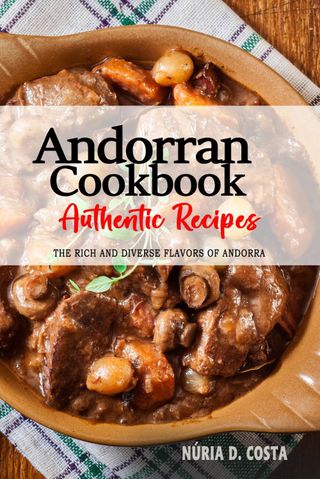

Cover of Andorran Cookbook

Andorran Cookbook

Núria D. Costa

Original language: English · Paperback · ISBN 979-8333607584

Andorra is a small, landlocked country in the eastern Pyrenees, bordered by France and Spain. Its cooking reflects that position, drawing on Catalan, French, and broader mountain traditions. Andorran Cookbook by Núria D. Costa gathers recipes described as traditional and passed down through generations, covering a range of dishes from substantial cold-weather meals to lighter preparations that use the herbs and spices found in everyday Andorran kitchens.

The book is organized around the country's staple foods and provides detailed preparation instructions for each recipe. Mountain cuisines often rely on preserved meats, root vegetables, cheese, and hearty stews suited to long winters at altitude, and the collection appears to follow that pattern while also including dishes with more delicate or aromatic seasoning. The recipes are aimed at home cooks who want to reproduce these flavors outside Andorra itself.

With a population of roughly 80,000 people and an area smaller than many cities, Andorra rarely appears in international cookbook publishing. A dedicated volume on its food traditions offers a concrete way to explore a cuisine that is easy to overlook on the map but shaped by centuries of life in high mountain valleys.

Plot

This volume illuminates the diverse array of culinary traditions that make up the traditional Andorran food landscape and provides detailed instructions on how to prepare each recipe. From hearty and comforting meals to the delicate, intricate flavors typical of the country's staple foods, to the rich and aromatic spices used in everyday cooking, this cookbook is designed to inspire home cooks and culinary enthusiasts alike.

Cover of Death Has A Thousand Doors

Death Has A Thousand Doors

Patricia W Grey

Original language: English · Paperback · ISBN 978-9888228768

Jane Burns is an Australian accountant trying to rebuild her life after alcoholism when a letter arrives about her grandfather's multi-million dollar trust. The legal matter requires her presence in Andorra, the small landlocked country high in the Pyrenees between France and Spain. Jane plans to stay with her half-sister Pearl, a photojournalist who relocated to Andorra after leaving an abusive marriage. But when Jane arrives, Pearl is gone without explanation.

The only trace Pearl has left behind is a bottle of champagne addressed to Jane, an unsettling welcome gift for someone in recovery. From this starting point the story follows Jane as she tries to locate her sister in a country she does not know, while also navigating the legal complications of her grandfather's estate. The setting places the action in the late 1990s, a period when Andorra was still transitioning from its older economy built around duty-free trade and tourism into a more regulated financial environment.

Patricia W Grey uses Andorra's compact geography and relative isolation as a backdrop for the disappearance. With a population of roughly 65,000 and an area smaller than many cities, the country offers few places to hide and few directions to run.

Plot

Jane Burns, an Australian accountant, is a recovering alcoholic with a troubled past. When she receives a letter inviting her to visit Andorra for the winding-up of her grandfather's multi-million dollar trust, she jumps at the opportunity to leave her humdrum life and troubles behind. She expects to stay with her half-sister, Pearl, a photo journalist who moved to Andorra to escape an abusive marriage, but on her arrival Pearl is missing without explanation. The only clue to her whereabouts is an unlikely welcoming gift to Jane of a bottle of champagne.

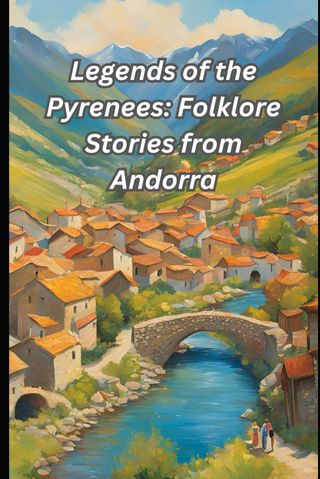
Cover of Legends of the Pyrenees: Folklore Stories from Andorra

Legends of the Pyrenees: Folklore Stories from Andorra

Davilla

Original language: English · Paperback · ISBN 979-8311034326

Andorra is a small principality located in the eastern Pyrenees between France and Spain, covering roughly 468 square kilometers. Despite its size, the country has a long oral tradition shaped by Catalan language and culture, mountain isolation, and centuries of self-governance under a unique co-principality arrangement. This collection by Davilla gathers folklore stories from that tradition, presenting tales of enchanted creatures, supernatural events, and local heroes tied to Andorra's highland valleys and peaks.

The stories draw on a mix of historical memory and imagination. Some involve spirits said to inhabit remote valleys, while others describe encounters between mountain communities and mythical beasts. Taken together, they reflect the beliefs, fears, and explanations that Andorran communities developed over generations to make sense of their surroundings. The collection blends elements common to broader Catalan folklore with details specific to Andorra's geography and local customs.

Because Andorra's population has historically been small and its territory mountainous, many of these legends circulated within tight-knit parishes. The book aims to bring those stories to a wider audience, preserving narratives that might otherwise remain little known outside the principality.

Plot

Though small in size, this principality is rich in folklore, blending Catalan traditions with echoes of its unique mountain culture. This book brings together Andorra’s most captivating legends—tales of enchanted creatures, heroic deeds, and supernatural events passed down through generations. From the spirits that haunt the highland valleys to the brave mountain dwellers who faced mythical beasts, these stories reveal the soul of Andorra. Whether inspired by historical events or woven from pure imagination, they offer a glimpse into the beliefs and fears of Andorra’s past.

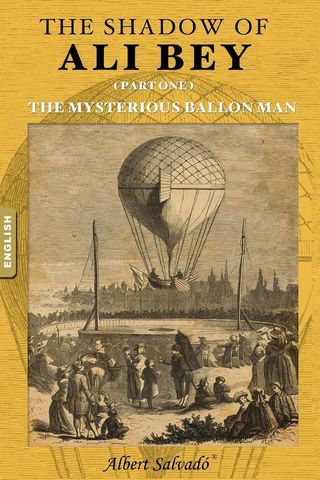
Cover of The mysterious balloon man

The mysterious balloon man

Albert Salvadó

Original language: English · Paperback · ISBN 978-1512329360

The Mysterious Balloon Man is set at the turn of the 19th century, a period when European power structures were shifting rapidly. Absolute monarchies were losing ground, England and Spain competed for control over the Atlantic and Mediterranean, and France found itself at odds with nearly every neighboring state. Across the ocean, the young United States was beginning to assert itself as a new force in global affairs. Albert Salvadó places his story squarely inside this volatile political landscape.

At the center of the novel is Alfred Gordon, a civil servant working for the British secret service. Gordon stumbles upon something that could reshape the practice of espionage on a global scale. The story blends historical events with invented characters and situations, and a romantic subplot runs alongside the espionage plot. Salvadó, an author from Andorra, builds his narrative from a mixture of documented history and fiction, using the geopolitical tensions of the era as a backdrop for personal risk and discovery.

The title hints at early experiments with balloon flight, a technology that attracted military and scientific interest during this exact period in Europe. How that thread connects to Gordon's work in intelligence is part of what the novel sets out to explore.

Plot

As the 18th century ends and the 19th century begins, changes abound all over Europe. Absolute monarchy is coming to an end, England and Spain struggle for supremacy in the Atlantic and the Mediterranean, and France is in conflict with all its neighbours. Meanwhile, on the other side of the ocean, a new power is starting to emerge: the United States of America. In the midst of all these changes, Alfred Gordon, a civil servant employed by the British secret service, makes a discovery that will totally revolutionise global espionage.

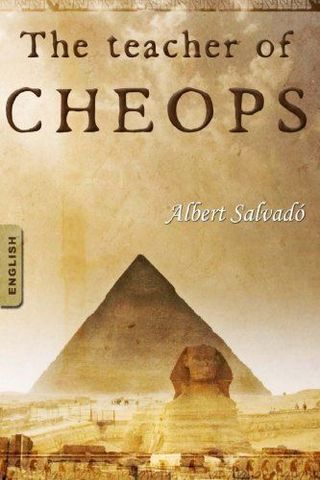
Cover of The teacher of Cheops

The teacher of Cheops

Albert Salvado

Original language: Catalan · Paperback

The Teacher of Cheops is set in ancient Egypt during the reign of Pharaoh Snefru and his queen Hetepheres, the parents of Khufu, known in Greek as Cheops. Snefru's reign saw the construction of the first true pyramids, and the novel follows the events and rivalries surrounding these early building projects. At the center of the story is Sedum, a slave who rises to become the personal teacher of the young Cheops, and the high priest Ramosi, whose ambitions pull the plot through layers of court intrigue and danger.

Albert Salvadó, the author, was from Andorra, a small country in the Pyrenees between France and Spain. He wrote several historical novels set in periods and places far from his home territory. In this book, the distance between a slave's origins and a pharaoh's education forms a central tension, set against questions of knowledge, power, and who controls access to both. The narrative moves quickly through episodes of mystery, murder, and political maneuvering, grounding its large-scale historical setting in the fates of individual characters caught between obedience and ambition.

Plot

This is the history of the time of Pharaoh Snefru and Queen Hetepheres, the parents of Cheops, who built the largest and most impressive pyramid of all. It is also the story of Sedum, a slave who became Cheops' teacher, the high priest Ramosi, and how the first pyramid came to be built. Sebekhotep, the great wise man of that time, said, "Everything is written in the stars. Most of us live our lives unaware of it. Some can read the stars and see their destiny. But very few people learn to write in the stars and change their destiny."

More from Andorra

See the country page for Andorra for its map, facts and largest cities, or browse books from other countries.

Links go to Amazon; Hookito doesn’t sell books. Know a book that belongs here, or spotted a mistake? Write to submissions@hookito.com.