Hookito

Afghanistan · Books

Books from Afghanistan
13 books from and about Afghanistan: what each is about, the plot, and a note from Professor Kogi.

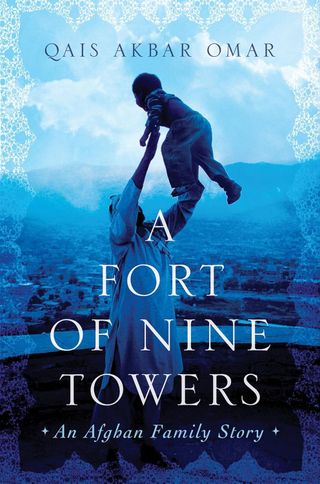
Cover of A Fort of Nine Towers

A Fort of Nine Towers

Qais Akbar Omar

Original language: English · Paperback · ISBN 978-0374157647

Qais Akbar Omar grew up in Kabul when the city felt like a place of gardens, with kite-flying from his grandfather's roof and family gatherings on the grass. Poetry, storytelling, music, and carpet trading filled the household. That world broke apart when civil war reached their neighborhood and familiar streets became a front line. With rockets falling nearby, the family abandoned their home for an old fort a few miles away.

As conditions worsened, his father decided to move the children out of Afghanistan. They traveled through northern provinces, sheltering in caves cut behind the giant Buddha figures at Bamyan and staying with nomadic relatives who herded camels and sheep. While his father searched for smugglers who could get them across a border, Omar grew up on the road and met a deaf-mute carpet weaver whose craft showed him his life's work.

Later chapters follow the years of Taliban rule. At eighteen, Omar opened a secret carpet workshop that gave paid work to girls barred from classrooms, while his parents quietly taught them literature and science. Afghan folklore and poetry run through the account. The New York Times Book Review named it an Editor's Choice, and the Washington Post listed it among its notable books.

Plot

For the young Qais Akbar Omar, Kabul was a city of gardens where he flew kites from his grandfather's roof with his cousin Wakeel while their parents, uncles, and aunts drank tea around a cloth spread in the grass. It was a time of telling stories, reciting poetry, selling carpets, and arranging marriages.Then civil war exploded. Their neighborhood found itself on the front line of a conflict that grew more savage by the day. With rockets falling around them, Omar's family fled, leaving behind everything they owned to take shelter in an old fort-only a few miles distant and yet a world away from the gunfire. As the violence escalated, Omar's father decided he must take his children out of the country to safety. On their perilous journey, they camped in caves behind the colossal Buddha statues in Bamyan, and took refuge with nomad cousins, herding their camels and sheep. While his father desperately sought smugglers to take them over the border, Omar grew up on the road, and met a deaf-mute carpet weaver who would show him his life's purpose.
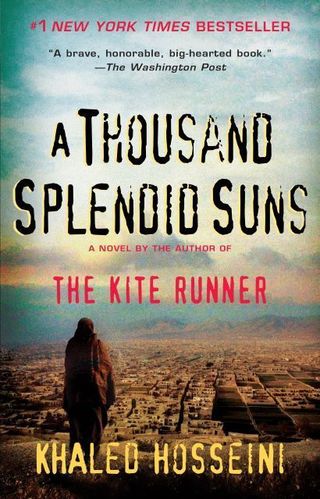
Cover of A Thousand Splendid Suns

A Thousand Splendid Suns

Khaled Hosseini

Original language: English · Paperback · ISBN 978-1594483851

Khaled Hosseini's second novel follows two Afghan women, Mariam and Laila, born a generation apart and shaped by very different circumstances. Mariam grows up on the outskirts of Herat as the illegitimate daughter of a wealthy man, while Laila is raised in Kabul by educated parents who encourage her schooling. War, loss, and domestic violence eventually force these two women into the same household, where their initial distrust slowly gives way to a bond that carries qualities of both sisterhood and a mother-daughter closeness.

The story moves through roughly thirty years of Afghan history, from the final decades of the twentieth century into the early 2000s. Soviet occupation, civil war, the rise of the Taliban, and the arrival of American forces all press directly on the characters' daily lives. Hosseini grounds these large-scale events in small, concrete details: restrictions on women's movement, the closing of schools, the scarcity of food and medicine in Kabul's hospitals. The dangers the two women face exist both in the streets and inside their own home.

Hosseini's previous novel, The Kite Runner, spent years on the New York Times bestseller list. A Thousand Splendid Suns reached the number one position on that same list and continued his focus on Afghan lives shaped by decades of conflict.

Plot

Born a generation apart and with very different ideas about love and family, Mariam and Laila are two women brought jarringly together by war, loss, and by fate. As they endure the ever-escalating dangers around them-in their home as well as in the streets of Kabul-they come to form a bond that makes them both sisters and mother-daughter to each other, and that will ultimately alter the course not just of their own lives but of the next generation. With heart-wrenching power and suspense, Hosseini shows how a woman's love for her family can move her to shocking and heroic acts of self-sacrifice, and that in the end, it is love, or even the memory of love, that is often the key to survival.

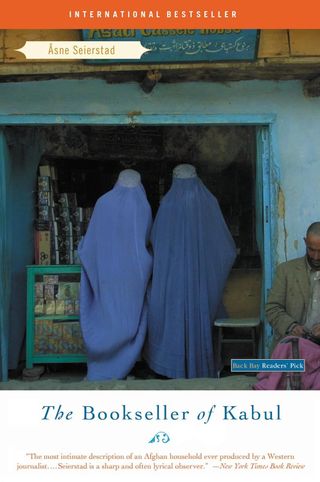
Cover of Bookseller of Kabul

Bookseller of Kabul

Asne Seierstad

Original language: Norwegian · Paperback · ISBN 978-0316159418

Norwegian journalist Asne Seierstad first traveled to Afghanistan shortly after September 11, 2001, to cover the conflict. She returned the following spring and lived for several months with the family of Sultan Khan, a Kabul bookseller who had spent more than twenty years defying successive regimes to keep selling books. Under communist rule he was arrested, interrogated, and imprisoned. Under the Taliban he watched soldiers burn stacks of his inventory in the street and resorted to hiding volumes in attics scattered across the city.

Khan is a figure of real contradiction. His commitment to books and opposition to censorship sit alongside strict views on family life rooted in his Muslim faith. Seierstad, as a foreign woman living inside the household, could move between the private quarters of Khan's two wives and the public sphere of the men. The book maps proposals, marriages, and the uneven distribution of power within a single extended family.

The portrait that emerges is specific rather than symbolic. Seierstad records domestic routines, small negotiations, and tensions that arise when personal authority goes unquestioned. Afghanistan's recent political history forms the background, but the foreground belongs to the ordinary pressures of the household and the people navigating them.

Plot

This mesmerizing portrait of a proud man who, through three decades and successive repressive regimes, heroically braved persecution to bring books to the people of Kabul has elicited extraordinary praise throughout the world and become a phenomenal international bestseller.

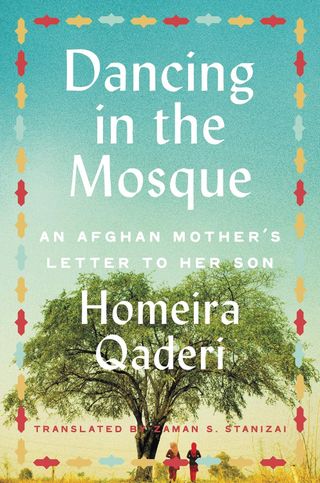
Cover of Dancing in the Mosque

Dancing in the Mosque

Homeira Qaderi

Original language: Dari Persian · Hardcover · ISBN 978-0062970312

Dancing in the Mosque is a memoir by Homeira Qaderi, an Afghan writer and activist who grew up under Taliban rule and continued to face danger long after their first period in power ended. The book takes the form of a letter addressed to her son, Siawash, and recounts the circumstances that led to their separation. Qaderi describes life in Kabul during a time of constant threat, including the checkpoints and explosions that made even a trip to a hospital a hazardous act.

Qaderi's account reaches back through her earlier years as well, describing how she defied restrictions on women's education by secretly teaching children to read and write. In a society shaped by theocratic and patriarchal authority, she pursued advocacy for women's rights at considerable personal risk. The memoir traces the cost of these choices on her family life and her relationship with her son.

The book is set against conditions in Afghanistan that shifted repeatedly over decades of conflict and political change. Qaderi writes from inside that experience, grounding broad questions about sacrifice, motherhood, and survival in specific moments from her own life in Kabul and beyond.

Plot

In the days before Homeira Qaderi gave birth to her son, Siawash, the road to the hospital in Kabul would often be barricaded because of the frequent suicide explosions. With the city and the military on edge, it was not uncommon for an armed soldier to point his gun at the pregnant woman’s bulging stomach, terrified that she was hiding a bomb. Frightened and in pain, she was once forced to make her way on foot. Propelled by the love she held for her soon-to-be-born child, Homeira walked through blood and wreckage to reach the hospital doors. But the joy of her beautiful son’s birth was soon overshadowed by other dangers that would threaten her life.

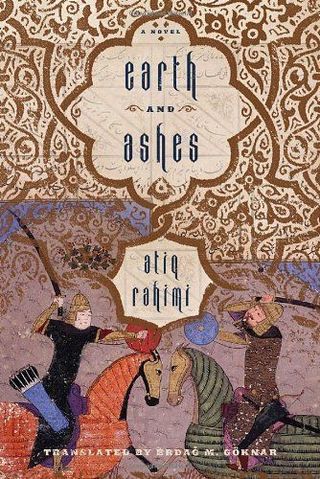
Cover of Earth and Ashes

Earth and Ashes

Atiq Rahimi

Original language: Dari · Hardcover · ISBN 978-1590513453

Earth and Ashes is the first novel by Afghan-born writer Atiq Rahimi. It follows Dastaguir, an elderly man traveling with his young grandson Yassin to reach his son Murad, who works at a distant mine. Their village has been destroyed by Soviet bombardment, and Dastaguir carries the burden of delivering this news. The story compresses its action into a tight frame, following the pair as they wait and move through a landscape shaped by conflict.

Yassin has been deafened by the bombing and cannot fully grasp what has happened. Murad, working far from home, does not yet know. Dastaguir is caught between a grandson who cannot understand and a son who has not yet learned, while carrying his own grief. Rahimi uses this triangle of awareness to explore how a single event fractures a family in different ways at different speeds.

The novel is notably short, and Rahimi's prose stays close to physical detail and small human exchanges rather than broad political framing. Three generations of one Afghan family appear in the story, and through them Rahimi compresses a longer history of disruption into a contained, specific narrative set during the Soviet-Afghan war of the 1980s.

Plot

Earth and Ashes is the spare, powerful story of an Afghan man, Dastaguir, trying desperately to reach his son Murad, who has left his village to earn a living working at a mine. In the meantime the village has been bombed by the Russian army, and Dastaguir, with his newly-deaf grandson Yassin in tow, must reach Murad to tell him of the carnage. The old man is beset on all sides by sorrow, that of his grandson, who cannot understand, that of his son, who does not yet know, and his own, made even crueler by the message he must deliver.

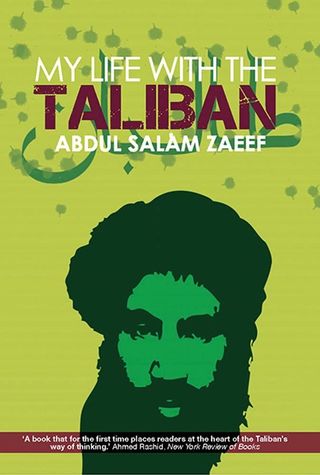
Cover of My Life with the Taliban

My Life with the Taliban

Abdul Salam Zaeef

Original language: Pashto · Paperback · ISBN 978-1849041522

Abdul Salam Zaeef grew up in rural Kandahar province in conditions of deep poverty. Both of his parents died when he was young, and the Soviet invasion of 1979 forced him across the border into Pakistan as a refugee. By 1983 he had joined the armed resistance against the Soviet occupation, a period during which he came into contact with several prominent figures in the Afghan mujahidin, among them Mullah Mohammad Omar, who would later lead the Taliban.

After the Soviet withdrawal, Zaeef returned to village life in Kandahar, but the factional fighting that followed plunged much of the country into disorder. Frustrated by the lawlessness, he was among the former mujahidin involved in the discussions that gave rise to the Taliban movement in 1994. From there he moved into roles as a civil servant and government minister, taking part in negotiations with foreign oil companies and with the Afghan opposition commander Ahmed Shah Massoud.

The book presents itself as a counter-narrative to the more widely circulated accounts of Afghanistan from 1979 onward. Written from the perspective of a senior former Taliban member, it traces the arc from Soviet-era displacement through guerrilla war, post-war collapse, and the early Taliban administration, offering details that are rarely available from this vantage point.

Plot

My Life with the Taliban offers a counter-narrative to the standard accounts of Afghanistan since 1979. Zaeef describes growing up in rural poverty in Kandahar province. Both of his parents died at an early age, and the Russian invasion of 1979 forced him to flee to Pakistan. He started fighting the jihad in 1983, during which time he was associated with many major figures in the anti-Soviet resistance, including the current Taliban head Mullah Mohammad Omar. After the war Zaeef returned to a quiet life in a small village in Kandahar, but chaos soon overwhelmed Afghanistan as factional fighting erupted after the Russians pulled out. Disgusted by the lawlessness that ensued, Zaeef was one among the former mujahidin who were closely involved in the discussions that led to the emergence of the Taliban, in 1994. Zaeef then details his Taliban career as civil servant and minister who negotiated with foreign oil companies as well as with Afghanistan's own resistance leader, Ahmed Shah Massoud.

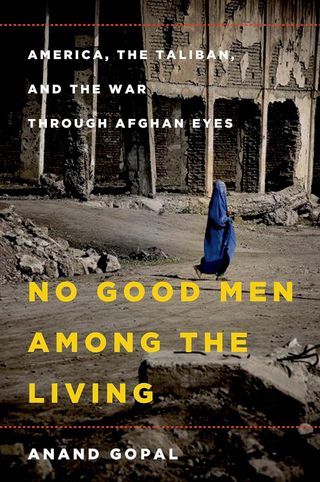
Cover of No Good Men Among the Living

No Good Men Among the Living

Anand Gopal

Original language: English · Hardcover · ISBN 978-0805091793

Anand Gopal, a journalist who reported extensively from Afghanistan, structures this work around three people whose lives were reshaped by the American-led war that began in 2001. One is a Taliban commander who grew from a young recruit into a prominent insurgent figure. Another is a warlord who aligned with U.S. forces and used that alliance to accumulate influence and wealth. The third is a village housewife caught between the two sides, facing the cost of trying to stay neutral.

A central argument is that top Taliban figures were prepared to surrender and abandon political activity within months of the 2001 invasion, leaving the movement effectively dissolved. American forces, guided in part by unreliable intelligence from local power brokers with their own interests, kept pressing operations against men who had already tried to submit to the new Afghan government. That cycle of misjudgment, Gopal argues, helped revive the insurgency.

The book draws on ground-level reporting and personal accounts rather than policy analysis from a distance. Each of the three subjects offers a different angle on how decisions made far from Afghan villages shaped daily life within them.

Plot

In a breathtaking chronicle, acclaimed journalist Anand Gopal traces the lives of three Afghans caught in America's war on terror. He follows a Taliban commander, who rises from scrawny teenager to leading insurgent; a U.S.-backed warlord, who uses the American military to gain wealth and power; and a village housewife trapped between the two sides, who discovers the devastating cost of neutrality. Through their dramatic stories emerges a stunning tale of how the United States had triumph in sight in Afghanistan―and then brought the Taliban back from the dead.

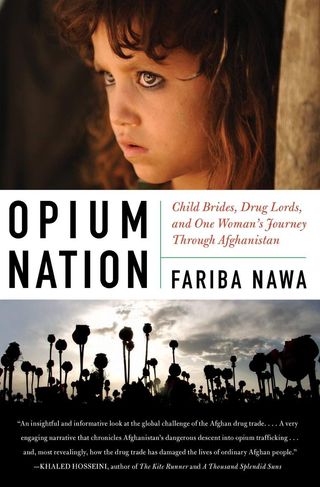
Cover of Opium Nation

Opium Nation

Fariba Nawa

Original language: English · Paperback · ISBN 978-0061934704

Fariba Nawa is an Afghan-American journalist who left Afghanistan as a child and returned after 2001 to report on the country's opium economy. Opium Nation combines her personal story of reconnecting with her homeland with on-the-ground reporting across Afghanistan's poppy-growing regions. Nawa interviews farmers, smugglers, drug lords, addicts, and government officials, tracing how the opium trade touches nearly every layer of Afghan society.

One of the book's recurring concerns is how ordinary people become entangled in the drug economy through poverty, debt, and coercion. Nawa describes encounters with families who have lost land or children to opium debts, including a twelve-year-old girl given as a bride to settle her father's obligations. These accounts sit alongside broader reporting on corruption, warlord influence, and the international dimensions of Afghan drug trafficking.

Nawa also examines her own position as someone shaped by both Afghan and American life. Her family history in Afghanistan gives her access and perspective that outside correspondents often lack, but it also complicates her reporting. The book moves between personal memoir and investigative journalism, grounding large-scale policy questions in specific lives and places.

Plot

Afghan-American journalist Fariba Nawa delivers a revealing and deeply personal explorationof Afghanistan and the drug trade which rules the country, from corruptofficials to warlords and child brides and beyond. KhaledHosseini, author of The Kite Runner and AThousand Splendid Suns calls Opium Nation “an insightful andinformative look at the global challenge of Afghan drug trade. Fariba Nawa weaves her personalstory of reconnecting with her homeland after 9/11 with a very engagingnarrative that chronicles Afghanistan’s dangerous descent into opiumtrafficking…and most revealingly, how the drug trade has damaged the lives ofordinary Afghan people.” Readers of Gayle Lemmon Tzemach’sThe Dressmaker of Khair Khanaand Rory Stewart’s The Places Between will find Nawa’spersonal, piercing, journalistic tale to be an indispensable addition to thecultural criticism covering this dire global crisis.

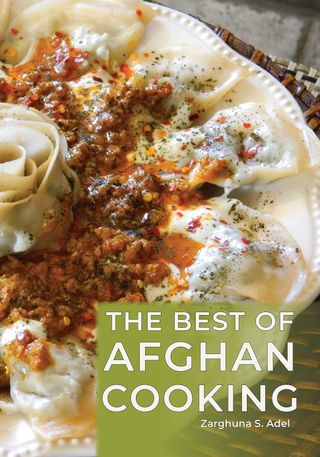
Cover of The Best of Afghan Cooking

The Best of Afghan Cooking

Zarghuna Adel

Original language: English · Paperback · ISBN 978-0781814430

Zarghuna Adel, originally from Kabul, compiled this cookbook after years of research into Afghan recipes that had become difficult to find following four decades of conflict and displacement. Many traditional dishes risked being lost as families scattered across borders and generations grew up far from the kitchens where these foods were once prepared daily. The book is an effort to gather and preserve that knowledge in one place.

The collection contains over 225 recipes organized across fifteen chapters, covering appetizers, soups, salads, main courses, condiments, and desserts. Each recipe is accompanied by a color photograph and step-by-step instructions written for accessibility. Beyond the recipes themselves, every chapter opens with background on the history, origins, and cultural customs connected to the foods it presents. Afghan cooking draws on ingredients and techniques shaped by the country's position along old trade routes linking Central Asia, South Asia, and the Middle East.

Adel frames the cookbook around Afghan food culture and the tradition of generous hospitality that surrounds the table. The book is written in English and aimed at readers who may have little prior familiarity with Afghan cuisine, making it a practical reference for preparing these dishes outside Afghanistan.

Plot

Kabul native Zarghuna Adel brings a lifetime of cooking experience and years of research into this unique cookbook, which features authentic Afghan recipes that were lost or forgotten in the course of four decades of war and displacement. This volume features over 225 recipes, each with easy-to-follow instructions and a color photograph. Fifteen chapters cover the range of Afghan culinary offerings, from appetizers, soups, salads, and main dishes to condiments and desserts, and each chapter includes a detailed introduction to the history, origins, and cultural traditions that surround the recipes.

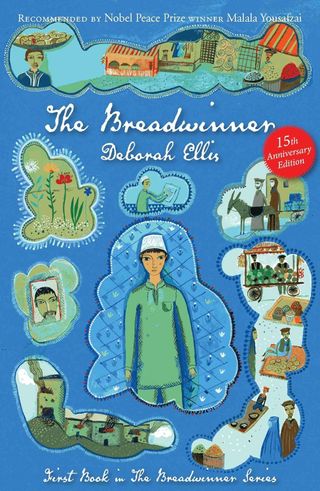
Cover of The Breadwinner

The Breadwinner

Deborah Ellis

Original language: English · Paperback · ISBN 978-1554987658

Eleven-year-old Parvana lives with her family in a single room of a damaged apartment building in Kabul. Her father, once a history teacher, now sits on a blanket in the marketplace reading and writing letters for people who cannot do so themselves. Under Taliban rule in the late 1990s, girls and women face severe restrictions on movement, work, and education. When Parvana's father is arrested for the supposed crime of holding a foreign education, the family loses its only person permitted to go outside and earn a living.

With no adult male left in the household, Parvana's mother and sisters cannot buy food or work. The situation forces Parvana toward a drastic step: she cuts her hair, changes her clothes, and passes as a boy so she can move through the city and support her mother, two sisters, and baby brother. The story follows her daily efforts to survive in a place where discovery could bring serious consequences.

Deborah Ellis wrote the novel after spending time in refugee camps along the Afghanistan-Pakistan border, interviewing women and girls about their experiences. The Breadwinner is the first book in a series and has received awards for its portrayal of loyalty, family, and survival under occupation.

Plot

Eleven-year-old Parvana lives with her family in one room of a bombed-out apartment building in Kabul, Afghanistan’s capital city. Parvana’s father ― a history teacher until his school was bombed and his health destroyed ― works from a blanket on the ground in the marketplace, reading letters for people who cannot read or write. One day, he is arrested for the crime of having a foreign education, and the family is left without someone who can earn money or even shop for food. As conditions for the family grow desperate, only one solution emerges. Forbidden to earn money as a girl, Parvana must transform herself into a boy, and become the breadwinner.

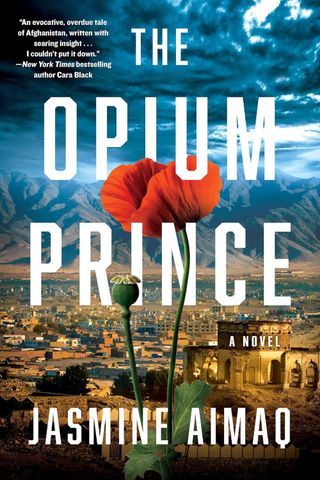
Cover of The Opium Prince

The Opium Prince

Jasmine Aimaq

Original language: English · Hardcover · ISBN 978-1641291583

Daniel Sajadi carries a divided history. His father was an Afghan war hero, his mother American, and he grew up partly in Los Angeles before returning to Kabul to lead a US foreign aid program. His mission is to eliminate the poppy fields in a region called Fever Valley, where opium production supplies a global drug trade. The 1970s setting places the story in Afghanistan just before the political upheavals that would reshape the country.

On a drive outside Kabul with his wife Rebecca, Daniel strikes and kills a young Kochi nomad girl named Telaya. Kochi communities occupy a marginal place in Afghan law, and Daniel escapes with only a small fine, helped by a stranger named Taj Maleki who speaks on his behalf at the scene. Taj, however, is an opium lord with his own reasons for wanting Daniel in his debt. As Daniel's guilt over Telaya's death grows, so does Taj's leverage over him.

The novel follows Daniel's deteriorating marriage and his entanglement with Taj against a backdrop of criminal networks and political instability. Jasmine Aimaq sets her debut at a moment when Afghanistan's drug economy and its shifting power structures were closely linked, and the story traces those connections through one man caught between them.

Plot

Afghanistan, 1970s. Born to an American mother and a late Afghan war hero, Daniel Sajadi has spent his life navigating a complex identity. After years in Los Angeles, he is returning home to Kabul at the helm of a US foreign aid agency dedicated to eradicating the poppy fields that feed the world’s opiate addiction. But on the drive out of Kabul for an anniversary trip with his wife, Daniel accidentally hits and kills a young Kochi girl named Telaya. He is let off with a nominal fine, in part because nomad tribes are ignored in the eyes of the law, but also because a mysterious witness named Taj Maleki intercedes on his behalf. Wracked with guilt and visions of Telaya, Daniel begins to unravel, running from his crumbling marriage and escalating threats from Taj, who turns out to be a powerful opium khan willing to go to extremes to save his poppies.

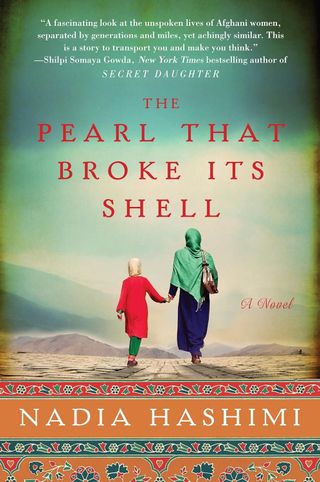
Cover of The Pearl That Broke Its Shell

The Pearl That Broke Its Shell

Nadia Hashimi

Original language: English · Hardcover · ISBN 978-0062244758

In Kabul in 2007, Rahima and her sisters live under severe restrictions. Their father is addicted to drugs, and with no brother in the family, the girls can rarely attend school or leave the house. Their family turns to an old Afghan practice called bacha posh, in which a girl is dressed and publicly treated as a boy. Rahima takes on that role until she reaches marriageable age. As a son she can go to the market and chaperone her older sisters.

A second storyline unfolds about a century earlier. Rahima's great-great-grandmother Shekiba, orphaned after an epidemic, survived by living the same way. The two accounts run side by side, separated by generations yet joined by the pressures placed on women and girls, and by the question of what follows when such borrowed freedom ends.

Nadia Hashimi, an Afghan-American writer, published this as her first novel. Bacha posh is a documented practice, recorded in Afghanistan in various periods, and the book sets it inside concrete family circumstances rather than treating it as folklore. Both timelines examine how family structure, custom, and the absence of a son shape what a girl is permitted to do.

Plot

In Kabul, 2007, with a drug-addicted father and no brothers, Rahima and her sisters can only sporadically attend school, and can rarely leave the house. Their only hope lies in the ancient custom of bacha posh, which allows young Rahima to dress and be treated as a boy until she is of marriageable age. As a son, she can attend school, go to the market, and chaperone her older sisters. But Rahima is not the first in her family to adopt this unusual custom. A century earlier, her great-great grandmother, Shekiba, left orphaned by an epidemic, saved herself and built a new life the same way.

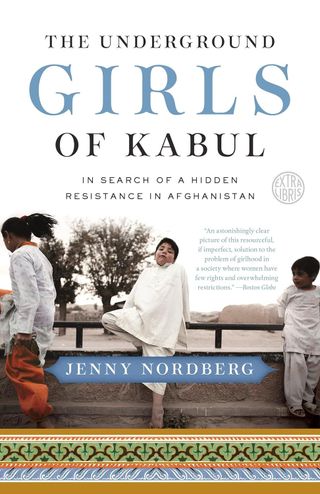
Cover of The Underground Girls of Kabul

The Underground Girls of Kabul

Jenny Nordberg

Original language: English · Paperback · ISBN 978-0307952509

In parts of Afghanistan, some families respond to the pressure of having no sons by raising a daughter as a boy. The practice, known as bacha posh, a Dari phrase meaning dressed up like a boy, allows a child to move freely in public, attend school, and work outside the home in ways that girls otherwise cannot. Jenny Nordberg, a journalist who first reported on the custom for the New York Times, follows several individuals and families navigating this arrangement across different stages of life.

The book introduces Azita, a member of parliament who presents her fourth daughter Mehran as a son to the outside world. Zahra, a teenager living as a boy, resists her family's efforts to reverse the change as puberty arrives. Shukria spent twenty years as a man before marrying and raising children as a woman. Nader and Shahed, a disguised female police officer, continue living as men into adulthood, each facing a different set of consequences. Nordberg uses these individual accounts to examine what the practice reveals about gender, opportunity, and survival in a society where women hold very few legal or social rights.

Plot

A bacha posh (literally translated from Dari as “dressed up like a boy”) is a third kind of child—a girl temporarily raised as a boy and presented as such to the outside world. Jenny Nordberg, the reporter who broke the story of this phenomenon for the New York Times, constructs a powerful and moving account of those secretly living on the other side of a deeply segregated society where women have almost no rights and little freedom. The Underground Girls of Kabul is anchored by vivid characters who bring this remarkable story to life: Azita, a female parliamentarian who sees no other choice but to turn her fourth daughter Mehran into a boy; Zahra, the tomboy teenager who struggles with puberty and refuses her parents’ attempts to turn her back into a girl; Shukria, now a married mother of three after living for twenty years as a man; and Nader, who prays with Shahed, the undercover female police officer, as they both remain in male disguise as adults.

More from Afghanistan

See the country page for Afghanistan for its map, facts and largest cities, or browse books from other countries.

Links go to Amazon; Hookito doesn’t sell books. Know a book that belongs here, or spotted a mistake? Write to submissions@hookito.com.