Hookito

Albania · Books

Books from Albania

7 books from and about Albania: what each is about, the plot, and a note from Professor Kogi.

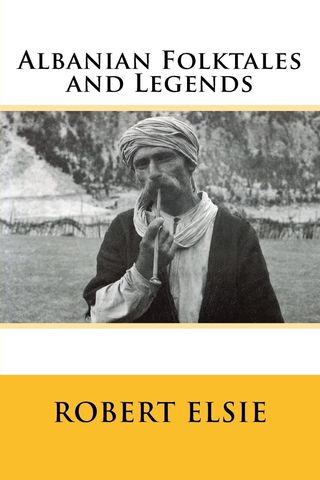
Cover of Albanian Folktales and Legends

Albanian Folktales and Legends

Robert Elsie

Original language: English · Paperback · ISBN 978-1507631300

This collection gathers traditional Albanian folktales alongside prose retellings of well-known Albanian legends. The stories come from an oral tradition still active in the mountainous regions of Albania, where tales have long been recited in the evenings after work or out in the fields, passed from one generation to the next through memory and repetition. Robert Elsie, a scholar of Albanian language and culture, compiled and translated the material for an English-reading audience.

The cast of characters drawn from this tradition includes figures familiar across Albanian storytelling. Among them are Muji and Halil, heroes of a cycle of northern Albanian epic songs, and creatures such as the Kulshedra, a fire-breathing serpent-like being from Albanian mythology. Other figures, like the Scurfhead and the Earthly Beauty, appear in tales that follow patterns found in oral traditions across the Balkans and beyond, mixing cunning, impossible tasks, and encounters with supernatural forces.

Albania's mountainous interior helped preserve regional oral traditions longer than in many parts of Europe. The isolation of highland communities meant that stories circulated locally for centuries before scholars began recording them in written form. This volume offers a window into that body of material in English translation.

Plot

Folktales are still very much alive in the mountains of Albania, a land of haunted history. They are recited in the evenings after a day’s work or out in the fields, are learned by heart and pass, as if immortal, from one generation to the next. Whose imagination could not be captured by the cunning of the Scurfhead, by the demands of the Earthly Beauty, by the heroic feats of Muji and Halil or by the appearance of a fiery Kulshedra in the forest?
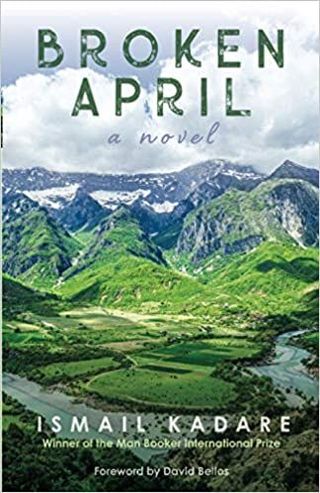
Cover of Broken April

Broken April

Ismail Kadare

Original language: Albanian · Paperback · ISBN 978-1493055173

In the northern highlands of Albania, a young man named Gjorg has killed someone. He did not act from anger or ambition, but because the Kanun, a centuries-old code governing mountain life, required him to avenge his older brother. Now the same code makes Gjorg the next target. He has thirty days of truce before the cycle resumes. Ismail Kadare sets the story in the early twentieth century, though the customs belong to a far older world.

A second thread follows a newly married couple traveling through the highland plateaus on their honeymoon. They came out of curiosity about local traditions, including the blood feud system that shapes daily life there. When the bride catches a brief glimpse of Gjorg during his period of waiting, the sight of a man walking through borrowed time marks her lastingly.

The novel holds these two viewpoints side by side, one person bound by the code from birth, the other meeting it as an observer. Kadare also notes the practical machinery around the feud, including the bloodied shirt displayed by a victim's family until an avenger answers. The plateau itself, remote and rule-bound, limits what anyone there can choose.

Plot

Two destinies intersect in Broken April. The first is that of Gjorg, a young mountaineer who (much against his will) has just killed a man in order to avenge the death of his older brother, and who expects to be killed himself in keeping with the provisions of the Code that regulates life in the highlands. The second is that of a young couple on their honeymoon who have come to study the age-old customs of the place, including the blood feud. While the story is set in the early twentieth century, life on the high plateaus of Albania takes life back to the Dark Ages. The bloody shirt of the latest victim is hung up by the bereaved for all to see—until the avenger in turn kills his man with a rifle shot. For the young bride, the shock of this unending cycle of obligatory murder is devastating. The horror becomes personified when she catches a glimpse of Gjorg as he wanders about the countryside, waiting for the truce of thirty days to end, and life with it. That momentary vision of the hapless murderer provokes in her a violent act of revulsion and contrition. Her life will be marked by it always.

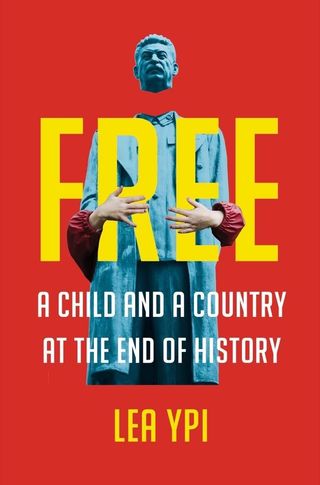
Cover of Free: A Child and a Country at the End of History

Free: A Child and a Country at the End of History

Lea Ypi

Original language: Albanian · Hardcover · ISBN 978-0393867732

Lea Ypi was eleven years old and a Young Pioneer in the People's Socialist Republic of Albania when the Berlin Wall fell in 1989. Until then her world felt stable: she believed the country's promises of collective freedom, trusted that Stalin was a kindly leader who cared about children, and saw her family as ordinary. The certainties of her childhood broke apart along with statues in public squares.

As the old system crumbled, Ypi learned that her family carried a hidden past. Words her parents and neighbours had used quietly, such as a relative going to university, turned out to be code for detention and persecution. Her best friend left the country. Her father, a committed leftist, had to dismiss workers, while her mother entered politics as a conservative. Albania's transition brought pyramid schemes, organized crime, and instability rather than prosperity.

Free follows these overlapping shifts through the eyes of a child becoming a teenager during economic disorder and civil war. Ypi places ordinary questions about friendship and the future beside the larger passage from state socialism to an unsteady market economy, asking what freedom meant under each system and who defined it.

Plot

Family and nation formed a reliable bedrock of security for precocious 11-year-old Lea Ypi. She was a Young Pioneer, helping to lead her country toward the future of perfect freedom promised by the leaders of her country, the People’s Socialist Republic of Albania. Then, almost overnight, the Berlin Wall fell and the pillars of her society toppled. The local statue of Stalin, whom she had believed to be a kindly leader who loved children, was beheaded by student protestors. Uncomfortable truths about her family’s background emerged. Lea learned that when her parents and neighbors had spoken in whispers of friends going to “university” or relatives “dropping out,” they meant something much more sinister. As she learned the truth about her family’s past, her best friend fled the country. Together with neighboring post-Communist states, Albania began a messy transition to join the “free markets” of the Western world: a dystopia of pyramid schemes, organized crime, and sex trafficking. Her father, despite his radical left-wing convictions, was forced to fire workers; her mother became a conservative politician on the model of Margaret Thatcher. Lea’s typical teen concerns about relationships and the future were shot through with the existential: the nation was engulfed in civil war.

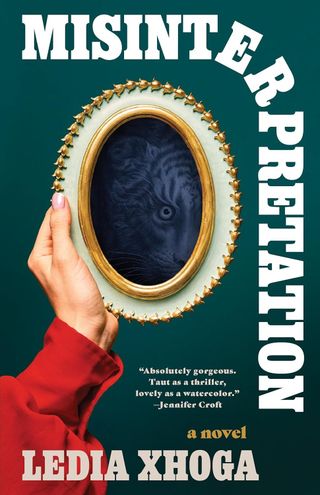
Cover of Misinterpretation

Misinterpretation

Ledia Xhoga

Original language: English · Paperback · ISBN 978-1959030805

Ledia Xhoga's debut novel follows an unnamed Albanian woman living in New York City who works as an interpreter. She takes on a difficult assignment: sitting in on therapy sessions for Alfred, a Kosovar survivor of torture. Her husband warns her against getting too close, but Alfred's accounts begin to surface memories she has kept buried. At the same time, she tries to assist a Kurdish poet, a decision that pulls her toward danger and an ill-considered plan.

As one poor choice follows another, the narrator's marriage and stability start to unravel. She flies to Albania to see her mother, and the distance from New York sharpens her view of the life she has built abroad. Returning to the United States means facing what her choices have set in motion, and the line between what she has experienced and what she may have imagined grows harder to trace.

The novel sits at the intersection of displacement, family inheritance, and the cost of absorbing other people's pain. Its setting moves between two countries and two versions of the narrator's identity. The book was longlisted for the 2025 Booker Prize.

Plot

In present-day New York City, an Albanian interpreter reluctantly agrees to work with Alfred, a Kosovar torture survivor, during his therapy sessions. Despite her husband’s cautions, she soon becomes entangled in her clients’ struggles: Alfred’s nightmares stir up her own buried memories, and an impulsive attempt to help a Kurdish poet leads to a risky encounter and a reckless plan. As ill-fated decisions stack up, jeopardizing the nameless narrator’s marriage and mental health, she takes a spontaneous trip to reunite with her mother in Albania, where her life in the United States is put into stark relief. When she returns to face the consequences of her actions, she must question what is real and what is not. Ruminative and propulsive, Ledia Xhoga’s debut novel, Misinterpretation, interrogates the darker legacies of family and country, and the boundary between compassion and self-preservation.

Cover of Sworn Virgin

Sworn Virgin

Elvira Dones

Original language: Italian · Paperback · ISBN 978-1908276681

In the northern Albanian mountains, a tradition known as the sworn virgin allows a woman to take on the social role of a man. The exchange is binding: she cuts her hair, wears male clothing, and swears a permanent vow of celibacy. In return she gains freedoms otherwise reserved for men in a strongly patriarchal society.

Elvira Dones builds her novel around this custom. Hana is called back from the city to her family home in the mountains when her uncle is dying. He tries to arrange her marriage to a local man who could run the household. Determined to stay independent, Hana takes the vow instead and becomes Mark. For a sworn virgin, tradition offers no way back.

Years later Mark lives as a raki-drinking, chain-smoking shepherd, when a cousin in the United States sends an invitation. Leaving Albania raises a question the vow never allowed: what would it mean to live as a woman again, in a country where the old mountain code carries no weight? The novel holds gender, migration, and belonging together as forms of displacement.

Plot

When Hana’s dying uncle calls her back from the city to the family home in the Albanian mountains, he tries to marry her to a local man who could run the household. Unable to accept the arranged marriage and determined to remain independent, Hana’s only option is to follow tradition and vow to live the rest of her life in chastity as a man – and so Hana becomes Mark. For a sworn virgin, there is no way back. Years later, Mark – now a raki-drinking, chain-smoking shepherd – receives an invitation to join a cousin in the US. This may be Mark’s only chance to escape his vow. But what does he know about being an American woman?

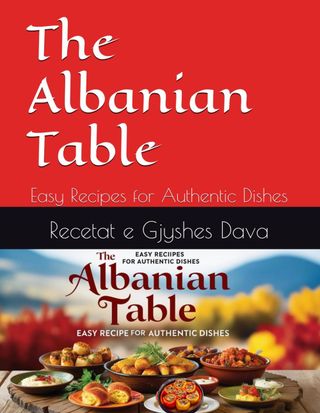
Cover of The Albanian Table: Easy Recipes for Authentic Dishes

The Albanian Table: Easy Recipes for Authentic Dishes

Spartak Fikaj

Original language: Albanian · Paperback · ISBN 979-8303262690

The Albanian Table is a cookbook by Spartak Fikaj that presents home-style Albanian recipes alongside the cultural context behind each dish. The book covers a range of preparations familiar to Albanian households, including byrek, a layered pastry filled with cheese, spinach, or meat; tavë kosi, a baked lamb and yogurt dish often described as Albania's national meal; and shëndetli, a syrup-soaked walnut cake. Fikaj writes the recipes with accessibility in mind, aiming them at cooks of varying experience levels.

Beyond step-by-step instructions, the book pairs its recipes with background on family customs and food traditions. Albanian cooking draws on both Mediterranean and Balkan influences, shaped by the country's long coastline along the Adriatic and Ionian seas and its mountainous interior. Ingredients such as yogurt, phyllo-style dough, lamb, olive oil, and fresh vegetables appear throughout the cuisine, and the book reflects that ingredient palette. Photography accompanies the recipes, and Fikaj includes suggestions for adapting traditional preparations to contemporary kitchens.

Albania's food culture has historically received less international attention than that of neighboring Greece or Italy, and cookbooks focused specifically on Albanian dishes remain relatively uncommon in English. The Albanian Table addresses that gap by organizing a single-author collection around everyday and celebratory meals from the region.

Plot

Perfect for both seasoned cooks and beginners, each recipe is crafted with simplicity and care, ensuring that anyone can recreate these beloved dishes. Beyond the recipes, The Albanian Table shares the stories and traditions behind the meals, weaving a narrative of family gatherings, cultural heritage, and the deep-rooted connection Albanians have with their food. Whether it’s the comforting warmth of a byrek, the sweet indulgence of shëndetli, or the hearty satisfaction of tavë kosi, this book is a celebration of flavors that evoke nostalgia and invite togetherness. Accompanied by stunning photography and tips for modern adaptations, The Albanian Table is more than a cookbook—it’s a tribute to a timeless cuisine and the stories that connect us to home.

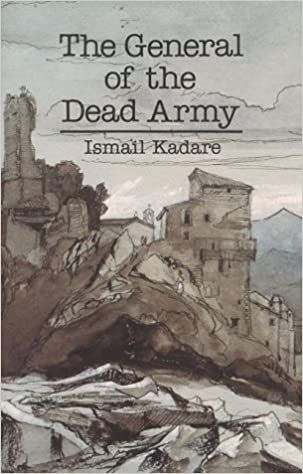
Cover of The General of the Dead Army

The General of the Dead Army

Ismail Kadare

Original language: Albanian · Hardcover · ISBN 978-1561310074

An unnamed Italian general travels to Albania with a military chaplain on an unusual assignment. Twenty years after World War II, they have been sent to locate and retrieve the remains of Italian soldiers killed during the occupation of Albania. The task is bureaucratic in origin but becomes something heavier as the two men move through a country that remembers the war differently than they do.

The general carries lists, maps, and identification records. He and the chaplain dig in muddy fields, visit remote villages, and rely on local workers to help unearth scattered graves. As the search continues, the landscape and the people they encounter press against the official purpose of the mission. Conversations with Albanian villagers surface memories and tensions that complicate the seemingly straightforward work of collecting bones. Rain and difficult terrain slow the effort further, and the general's composure begins to erode.

Ismail Kadare published the novel in Albanian in the 1960s, and it became one of his most widely known works abroad. By 2018 it ranked among the most translated books worldwide. The story uses the recovery mission as a frame for examining how war lingers in both the occupier and the occupied long after fighting ends.

Plot

This is the story of an Italian general, accompanied by his chaplain, charged with the mission of scouring Albania in search of the bones of their fallen countrymen, killed twenty years earlier during World War II. Published January 25, 1991

More from Albania

See the country page for Albania for its map, facts and largest cities, or browse books from other countries.

Links go to Amazon; Hookito doesn’t sell books. Know a book that belongs here, or spotted a mistake? Write to submissions@hookito.com.