Hookito

Armenia · Books

Books from Armenia

12 books from and about Armenia: what each is about, the plot, and a note from Professor Kogi.

Cover of Armenian Cuisine by Pierrette

Armenian Cuisine by Pierrette

Thierry DER-PARSEGHIAN

Original language: English · Paperback · ISBN 978-2956959328

Armenian Cuisine by Pierrette is a cookbook collecting 101 recipes that span the range of traditional Armenian food, from small appetizer dishes known as mezzes through main courses, side dishes, and sweets. The author, Thierry Der-Parseghian, presents the recipes under the name Pierrette, organizing them in a progression that follows the structure of an Armenian meal.

The book covers a wide selection of well-known preparations. Vine leaf dolma, hummus, baba ganoush, and borek appear alongside less widely familiar dishes such as jingalov hats, a flatbread stuffed with herbs associated with the city of Stepanakert, and ghapama, a pumpkin filled with rice and dried fruits often served at celebrations. Meat dishes include khorovadz (barbecue), several styles of kofta, and slow-cooked stews like khashlama and bozbash. Bread recipes cover both lavash, the thin flatbread central to Armenian tables, and matnakash, a thicker leavened loaf. The dessert section moves through baklava, kataifi, halva, and gata nazook, among others.

Several of the recipes reflect the overlap between Armenian cooking and the broader cuisines of the South Caucasus and Eastern Mediterranean, where shared ingredients such as bulgur, yoghurt, and pomegranate appear in distinct local variations.

Plot

Pierrette gives you all her little secrets: Vine leaf dolma, hummus, soudjouk, basturma, baba ganoush, borek, djajik, tabbouleh, beetroot salad, yoghurt soup, bortsh, plaki, itch, jingalov hats, bomba, bamia, gomgush, bozbash, kechkek, khashlama, patcha, stuffed eggplant, manti, midia, vegetable dolma, Armenian pizza, khorovadz, kofta, tchi kofta, soulou kofta, topig, blinchik, ghapama, bulgur, pilaf rice, lavash bread, matnakash, simit, baklava, tcheurek, sari burma , kataifi, halva, negri-zhpit, khourabié, gata nazook, anouch abour, ice cream and jams… Pari akhorjak (enjoy your meal)!
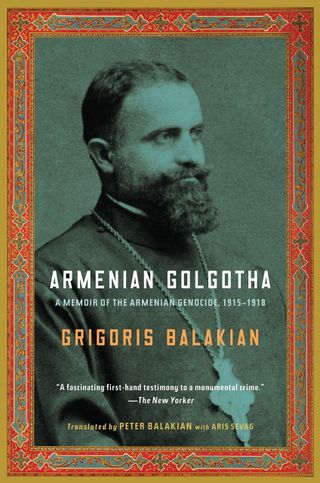
Cover of Armenian Golgotha: A Memoir of the Armenian Genocide

Armenian Golgotha: A Memoir of the Armenian Genocide

Grigoris Balakian

Original language: Armenian · Paperback · ISBN 978-1400096770

On April 24, 1915, Ottoman authorities arrested Grigoris Balakian and roughly 250 other Armenian intellectuals, clergy, and community leaders in Constantinople. That date is now widely recognized as the start of the Armenian Genocide, a coordinated campaign by the Ottoman government to destroy the Armenian population within its borders. Balakian, an Armenian Apostolic clergyman, survived four years of deportation, forced marches, and mass killing that claimed over a million lives.

Armenian Golgotha is Balakian's firsthand account of what he witnessed during those years. He describes the mechanisms of persecution in detail: the arrests, the deportation caravans through Anatolia, the organized violence carried out against civilians, and his own eventual escape. The memoir functions both as personal testimony and as a documentary record, naming specific officials, locations, and events. Balakian wrote the original text in Armenian, and the English translation brought the account to a wider international readership decades later.

The title draws on the biblical name for the site of crucifixion, framing the collective suffering of Armenians in terms familiar to Christian tradition. Balakian's position as an educated clergyman gave him access to conversations and observations that shaped his unusually detailed record of the period.

Plot

On April 24, 1915, Grigoris Balakian was arrested along with some 250 other leaders of Constantinople’s Armenian community. It was the beginning of the Ottoman Empire’s systematic attempt to eliminate the Armenian people from Turkey—a campaign that continued through World War I and the fall of the empire. Over the next four years, Balakian would bear witness to a seemingly endless caravan of blood, surviving to recount his miraculous escape and expose the atrocities that led to over a million deaths.

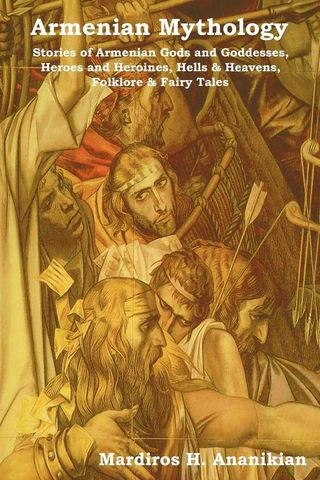
Cover of Armenian Mythology

Armenian Mythology

Mardiros H Ananikian

Original language: Armenian · Hardcover · ISBN 978-1604449303

Armenian Mythology by Mardiros H. Ananikian surveys the religious beliefs and divine figures of pre-Christian Armenia. The book traces how early nature worship gradually shifted toward a structured pantheon of national gods. Several of these deities had clear parallels in Persian, Greek, and Roman traditions. Aramazd, Mihr, and Anahit show strong connections to Zoroastrian religion, while figures like Barsamin reflect Assyrian influence.

Alongside these borrowed or adapted gods, the record preserves traces of figures that appear to be native Armenian creations. Hayk, a legendary ancestor and archer, and Vahagn, a god associated with fire and courage, belong to this older layer, as does Astghik, linked to love and water. Much of the original poetry and song connected to these figures was lost after Armenia adopted Christianity in the early fourth century. Temples were dismantled, and oral traditions about the old gods largely disappeared.

What survives are fragments, quoted and discussed by later scholars. Ananikian draws on sources such as De Morgan and Georg Brandes to reconstruct what can still be known. The book sits at the intersection of comparative religion and regional history, assembling scattered evidence from a period that left few written records of its own.

Plot

According to De Morgan there are signs which indicate that the Armenians were initially nature worshipers and that this faith in time was transformed to the worship of national gods, of which many were the equivalents of the gods in the Roman, Greek and Persian cultures. Georg Brandes described the Armenian gods in his book: "When Armenia accepted Christianity, it was not only the temples which were destroyed, but also the songs and poems about the old gods and heroes that the people sang. We have only rare segments of these songs and poems, segments which bear witness of a great spiritual wealth and the power of creation of this people and these alone are sufficient reason enough for recreating the temples of the old Armenian gods. These gods were neither the Asian heavenly demons nor the precious and the delicate Greek gods, but something that reflected the characteristics of the Armenian people which they have been polishing through the ages, namely ambitious, wise and good - hearted."

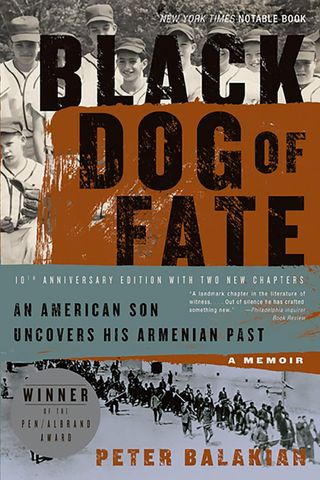
Cover of Black Dog of Fate: A Memoir

Black Dog of Fate: A Memoir

Peter Balakian

Original language: English · Paperback · ISBN 978-0465010196

Peter Balakian grew up in suburban New Jersey during the 1950s and 1960s as the firstborn son of his generation in a close Armenian-American family. His childhood looked, on the surface, like a standard baby boom upbringing, filled with pop culture, sports, and middle-class comfort. But beneath that surface lay a history the family rarely discussed openly: the Ottoman Turkish government's systematic killing of more than a million Armenians in 1915, widely recognized as the first genocide of the twentieth century.

Black Dog of Fate follows Balakian's gradual discovery of that history and the ways it shaped the people around him. His grandmother, a survivor and widow of the genocide, is the book's central figure. She spoke in fragments of metaphor and myth while cooking Armenian dishes, following the stock market, and tracking the New York Yankees. Other relatives included matriarchs, merchants, physicians, a bishop, and two aunts known in literary circles. The memoir traces how an ancient Near Eastern family culture collided, sometimes comically, with American suburban life.

Balakian, a poet, moves between childhood memory, family biography, and historical record as he pieces together what his elders endured and what their silence meant. The book charts how personal identity can be shaped by events a generation chose not to name aloud.

Plot

In elegant prose, the prize-winning poet who James Dickey called "an extraordinary talent" has written a compelling memoir about growing up American in a family that was haunted by a past too fraught with terror to be spoken of openly. Black Dog of Fate is set in the affluent New Jersey suburbs where Balakian -- the firstborn son of his generation -- grew up in a close, extended family. At the center of what was a quintessential American baby boom childhood lay the dark specter of a trauma his forebears had experienced -- the Ottoman Turkish government's extermination of more than a million Armenians in 1915, the century's first genocide.

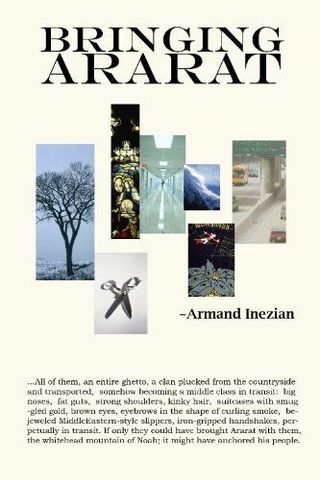
Cover of Bringing Ararat

Bringing Ararat

Armand Inezian

Original language: Armenian · Paperback · ISBN 978-0982708408

Bringing Ararat is a collection of interwoven short stories by Armand Inezian that follows Armenian migrants as they move westward across the twentieth century. The geography of the book stretches from Mount Ararat through countries of the former Communist Bloc, reaching Bucharest, Beirut, and eventually the United States. Each story is rooted in a particular place and moment along this arc of displacement.

The characters in these stories navigate tensions between belonging and estrangement, between the cultures they carry with them and the societies they enter. Details specific to Armenian life and history run through the collection, but the situations Inezian constructs often center on personal choices shaped by fear, loyalty, compassion, and betrayal. The stories are linked, so recurring threads connect one setting to the next as the migration pattern unfolds westward.

The book has been recognized with an award, though the supplied record does not specify which one. Its structure as a linked collection allows each story to stand on its own while contributing to a larger picture of how migration reshapes families and individuals across generations and borders.

Plot

Bringing Ararat is an award-winning, interwoven collection of short stories that span the westward progress of Armenian migrants in the 20th century, from Mount Ararat, west through the Communist Block, to Bucharest, Beirut, and finally the USA. While each has elements that are distinctly Armenian, at their heart, these stories illuminate the deeply personal experiences of familiarity and alienation, fear and compassion, and loyalty and betrayal.

Cover of Eastern Armenian For English Speakers

Eastern Armenian For English Speakers

A. Mkhitaryan, T. Baghdasaryan

Original language: English · Paperback · ISBN 978-1985605718

Eastern Armenian For English Speakers is a language textbook by A. Mkhitaryan and T. Baghdasaryan, designed to take learners from the Armenian alphabet through to intermediate reading and conversation. The book is split into two parts. Part 1 covers the basics: the alphabet, introductory dialogues, core grammar, and essential vocabulary. Latin transliteration accompanies the Armenian script throughout this section, giving beginners a way to sound out words before they can read the letters fluently.

Part 2 is aimed at intermediate learners and drops most of the transliteration, expecting students to read Armenian script with growing confidence. The units here contain longer texts, additional exercises, and a wider range of vocabulary. Both sections include cultural material such as information about Armenian places of interest, notable writers and artists, and historical background, so that language study runs alongside a broader introduction to the country.

An appendix at the back provides an expanded vocabulary list, a collection of common Armenian proverbs, acronyms, and everyday expressions. Eastern Armenian is the standard variety spoken in the Republic of Armenia and by many diaspora communities, distinct from the Western Armenian branch that developed in the Ottoman Empire.

Plot

It is particularly good for beginners, since it also educates the learners culturally. I have written this textbook with the challenges of my students in mind and by utilizing most efficient methodologies of teaching foreign languages. The textbook consists of two parts. Part 1 is for complete beginners, where the alphabet, basic dialogues accompanied by Latin transliteration, grammar and essential vocabulary are taught. Part 2, on the other hand, is intended for intermediate learners. We have almost no transliteration in this section and assume that the student is feeling more comfortable reading the Armenian letters. The units in Part 2 have more exercises, longer texts and teach richer vocabulary. The texts and dialogues include information about Armenian places of interest, famous writers and artists, historical facts, pictures. This way the student feels more engaged with the Armenian culture and does not simply learn a new foreign language. In the appendix, I included a more elaborate vocabulary list, common Armenian proverbs, acronyms and useful expressions. I hope you enjoy your Armenian journey!

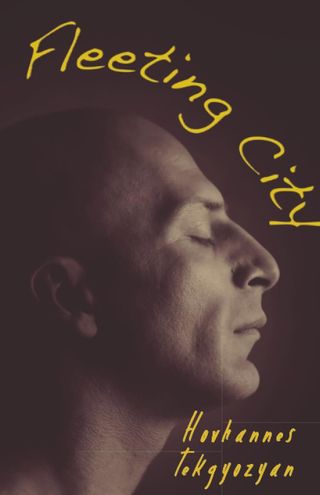
Cover of Fleeting City

Fleeting City

Hovhannes Tekgyozyan

Original language: Armenian · Paperback · ISBN 978-1771611596

Fleeting City is a novel by Armenian writer Hovhannes Tekgyozyan that follows two characters, Gagik and Grigor, as they recount the same story from separate perspectives. Each narrator adds and removes details, so the reader receives two overlapping but different versions of events. The structure creates a layered narrative where contradictions and gaps become part of the meaning rather than mistakes to resolve.

The novel addresses subjects that were once considered off-limits in Armenian literature, including virtual reality, sexuality, suicide, and drugs. Tekgyozyan's writing style has an animated, almost cartoon-like quality. Objects behave as if they are alive, and people shift into unexpected forms. In one scene, a character's hair branches outward like a tree and begins to move on its own. The tone shifts between humor, absurdity, and gravity, sometimes within the same passage.

The book has been described as a kind of virtual movie-novella, mixing mysticism with urban settings and grotesque transitions. It reflects aspects of contemporary Armenia, where rapid social change has opened space for literary subjects and styles that earlier generations of Armenian writers rarely explored.

Plot

This novel touches on themes previously taboo in Armenian but which characterize much of the new Armenia, including virtual reality, sexuality, suicide, and drugs. His style resonates with an almost cartoon-animated quality. Equal parts humorous, absurd, serious, and surreal, Tekgyozyan is able to draw an animated film on paper, where objects come to life and human beings take on unsuspecting forms. In this novel, one of the characters has hair that seems to have branched out like a tree and comes alive. The two main characters in Fleeting City, Gagik and Grigor, tell the same story but from two different perspectives, adding and subtracting. The result is a narrative as complex as Tekogyozyvan's reality.

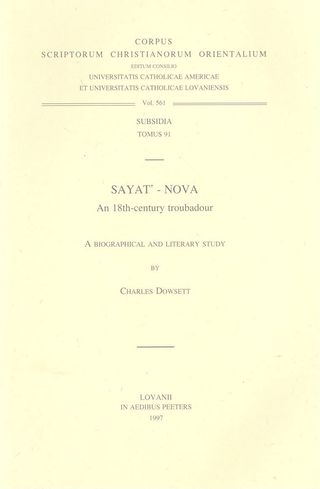
Cover of Sayat'-Nova, an 18th-Century Troubadour. a Biographical and Literary Study

Sayat'-Nova, an 18th-Century Troubadour. a Biographical and Literary Study

Cjf Dowsett

Original language: English · Paperback · ISBN 978-9068317954

Sayat'-Nova (roughly 1712 to 1795) was an Armenian poet and minstrel who composed songs in at least four languages: Armenian, Georgian, Azeri Turkish, and Persian. He spent much of his life in Tiflis, the city now called Tbilisi, which in his era was a multilingual crossroads of the South Caucasus. Charles Dowsett's study sets out to reconstruct both the biography and the literary world surrounding this figure, drawing on primary manuscript sources.

Central to the book is the Tetrak, a manuscript dated around 1765 or 1766 that appears to be at least partly in Sayat'-Nova's own handwriting. Dowsett also works with copies made in 1823 at St. Petersburg by the poet's youngest son, Ioane. The songs are presented in a unified transliteration from their original Georgian and Armenian scripts, accompanied by notes on variant readings, loanwords, wordplay, and instances of what medieval European tradition called trobar clus, meaning deliberately obscure or encoded poetic language.

Separate chapters address versification, genre, and the mainly Persian literary influences that shaped Sayat'-Nova's style. The study also examines six odes written in Russian, texts that earlier scholarship had largely overlooked, analyzing their possible motives and emotional content.

Plot

The most important of his songs in Armenian, Tiflis Armenian, Georgian and Azeri Turkish, one in four languages (these plus Persian), are edited in a unified transliteration from the original Georgian and Armenian scripts on the texts in the Tetrak, a 1765/6 MS in at least partly his own hand, and versions made in 1823 at St. Petersburg by his youngest son Ioane, with notes on variants, loanwords, cryptica ("trobar clus"), puns, etc. Six odes in poor Russian, hitherto ignored, are examined for motive and sentiments. Chapters are devoted to versification, genres and influences (mainly Persian), an attempt being made to analyse the attraction of his verse.

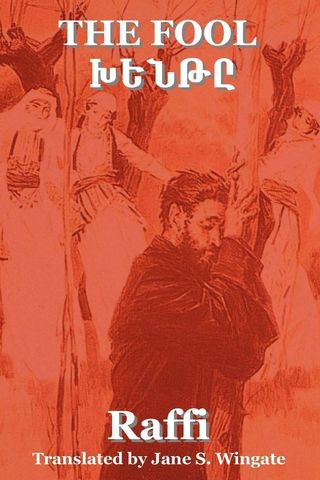
Cover of The Fool

The Fool

Raffi

Original language: Armenian · Paperback · ISBN 978-1604440324

The Fool, first published in 1881, is a novel by the Armenian writer Raffi, the pen name of Hakob Melik Hakobian. Set against the backdrop of the Russo-Turkish War of 1877-78, the story follows a man and a woman caught up in the fate of a divided nation. The war had raised hopes among Armenians living under Ottoman rule that Russian advances might bring protection or autonomy, but the aftermath left many communities exposed and vulnerable. Raffi wrote the novel years before the large-scale violence of the 1890s and later, giving the book an uneasy quality of anticipation.

Central to the novel are Raffi's arguments for unity, self-reliance, and organized action within the Armenian population. He directed pointed criticism at what he saw as passivity and internal division in Armenian society, warning that without change the community faced a grim future. The English translation by Jane S. Wingate makes the text accessible beyond Armenian-language readers.

Raffi remains one of the most widely read Armenian novelists of the nineteenth century. The Fool sits within a body of work that frequently used fiction to address the political pressures facing Armenians in the Ottoman and Russian empires.

Plot

It was originally published in 1881 and deals with the Russo-Turkish War of 1877-78 long before the large-scale massacres began. Raffi called for action, unity, and self-reliance. Many of his criticisms of the Armenian community of the time are equally as applicable today as they were nearly 125 years ago. He foresaw what was in store for the Armenians if they did not actively seek to change their fate.

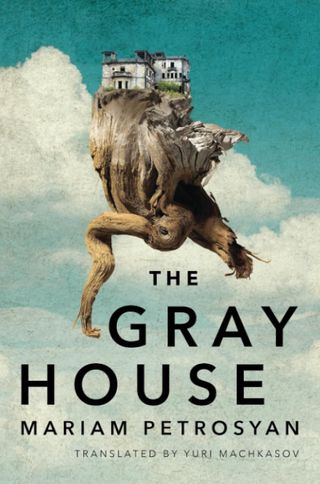
Cover of The Gray House

The Gray House

Mariam Petrosyan

Original language: Russian · Paperback · ISBN 978-1503942813

The Gray House by Mariam Petrosyan is set almost entirely inside a boarding institution for physically disabled teenagers. The residents use wheelchairs and prosthetic limbs, but these details recede quickly. What matters inside the House is tribal hierarchy, secret knowledge, and the building itself, which the students treat as a living presence with its own intentions. Corridors, crawl spaces, dormitories, and classrooms form a closed world with rules that have little in common with the reality outside its walls.

The story follows several groups of students, each with its own leader and internal culture. Teachers appear mostly at the edges, often frightened or bewildered by what happens among their charges. Time inside the House does not always behave as clocks suggest it should, and the boundary between the ordinary and the strange stays deliberately unclear. When student deaths occur and outside authorities increase pressure on the institution, the fragile order that has held the tribes together begins to shift.

Petrosyan, an Armenian author and artist, spent roughly two decades writing the novel. It was first published in Russian in 2009 and later translated into English. The book unfolds through multiple narrators whose overlapping accounts build a picture of the House that no single perspective could provide.

Plot

Bound to wheelchairs and dependent on prosthetic limbs, the physically disabled students living in the House are overlooked by the Outsides. Not that it matters to anyone living in the House, a hulking old structure that its residents know is alive. From the corridors and crawl spaces to the classrooms and dorms, the House is full of tribes, tinctures, scared teachers, and laws―all seen and understood through a prismatic array of teenagers’ eyes. But student deaths and mounting pressure from the Outsides put the time-defying order of the House in danger. As the tribe leaders struggle to maintain power, they defer to the awesome power of the House, attempting to make it through days and nights that pass in ways that clocks and watches cannot record.

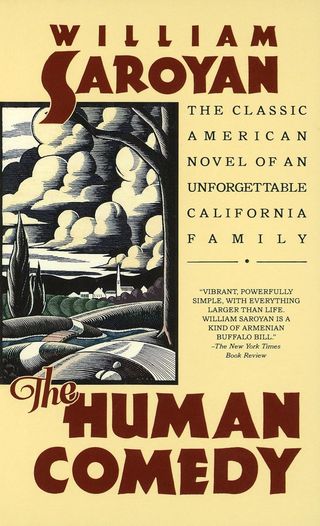
Cover of The Human Comedy

The Human Comedy

William Saroyan

Original language: English · Mass Market Paperback · ISBN 978-0440339335

William Saroyan's The Human Comedy is set in Ithaca, a small town in California's San Joaquin Valley, during the Second World War. At its center is the Macauley family: a mother, a sister, and three brothers whose daily lives reflect the experience of second-generation immigrants in the United States. Fourteen-year-old Homer works as a telegraph messenger, delivering messages that carry news of death, love, and money.

Homer's job places him at a strange intersection. He is old enough to grasp what the telegrams mean but still young enough to be shaken by them. He also wants to be among the fastest messengers in the West, an ambition that sits oddly beside the news he hands over. Each delivery brings him close to feelings most adults would rather keep private.

Saroyan was the son of Armenian immigrants who settled in Fresno, in the same valley, and the novel draws openly on his upbringing there. The story stays close to family life: work, school, and the gap between what a boy imagines and what he learns while carrying wartime news through a small town.

Plot

The place is Ithaca, in California's San Joaquin Valley. The time is World War II. The family is the Macauley's—a mother, sister, and three brothers whose struggles and dreams reflect those of America's second-generation immigrants. . . . In particular, fourteen-year-old Homer, determined to become one of the fastest telegraph messengers in the West, finds himself caught between reality and illusion as delivering his messages of wartime death, love, and money brings him face-to-face with human emotion at its most naked and raw.

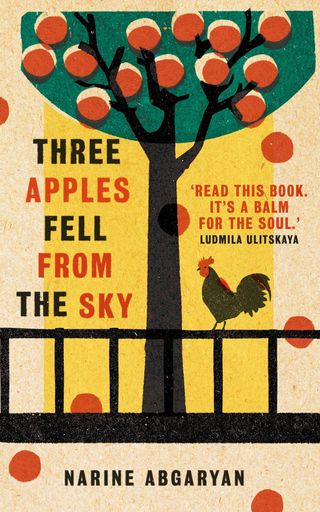
Cover of Three Apples Fell from the Sky

Three Apples Fell from the Sky

Narine Abgaryan

Original language: Russian · Paperback · ISBN 978-1786077301

In the small, elevated village of Maran, set high in the Armenian mountains, daily life follows patterns that have barely shifted in generations. The residents know each other thoroughly, trading gossip, holding grudges, and sharing meals with equal commitment. Dreams and curses carry real weight here, and miracles are discussed as practical matters rather than abstractions. Narine Abgaryan builds this community with patient detail, giving each villager a distinct voice and history.

At the center of the story is Anatolia, a woman who has lived in Maran all her life and is content with her routines. One morning she wakes up certain that she is about to die. She takes to her bed and begins preparing for the end with calm determination. Before she can settle fully into this plan, a neighbour arrives with an unexpected proposal that disrupts her careful arrangements.

Abgaryan's novel has been recognized with multiple awards. Its themes stay close to the ground: how a small community keeps its stories, how old quarrels sit beside long loyalties, and how people in remote mountain settlements measure time by seasons and neighbours rather than by news arriving from distant cities.

Plot

In the tiny village of Maran nestled high in the Armenian mountains, a place where dreams, curses, and miracles are taken very seriously, a close-knit community bickers, gossips, and laughs, untouched by the passage of time. A lifelong resident, Anatolia is happily set in her ways. Until that is, she wakes up one day utterly convinced that she is dying. She lies down on her bed and prepares to meet her maker, but just when she thinks everything is ready, she is interrupted by a surprise visit from a neighbor with an unexpected proposal

More from Armenia

See the country page for Armenia for its map, facts and largest cities, or browse books from other countries.

Links go to Amazon; Hookito doesn’t sell books. Know a book that belongs here, or spotted a mistake? Write to submissions@hookito.com.