Hookito

Angola · Books

Books from Angola

7 books from and about Angola: what each is about, the plot, and a note from Professor Kogi.

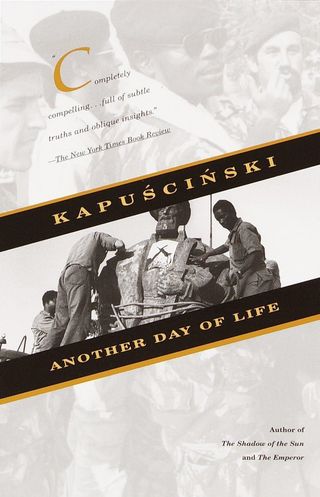
Cover of Another Day of Life

Another Day of Life

Ryszard Kapuscinski

Original language: Polish · Paperback · ISBN 978-0375726293

In 1975, as Angola lurched toward independence after centuries of Portuguese colonial rule, most foreigners were trying to leave. Polish journalist Ryszard Kapuscinski traveled in the opposite direction, making his way from Lisbon to Luanda, a city once compared to Rio de Janeiro but now sliding into disorder. Angola had been a Portuguese colony since before English-speaking settlers reached North America, and the collapse of Portugal's fascist government in 1974 triggered a rapid and disorganized withdrawal that left the territory fractured by competing factions.

Kapuscinski's account follows his movements through a country caught between liberation and violence. He drove past countless checkpoints where saying the wrong word to the wrong group could be fatal. The soldiers he encountered came from several countries, including Cuba, South Africa, and Portugal, each drawn into a conflict with broad Cold War dimensions. Rather than offering a conventional journalistic report, Kapuscinski mixed close observation with literary writing, recording the texture of daily life in a place where ordinary routines had broken down.

The book sits at the boundary between memoir and war correspondence. It captures the confusion of a society abruptly released from colonial control and immediately pulled apart by internal and external forces, with no stable authority to replace what had been removed.

Plot

In 1975, Angola was tumbling into pandemonium; everyone who could was packing crates, desperate to abandon the beleaguered colony. With his trademark bravura, Ryszard Kapuscinski went the other way, begging his was from Lisbon and comfort to Luanda—once famed as Africa's Rio de Janeiro—and chaos.Angola, a slave colony later given over to mining and plantations, was a promised land for generations of poor Portuguese. It had belonged to Portugal since before there were English-speakers in North America. After the collapse of the fascist dictatorship in Portugal in 1974, Angola was brusquely cut loose, spurring the catastrophe of a still-ongoing civil war. Kapuscinski plunged right into the middle of the drama, driving past thousands of haphazardly placed check-points, where using the wrong shibboleth was a matter of life and death; recording his imporessions of the young soldiers—from Cuba, Angola, South Africa, Portugal—fighting a nebulous war with global repercussions; and examining the peculiar brutality of a country surprised and divided by its newfound freedom.
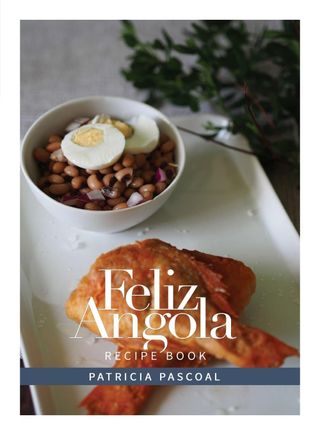
Cover of Feliz Angola Recipe Book

Feliz Angola Recipe Book

Patricia Pascoal

Original language: English · Paperback · ISBN 978-1836545637

Feliz Angola Recipe Book is a collection of Angolan recipes compiled by Patricia Pascoal. The book gathers dishes rooted in Angolan home cooking, with a focus on recipes that Pascoal describes as uncommon in other published sources. The title, meaning Happy Angola in Portuguese, reflects the author's view of Angolan culture as one shaped by warmth and communal celebration.

Pascoal connects the food in the book to specific social occasions in Angolan life: traditional engagement proposals, post-church Sunday meals, Christmas gatherings, and other events where families and communities come together around a table. The recipes are presented as part of a broader cooking tradition passed between generations, particularly through mothers and home kitchens. Angola's cuisine draws on ingredients and techniques influenced by both Central African and Portuguese culinary traditions, and the country's long Atlantic coastline contributes seafood and coastal flavors to its kitchen vocabulary.

The book is written with an open audience in mind, aiming to introduce Angolan dishes to readers regardless of their background or familiarity with the cuisine. Pascoal frames her recipes not only as instructions but as a way to share everyday Angolan food culture with a wider circle of cooks.

Plot

As many of you know, our mothers are the best cooks in the world, and Ms. Pascoal is eager to share these fresh and fantastic recipes in her new book. These recipes showcase our innovative cooking style. Ms. Pascoal's heartfelt desire is to share these recipes with you, hoping you will appreciate them. The aim is to take you on a journey of discovery with "Feliz Angola." She invites everyone, not just the Angolan people but also those from all corners of the earth, to explore these delightful written words. Feliz Angola epitomises the joyous spirit of Angolans, shining through during social gatherings, traditional engagement proposals, post-church Sundays, and the festive Christmas season. This book seeks to convey the author's perception of Angolans as inherently happy people.

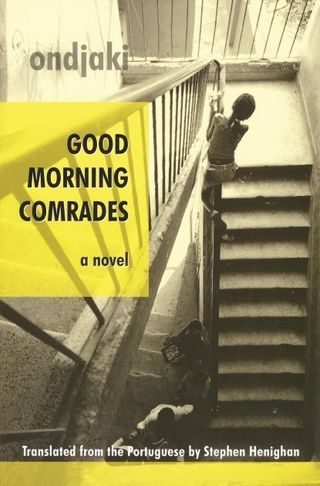
Cover of Good Morning Comrades

Good Morning Comrades

Ondjaki

Original language: Portuguese · Paperback · ISBN 978-1897231401

Set in Luanda in 1990, Good Morning Comrades follows Ndalu, a twelve-year-old boy growing up in Angola during a period of socialist governance and civil conflict. Ndalu's daily life looks ordinary on the surface: he jokes with classmates, dodges schoolwork, and swaps stories with friends. But the details of that life are shaped by the political moment. His teachers are Cuban, his school essays concern workers and peasants, and the rumors circulating among children involve a gang called Empty Crate that targets schools.

Ndalu's world extends beyond the classroom. At home, the family servant Comrade Antonio unsettles him by insisting that Angola functioned better under Portuguese colonial rule. His Aunt Dada, who lives in Portugal, has never heard of a ration card. These contrasts sit alongside Ndalu's friendships and small adventures without being explained away. The novel is told in a voice shaped by a child's perspective, where political reality and everyday play coexist without sharp boundaries.

Ondjaki, an Angolan writer born in Luanda, draws on a setting where Cuban teachers, ration cards, and shifting political loyalties form the backdrop to an otherwise recognizable childhood. The story is situated at a point when that world is already beginning to change around its young characters.

Plot

Luanda, Angola, 1990. Ndalu is a normal twelve-year-old boy in an extraordinary time and place. Like his friends, he enjoys laughing at his teachers, avoiding homework, and telling tall tales. But Ndalu's teachers are Cuban, his homework assignments include writing essays on the role of the workers and peasants, and the tall tales he and his friends tell are about a criminal gang called Empty Crate which specializes in attacking schools. Ndalu is mystified by the family servant, Comrade Antonio, who thinks that Angola worked better when it was a colony of Portugal, and by his Aunt Dada, who lives in Portugal and doesn't know what a ration card is. In a charming voice that is completely original, Good Morning Comrades tells the story of a group of friends who create a perfect childhood in a revolutionary socialist country fighting a bitter war.

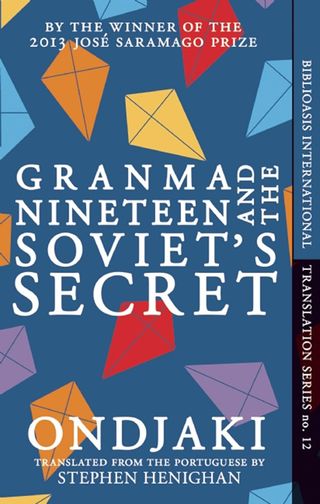
Cover of Granma Nineteen and the Soviet's Secret

Granma Nineteen and the Soviet's Secret

Ondjaki

Original language: Portuguese · Paperback · ISBN 978-1927428658

Near the shoreline of Luanda, Angola, Soviet engineers are constructing a large mausoleum to honor the Comrade President. Rumors spread among the neighborhood grandmothers that homes will be demolished to make way for the project, forcing residents out of Bishop's Beach. A young boy living with his grandmother finds himself caught between the ordinary adventures of childhood and the very real threat of losing his home.

The boy's world is populated by a vivid cast of locals. His friends Charlita and Pi, nicknamed 3.14, help him navigate the situation, while adults like Dr. Rafael KnockKnock, the Comrade Gas Jockey, a lovelorn Soviet named Gudafterov, and a figure known as Sea Foam each play their own part in the unfolding events. A ghost also turns up. Together, these characters fill the story with humor and warmth even as the political backdrop remains serious.

Ondjaki, an Angolan writer from Luanda, sets the novel during a period when Soviet cooperation shaped daily life in the country. The story follows the boy as he tries to figure out how far he is willing to go to keep his grandmother safe in their neighborhood, balancing loyalty, mischief, and the pressures of a changing city.

Plot

By the beaches of Luanda, the Soviets are building a grand mausoleum in honour of the Comrade President. Granmas are whispering: houses, they say, will be dexploded, and everyone will have to leave. With the help of his friends Charlita and Pi (whom everyone calls 3.14), and with assistance from Dr. Rafael KnockKnock, the Comrade Gas Jockey, the amorous Gudafterov, crazy Sea Foam, and a ghost, our young hero must decide exactly how much trouble he’s willing to face to keep his Granma safe in Bishop’s Beach.

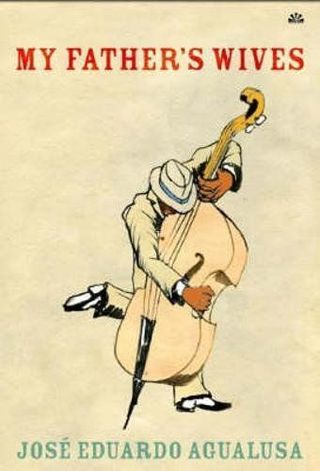
Cover of My Father's Wives

My Father's Wives

José Eduardo Agualusa

Original language: Portuguese · Paperback · ISBN 978-1906413149

When the celebrated Angolan musician Faustino Manso dies, his youngest daughter Laurentina sets out for Angola to piece together the life of a father she barely knew. Her search leads her across southern Africa, tracking down the seven wives and eighteen children Faustino left scattered through several countries. The route follows the coast from Angola through Namibia and South Africa to Mozambique, and the people Laurentina encounters along the way slowly fill in the shape of a man defined by his restlessness and his secrets.

The novel operates on two parallel tracks. One is Laurentina's fictional journey. The other is José Eduardo Agualusa's own account of how the book came into being, a chronicle of the writing process running alongside the story it produces. Characters and author travel the same geography, sometimes meeting the same people, blurring the line between invention and documentation. Agualusa, one of the most widely translated writers from Angola, sets much of his fiction against the country's recent history and its connections to the wider Portuguese-speaking world.

The book was long-listed for the Independent Foreign Fiction Prize. Its structure turns a family search into a broader map of southern African life, where personal history and national borders overlap in unpredictable ways.

Plot

When the celebrated Angolan musician Faustino Manso dies, his youngest daughter Laurentina journeys to Angola to trace the story of the father she never knew. Setting out to find the 7 wives and 18 children he left scattered across southern Africa, the fictional account of Laurentina's journey runs parallel with the author's chronicle of the novel's genesis. As the characters and their creator travel the southern African coast-from Angola through Namibia and South Africa to Mozambique-they meet extraordinary people and, along the way, discover Faustino's secrets.

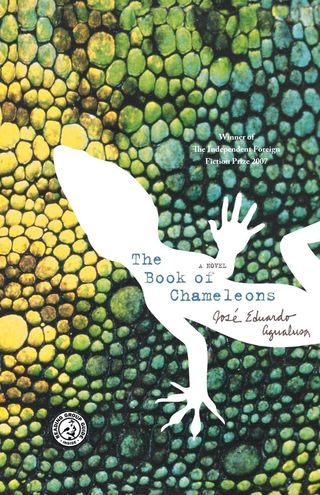
Cover of The Book of Chameleons

The Book of Chameleons

Jose Eduardo Eduardo Agualusa

Original language: Portuguese · Paperback · ISBN 978-1416573517

Félix Ventura has an unusual profession in Luanda, Angola. He fabricates personal histories for clients who have money and status but lack a respectable lineage. For a fee, he provides them with invented ancestors, forged family trees, and credible backstories. In a country shaped by decades of civil war, where many people carry pasts they would rather erase, his services find steady demand.

The story is narrated by a gecko living on the ceiling of Félix's home, an observer with opinions and a dry wit. When a mysterious foreign client arrives seeking a new identity, the transaction pulls Félix into something far less predictable than his usual work. The line between fabricated histories and real ones starts to dissolve, and questions about who this stranger actually is begin to carry real danger. A murder enters the picture, and what seemed like a literary game turns toward consequences no one in the house anticipated.

José Eduardo Agualusa sets the novel in post-war Angola, where reinvention is both a creative act and a survival strategy. The book moves between past and present, waking life and dream, using a light touch to explore identity, memory, and the stories people construct to live with themselves.

Plot

Félix Ventura trades in an unusual commodity; he is a dealer in memories, clandestinely selling new pasts to people whose futures are secure and who lack only a good lineage to complete their lives. In this completely original murder mystery, where people are not who they seem and the briefest of connections lead to the forging of entirely new histories, a bookish albino, a beautiful woman, a mysterious foreigner, and a witty talking lizard come together to discover the truth of their lives. Set in Angola, Agualusa's tale darts from a tormented past to a dream-filled present with a lightness that belies the savage history of a country in which many have something to forget -- and to hide.

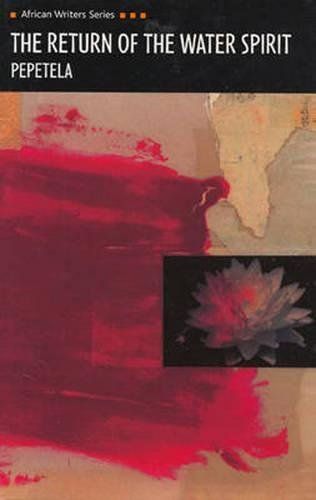
Cover of The Return of the Water Spirit

The Return of the Water Spirit

Pepetela

Original language: Portuguese · Paperback · ISBN 978-0435912109

The Return of the Water Spirit is set in Luanda, Angola, during the late 1980s. The country is at war, and its formerly Marxist-oriented ruling class has drifted into corruption, nepotism, and unchecked capitalism. Against this backdrop, buildings in Kinaxixi Square begin collapsing one by one, an event that baffles engineers and unsettles the city. Some residents call it Luanda Syndrome, interpreting the destruction as divine punishment for a society in moral decline.

The novel connects this present-day crisis to an act of violence three centuries earlier: the beheading of a slave in the same square, killed for a relationship with his master's daughter. Pepetela, the pen name of Angolan writer Artur Carlos Maurício Pestana dos Santos, uses this layered timeline to examine how colonial brutality echoes through generations. The mysterious collapses raise the possibility that a kianda, a water spirit from Angolan mythology, has returned. This strand of the story draws on traditions that colonialism and political upheaval had largely pushed aside.

Pepetela treats the abandonment of socialist ideals by Angola's post-independence leadership as a central subject. The fictional collapses in Kinaxixi Square serve as a concrete image for institutional decay, while the mythological layer grounds the narrative in a cultural memory older than the modern state.

Plot

Set in Angola in the late 1980s, a time of war, and when the Marxist-orientated ruling elite became engulfed by corruption, nepotism, and rampant capitalism. Three centuries earlier, a hideous crime occurred, the beheading of a slave who had had inappropriate relations with his Master's daughter. Now, in the very same Kinaxixi Square in the city of Luanda buildings are falling down one by one baffling the country's engineers. Many describe this mysterious process as 'Luanda Syndrome, God's punishment for a degenerate society. Drawing on the essence of African mythology which had all but been obliterated by history, could this be explained by the return of a Water Spirit (the 'kianda')?

More from Angola

See the country page for Angola for its map, facts and largest cities, or browse books from other countries.

Links go to Amazon; Hookito doesn’t sell books. Know a book that belongs here, or spotted a mistake? Write to submissions@hookito.com.