Hookito

Argentina · Books

Books from Argentina
16 books from and about Argentina: what each is about, the plot, and a note from Professor Kogi.

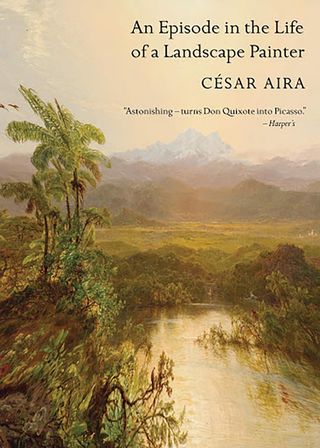
Cover of An Episode in the Life of a Landscape Painter

An Episode in the Life of a Landscape Painter

Cesar Aira

Original language: Spanish · Paperback · ISBN 978-0811216302

Johan Moritz Rugendas was a real German painter, born in 1802, who spent years traveling through Latin America to record its landscapes. In this short novel, Cesar Aira takes him as a subject without writing a biography. The story follows one episode during the painter's ride across the Argentine pampas, the wide grass plains that stretch inland from Buenos Aires.

Rugendas traveled on the advice of Alexander von Humboldt, who urged European artists to document Chile, Argentina, and Mexico. Behind the trip lay a stranger aim: to reach what Humboldt described as physiognomic totality, a single image able to hold the complete character of a place. Aira compresses that large ambition into a few days of open country.

The novel turns on the moment when the landscape stops being a calm subject and begins to act on the painter himself. Beauty and the grotesque sit close together here, and the book keeps asking how much of nature one picture can carry. Aira is among Argentina's most prolific living writers, known for short and unpredictable works of fiction.

Plot

An Episode in the Life of a Landscape Painter is the story of a moment in the life of the German artist Johan Moritz Rugendas (1802-1858). Greatly admired as a master landscape painter, he was advised by Alexander von Humboldt to travel West from Europe to record the spectacular landscapes of Chile, Argentina, and Mexico. Rugendas did in fact become one of the best of the nineteenth-century European painters to venture into Latin America. However, this is not a biography of Rugendas. This work of fiction weaves an almost surreal history around the secret objective behind Rugendas' trips to America: to visit Argentina in order to achieve in art the "physiognomic totality" of von Humboldt's scientific vision of the whole.
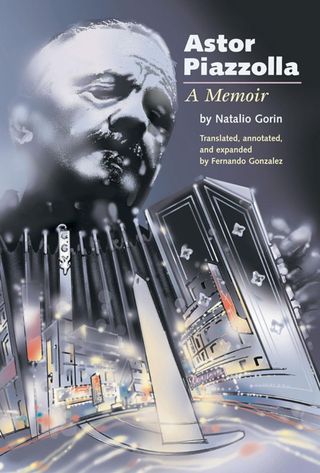
Cover of Astor Piazzolla: A Memoir

Astor Piazzolla: A Memoir

Astor Piazzolla, Natalio Gorin

Original language: Spanish · Paperback · ISBN 978-1574670677

Astor Piazzolla (1921-1992) spent decades reshaping tango from the inside, drawing on the harmonic language of composers like Ravel and Debussy alongside elements of cool jazz. Born in Mar del Plata, Argentina, and raised partly in New York City, he developed a style that treated tango as concert music rather than strictly dance music. His compositions introduced melodic and rhythmic layers that unsettled tango traditionalists while attracting listeners from classical and jazz circles. The tension between those audiences, and the resistance he faced at home, runs through much of his life story.

This memoir originated in a series of frank interviews Piazzolla gave to journalist Natalio Gorin in the spring of 1990. Piazzolla speaks directly about his career, his stubbornness, and the controversies that followed his work. The book also includes observations from people close to him, among them his lyricist Horacio Ferrer, fellow musicians, and jazz vibraphonist Gary Burton, whose recollections appear here for the first time.

The Amadeus edition was translated and annotated by Fernando Gonzalez, an Argentine-born American music critic who had covered Piazzolla's career in the United States. His notes provide context for readers encountering Piazzolla's musical world from outside Argentina.

Plot

The outspoken, headstrong Piazzolla told his story to journalist and longtime fan Natalio Gorin in the spring of 1990 in a series of frank interviews.Among the firsthand observations of others who knew Piazzolla well are those of his lyricist Horacio Ferrer, his fellow musicians, and his colleagues. Translator Fernando Gonzalez, an Argentine native and American popular music critic who covered Piazzolla's career in the United States, has annotated the Amadeus edition for the widening audience that is rediscovering Astor Piazzolla.

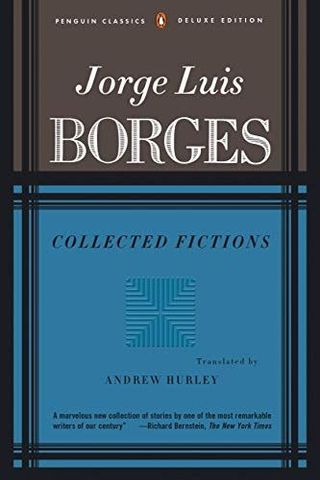
Cover of Collected Fictions

Collected Fictions

Jorge Luis Borges

Original language: Spanish · Paperback · ISBN 978-0140286809

Collected Fictions gathers the short stories of Jorge Luis Borges, the Argentine writer whose work reshaped how fiction could behave on the page. The volume spans from his 1935 debut collection, A Universal History of Iniquity, through the landmark mid-century books Ficciones and The Aleph, and onward to his later writings. Borges worked in Buenos Aires for most of his life, and the city appears across these stories alongside invented libraries, desert labyrinths, and imaginary encyclopedias.

His stories tend to be short and densely constructed. Many read like essays or scholarly reports that turn out to be fiction, while others borrow the shape of detective tales, gaucho knife-fight legends, or theological arguments. Borges frequently built plots around paradoxes of time, infinity, mirrors, and identity. A single story might propose an encyclopedia that slowly overwrites the real world, or a library containing every possible book. These structural games are carried out in cool, precise prose rather than extravagant language.

This English-language edition, translated by Andrew Hurley, collects all of Borges's published fiction in one volume. The stories are arranged chronologically by their original Spanish publication, giving a clear view of how his methods developed across several decades of writing.

Plot

From Jorge Luis Borges’s 1935 debut with The Universal History of Iniquity, through his immensely influential collections Ficciones and The Aleph, these enigmatic, elaborate, imaginative inventions display his talent for turning fiction on its head by playing with form and genre and toying with language

Cover of Die, My Love

Die, My Love

Ariana Harwicz

Original language: Spanish · Paperback · ISBN 978-1999722784

Ariana Harwicz is an Argentine writer who has lived in rural France, and that geography sits at the centre of this short, high-pressure novel. The unnamed narrator is a woman in a remote patch of French countryside, caught between opposing impulses. She wants to belong to her family and her surroundings, yet she also craves escape, and domestic life pulls against a volatile inner world.

Her family appears to tolerate her increasingly erratic behaviour, but that tolerance does not ease her sense of confinement. The novel traces how the ordinary textures of rural life, caregiving and partnership turn into sites of friction and dread. Harwicz writes in compressed, urgent prose, and the English translation by Sarah Moses and Carolina Orloff keeps that restless pace. The book does not ask whether pressure will pass a limit, but when.

Written first in Spanish, the novel reached English readers through Charco Press, an Edinburgh publisher devoted to contemporary Latin American writing in translation. Its subjects are motherhood, womanhood, desire and the strain of carrying another person's heart for good. The narration stays close to the woman's thoughts, so the fields and houses around her are registered mainly through her shifting attention.

Plot

In a forgotten patch of French countryside, a woman is battling her demons: embracing exclusion yet wanting to belong, craving freedom whilst feeling trapped, yearning for family life but wanting to burn the entire house down. Given surprising leeway by her family for her increasingly erratic behaviour, she nevertheless feels ever more stifled and repressed. Motherhood, womanhood, the banality of love, the terrors of desire, the brutality of ‘another person carrying your heart forever’: Die, My Love faces all this with a raw intensity. It’s not a question of if a breaking point will be reached, but rather when, and how violent a form will it take?

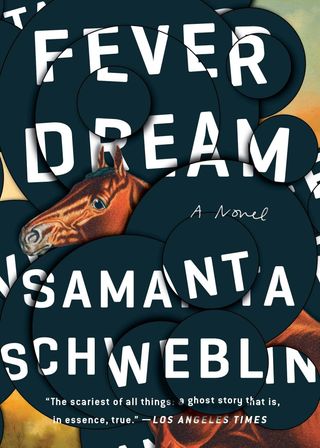
Cover of Fever Dream

Fever Dream

Samanta Schweblin

Original language: Spanish · Paperback · ISBN 978-0399184604

Fever Dream opens in a rural hospital clinic where a young woman named Amanda is dying. Beside her sits a boy called David, who is not her child. The two of them reconstruct, through urgent back-and-forth dialogue, a sequence of events involving toxins, illness, and the ties between parents and children. The entire novel unfolds as this single tense conversation, with David pressing Amanda to identify the exact moment when things went wrong.

The setting is the Argentine countryside, where Amanda has been staying with her young daughter during a holiday. What begins as a quiet rural retreat turns unsettling as the story reveals connections between agricultural chemicals, unexplained sickness, and local beliefs about the migration of souls between bodies. Schweblin builds dread not through explicit horror but through accumulation of small, disorienting details and the growing sense that something essential has shifted.

Originally written in Spanish, the novel is notably short, closer to a novella in length. Schweblin, an Argentine author, constructs the narrative almost entirely through dialogue, giving the book a compressed, breathless quality. The tension between what Amanda remembers and what David insists she notice drives the story forward without pause.

Plot

A young woman named Amanda lies dying in a rural hospital clinic. A boy named David sits beside her. She’s not his mother. He's not her child. Together, they tell a haunting story of broken souls, toxins, and the power and desperation of family. Fever Dream is a nightmare that comes to life, a ghost story for the real world, a love story, and a cautionary tale.

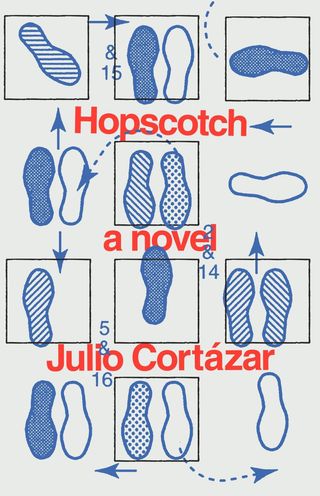
Cover of Hopscotch

Hopscotch

Julio Cortazar

Original language: Spanish · Paperback · ISBN 978-0394752846

Hopscotch, originally published in Spanish as Rayuela in 1963, is a novel by Argentine writer Julio Cortázar. It follows Horacio Oliveira, an Argentine intellectual living in Paris with his lover, La Maga, and a circle of bohemian friends who gather as a group they call the Club. Their days are filled with conversation, music, and aimless philosophy until a child's death and La Maga's disappearance fracture the group and push Oliveira back to Buenos Aires.

In Argentina, Oliveira drifts through a series of odd jobs: selling fabric, tending a circus cat reportedly able to count, and working as an attendant in a psychiatric institution. The novel tracks his restless movement between two cities and two versions of himself, one defined by abstraction and the other by the ordinary strangeness of daily life.

The book contains 155 chapters and was designed to be read in more than one order. Cortázar provided a suggested alternate sequence that rearranges the chapters and incorporates sections marked as expendable. He described the work not as an anti-novel but as a counter-novel. It was written in Paris and first published on 28 June 1963.

Plot

Horacio Oliveira is an Argentinian writer who lives in Paris with his mistress, La Maga, surrounded by a loose-knit circle of bohemian friends who call themselves "the Club." A child's death and La Maga's disappearance put an end to his life of empty pleasures and intellectual acrobatics, and prompt Oliveira to return to Buenos Aires, where he works by turns as a salesman, a keeper of a circus cat that can truly count, and an attendant in an insane asylum. Hopscotch is the dazzling, freewheeling account of Oliveira's astonishing adventures.

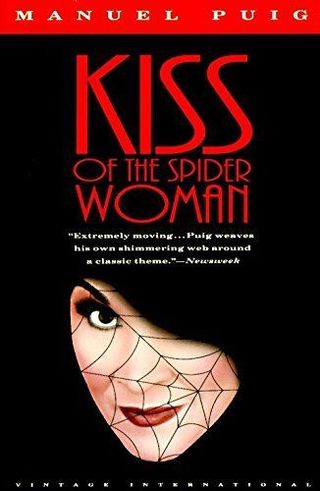
Cover of Kiss of the Spider Woman

Kiss of the Spider Woman

Manuel Puig

Original language: Spanish · Paperback · ISBN 978-0679724490

Kiss of the Spider Woman by Manuel Puig is set inside an Argentine prison cell during the country's military dictatorship. Two men share the confined space: Molina, a gay window dresser with a flair for charm and a habit of self-deprecation, and Valentin, a political revolutionary whose ideological certainty is shadowed by memories of a woman he left behind. Their long conversations become a way to push back against isolation and the constant threat of torture.

Molina passes the time by retelling the plots of films, spinning out romantic and fantastical stories that offer a world apart from the cell walls. Valentin, skeptical at first, is drawn into these retellings even as he revisits his own past and imagines possible futures. Through their exchanges, each man's assumptions about strength, desire, and loyalty are tested. The novel is constructed largely through dialogue, with footnotes and official reports woven into the text, giving it an unusual documentary texture.

Puig wrote the book in 1976. Its setting in a Buenos Aires prison during a period of political repression grounds the story in a specific historical moment, while the interplay between political conviction and personal longing gives the narrative its central tension.

Plot

In an Argentine prison, two men share a cell: Molina, a gay window dresser who is self-centered, self-denigrating, yet charming as well; and Valentin, an articulate, fiercely dogmatic revolutionary haunted by memories of a woman he left for the cause. Both are gradually transformed by their guarded but growing friendship and by Molina’s obsession with the fantasy and romance of the movies.

Cover of Maradona

Maradona

Diego Armando Maradona

Original language: Spanish · Paperback · ISBN 978-1616081867

Diego Armando Maradona grew up in Villa Fiorito, a shanty town on the southern edge of Buenos Aires, and rose to become one of the most celebrated football players in history. This autobiography, written in his own voice, traces that arc from childhood poverty through his years at Argentinos Juniors, Boca Juniors, Barcelona, and Napoli, and on to the Argentine national team. It covers two World Cups in particular: Mexico 1986, where Maradona led Argentina to the title, and the tournaments that followed.

The book addresses both the football and the trouble that surrounded it. Maradona's struggles with injury, intense public scrutiny, substance abuse, and repeated disciplinary actions form a parallel thread alongside the goals and trophies. He writes about his relationships with coaches, teammates, journalists, and officials, often with a directness that swings between confession and self-defence.

The edition includes a later epilogue that extends the account beyond his playing career, along with a collection of photographs. Maradona remains one of only a handful of elite footballers to have produced a full-length autobiography in their own words, and the book reflects the contradictions he carried throughout his public life.

Plot

Diego Maradona went from a poor boy in a Buenos Aires shanty town to a genius with the soccer ball. He kicked his way to the top of South American, European, and world soccer, but his battles with the many pressures of life inside and outside the game consistently threatened to tear his legend and his spirit down. He is one of many famous soccer players, but one of only a few to write their own soccer autobiography. Villain or hero, one thing about Maradona is clear: he was the best soccer player of his generation and possibly of all time. He has never shared his remarkable story in his own words—until this autobiography.

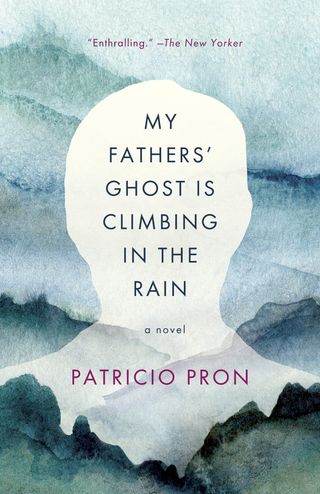
Cover of My Fathers' Ghost Is Climbing in the Rain

My Fathers' Ghost Is Climbing in the Rain

Patricio Pron

Original language: Spanish · Paperback · ISBN 978-0307745422

A young Argentine writer living abroad returns home when his father falls seriously ill. While sorting through papers and notes in the family house, he discovers that his father had been investigating the disappearance of a local man. The narrator begins to follow the same trail, piecing together clues about the missing person and gradually uncovering connections to a much larger and more disturbing history.

The story is set against the background of Argentina's last military dictatorship, which lasted from 1976 to 1983 and left tens of thousands of people dead or forcibly disappeared. As the narrator digs further into his father's research, he finds that his own family was more closely involved in the political struggles of that era than he had understood. The book is semi-autobiographical, drawing on author Patricio Pron's own experience of returning to Argentina and confronting his parents' generation and its silences.

Pron was named one of Granta's Best Young Spanish-Language Novelists. The novel moves between the narrator's present-day search and fragments of the past, exploring how political violence passes through families and how much of a shared history can be kept hidden before it surfaces on its own.

Plot

When a young writer returns home to visit his dying father, he finds himself drawn into an obsessive search for a local man gone missing. As the truth—not only about his father but an entire generation—comes to light, the narrator is forced to confront the ghosts of Argentina’s dark political past, as well as long-hidden memories about his own family’s history. Powerful and audacious, this semi-autobiographical novel is a thoroughly original story of corruption and responsibility, of history and remembrance, from one of South America’s most important new writers.

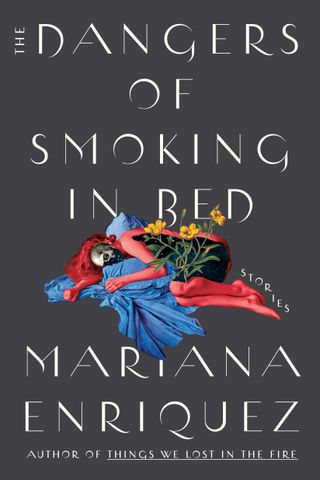
Cover of The Dangers of Smoking in Bed

The Dangers of Smoking in Bed

Mariana Enriquez

Original language: Spanish · Hardcover · ISBN 978-0593134078

Mariana Enriquez is an Argentine writer known for short fiction that sits between urban realism and horror. The Dangers of Smoking in Bed gathers stories set against contemporary Argentina, populated by figures on the edges of ordinary life: restless teenagers, ghosts without shelter, crooked witches, and women driven by obsession or hunger. Two teenage girls cannot let go of their idol.

The stories move through subjects often left unspoken, including illness, fetish, the female body, and the darker threads of human history. Enriquez treats these directly rather than as spectacle, grounding supernatural or grotesque events in recognizable social settings. Horror here tends to grow from real conditions such as poverty and neglect rather than arriving from nowhere. One story turns on a whole neighbourhood cursed after failing to answer a moral question correctly.

Critics have compared Enriquez to Shirley Jackson and Jorge Luis Borges, and this collection follows her earlier book Things We Lost in the Fire. Alongside the frightening material runs a steady attention to people in pain, in fear, or in an unresolved state, which keeps these stories close to the social texture of the country they come from.

Plot

Mariana Enriquez has been critically lauded for her unconventional and sociopolitical stories of the macabre. Populated by unruly teenagers, crooked witches, homeless ghosts, and hungry women, they walk the uneasy line between urban realism and horror. The stories in her new collection are as terrifying as they are socially conscious and press into being the unspoken—fetish, illness, the female body, the darkness of human history—with bracing urgency. A woman is sexually obsessed with the human heart; a lost, the rotting baby crawls out of a backyard and into a bedroom; a pair of teenage girls can’t let go of their idol; an entire neighborhood is cursed to death when it fails to respond correctly to a moral dilemma.

Cover of The Food and Cooking Of Argentina

The Food and Cooking Of Argentina

Cesar Bartolini

Original language: English · Hardcover · ISBN 978-1908991379

This cookbook by Cesar Bartolini presents 65 traditional recipes from Argentina, organized around the country's varied geography and food history. The collection spans regions from the flat grasslands of the Pampas, where cattle ranching has shaped eating habits for centuries, to the western foothills of the Andes, where different ingredients and cooking methods prevail. The book includes more than 380 photographs, many arranged as step-by-step guides to individual dishes.

Recipes cover a broad range of Argentinian cooking. Snacks and starters include fish croquettes and empanadas, the filled pastries found across the country in countless local variations. Main courses feature the asado, Argentina's characteristic open-fire barbecue tradition. Corn-based dishes such as tamales de humita appear alongside faina, a chickpea-flour flatbread that arrived with Italian immigrants and became a common companion to pizza in Buenos Aires. Desserts make use of dulce de leche, the slow-cooked caramelized milk preparation that appears in Argentinian sweets of many kinds.

The book positions itself as both a practical kitchen guide and an introduction to how Argentina's landscape and migration patterns have shaped its food. Regional differences in climate and agriculture receive attention alongside the recipes themselves.

Plot

The book offers a fascinating introduction to the geographical and historical diversity of Argentinian food, from the grasslands of the Pampas to the foothills of the Andes. It features a wide variety of dishes from irresistible snacks like Fish Croquettes, to the incredible meat feast of the famous Argentinian barbecue, or the fabulously tempting desserts featuring dulce de leche. You can learn how to create Argentinian classics like Empanadas (little meat pasties), Tamales de humita (sweetcorn parcels), and Faina (the Argentinian pizza). It is lavishly illustrated with more than 380 stunning photographs, including step-by-step instructions.

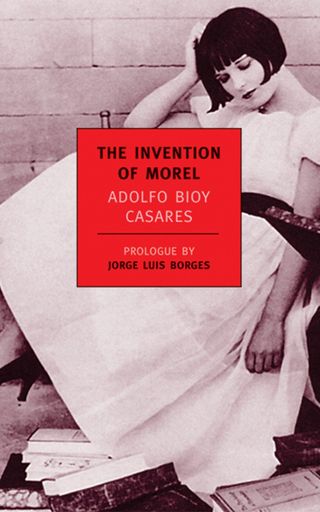
Cover of The Invention of Morel

The Invention of Morel

Adolfo Bioy Casares

Original language: Spanish · Paperback · ISBN 978-1590170571

A fugitive arrives on what appears to be a deserted island, then finds a group of well-dressed people who seem unaware of his presence. Watching from hiding, he becomes obsessed with a woman among them and slowly uncovers a strange invention built by a man named Morel. The story is told as a diary, mixing suspense with questions about perception and recorded experience.

Bioy Casares, an Argentine writer and longtime collaborator of Jorge Luis Borges, published the novella in 1940. Borges praised its plotting, comparing it to Henry James's The Turn of the Screw and Jules Verne's Journey to the Center of the Earth. Julio Cortazar, Gabriel Garcia Marquez and Octavio Paz also admired it, and it became one of the works linked to the postwar boom in Latin American fiction.

Its influence reached cinema: Alain Resnais and Alain Robbe-Grillet's 1961 film Last Year in Marienbad drew on its premise. Bioy Casares took inspiration from his fascination with the American silent-film actress Louise Brooks. The book is compact and precise, built around a single location, a small cast, and one device whose implications widen as the narrator watches.

Plot

Set on a mysterious island, Bioy's novella is a story of suspense and exploration, as well as a wonderfully unlikely romance, in which every detail is at once crystal clear and deeply mysterious. Inspired by Bioy Casares's fascination with the movie star Louise Brooks, The Invention of Morel has gone on to live a secret life of its own. Greatly admired by Julio Cortázar, Gabriel García Márquez, and Octavio Paz, the novella helped to usher in Latin American fiction's now famous postwar boom. As the model for Alain Resnais and Alain Robbe-Grillet's Last Year in Marienbad, it also changed the history of film.

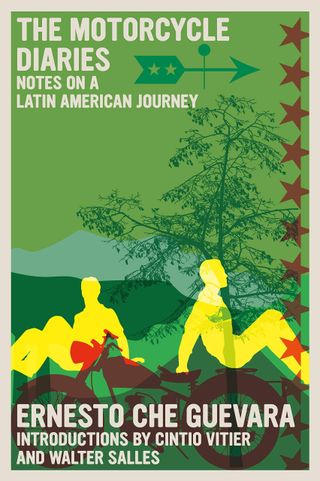
Cover of The Motorcycle Diaries

The Motorcycle Diaries

Ernesto Che Guevara

Original language: Spanish · Paperback · ISBN 978-1644210680

In 1952, a 23-year-old Argentine medical student named Ernesto Guevara and his friend Alberto Granado, a biochemist, set off across South America on an aging Norton motorcycle. The diary Guevara kept during the trip records what they saw and whom they met as they traveled through Argentina, Chile, Peru, Colombia, and Venezuela. It is a young person's account of encountering a continent's geography, poverty, and cultural variety firsthand, written before the author became the political figure later known worldwide as Che Guevara.

The book captures small, concrete episodes: breakdowns on the road, encounters with workers and indigenous communities, visits to copper mines and ancient ruins, nights spent sleeping outdoors. Guevara's observations shift between humor and growing awareness of social inequality across the region. The journey lasted several months and covered thousands of kilometers, much of it completed after the motorcycle itself broke down and the two continued by other means.

This edition includes photographs Guevara took during the trip, a preface by his daughter Aleida Guevara, and an introduction by the Cuban poet Cintio Vitier. It was published in association with the Che Guevara Studies Center in Havana. Following the 2004 film directed by Walter Salles, the book became a New York Times bestseller.

Plot

The Motorcycle Diaries is Che Guevara's diary of his journey to discover the continent of Latin America while still a medical student, set out in 1952 on a vintage Norton motorcycle together with his friend Alberto Granado, a biochemist. It captures, arguably as much as any book was ever written, the exuberance and joy of one person's youthful belief in the possibilities of humankind tending towards justice, peace, and happiness. After the release in 2004 of the exhilarating film of the same title, directed by Walter Salles, the book became a New York Times and international bestseller.

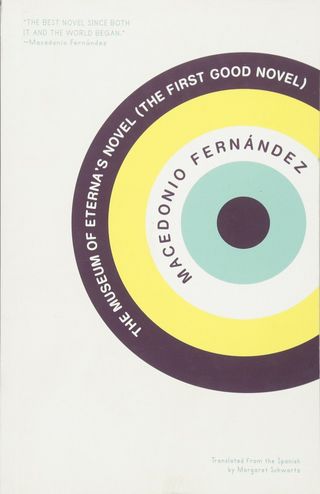
Cover of The Museum of Eterna's Novel

The Museum of Eterna's Novel

Macedonio Fernandez

Original language: Spanish · Paperback · ISBN 978-1934824061

Macedonio Fernández, known to readers simply by his first name, worked on this book during the 1930s and early 1940s, a busy period in Argentine literary life. It carries the subtitle The First Good Novel and is often called an anti-novel, meaning a work that sets itself against the usual habits of storytelling rather than following them.

The first half gathers more than fifty prologues, addressed variously to critics, to the author's own authorial persona, and to readers who fear they will perish without knowing the subject. Their tone moves between philosophy, provocation, heavy argument and riddle. One stated aim is to frustrate readers who skip around, by building a book that refuses to run in a straight line.

The second half is the novel itself, set on an estancia, a large Argentine country estate, which carries the name la novela. Some of its characters are borrowed from other texts, so the fiction openly reuses material readers may already know. Macedonio published little during his lifetime, and the book appeared after his death. Jorge Luis Borges regarded him as a mentor.

Plot

Macedonio (known to everyone by his unusual first name) worked on this novel in the 1930s and early '40s, during the heyday of Argentine literary culture, and around the same time that At Swim-Two-Birds was published, a novel that has quite a bit in common with Macedonio's masterpiece. In many ways, Museum is an "anti-novel." It opens with more than fifty prologues—including ones addressed "To My Authorial Persona," "To the Critics," and "To Readers Who Will Perish If They Don't Know What the Novel Is About"—that is by turns philosophical, outrageous, ponderous, and cryptic. These pieces cover a range of topics from how the upcoming novel will be received to how to thwart "skip-around readers" (by writing a book that defies linearity!). The second half of the book is the novel itself, a novel about a group of characters (some borrowed from other texts) who live on an estancia called "la novella" . . .

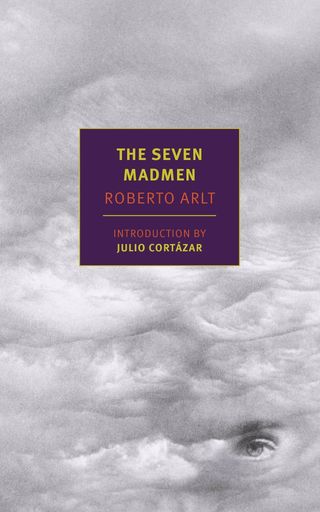
Cover of The Seven Madmen

The Seven Madmen

Roberto Arlt

Original language: Spanish · paperback

The Seven Madmen follows Erdosain, a bill collector in Buenos Aires who loses his job after being caught embezzling. Shortly after, his wife leaves him. With little left to hold him in place, Erdosain drifts through the city's crowded streets, surrounded by immigrants who seem nearly as rootless as he is. He eventually falls in with a circle of conspirators led by a figure known only as the Astrologer, a man with grand and disturbing plans for remaking society.

The Astrologer's vision is both absurd and sinister. He proposes to eliminate unemployment through forced labor on an enormous scale, with factories built inside hollowed-out mountains. This operation would be financed through organized prostitution and set into motion with murder. Erdosain, meanwhile, is preoccupied with a different kind of problem: he wants to determine the physical location and dimensions of the human soul, the source of his persistent anguish.

Roberto Arlt published the novel in 1929 in Argentina. The book draws comparisons to Dostoyevsky for its intense psychological atmosphere and its cast of desperate, idea-obsessed characters. It has been cited as an important influence on later Argentine writers, including Julio Cortazar.

Plot

A weird wonder of Argentine and modern literature and a crucial work for Julio Cortázar, The Seven Madmen begins when its hapless and hopeless hero, Erdosain, is dismissed from his job as a bill collector for embezzlement. Then his wife leaves him and things only go downhill after that. Erdosain wanders the crowded, confusing streets of Buenos Aires, thronging with immigrants almost as displaced and alienated as he is, and finds himself among a group of conspirators who are in thrall to a man known simply as the Astrologer. The Astrologer has the cure for everything that ails civilization. Unemployment will be cured by mass enslavement. (Mountains will be hollowed out and turned into factories.) Mass enslavement will be funded by industrial-scale prostitution. That scheme will be kicked off with murder. “D’you know you look like Lenin?” Erdosain asks the Astrologer. Meanwhile, Erdosain struggles to determine the physical location and dimensions of the soul, this thing that is causing him so much pain.

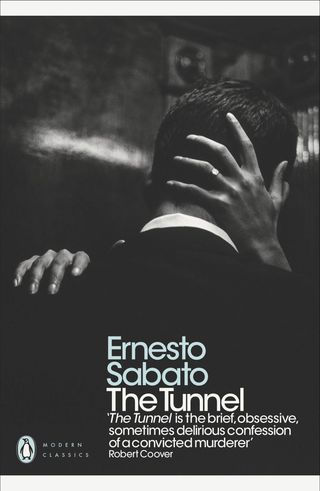
Cover of The Tunnel

The Tunnel

Ernesto Sabato

Original language: Spanish · paperback

The Tunnel is a short novel by the Argentine writer Ernesto Sabato, first published in 1948. It takes the form of a confession written from a prison cell by Juan Pablo Castel, a painter who has killed a woman named Maria Iribarne. Castel does not hide this fact. He states it plainly at the start, then sets out to explain how and why it happened. The story moves backward through the months leading up to the crime, tracing Castel's account of his fixation on Maria after he noticed her studying a particular detail in one of his paintings at an exhibition.

Castel interprets Maria's attention to his work as proof of a deep, private connection between them. When they eventually meet, a relationship forms, but Castel's need for certainty and exclusivity begins to distort everything around him. Suspicion replaces affection. Small ambiguities in Maria's behavior become, for Castel, evidence of betrayal. The novel stays locked inside his perspective, offering no outside correction to his reasoning.

Sabato trained as a physicist before turning to literature, and Castel's narration has a cold, logical surface that contrasts with its increasingly unstable content. Albert Camus and Graham Greene both praised the book. It remains one of the best-known works of twentieth-century Argentine fiction.

Plot

Infamous for the murder of Maria Iribarne, the artist Juan Pablo Castel is now writing a detailed account of his relationship with the victim from his prison cell: obsessed from the first moment he saw her examining one of his paintings, Castel had become fixated on her over the next months and fantasized over how they might meet again. When he happened upon her one day, a relationship was formed that swiftly convinced him of their mutual love. But Castel's growing paranoia would lead him to destroy the one thing he truly cared about...

More from Argentina

See the country page for Argentina for its map, facts and largest cities, or browse books from other countries.

Links go to Amazon; Hookito doesn’t sell books. Know a book that belongs here, or spotted a mistake? Write to submissions@hookito.com.