Hookito

Austria · Books

Books from Austria

13 books from and about Austria: what each is about, the plot, and a note from Professor Kogi.

Cover of Bambi, a Life in the Woods

Bambi, a Life in the Woods

Felix Salten

Original language: German · Paperback · ISBN 978-1447417767

Felix Salten published Bambi in 1923 in German. The story follows a roe deer named Bambi from birth through the stages of growing up in a European forest. Bambi encounters other animals, learns to find food and avoid predators, and gradually comes to understand the greatest threat in the woods: human beings, whom the animals refer to simply as He. The English translation, completed by Whittaker Chambers in 1928, brought the book to a much wider audience.

The novel is often considered one of the earliest works of environmental fiction. Salten presents the forest as a place of both beauty and constant danger, where survival depends on alertness and experience passed between generations. Bambi's father, a distant and solitary older deer, plays a key role in teaching Bambi how to navigate these threats. The story also touches on loss, particularly the death of Bambi's mother, which remains one of its most recognizable moments.

In 1936, the book was banned by Nazi Germany, which treated it as a parable about the persecution of Jews in Europe. Salten himself was an Austrian Jewish writer born in Budapest. Walt Disney later adapted the story into an animated film, released in 1942, which became the version most widely known around the world.

Plot

The story follows the life of a dear called Bambi from his birth, through his childhood and the death of his mother, to finding a mate, learning his father's lessons, and discovering the dangers posed by human beings.

Cover of Fanni's Viennese Kitchen

Fanni's Viennese Kitchen

Genevieve Davis

Original language: English · Paperback · ISBN 978-0615940632

Fanni's Viennese Kitchen combines a family cookbook with a personal history rooted in early twentieth-century Vienna. The book is written by Genevieve Davis, who presents recipes passed down from Fanni, a woman who left Vienna in 1921 and settled in the United States. Among the dishes collected here are Apfelstrudel, Wiener Schnitzel, Sauerbraten, plum dumplings, and apricot Kuchen, each connected to the household cooking Fanni practiced after emigrating.

Alongside the recipes, the book tells the story of why Fanni left Austria and never returned, and how her cooking sustained her family during the Great Depression. Davis also recounts how Fanni protected her daughter from a threatening figure in their lives. These personal narratives sit between the recipe instructions, giving each dish a context that extends beyond ingredients and technique.

The structure moves between food preparation and memoir, linking specific Viennese dishes to episodes in one immigrant family's life in America. The recipes reflect a home kitchen tradition rather than restaurant cooking, and the biographical sections ground them in the particular circumstances of displacement, economic hardship, and family survival that shaped how and why Fanni cooked.

Plot

Scrumptious, delicious things to make in your own kitchen! Plus stories about why Fanni sailed to America from Vienna in 1921, never to return. And stories about how Fanni got her family through the Great Depression with her cooking and how Fanni saved her daughter “from a monster!”

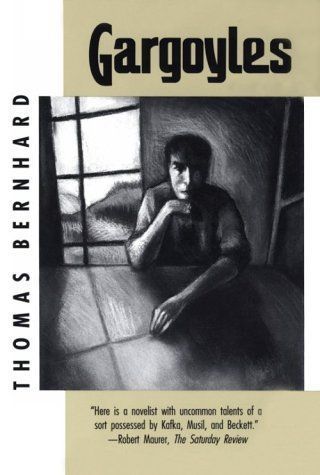
Cover of Gargoyles

Gargoyles

Thomas Bernhard

Original language: German · Paperback · ISBN 978-0226043999

Published under its original German title Verstörung, meaning disturbance, Gargoyles is an early novel by Thomas Bernhard. It follows a country doctor and his university-age son through a single day of medical rounds in a remote, mountainous region of rural Austria. Each visit introduces a patient caught in a distinct form of suffering: a diabetic industrialist living in seclusion with his half-sister, three brothers in a gorge-set mill who have strangled exotic birds, and a young musical prodigy whose sister keeps him confined in a cage.

The son, home from university, observes without intervening. The rounds lead finally to a crumbling castle occupied by Prince Saurau, a reclusive aristocrat whose extended monologue fills much of the novel's later pages. His speech circles through paranoia, grief, and reflections on the decay of his family and the wider social order.

Rather than following a conventional storyline, the novel builds its effect through accumulation and atmosphere. Bernhard uses the Austrian mountain landscape and a procession of isolated, damaged lives to examine alienation, the failure of communication, and the psychological condition of a society shaped by the Second World War.

Plot

Gargoyles (originally titled Verstörung, meaning “Disturbance”) is one of Thomas Bernhard’s early novels. It follows a single day in the life of an unnamed country doctor and his son, a university student home for a break, as they make their rounds through a remote, mountainous region of rural Austria. Along the way, they encounter a series of patients — each trapped in different forms of suffering, whether physical illness, madness, isolation, or despair. These visits gradually reveal the bleakness and absurdity of human existence. The novel culminates with an extended monologue by Prince Saurau, a reclusive aristocrat living in a crumbling castle. His speech is a torrent of paranoia, lamentations, and reflections on decay — of himself, his family, and the entire social order. Rather than a conventional plot, the book offers a meditation on death, alienation, and the collapse of communication, with the son serving as a detached observer of the desolation around him.

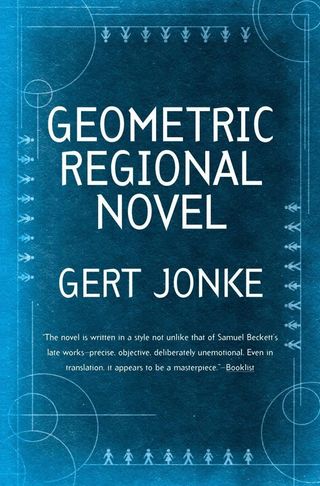
Cover of Geometric Regional Novel

Geometric Regional Novel

Gert Jonke

Original language: German · Paperback · ISBN 978-1564782311

Gert Jonke's Geometric Regional Novel presents an unnamed village through the voice of a detached, nameless narrator who describes its workings in a flat, pseudo-scientific tone. The inhabitants follow routines so fixed and predictable that the narrator treats them almost like variables in a formula. Village authority figures, the mayor, the priest, the teacher, maintain order through an exaggerated devotion to ceremony and minor detail, while other residents carry out roles unchanged from one generation to the next.

The village's obsession with regulation is made visible through the sheer volume of written material that fills daily life: warnings, instructions, diagrams, ordinances, historical records, and official forms. One extended passage reproduces a multi-page form required of anyone who wants to walk in the forest, a bureaucratic document so elaborate it becomes absurd. Jonke uses these insertions to show how thoroughly codified existence has become in this setting.

Alongside the mathematical and administrative descriptions, the novel shifts at times into surrealistic, vivid language that contrasts sharply with the controlled routines around it. Jonke, one of Austria's prominent postwar writers, originally published the novel in German. This English-language edition marked his first appearance in translation for English-speaking readers.

Plot

In a deadpan, pseudo-scientific tone, the nameless narrator takes us on a tour of a bizarre village whose inhabitants lead such habitual, regulated lives that they resemble elements in a mathematical equation.

Cover of Man's Search for Meaning

Man's Search for Meaning

Viktor Frankl

Original language: German · Paperback · ISBN 978-0807014271

Viktor Frankl was an Austrian psychiatrist who survived several Nazi concentration camps during the Second World War. First published in 1946, this book combines a memoir of that experience with an outline of his psychological framework, logotherapy. The name draws on the Greek root logos, which Frankl connected with meaning, and the approach rests on the idea that the primary human motivation is not pleasure but the search for personal significance.

Frankl draws on observations from his time in the camps to illustrate how people responded to extreme suffering. He noticed that prisoners who held on to a sense of purpose, whether through connection to others, unfinished work, or inner conviction, were often better able to endure. Suffering cannot always be avoided, he argues, but a person can still choose how to respond to it.

The second part of the book presents logotherapy in more structured terms, describing methods Frankl later used with patients in clinical practice. He positions his approach as distinct from Freudian psychoanalysis and Adlerian psychology, offering a third direction within Viennese psychotherapy. The book was originally written in German and has since been translated into many languages and read by successive generations.

Plot

Viktor Frankl’s riveting account of his time in the Nazi concentration camps, and his insightful exploration of the human will to find meaning in spite of the worst adversity, has offered solace and guidance to generations of readers since it was first published in 1946. At the heart of Frankl’s theory of logotherapy (from the Greek word for “meaning”) is a conviction that the primary human drive is not pleasure, as Freud maintained, but rather the discovery and pursuit of what the individual finds meaningful. Today, as new generations face new challenges and an ever more complex and uncertain world, Frankl’s classic work continues to inspire us all to find significance in the very act of living, in spite of all obstacles.

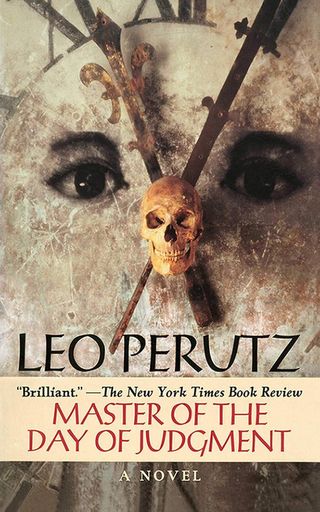
Cover of Master of the Day of Judgment

Master of the Day of Judgment

Leo Perutz

Original language: German · Paperback · ISBN 978-1611458428

Vienna in 1909 provides the setting for this novel by Leo Perutz, an Austrian writer known for mixing suspense with elements of the uncanny. The story opens with the death of Eugen Bischoff, a well-known actor found in his locked garden pavilion after two gunshots. Everything points to suicide, but Baron von Yosch, an army officer and former lover of Bischoff's wife, finds himself under immediate suspicion. To clear his own name, the baron begins investigating the circumstances surrounding the actor's final hours.

What starts as a relatively contained inquiry soon widens. Additional apparent suicides follow within days, each sharing unsettling similarities with Bischoff's death. The baron's investigation shifts from tracing one man's last movements to tracking a pattern that seems to stretch back through history. Bischoff's dying words, referring to a Day of Judgment, become the only clue pointing toward whatever force connects these deaths. The locked-room detail and the spreading wave of deaths give the novel a structure that sits between detective fiction and something stranger.

Perutz was born in Prague and spent much of his life in Vienna before emigrating in 1938. His novels, written in German, often occupy a space where historical detail and the inexplicable overlap, and this book is a characteristic example of that approach.

Plot

Vienna, 1909. When the celebrated actor Eugen Bischoff is found dead in his garden pavilion, suspicion falls immediately on Baron von Yosch, a well-to-do army officer who was once the lover of the dead man’s wife. By all appearances—the door was locked from the inside when the two shots rang out—the actor took his own life, but someone, or something, drove him to it. The baron sets out to learn all he can about the actor’s death in order to clear his name. Meanwhile, within a few days, similar apparent suicides are reported. What started out as a straightforward quest to establish Bischoff’s last deeds and discover the truth of his death becomes a search through the ages for an invisible enemy identified only by the actor’s dying breath, when he whispered: “. . . the Day of Judgment.”

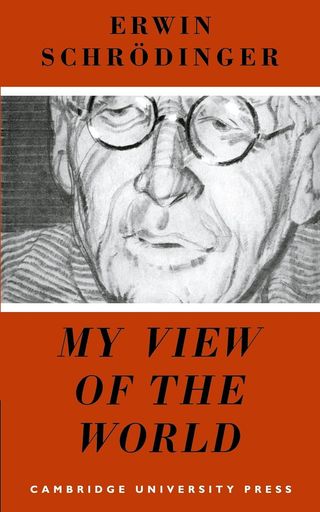
Cover of My View of the World

My View of the World

Erwin Schrödinger

Original language: German · Paperback · ISBN 978-0521090483

Erwin Schrödinger, the Austrian physicist who received the Nobel Prize for his work in quantum mechanics, wrote these two philosophical essays at different points in his life. Rather than discussing wave equations or atomic theory, the book sets out his broader thinking about consciousness, identity, and the relationship between mind and the external world. Schrödinger draws heavily on the Vedanta tradition of Indian philosophy, arriving at the position that there is only a single consciousness, and that individual minds are different aspects of it rather than separate entities.

Schrödinger acknowledges openly that this view is metaphysical and cannot be proven through logical deduction alone. But he argues that the same limitation applies to more conventional assumptions, including the common belief that an external world exists independently of the mind and interacts with it. The essays are discursive and wide-ranging, moving between physics, biology, ethics, and Eastern philosophy. His philosophical outlook connects to what the book's own framing describes as a reverence for life, a stance that follows naturally from the idea that all conscious experience shares a single root.

The book is short and direct, written for a general audience rather than specialists in either physics or philosophy. Schrödinger's tone throughout is exploratory, presenting his positions as honest personal conclusions rather than doctrines.

Plot

A Nobel prize winner, a great man and a great scientist, Erwin Schrödinger has made his mark in physics, but his eye scans a far wider horizon: here are two stimulating and discursive essays which summarize his philosophical views on the nature of the world. Schrödinger's world view, derived from the Indian writings of the Vedanta, is that there is only a single consciousness of which we are all different aspects. He admits that this view is mystical and metaphysical and incapable of logical deduction. But he also insists that this is true of the belief in an external world capable of influencing the mind and of being influenced by it.

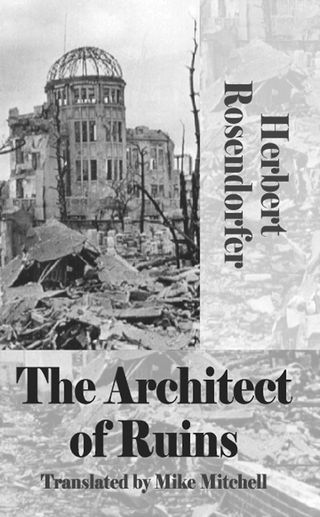
Cover of The Architect of Ruins

The Architect of Ruins

Herbert Rosendorfer

Original language: German · Paperback · ISBN 978-1903517796

Four men, led by a figure known as the Architect of Ruins, build a shelter shaped like a giant cigar. Its purpose is to survive the end of the world, and the group intends to pass into eternity in a particular mood, playing a Schubert string quartet. While they wait, they entertain one another by telling stories, and those stories begin to develop lives of their own.

The narrative moves between the Dark Ages and the present day, folding back on itself in a structure sometimes compared to a Möbius strip. Fictional and historical figures appear along the way, including Faust, Don Juan, the librettist Lorenzo da Ponte, and G.K. Chesterton. The novel uses a story-within-a-story technique, layering tales inside one another so that the boundaries between each level grow uncertain. Herbert Rosendorfer, the Austrian-born author, constructs an elaborate literary puzzle in which the frame and its contents keep trading places.

The book has been compared to Robert Irwin's The Arabian Nightmare and Umberto Eco's The Name of the Rose for its labyrinthine plotting and playful approach to narrative form. It was published in English by Dedalus, a press known for European literary fiction in translation.

Plot

An archetypal Dedalus novel with its literary game-playing and story-within-a-story technique. It has the labyrinthine brilliance of Robert Irwin's The Arabian Nightmare and Umberto Eco's The Name of the Rose. Four men led by the Architect of Ruins construct an Armagedon shelter, in the shape of a giant cigar, so that when the end of the world comes they can enter eternity in the right mood, whilst playing a Schubert string quartet. They amuse themselves by telling stories, which take on a life of their own, with walk on parts for Faust, Don Juan, da Ponte, and G.K. Chesterton etc as the narrative flashes back and forth between the Dark Ages and the Modern Day, like a literary Mobius strip.

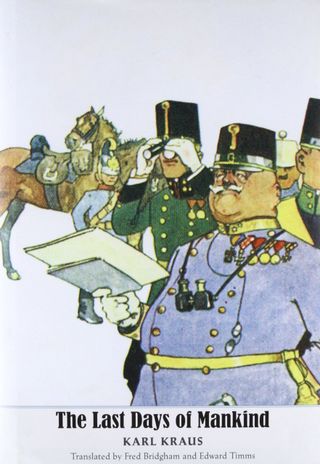
Cover of The Last Days of Mankind

The Last Days of Mankind

Karl Kraus

Original language: German · Hardcover · ISBN 978-0300207675

Karl Kraus began The Last Days of Mankind during the First World War, building a vast drama around the collapse of the Austro-Hungarian Empire. The play traces the war from the Austrian army's call to arms toward ruin, drawing on real material: political speeches, newspaper editorials, and recorded public responses. Kraus assembled these documents into a textual collage, mixing them with satirical verse and invented comic scenes.

Among the forces Kraus holds responsible are bungled diplomacy, war profiteers, the complicity of big business, and a credulous newspaper audience. The sloganizing of the press receives the sharpest attention, shown as the machinery that made mass killing sound necessary and even glorious while its consequences went unexamined. Bertolt Brecht described the work as the great dramatic achievement of Viennese modernism, and its scale is unusual for the stage.

This edition presents the first complete English translation of the play, opening a central work of Viennese writing from the era of that war to readers outside German. Its method, quoting the language of officials, editors, and ordinary citizens back at them, keeps the documentary record visible on the surface of the drama rather than reshaping it into invented dialogue.

Plot

Bertolt Brecht hailed The Last Days as the masterpiece of Viennese modernism. In the apocalyptic drama, Kraus constructs a textual collage, blending actual quotations from the Austrian army’s call to arms, people’s responses, political speeches, newspaper editorials, and various other sources. Seasoning the drama with comic invention and satirical verse, Kraus reveals how bungled diplomacy, greedy profiteers, Big Business complicity, gullible newsreaders, and, above all, the sloganizing of the press brought down the Austro-Hungarian Empire.

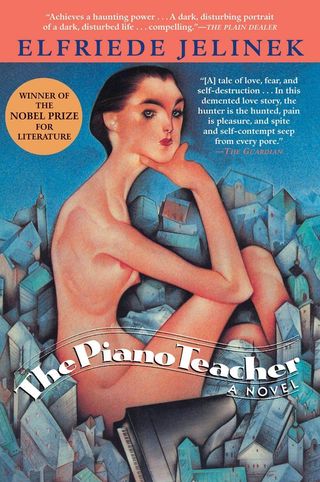
Cover of The Piano Teacher

The Piano Teacher

Elfriede Jelinek

Original language: German · Paperback · ISBN 978-0802144614

Erika Kohut is thirty-eight years old, a piano teacher at the Vienna Conservatory, and she has never left her mother's apartment. Her mother monitors her schedule, her purchases, and her social life with a controlling grip that has shaped Erika's entire adulthood. On the surface, Erika's days follow the rigid structure of classical music education in one of Vienna's most formal institutions. Beneath that structure, she leads a hidden life: she visits peep shows in the city's Turkish quarter and watches sadomasochistic films alone.

The story shifts when a seventeen-year-old student, confident and self-absorbed, decides to pursue Erika romantically. She initially resists, but the dynamic between teacher and pupil moves quickly beyond either person's control. Erika's suppressed impulses surface in ways that are violent and degrading, and the novel tracks her slide toward self-destruction without offering easy explanations or comfort.

Elfriede Jelinek, who received the Nobel Prize in Literature in 2004, wrote the novel in German. It was first published in 1983 under the title Die Klavierspielerin. Set in Vienna, the book examines the intersection of cultural respectability, maternal domination, and sexuality in postwar Austrian society.

Plot

Erika Kohut is a piano teacher at the prestigious and formal Vienna Conservatory, who still lives with her domineering and possessive mother. Her life appears boring, but Erika, a quiet thirty-eight-year-old, secretly visits Turkish peep shows at night and watched sadomasochistic films. Meanwhile, a handsome, self-absorbed, seventeen-year-old student has become enamored with Erika and sets out to seduce her. She resists him at first—but then the dark passions roiling under the piano teacher’s subdued exterior explode in a release of perversity, violence, and degradation.

Cover of The Reluctant Empress: A Biography of Empress Elisabeth of Austria

The Reluctant Empress: A Biography of Empress Elisabeth of Austria

Brigitte Hamann

Original language: English · Paperback · ISBN 978-0571271306

Brigitte Hamann's biography follows Empress Elisabeth of Austria from her origins in the Bavarian nobility through decades at the centre of Habsburg court life. Elisabeth, called Sisi by her family, was fifteen when Emperor Franz Josef met her in 1853 and fell in love at once. They married the following year, and the match looked like a storybook union of European royalty.

Hamann, a historian based in Vienna, first published the book in 1988. She examines the pressures Elisabeth faced inside the rigid protocol of the imperial court, her difficult position beside her mother-in-law, and her growing restlessness as the years passed. Elisabeth travelled widely and pursued demanding physical exercise, and Hamann treats such choices as material for historical explanation rather than praise or blame.

The book also sets Elisabeth's private life against the politics of the Austro-Hungarian Empire during a period of considerable change. Her death in 1898 fell close to the final decades of Habsburg rule, and Hamann follows the links between an unhappy personal life and a shifting public order without reducing either one to the other.

Plot

Empress Elisabeth of Austria, known to her family as Sisi, belongs to a famous love story of European royalty - in 1853 the Emperor Franz Josef, the most eligible bachelor in Europe, fell in love with her at first sight when she was fifteen; they were married the next year. On the surface, it was a fairytale marriage, all the more poignant, with hindsight, because her death signalled the twilight years of the Habsburg Empire.

Cover of The Royal Game: A Chess Story

The Royal Game: A Chess Story

Stefan Zweig

Original language: German · Paperback · ISBN 978-1782278269

Aboard a transatlantic ocean liner, passengers gather to watch Mirko Czentovic, the reigning world chess champion, defeat one amateur challenger after another. Czentovic is arrogant and methodical, seemingly unbeatable. Then a stranger known as Dr B steps forward and offers to play. Dr B is Austrian, cultured, and deeply familiar with chess, but his knowledge of the game was acquired under extreme circumstances during Nazi imprisonment in his homeland.

Dr B's backstory forms the psychological core of the novella. Held in prolonged isolation by the Nazis, he managed to obtain a book of famous chess games and memorized every match it contained, eventually playing both sides of imaginary games against himself. This obsessive internal practice sharpened his ability but also damaged his mind, pushing him toward a breakdown. On the ship, his encounter with Czentovic sets up a contest between two very different kinds of intelligence: one cold and instinctive, the other fevered and cultivated under duress.

Stefan Zweig wrote this novella in Brazilian exile during the Second World War. It was his last completed work of fiction, published posthumously in 1942. The story is set against the backdrop of Nazi-era Austria and explores obsession, confinement, and the fragile boundary between mental discipline and collapse.

Plot

On the deck of a transatlantic ocean liner, a crowd of passengers gathers to watch reigning chess world champion Mirko Czentovic take on a series of amateur challengers. The haughty grandmaster dispatches all of his opponents with ease, until one Dr B steps forward from the crowd―a passionate lover of the royal game who still bears the mental scars of imprisonment by the Nazis in his native Austria. The enigmatic genius reluctantly agrees to challenge Czentovic, but at what cost to his sanity?

Cover of The Wall

The Wall

Marlen Haushofer

Original language: German · Paperback · ISBN 978-1573449069

An unnamed middle-aged woman wakes to find an invisible, impenetrable wall sealing off a small stretch of Austrian forest and meadow. Beyond it, all life appears to have stopped. As far as she can tell, she is the last living human being. She had been a city dweller with a family, and nothing in that earlier life prepared her for the enclosed ground she cannot leave.

Her companions are a dog that wandered in, a cat, and a pregnant cow. With no rural experience, she teaches herself to plant potatoes and beans, tend animals, count her remaining matches, and measure time by the seasons. She writes her account on the blank backs of old calendar pages, in plain and careful language, and slowly begins to understand a person she never had reason to examine before.

Marlen Haushofer, an Austrian writer, published the novel in 1963. It sits between survival narrative and sustained reflection on solitude, self-reliance, and the conventions a woman of her time was expected to keep. The wall itself is never explained. Instead the book stays with practical work and inner life, including small losses such as forgetting the taste of sugar and the use of her own name.

Plot

“I can allow myself to write the truth; all the people for whom I have lied throughout my life are dead…” writes the heroine of Marlen Haushofer’s The Wall, a quite ordinary, unnamed middle-aged woman who awakens to find she is the last living human being.

More from Austria

See the country page for Austria for its map, facts and largest cities, or browse books from other countries.

Links go to Amazon; Hookito doesn’t sell books. Know a book that belongs here, or spotted a mistake? Write to submissions@hookito.com.