Hookito

Belgium · Books

Books from Belgium

12 books from and about Belgium: what each is about, the plot, and a note from Professor Kogi.

Cover of Chapel Road

Chapel Road

Louis Paul Boon

Original language: Dutch · Paperback · ISBN 978-1628975192

Chapel Road, first published in 1953, is a novel by Flemish author Louis Paul Boon set in and around the industrial city of Aalst, Belgium, at the turn of the twentieth century. At its center is Ondine, a young girl born into poverty alongside her brother Valeer. Their lives unfold against the rhythms of factory work, class division, and the small, accumulating choices that shape a family over time. Ondine's story of growing up in difficult circumstances forms the backbone of the book, but the novel does not follow a single straightforward path.

Boon layers the narrative with a retelling of the medieval fable of Reynard the Fox, weaving the old animal tale through the modern story of Ondine and Valeer. On top of this, a third strand introduces a character named Louis Paul Boon, who sits with a circle of friends and debates how the novel itself should be written. These friends question choices of structure, tone, and emphasis, turning the act of storytelling into part of the story.

The result is a book built from overlapping frames, each one commenting on the others. The Reynard material connects Ondine's world to older patterns of cunning and survival, while the metanarrative sections expose the uncertainty behind any attempt to represent a life on the page.

Plot

The twisting narrative of Louis Paul Boon’s 1953 masterpiece follows a young girl named Ondine and her brother Valeer, born into poverty at the turn of the century in the industrial city of Aalst, Belgium. Ondine’s coming of age is interwoven with a reworking of the medieval fable of Reynard the Fox, as well as a metanarrative in which an author named Louis Paul Boon and his colorful group of friends discuss the writing of a novel named Chapel Road, debating how best to present Ondine’s story.

Cover of Escal-Vigor

Escal-Vigor

Georges Eekhoud

Original language: French · Paperback · ISBN 978-1513295411

Georges Eekhoud's Escal-Vigor follows Count Henry of Kehlmark, a young aristocrat who returns to settle in the ancestral castle on a wild North Sea island. Henry has spent years moving freely across Europe, but now he takes up the title of Dykgrave and attempts to root himself in one place. The island's landscape is rough and isolated, and its people hold tightly to local customs.

Henry's cosmopolitan outlook sets him apart from the villagers almost immediately. When he begins a romantic relationship with Guidon Govaertz, the son of the local burgomaster, the tension between the Count and the community sharpens. Guidon is rejected by his own family, and for Henry the relationship represents a rare chance to live without concealment. The novel traces what happens as word of their bond spreads through a small, suspicious community with little tolerance for difference.

Published in Belgium in 1899, the book prompted an obscenity trial against Eekhoud, though he was supported by several prominent Belgian critics. The case made the novel one of the earliest works of European fiction to bring a same-sex relationship to the center of its plot and to face legal consequences for doing so.

Plot

Henry, whose nature was passionate and philosophy audacious, told himself, not without reason, that through his affinities, he would feel himself at home amid these beautifully barbarous surroundings, where natural instincts reigned.” Having lived freely around Europe, Henry Kehlmark returns to his family’s ancestral home, ready to settle down in the role of Dykgrave, or Count. Soon, however, his cosmopolitan ways draw the attention of the local villagers, who mistrust Henry and question his intentions. When the Count strikes up a romantic relationship with the burgomaster’s son, an impressionable youth, he risks violent reprisal as a homosexual living in proximity to a traditional, insular people. For once in his life, however, Henry feels like he can be himself, living truthfully and without fear, able to separate himself from the pressures that dogged so many of his loved ones, now deceased. When word of their relationship gets out, however, Henry discovers the limits of provincial hospitality.

Cover of Fear and Trembling

Fear and Trembling

Amelie Nothomb

Original language: French · Paperback · ISBN 978-0312288570

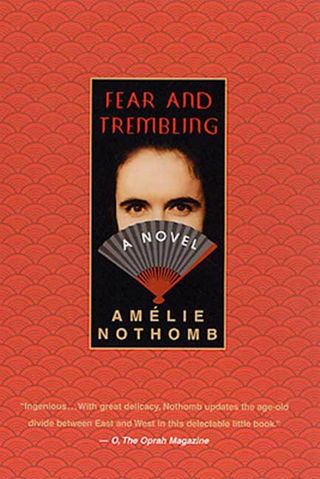
Amélie Nothomb's Fear and Trembling follows a young Belgian woman named Amélie who takes a one-year contract at a large Japanese corporation called Yumimoto. Born in Japan but raised in the West, Amélie arrives eager to reconnect with the country of her earliest years. What she finds instead is a workplace governed by codes she cannot master. The title refers to an old Japanese protocol requiring foreigners who approached the emperor to display terror and self-abasement as signs of respect.

Amélie begins at the lowest rung of the company and, despite her best efforts, keeps descending. She is assigned to deliver mail, serve tea, update calendars, and photocopy documents endlessly. Each task she attempts leads to a new misstep or breach of etiquette. Her situation grows more complicated when she develops an infatuation with her direct supervisor, Miss Mori, a woman described as composed, exacting, and unyielding.

The novel draws its energy from the gap between Amélie's earnest intentions and the rigid hierarchical world she has entered. Nothomb, a Belgian author who spent part of her childhood in Japan, grounds the story in specific office routines and workplace rituals rather than broad cultural generalization.

Plot

According to ancient Japanese protocol, foreigners deigning to approach the emperor did so only with fear and trembling. Terror and self-abasement conveyed respect. Amélie, our well-intentioned and eager young Western heroine, goes to Japan to spend a year working at the Yumimoto Corporation. Returning to the land where she was born is the fulfillment of a dream for Amélie; working there turns into comic nightmare.

Cover of I Who Have Never Known Men

I Who Have Never Known Men

Jacqueline Harpman

Original language: French · Paperback · ISBN 978-1945492600

Forty women are held in an underground cage with no explanation. Thirty-nine of them carry faint memories of a previous life, but the fortieth, the youngest, was born into captivity and has never experienced anything else. She is the narrator, and her account unfolds from a position of radical absence: no knowledge of seasons, of open sky, of physical intimacy, or of ordinary human routines. The guards who watch over the prisoners are uniformed men who offer no information and enforce strict separation. Time in the cage is unmarked, with constant electric light erasing any boundary between day and night.

When circumstances eventually allow the women to leave their confinement, they emerge onto a barren, largely empty Earth. The landscape above ground provides no ready answers about what happened to the world or why they were imprisoned. Survival becomes the group's new occupation, and the narrator, lacking any template for normal life, must piece together what human connection, grief, desire, and purpose feel like by observing the older women around her.

Jacqueline Harpman, a Belgian novelist and psychoanalyst, originally published this novel in French. The story operates in a spare, speculative register, concerned less with the mechanics of its catastrophe than with what remains of inner life when nearly every external reference point has been stripped away.

Plot

Deep underground, thirty-nine women live imprisoned in a cage. Watched over by guards, the women have no memory of how they got there, no notion of time, and only a vague recollection of their lives before. As the burn of electric light merges day into night and numberless years pass, a young girl—the fortieth prisoner—sits alone and outcast in the corner. Soon she will show herself to be the key to the others' escape and survival in the strange world that awaits them above ground.

Cover of Maigret's First Case

Maigret's First Case

Georges Simenon

Original language: French · Paperback · ISBN 978-0241206386

A musician is walking home along the Rue Chaptal in the small hours when he sees a woman at an upstairs window, visibly frightened, calling out for help. Seconds later, a gunshot sounds from inside the building. He rushes to the door, but the man who answers forces him back out. Unable to let the matter rest, the musician goes straight to the nearest police station, where he finds a young inspector named Maigret and asks him to come investigate. The title signals that this story sits early in Maigret's career, before the familiar pipe-smoking commissaire has fully taken shape.

Georges Simenon, born in Liège, Belgium, wrote dozens of novels featuring Maigret over several decades. His method was typically spare: short chapters, plain language, and close attention to atmosphere and human behaviour rather than elaborate forensic puzzles. In this novel, the late-night incident on a quiet Paris street sets the young detective on a path that tests his instincts and his authority within the police hierarchy. The case draws him into a household whose occupants have reasons to guard their privacy, and the tension comes less from physical danger than from what people choose to conceal and why.

Plot

A musician walking home along the Rue Chaptal in the early hours of the morning sees a panic-stricken woman call for help from an upstairs window; moments later he hears a gunshot. He tries to go to her assistance, pushing past the man who opens the door upon his frantic knocking, but he finds himself roughly ejected from the premises. Undeterred, he heads for the nearest police station and urges Maigret to return with him and find out what has taken place.

Cover of Speechless

Speechless

Tom Lanoye

Original language: Dutch · Paperback · ISBN 978-1642860061

Tom Lanoye's Speechless is a work that combines autobiography, testimony, and fiction to portray the life of his mother, Josée. A woman described as flamboyant, proud, and dominant, Josée suffered a stroke that took away her ability to speak and to express herself with the force that had defined her. The book traces the period after the stroke and also looks back at the years before it, building a portrait of someone through presence and absence alike.

Lanoye, a Belgian author known for his work as a playwright and poet, uses this personal account to explore his own upbringing alongside his mother's story. Part of the book addresses his experience of coming to terms with his homosexuality. The narrative moves between different modes of writing, shifting from recalled scenes to more constructed passages, which gives the text a layered quality shaped by both memory and craft.

The title points to the central fact of the book: a person once known for expansive self-expression is left without language. Lanoye's account stays close to the tension between who Josée was before the stroke and who she became afterward, grounding the story in specific domestic and family detail rather than abstraction.

Plot

Flamboyant, proud and dominant, Josée is unrecognizable after suffering a stroke, which strips her of the ability to speak and express herself with the expansiveness for which she was known. With style and grace, Lanoye weaves together autobiography, testimony, and fiction to recount the last years of his mother’s life and the years before her stroke.

Cover of The Adventures of Tintin, Vol. 1 (Tintin in America / Cigars of the Pharaoh / The Blue Lotus)

The Adventures of Tintin, Vol. 1 (Tintin in America / Cigars of the Pharaoh / The Blue Lotus)

Hergé

Original language: French · Hardcover · ISBN 978-0316359405

This collected volume brings together three early Tintin stories by the Belgian cartoonist Hergé: Tintin in America, Cigars of the Pharaoh, and The Blue Lotus. Each first appeared as newspaper strips in the 1930s before being redrawn for full-color album editions. Tintin, a traveling reporter, works alongside his small white dog Snowy. The three plots carry him across the United States, Egypt, India and China.

Tintin in America sends the reporter into Chicago's gangster underworld and onward across the plains. Cigars of the Pharaoh opens with an Egyptian archaeological dig and widens into a mystery around an international drug-smuggling network. The Blue Lotus carries that thread to Shanghai, where Hergé grounded the setting in research helped by his friendship with the Chinese art student Zhang Chongren.

Hergé was the pen name of Georges Remi, who drew Tintin's adventures over more than four decades. The albums gathered here belong to the series' early period, when the mix of slapstick comedy, chases and location detail that later readers recognized was still taking shape. Tintin's supporting cast, including Captain Haddock, grew in later volumes.

Plot

Join traveling reporter Tintin and his faithful dog Snowy, along with well-known friends such as Captain Haddock, as they embark on extraordinary adventures spanning historical and political events, fantasy and science-fiction adventures, and thrilling mysteries.

Cover of The Angel Maker

The Angel Maker

Stefan Brijs

Original language: Dutch · Paperback · ISBN 978-0143113096

The Angel Maker follows Dr. Victor Hoppe, a geneticist who returns to the small Belgian village of Wolfheim after nearly twenty years away. He arrives with three infant triplets, identical boys who share the same cleft lip he was born with. The children are kept out of sight, and the villagers watch with a mix of curiosity and unease. Over time, Hoppe wins some trust through apparent medical successes and a sympathetic account of his dead wife, but suspicion never fully fades.

As a child, Hoppe was placed in a convent-run institution where his autism and cleft lip led the nuns to dismiss him as incapable. That early experience of religious rigidity pushed him toward science, and he built a career in genetics driven by a desire to correct what he saw as nature's errors. His ambitions eventually brought professional ruin. The novel traces the consequences of that ambition through both his past and his present life in Wolfheim.

Charlotte, an ex-schoolmistress hired to care for the boys, gradually notices details that do not add up. Her growing doubts about the doctor and the triplets form the central tension of the story, set against the village's own slow shift from acceptance back toward suspicion.

Plot

The village of Wolfheim is a quiet little place until the geneticist Dr. Victor Hoppe returns after an absence of nearly twenty years. The doctor brings with him his infant children-three identical boys all sharing a disturbing disfigurement. He keeps them hidden away until Charlotte, the woman who is hired to care for them, begins to suspect that the triplets-and the good doctor- aren't quite what they seem. As the villagers become increasingly suspicious, the story of Dr. Hoppe's past begins to unfold, and the shocking secrets that he has been keeping are revealed.

Cover of The Life of the Bee

The Life of the Bee

Maurice Maeterlinck

Original language: French · Paperback · ISBN 978-0486451435

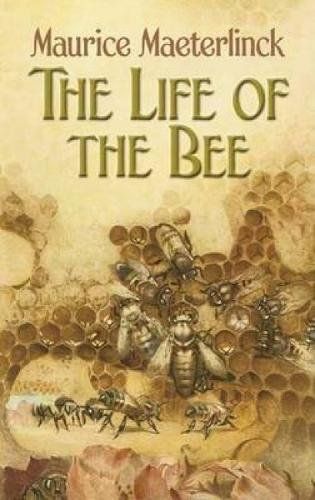
Maurice Maeterlinck, the Belgian writer who received the Nobel Prize in Literature in 1911, was also an enthusiastic and skilled beekeeper. The Life of the Bee, originally published in French in 1901, grew from that direct experience. It is not a scientific treatise, though it describes the mathematically precise architecture of the hive, the organized division of labor among workers, and the stages of the young queen's development. Maeterlinck treats each of these subjects with close observation while steering the book toward broader philosophical territory.

The nuptial flight of the queen bee receives particular attention. Maeterlinck follows her single mating journey high into the air and traces the consequences it holds for the entire colony. He also examines the swarm, the moment when thousands of bees leave their hive together, exploring both its mechanics and its possible meaning. Throughout these passages, the colony becomes a lens for reflecting on cooperation, sacrifice, and the patterns that connect insect societies to questions about how humans organize their own lives.

Maeterlinck writes in a style that is openly poetic rather than detached. The book sits at a crossing point between natural history and essay, using the hive as a concrete starting place for philosophical observation rather than laboratory analysis.

Plot

An enthusiastic and expert beekeeper, Maeterlinck did not intend to write a scientific treatise, even though he details such topics as the mathematically accurate construction of the hive, the division of labor among community members, the life of the young queen and her miraculous nuptial flight, and the movement and meaning of the swarm.

Cover of The Sorrow of Belgium

The Sorrow of Belgium

Hugo Claus

Original language: Dutch · Paperback · ISBN 978-0140188011

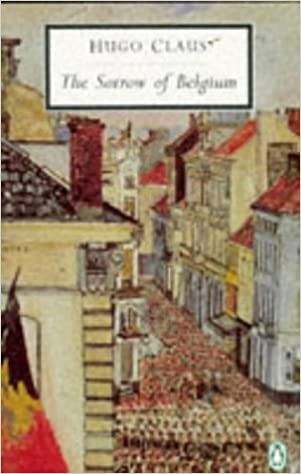
The Sorrow of Belgium, originally published in Dutch in 1983 as Het verdriet van België, is a novel by the Flemish writer Hugo Claus. It follows Louis Seynaeve, an adolescent growing up in the fictional Flemish town of Walle between 1939 and 1947. Louis returns home from his Catholic boarding school to discover that members of his own family are willing to cooperate with the German occupation. The story tracks his observations as wartime loyalty, opportunism, and ordinary life overlap in ways that are difficult for a young person to separate.

The novel is divided into two parts. The first, set largely in the boarding school, establishes Louis as a boy absorbing religion, language, and local culture without yet understanding the political pressures building around him. The second half moves into the occupation years and their aftermath, where collaboration is not a dramatic act of betrayal but something closer to social convenience for many in the community.

Claus uses Louis's limited, evolving perspective to show how a small Flemish town navigates foreign rule, Catholic authority, and Flemish nationalist sentiment during and after the Second World War. The book is widely regarded as Claus's central work and one of the major novels of twentieth-century Dutch-language literature.

Plot

Returning home from his Catholic boarding school to Walle, Louis finds that his family is more than willing to collaborate with the Germans.

Cover of The Taste of Belgium

The Taste of Belgium

Ruth van Waerebeek

Original language: English · Hardcover · ISBN 978-1909808188

The Taste of Belgium is a cookbook by Ruth van Waerebeek containing 250 recipes drawn from Belgian cooking traditions. First published in 1996, the book sold over 50,000 copies before going out of print for several years. It was later reissued after sustained demand from readers and cooks who had used or sought the original edition.

Belgium sits between France, the Netherlands, and Germany, and its cuisine reflects that position. The recipes here range across soups, stews, fish, game, and grains, with dishes such as Flemish carrot soup, smoked trout mousse with watercress sauce, braised partridge with abbey beer and cabbage, veal stew with dumplings, and gratin of Belgian endives. Steamed mussels and steak-frites appear alongside less widely known preparations. A separate section covers desserts that feature Belgian chocolate, including ganache tart and small chocolate nut cakes.

The book's source material notes that Belgium has more three-star restaurants per capita than any other country, France included. Van Waerebeek organizes the collection around home-level cooking rather than restaurant technique, drawing on regional ingredients such as endive, abbey-brewed beer, and locally produced chocolate.

Plot

First published in 1996 (and selling over 50,000 copies) but out of print for many years, now back by popular demand is Ruth Van Waerebeek’s wonderful compendium of Belgian recipes. Belgium is a country that boasts more three-star restaurants per capita than any other nation ̶ including France. In 250 delicious recipes, here is the best of Belgian cuisine. Veal Stew with Dumplings, Mushrooms, and Carrots, Smoked Trout Mousse with Watercress Sauce, Braised Partridge with Cabbage and Abbey Beer, Gratin of Belgian Endives, Flemish Carrot Soup, Steak-Frites, Steamed Mussels, and desserts, some using the best chocolate on earth: Belgian Chocolate Ganache Tart, Almond Cake with Fresh Fruit Topping and Little Chocolate Nut Cakes.

Cover of War and Turpentine

War and Turpentine

Stefan Hertmans

Original language: Dutch · Paperback · ISBN 978-1101872116

War and Turpentine is a novel by the Belgian author Stefan Hertmans, translated from Dutch by David McKay. It centers on Urbain Martien, a man born into a modest Flemish family whose father worked as a church painter. From childhood, Urbain assisted his father in retouching religious paintings, and he carried ambitions of becoming an artist himself. Those ambitions were interrupted first by dangerous work in an iron foundry, and then, decisively, by the First World War.

After the war, Urbain married Gabrielle, the sister of the woman he had loved. He lived with the distance between the life he had imagined and the one the war left him. He died in 1981, leaving behind two handwritten notebooks filled with pieces of his past. His grandson, a writer, used those notebooks as a foundation for reconstructing Urbain's story, moving between documented detail and imaginative recovery of what the notebooks could not fully say.

The book moves between generations as the grandson tries to locate himself within the history he has inherited. Black-and-white illustrations appear throughout, and the novel became an international bestseller. The narrative holds two men together across decades: one shaped by war and unfinished work as a painter, the other reading the traces left on paper.

Plot

The story of Urbain Martien lies con­tained in two notebooks he left behind when he died. In War and Turpentine, his grandson, a writer, retells his grandfather’s story, the notebooks providing a key to the locked chambers of Urbain’s memory. But who is he, really? There is Urbain the child of a lowly church painter; Urbain the young man, who narrowly escapes death in an iron foundry; Urbain the soldier; and Urbain the man, married to his true love's sister, haunted by the war and his interrupted dreams of life as an artist. Wrestling with this tale, the grandson straddles past and present, searching for a way to understand his own part in both.

More from Belgium

See the country page for Belgium for its map, facts and largest cities, or browse books from other countries.

Links go to Amazon; Hookito doesn’t sell books. Know a book that belongs here, or spotted a mistake? Write to submissions@hookito.com.