Hookito

Democratic Republic of the Congo · Books

Books from Democratic Republic of the Congo
4 books from and about Democratic Republic of the Congo: what each is about, the plot, and a note from Professor Kogi.

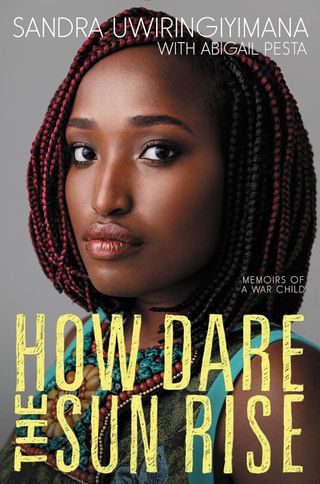
Cover of How Dare the Sun Rise: Memoirs of a War Child

How Dare the Sun Rise: Memoirs of a War Child

Sandra Uwiringiyimana

Original language: English · Hardcover · ISBN 978-0062470140

Sandra Uwiringiyimana was ten years old when armed rebels attacked the refugee camp where her family was sheltering in the Democratic Republic of the Congo. During the assault, her mother and six-year-old sister were killed. Sandra survived after a rebel pointed a gun at her head but did not fire. The memoir opens with these events and follows what came after: displacement, the loss of almost everything familiar, and the slow work of staying alive with her remaining family members.

With no home or resources, the family eventually resettled in the United States through a United Nations refugee program. Arriving in America did not end the difficulties. Sandra faced a new kind of isolation, navigating ethnic identity and cultural distance as a young teenager starting middle school in New York. The gap between her past and her new surroundings posed its own challenges, separate from the violence she had already experienced.

The book traces how Sandra began to process her trauma through art and activism, finding ways to speak publicly about the Congolese communities affected by ongoing conflict. It is a firsthand account of forced migration, adaptation, and the long process of rebuilding a sense of self in unfamiliar circumstances.

Plot

This profoundly moving memoir is the remarkable and inspiring true story of Sandra Uwiringiyimana, a girl from the Democratic Republic of the Congo who tells the tale of how she survived a massacre, immigrated to America, and overcame her trauma through art and activism. Sandra was just ten years old when she found herself with a gun pointed at her head. She had watched as rebels gunned down her mother and six-year-old sister in a refugee camp. Remarkably, the rebel didn’t pull the trigger, and Sandra escaped. Thus began a new life for her and her surviving family members. With no home and no money, they struggled to stay alive. Eventually, through a United Nations refugee program, they moved to America, only to face yet another ethnic disconnect. Sandra may have crossed an ocean, but there was now a much wider divide she had to overcome. And it started with middle school in New York.
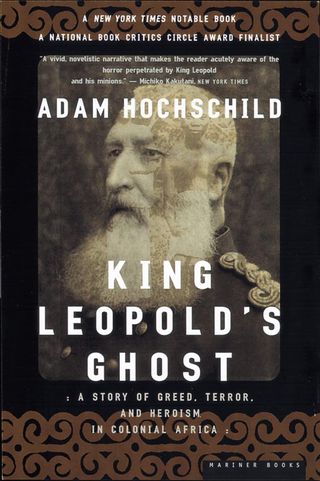
Cover of King Leopold's Ghost

King Leopold's Ghost

Adam Hochschild

Original language: English · Paperback · ISBN 978-0618001903

During the 1880s, European governments divided much of Africa among themselves. King Leopold II of Belgium claimed a huge territory around the Congo River, not as a Belgian colony but as his personal domain. Adam Hochschild's book traces how Leopold organized the extraction of rubber from this region through forced labor and systematic violence, reducing the population by an estimated ten million people. Leopold meanwhile maintained a public image as a philanthropist.

Hochschild follows the individuals who uncovered what was happening in the Congo. Missionaries, journalists, travelers, and activists, many of whom had arrived in Central Africa for unrelated reasons, became witnesses to widespread brutality and began reporting it to audiences in Europe and North America. Figures such as Mark Twain and the Archbishop of Canterbury eventually joined a growing campaign against Leopold's rule. The book presents this campaign as one of the earliest organized international human rights efforts of the twentieth century.

The narrative moves between Brussels, London, and the Congo basin, drawing on letters, official reports, and personal accounts. Hochschild also notes how the territory passed to Belgian state control in 1908, and how many records from Leopold's private administration were destroyed before that transfer took place.

Plot

In the 1880s, as the European powers were carving up Africa, King Leopold II of Belgium seized for himself the vast and mostly unexplored territory surrounding the Congo River. Carrying out a genocidal plundering of the Congo, he looted its rubber, brutalized its people, and ultimately slashed its population by ten million—all the while shrewdly cultivating his reputation as a great humanitarian. Heroic efforts to expose these crimes eventually led to the first great human rights movement of the twentieth century, in which everyone from Mark Twain to the Archbishop of Canterbury participated. It is also the deeply moving portrait of those who fought Leopold: a brave handful of missionaries, travelers, and young idealists who went to Africa for work or adventure and unexpectedly found themselves witnesses to a holocaust.

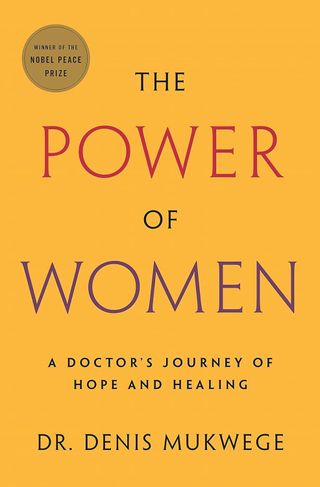
Cover of The Power of Women: A Doctor's Journey of Hope and Healing

The Power of Women: A Doctor's Journey of Hope and Healing

Denis Mukwege

Original language: English · Hardcover · ISBN 978-1250769190

Denis Mukwege is a gynecological surgeon based in Bukavu, in the eastern Democratic Republic of the Congo. Over decades of medical practice, he has treated thousands of women and girls who survived sexual violence linked to armed conflict in the region. In this book, he combines his own life story with a broader examination of why wartime sexual violence receives so little international attention and what structural failures allow it to continue.

Mukwege traces connections between the long-running conflict in the DRC, which has caused an estimated five million deaths over more than twenty years, and patterns of economic exploitation rooted outside the country. He argues that sexual violence in conflict zones cannot be understood in isolation from global supply chains and political interests. His medical and advocacy work has also taken him to South Korea, Latin America, the Middle East, and other parts of Africa, where he has observed similar patterns in women's accounts of assault and its aftermath.

The book addresses the systems that discourage survivors from speaking and the legal and social structures that would need to change in order to support them. Mukwege discusses what recognition and compensation for victims could look like, and why indifference, both distant and local, sustains the problem. He was awarded the Nobel Peace Prize in 2018.

Plot

Dr. Mukwege’s dramatic personal story is interwoven throughout as he explores the bigger issues that have become a focus of his advocacy. He will seek to explain why sexual violence is so often overlooked during war, and how governments need to recognize and compensate victims. He will also stress the importance of breaking down the taboos surrounding assault, and the necessity of building a system that supports women who come forward. His words advocate for saying ‘no’ to indifference and he asks readers to reckon with the West’s involvement in perpetuating sexual violence in places like the Democratic Republic of Congo, and to confront the abuse taking place in their own communities. Sexual violence does not occur in a vacuum. The conflict in the Democratic Republic of Congo, which has raged for over 20 years and has claimed an estimated 5 million lives, is inseparable from Western patriarchy and economic colonization. And this cycle of violence and spoils is not limited to Congo. Dr. Mukwege’s work has led him to South Korea, Latin America, the Middle East, and elsewhere in Africa, where he has found striking similarities in women’s testimonies.

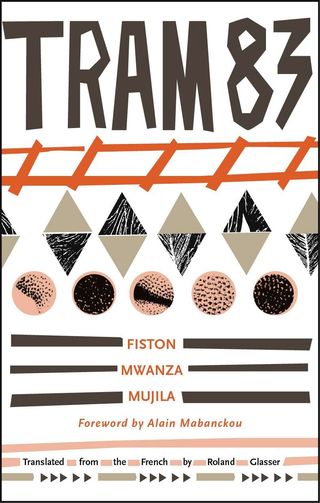
Cover of Tram 83

Tram 83

Fiston Mwanza Mujila

Original language: French · Paperback · ISBN 978-1941920046

Tram 83 is the debut novel of Fiston Mwanza Mujila, a Congolese writer from Lubumbashi. Almost all of it unfolds inside a nightclub of that name, in an unnamed city-state that has broken away from a larger country. Two friends meet there: Lucien, a writer back from abroad, and Requiem, a hustler working every angle the city offers. Around them press miners, students, musicians, and foreign prospectors drawn by mineral wealth.

The structure borrows from jazz. Phrases return like refrains, conversations overlap, and the pace swings between frantic energy and sudden stillness. Mujila builds the club through accumulation rather than conventional plot, layering voices and transactions until the place becomes the subject. The setting is fictional, yet it echoes mining towns in southeastern Congo, where competition over copper and cobalt shapes daily life.

Mujila wrote the book in French, and it first appeared in France in August 2014, where it drew wide notice and won awards. The crowd inside the club speaks many languages and comes from many countries, so the novel treats a single African boomtown as one node in a connected global economy rather than an isolated corner.

Plot

Two friends, one a budding writer home from abroad, the other an ambitious racketeer, meet in the most notorious nightclub—Tram 83—in a war-torn city-state in secession, surrounded by profit-seekers of all languages and nationalities. Tram 83 plunges the reader into the modern African gold rush as cynical as it is comic and colorfully exotic, using jazz rhythms to weave a tale of human relationships in a world that has become a global village.

More from Democratic Republic of the Congo

See the country page for Democratic Republic of the Congo for its map, facts and largest cities, or browse books from other countries.

Links go to Amazon; Hookito doesn’t sell books. Know a book that belongs here, or spotted a mistake? Write to submissions@hookito.com.