Hookito

Republic of the Congo · Books

Books from Republic of the Congo
4 books from and about Republic of the Congo: what each is about, the plot, and a note from Professor Kogi.

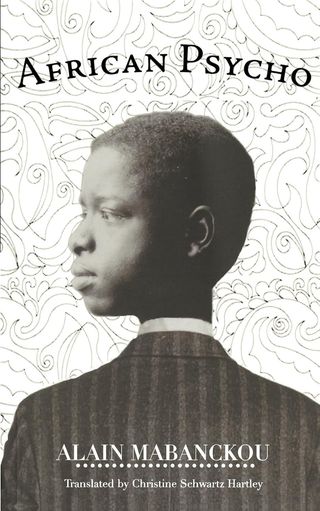
Cover of African Psycho

African Psycho

Alain Mabanckou

Original language: French · Paperback · ISBN 978-1933368504

Gregoire Nakobomayo is a small-time criminal in the Republic of the Congo who has settled on a grim objective: he intends to murder his girlfriend, Germaine. The plan has been taking shape for a while, but carrying it out proves far harder than he expected. For guidance, Gregoire turns to Angoualima, a notorious serial killer whose reputation looms large in local memory. Angoualima is dead, yet that does not stop Gregoire from conducting long, detailed conversations with him, treating the dead man as both advisor and model.

As Gregoire prepares, he begins folding Angoualima's criminal history into his own story, blurring the line between the two figures. His repeated failures to act on the plan pile up in ways that undercut his self-image as a dangerous man. The novel uses dark comedy to expose Gregoire's incompetence and self-delusion, building its tension from the gap between his aspirations and his actual capabilities.

Alain Mabanckou, born in Pointe-Noire in the Republic of the Congo, wrote the novel in French. It was praised in France for its inventive language and sharp humor applied to unsettling material. The English translation brought the book to a wider audience outside the French-speaking world.

Plot

Gregoire Nakobomayo, a petty criminal, has decided to kill his girlfriend Germaine. He’s been planning the crime for some time. But the act of murder requires a bit of psychological and logistical preparation. Luckily, he has a mentor to call on, the far more accomplished serial killer Angoualima. The fact that Angoualima is dead doesn’t prevent Gregoire from holding lengthy conversations with him. Little by little, Gregoire interweaves Angoualima’s life and criminal exploits with his own. Continuing with the plan despite a string of botched attempts and abject failures, Gregoire’s final shot at offing Germaine leads to his abrupt unraveling. Lauded in France for its fresh and witty style, African Psycho’s inventive use of language surprises and delights, relieving the reader through an injection of humor into a plainly disturbing subject.
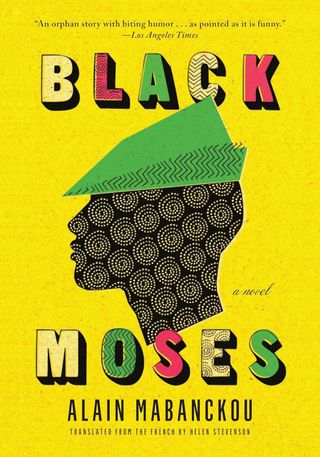
Cover of Black Moses

Black Moses

Alain Mabanckou

Original language: French · Hardcover · ISBN 978-1620972939

Black Moses follows a boy whose full name, Tokumisa Nzambe po Mose yamoyindo abotami namboka ya Bakoko, translates roughly as a prayer of thanks for a Moses born on ancestral land. Everyone calls him Moses. He grows up in an orphanage in 1970s Congo-Brazzaville, overseen by Dieudonne Ngoulmoumako, a petty official who runs the place with spite rather than care. Moses is bullied by twin orphans named Songi-Songi and Tala-Tala until an act of hot-pepper revenge turns the three into unlikely allies.

The trio escapes the orphanage and relocates to Pointe-Noire, the port city on the Atlantic coast of the Republic of the Congo. There they form a small gang living off petty theft, and Moses is drawn deeper into the city's underworld during a period of political repression in the late 1970s and 1980s. The novel tracks Moses's growing entanglement with Pointe-Noire's margins and his gradual mental unraveling as pressures mount around him.

Alain Mabanckou, a Congolese-French writer and finalist for the Man International Booker Prize, sets this book within a larger cycle of novels based in and around Pointe-Noire. The French press compared the story to Oliver Twist relocated to 1970s Africa. Black Moses received the Hurston-Wright Legacy Award.

Plot

Greeted with wildly enthusiastic reviews on publication, Alain Mabanckou's riotous novel begins in an orphanage in 1970s Congo-Brazzaville run by a malicious political stooge who makes the life of our hero, Tokumisa Nzambe po Mose yamoyindo abotami namboka ya Bakoko―his name means "Let us thank God, the black Moses is born on the lands of the ancestors," but most people just call him Moses―very difficult. Moses is also terrorized by his two fellow orphans―the twins Songi-Songi and Tala-Tala―but after Moses exacts revenge on them by lacing their food with hot pepper, the twins take Moses under their wing, escape the orphanage, and move to the bustling port town of Pointe-Noire, where they form a gang that survives on petty theft.

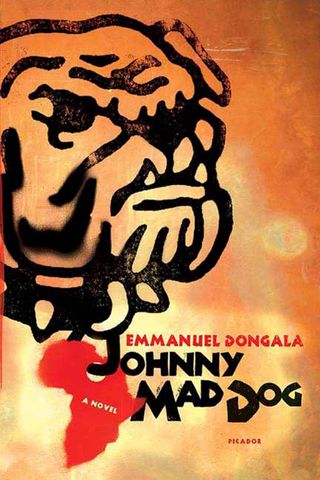
Cover of Johnny Mad Dog

Johnny Mad Dog

Emmanuel Dongala

Original language: French · Paperback · ISBN 978-0312425302

Johnny Mad Dog is a novel by Emmanuel Dongala set against the backdrop of civil conflict in Congo. The story follows two sixteen-year-olds whose lives move in opposite directions under the same pressure of war. Johnny Mad Dog is a fighter in a rebel faction working to seize control of the country. Laokolé is a student whose central ambition is to finish high school. Their alternating voices carry the narrative forward as their paths eventually cross.

Dongala, born in the Republic of the Congo, structures the novel around this pairing of two young people shaped by the same circumstances but responding to them in radically different ways. Johnny's chapters convey the volatile logic of an armed teenager caught up in factional violence, while Laokolé's perspective grounds the story in the ordinary goals that war displaces. The contrast gives the book its tension without simplifying either character into a symbol.

The novel has drawn praise from writers including Philip Roth and Chinua Achebe. Dongala's approach treats the experience of young people in wartime with directness, avoiding both spectacle and sentimentality while holding close to the physical realities of life in a country torn apart by competing armed groups.

Plot

Johnny Mad Dog, age sixteen, is a member of a rebel faction bent on seizing control of war-torn Congo. Laokolé, at the same age, simply wants to finish high school. Together, they narrate a crossing of paths that has explosive results. Set amid the chaos of West Africa's civil wars, and acclaimed by such writers as Philip Roth and Chinua Achebe, Emmanuel Dongala's powerful, exuberant, and terrifying new work is a coming-of-age story like no other.

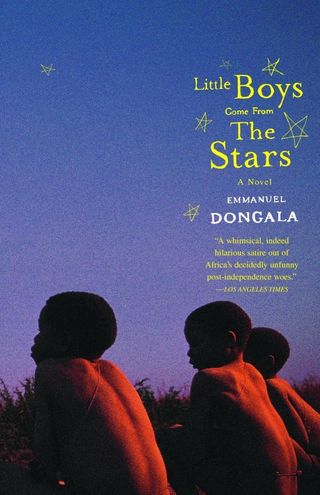
Cover of Little Boys Come from the Stars

Little Boys Come from the Stars

Emmanuel Dongala

Original language: English · Paperback · ISBN 978-0385721226

Little Boys Come from the Stars unfolds in an unnamed country in equatorial Africa, where a boy named Michel is known as Matapari, a nickname meaning trouble that followed his unusual birth. His everyday tastes are global: Reebok shoes, bottles of Coke, comics from Japan, and American action films. Around him, adults handle the unsteady politics of a post-colonial state where rulers rebrand themselves as democrats.

The household pulls in several directions. Matapari's father is a scholarly recluse who spends his energy arguing for African contributions to the Western past. His mother practices a devout but muddled Catholicism. His uncle chases a senior place in whatever government holds power. When the family lands at the centre of a movement for democracy, the country's tensions turn violent.

Emmanuel Dongala gives the telling to Matapari himself, and the boy's voice sets the tone. He grows up among talking drums, the Internet and satellite television, and he reports corruption and upheaval with an ironic innocence that keeps the satire close to comedy. The gap between his plain observations and the adult manoeuvring around him shapes the whole book.

Plot

Set in an unnamed country in equatorial Africa, it tells the story of Michel, a precocious teen dubbed Matapari (“trouble”) because of his extraordinary birth. Though his father is a reclusive scholar, his mother a pious though confused Catholic, and his uncle a shameless opportunist determined to gain power in the shifting politics of their post-colonial nation, Matapari remains an unsullied child who wears Reeboks, drinks Coke, reads Japanese comics, and watches Rambo. But when his family becomes the nucleus of the revolution for democracy, Matapari proves to be the ideal narrator for this story of violent upheaval and bloody corruption–a voice whose ironic innocence makes bearable and even humorous the awful realities of the world it describes.

More from Republic of the Congo

See the country page for Republic of the Congo for its map, facts and largest cities, or browse books from other countries.

Links go to Amazon; Hookito doesn’t sell books. Know a book that belongs here, or spotted a mistake? Write to submissions@hookito.com.