Hookito

People's Republic of China · Books

Books from People's Republic of China
11 books from and about People's Republic of China: what each is about, the plot, and a note from Professor Kogi.

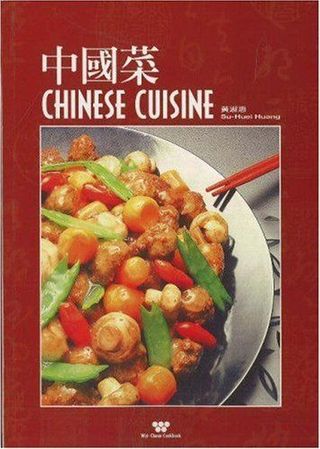
Cover of Chinese Cuisine

Chinese Cuisine

Huang Su-Huei

Original language: Chinese · Hardcover · ISBN 978-0941676083

Chinese Cuisine by Huang Su-Huei is a practical cookbook that covers a broad selection of popular Chinese dishes. The book was the first in a series of cookbook titles by Huang, who became known for her detailed approach to Chinese home cooking. It is organized into sections that address the tools, techniques, seasonings, vegetables, and specialty ingredients common across different styles of Chinese cooking.

Each section is designed as a reference, giving readers clear explanations before they begin a recipe. Guidance on utensils and cooking methods helps newcomers understand why certain equipment and techniques matter, while the ingredient sections introduce items that may be unfamiliar outside Chinese kitchens. This structure makes the book useful both for following specific recipes and for building a broader working knowledge of Chinese culinary practice.

Huang Su-Huei based her work in Taiwan, where she developed and tested recipes for an international audience. The book has remained in use over many years, serving as a starting point for people approaching Chinese cooking for the first time and as a reference for those returning to confirm proportions, substitutions, or technique.

Plot

Individual sections provide clear guidance for utensils, cooking method, seasonings, vegetables, and special ingredients used in Chinese Cooking. Many people are still discovering the wonders of Chinese cooking through this book and use it as a reference source.
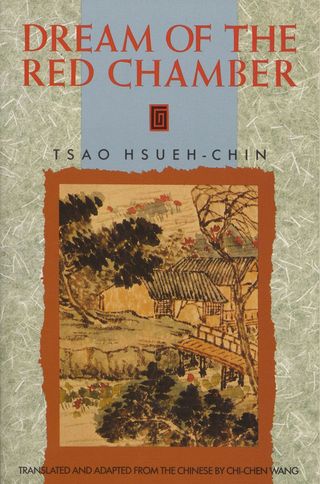
Cover of Dream of the Red Chamber

Dream of the Red Chamber

Cao Xueqin

Original language: Chinese · Paperback · ISBN 978-0385093798

Dream of the Red Chamber, written by Cao Xueqin during the Qing dynasty in the eighteenth century, follows the life of Jia Baoyu, a boy born into a powerful aristocratic household with a piece of jade in his mouth. The novel centers on four interconnected elite families, the Jia, Shi, Wang, and Xue clans, and traces their gradual decline. Baoyu grows up surrounded by the women and girls of the household, developing close bonds with his cousins Lin Daiyu and Xue Baochai. The emotional ties among these three characters form the main thread of the story.

Baoyu is at odds with the expectations placed on him by his strict father and the rigid social codes of his world. Rather than pursue the scholarly career and official ambitions his family demands, he is drawn to poetry, companionship, and a life shaped by personal feeling. The novel uses the fall of one great household to reflect broader patterns of social and political change during the late imperial period in China.

The book is one of the Four Great Classical Novels of Chinese literature. It exists in multiple versions and has been translated into numerous languages. The original manuscript circulated in handwritten copies before Cao Xueqin's death, and the authorship of its final chapters remains a subject of scholarly discussion.

Plot

The son of a wealthy, noble family is born with a magic stone in his mouth. A darling and admirer of all the women and girls in the household, he rebels against his stern father and the social barriers of the time.

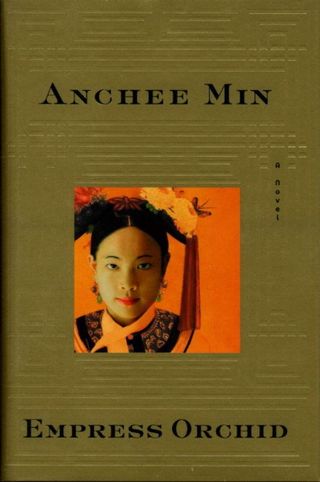
Cover of Empress Orchid

Empress Orchid

Anchee Min

Original language: English · Hardcover · ISBN 978-0618068876

Empress Orchid by Anchee Min is a historical novel set in mid-nineteenth-century China, inside the walls of the Forbidden City. It follows a young woman named Orchid, born into an aristocratic family that has fallen into poverty. When she is selected as a low-ranking concubine for the emperor, she enters a world of rigid hierarchy, ceremony, and constant political maneuvering among hundreds of imperial women and court officials.

Orchid's intelligence and resourcefulness become her means of survival in a system designed to keep concubines powerless. The novel traces her gradual rise through the ranks of the imperial court, where alliances shift quickly and proximity to the emperor determines status and safety. Min draws on the historical figure of Empress Dowager Cixi, who governed China during the final decades of the Qing dynasty, shaping the fictional Orchid's story around real events and palace customs of the period.

The book gives sustained attention to the physical details of court life, from clothing and food to the architecture of the imperial compound. Political tensions between reformers and traditionalists within the court form a steady backdrop as Orchid navigates questions of loyalty, ambition, and self-preservation.

Plot

A fictional portrait of the infamous last empress of China follows the life of Orchid, a beautiful teenager from an aristocratic but impoverished family, who is chosen to become a low-ranking concubine of the emperor and who uses her seductive talents and intelligence to rise to a position of power in the Chinese court.

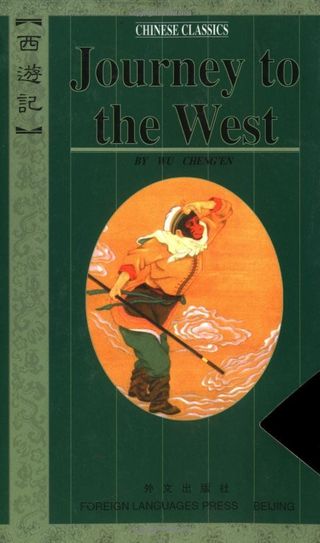
Cover of Journey to the West

Journey to the West

Wu Cheng'en

Original language: Chinese · Paperback · ISBN 978-7119016634

Journey to the West is a Chinese mythological novel attributed to Wu Cheng'en, written during the Ming Dynasty and drawing on older folktales. The story spans 100 chapters and follows the Tang Dynasty monk Sanzang and his three companions, Monkey, Pig, and Friar Sand, as they travel westward to obtain Buddhist scriptures. The opening chapters tell the origin of the Monkey King and his revolt against the heavens, while later sections introduce Sanzang's background and the reasons behind his quest.

The bulk of the novel tracks the group's long westward road, where they face demons, monsters, treacherous landscapes, and supernatural obstacles. Episodes such as crossing the Fiery Mountain give the story a serial structure, with each challenge testing the travelers in different ways. Monkey is the most prominent figure, a trickster whose cunning and defiance sit alongside genuine loyalty to his companions. The novel blends folk comedy, allegory, and religious themes drawn from Buddhism, Taoism, and Confucianism.

The work has held a central place in Chinese literature for centuries and remains one of the most widely read novels in East Asia. Its characters, particularly the Monkey King, have appeared across countless adaptations in theatre, film, television, and games.

Plot

Consisting of 100 chapters, this fantasy relates the adventures of a Tang Dynasty (618-907) priest Sanzang and his three disciples, Monkey, Pig, and Friar Sand, as they travel west in search of Buddhist Sutra. The first seven chapters recount the birth of the Monkey King and his rebellion against Heaven. Then in chapters eight to twelve, we learn how Sanzang was born and why he is searching for the scriptures, as well as his preparations for the journey. The rest of the story describes how they vanquish demons and monsters, tramp over the Fiery Mountain, cross the Milky Way, and after overcoming many dangers, finally arrive at their destination - the Thunder Monastery in the Western Heaven - and find the Sutra.

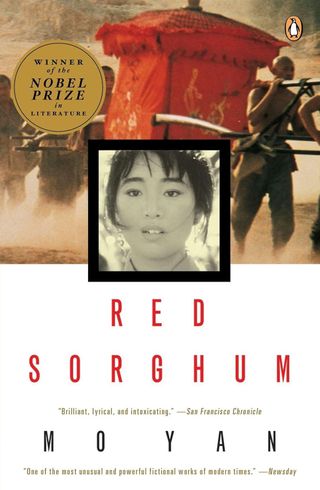
Cover of Red Sorghum

Red Sorghum

Mo Yan

Original language: Chinese · Paperback · ISBN 978-0140168549

Red Sorghum follows three generations of one family in rural Shandong Province, told through layered flashbacks rather than a straight line. Much of the action falls in the late 1930s, during the Japanese invasion of China, and moves between armed conflict and the ordinary work of village life. The sorghum fields themselves hold the story, serving as farmland, hiding place, and battleground.

Mo Yan builds the book from local legend, family memory, and folk storytelling, so history and fable sit close together. The characters are caught between Japanese troops and rival Chinese fighters, and the earlier generations reach the page through inherited accounts rather than direct witness. Scenes of extreme violence alternate with close attention to the land, the weather, and the harvest.

The novel won major literary awards in China and gained wider attention through Zhang Yimou's film adaptation, which received an Oscar nomination. Mo Yan was later awarded the Nobel Prize in Literature. Sorghum, the grain named in the title, grows widely across northern China and is used both as food and for distilled liquor.

Plot

Spanning three generations, this novel of family and myth is told through a series of flashbacks that depict events of staggering horror set against a landscape of gemlike beauty, as the Chinese battle both Japanese invaders and each other in the turbulent 1930s. A legend in China, where it won major literary awards and inspired an Oscar-nominated film directed by Zhang Yimou, Red Sorghum is a book in which fable and history collide to produce fiction that is entirely new—and unforgettable.

Cover of Tao Te Ching

Tao Te Ching

Lao Tzu

Original language: Classical Chinese · Paperback · ISBN 978-1690029991

The Tao Te Ching is a short philosophical text compiled in China roughly 2,500 years ago. It is attributed to Lao Tzu, a name usually understood as the old master. Its brief chapters meditate on the Tao, often rendered in English as the Way, and consider how this underlying principle works in nature, in governance, and in ordinary life, frequently through paradox and reversal.

In classical Chinese, a single character can carry a wide and sometimes contradictory range of meanings, and many of the book's terms have no exact English counterpart. Jonathan Star's edition responds to this by pairing an English translation with a verbatim, character-by-character rendering of the original, so that readers can see the possible senses held inside each line.

That second layer also allows comparison between modern translators, whose versions of the same passage often diverge widely. Only the Bible is said to have been translated more often than this text, yet its language keeps resisting simple equivalence in English, and the question of what Lao Tzu meant stays open across schools and centuries.

Plot

The Tao Te Ching is a series of meditations on the mysterious nature of the Tao--the Way, the Light, the very Source of all existence. According to Lao Tzu (a name meaning "the old master"), the Tao is found where we would least expect it

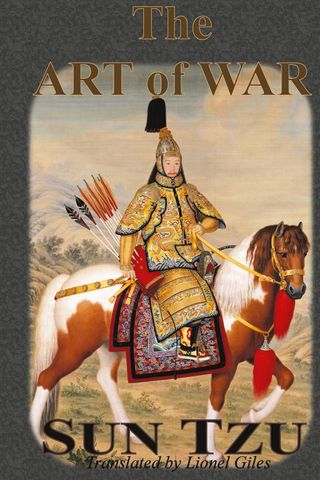
Cover of The Art of War

The Art of War

Sun Tzu

Original language: Chinese · Hardcover · ISBN 978-1640320161

The Art of War is a military treatise attributed to Sun Tzu, a Chinese strategist believed to have lived during the late Spring and Autumn period, roughly 2,500 years ago. The text is organized into thirteen chapters, each addressing a distinct aspect of conflict and strategy. Topics range from initial planning and the assessment of conditions to questions of terrain, the use of spies, and the role of deception. Sun Tzu emphasizes calculation before action, arguing that outcomes are often shaped well before any direct confrontation begins.

This particular edition presents the thirteen chapters in an abridged English form, offering the core teachings in a compressed format intended for reflection. Sections such as Tactical Dispositions, Maneuvering, and Five Essentials for Victory lay out principles of positioning, timing, and resource management. Although the original context is ancient warfare in what is now China, the book's structured approach to competition and decision-making has led to its wide adoption in fields far from the battlefield, including business strategy, sports coaching, and negotiation. The brevity of each chapter keeps the focus on Sun Tzu's direct statements rather than extended commentary.

Plot

ThisAbridged English value reproduction of THE ART OF WAR is wisdom on competition from 2,500 years ago. It lists the 13 Chapters in bare form for the reader to review and contemplate Sun Tzu’s teachings as it applies to their life. THE ART OF WAR is divided into 13 chapters covering all the steps of battle, be it in the office or across continents. Topics include, “Five Essentials for Victory,” “Tactical Dispositions,” “Maneuvering,” and many more.

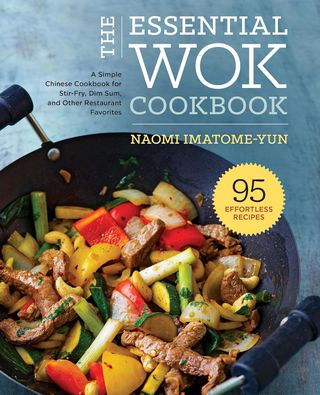
Cover of The Essential Wok Cookbook

The Essential Wok Cookbook

Naomi Imatome-Yun

Original language: English · Hardcover · ISBN 978-1638788010

The Essential Wok Cookbook by Naomi Imatome-Yun is a home cooking guide focused on Chinese dishes prepared in a wok. The book positions itself as a practical alternative to restaurant takeout, with an emphasis on reducing added salt, oil, and MSG while keeping the flavors familiar. It covers foundational skills such as how to choose a wok, how to season it before first use, and how to maintain it over time. These sections address a real gap for cooks who may own a wok but feel uncertain about basic care and heat control.

The recipe collection draws on Chinese comfort food traditions, aiming to reproduce dishes commonly found on restaurant menus. The approach leans toward accessibility, using ingredients and techniques suited to a home kitchen rather than a professional setup. By focusing on speed and affordability alongside flavor, the book targets everyday meals rather than elaborate weekend projects.

A wok's wide, curved shape allows food to be tossed quickly over high heat, which is central to stir-frying. Understanding that single principle already opens the door to a broad range of Chinese cooking methods, and the cookbook uses it as a starting point for building confidence with the pan.

Plot

Ordering Chinese takeout is easy―but it's definitely not the healthiest or most affordable way to enjoy Chinese comfort food at home. With this simple cookbook in your kitchen and a mighty wok in your hand, Chinese favorites are now quicker, healthier, and cheaper than delivery. The Essential Wok Cookbook is your guide to mastering the wok, the versatile pan that makes possible all of the Chinese restaurant dishes you love―no extra salt, oil, or MSG required. Beyond tips for selecting, seasoning, and caring for your wok, this wok recipe cookbook also provides:

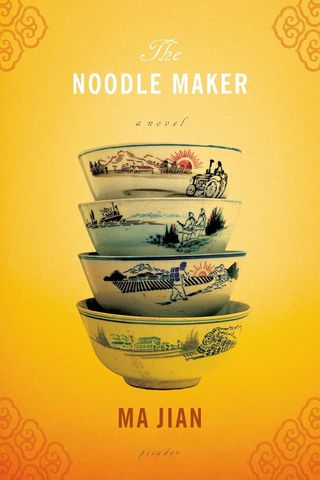
Cover of The Noodle Maker

The Noodle Maker

Mi Jian

Original language: Chinese · Paperback · ISBN 978-0312424794

Two men meet for their weekly dinner in a Chinese city. One is a writer who keeps his best material to himself. Across a long, drink-filled evening he describes the stories he would set down if he had the nerve. Each follows ordinary people whose lives bend under political pressure. One tale concerns a young man who buys a disused kiln and runs a private crematorium, taking satisfaction in his authority over the bodies of officials.

Another follows an actress whose heartbreak ends in a fatal public act involving a wild tiger, watched without emotion by the man who left her. The title image ties the pieces together: citizens are pulled and pressed like balls of dough by a power that is absolute and hard to read. Ma Jian works through dark comedy and surreal episodes.

The stories-within-a-story structure lets the unnamed writer voice what his public silence forbids, covering work, art, love, and the rituals around death. The novel is set in the People's Republic of China and was written in Chinese. Its tone moves between satire and bleakness, sometimes inside a single scene.

Plot

Two men meet for dinner each week. Over the course of one of these drunken evenings, the writer recounts the stories he would write, had he the courage: a young man buys an old kiln and opens a private crematorium, delighting in his ability to harass the corpses of police officers and Party secretaries, while swooning to banned Western music; a heartbroken actress performs a public suicide by stepping into the jaws of a wild tiger, watched nonchalantly by her ex-lover. Extraordinary characters inspire him, their lives pulled and pummeled by fate and politics, as if they are balls of dough in the hands of an all-powerful noodle maker.

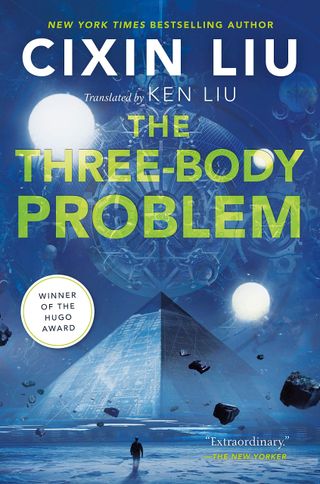
Cover of The Three-Body Problem

The Three-Body Problem

Liu Cixin

Original language: Chinese · Paperback · ISBN 978-0765382030

The Three-Body Problem begins during China's Cultural Revolution, when a secret military project transmits signals into space hoping to reach extraterrestrial life. The project succeeds. A distant alien civilization, facing its own existential crisis, detects the signal and begins preparing to reach Earth. The story moves between decades, connecting political upheaval on Earth with a slow-building interstellar threat.

On Earth, knowledge of the alien contact fractures into opposing groups. Some see the approaching civilization as a force that could correct humanity's failures and welcome its arrival. Others recognize the contact as a danger to the entire planet and work to resist it. These divisions play out through scientists, officials, and ordinary people caught between hope, despair, and calculation. A mysterious online game built around an unsolvable physics problem, the three-body problem of celestial mechanics, serves as one of the novel's central devices, connecting players to the alien world's chaotic conditions.

Liu Cixin originally published the novel in Chinese in 2008. The English translation by Ken Liu appeared in 2014. It won the Hugo Award for Best Novel in 2015, making it the first translated novel to receive that prize. The book is the opening volume of a trilogy known as Remembrance of Earth's Past.

Plot

Set against the backdrop of China's Cultural Revolution, a secret military project sends signals into space to establish contact with aliens. An alien civilization on the brink of destruction captures the signal and plans to invade Earth. Meanwhile, on Earth, different camps start forming, planning to either welcome the superior beings and help them take over a world seen as corrupt or to fight against the invasion. The result is a science fiction masterpiece of enormous scope and vision.

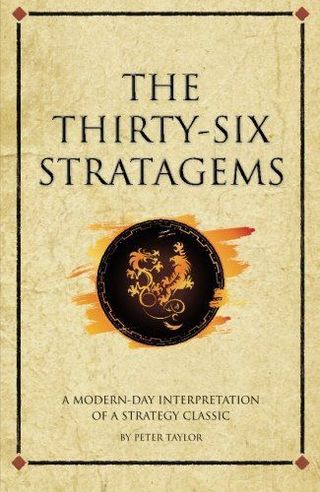
Cover of Thirty-Six Stratagems

Thirty-Six Stratagems

Unknown

Original language: Chinese · The Thirty-Six Stratagems: A Modern Interpretation Of A Strategy Classic · ISBN 978-1906821838

The Thirty-Six Stratagems is a collection of Chinese strategic principles, each described in a short passage and often illustrated with historical examples from politics and warfare. The text organizes its stratagems into six chapters, grouping them by the type of situation they address, from positions of strength to moments of desperation. The authorship is unknown, and the essay's exact date of composition remains uncertain, though it draws on ideas found across centuries of Chinese military and political thought.

Each stratagem carries a compact title, sometimes only a few characters long, that compresses a tactical idea into a memorable phrase. Some deal with deception and misdirection, others with patience, retreat, or turning an opponent's strength into a weakness. The stratagems apply not only to battlefields but also to diplomacy, negotiation, and ordinary social life. Their brevity makes them closer to proverbs than to detailed instruction, leaving readers to interpret how each principle fits a given situation.

The text became widely known in China as a popular companion to more formal military classics. Its thirty-sixth and final stratagem, often paraphrased as knowing when to withdraw, is among the most frequently quoted in everyday Chinese speech.

Plot

The 36 Stratagems is a Chinese essay used to illustrate a series of stratagems used in politics and in war, as well as in civilian life, often through unorthodox means. Also available for free in French at the 2nd link.

More from People's Republic of China

See the country page for People's Republic of China for its map, facts and largest cities, or browse books from other countries.

Links go to Amazon; Hookito doesn’t sell books. Know a book that belongs here, or spotted a mistake? Write to submissions@hookito.com.