Hookito

Algeria · Books

Books from Algeria

10 books from and about Algeria: what each is about, the plot, and a note from Professor Kogi.

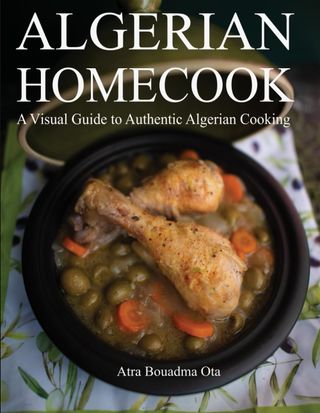
Cover of Algerian Homecook: A Visual Guide to Authentic Cooking

Algerian Homecook: A Visual Guide to Authentic Cooking

Atra Bouadma Ota

Original language: English · Paperback · ISBN 979-8873117413

Algerian Homecook is a visual cookbook by Atra Bouadma Ota featuring 23 recipes drawn from Algerian home cooking and street food traditions. The book covers dishes that are widely prepared and valued across Algeria, including methods for making couscous, a grain dish central to North African cuisine. Each recipe is accompanied by photographs intended to guide readers through the preparation steps.

Beyond the recipes, the book includes images of Algeria itself along with cultural context and background notes on the food and its place in daily life. Algeria spans a large stretch of North Africa, from Mediterranean coastline in the north to Saharan desert in the south, and its cooking reflects influences from Amazigh, Arab, Ottoman, and French traditions. The collection is structured as both a cookbook and a short visual introduction to the country.

The 23 recipes represent a focused selection rather than an encyclopedic survey. Street food sits alongside home-cooked dishes, giving a sense of the range between casual and family cooking. The book positions itself as a starting point for readers outside Algeria who have had limited access to the country's food culture.

Plot

"Within the pages of this book, I present 23 remarkable recipes that hold a special place in the hearts of Algerians. From the time-honored techniques employed in crafting couscous to the tantalizing street food that beckons visitors to Algeria, this collection offers a taste of the nation's culinary treasures. Moreover, in the spirit of travel, I have included captivating imagery of the country, cultural insights, and enlightening explanations that are sure to captivate and surprise."
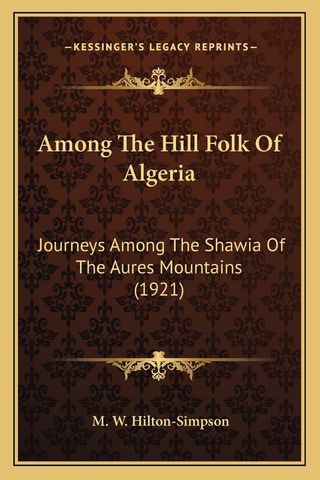
Cover of Among The Hill Folk Of Algeria

Among The Hill Folk Of Algeria

M. W. Hilton-Simpson

Original language: English · Paperback · ISBN 978-1164066378

Among The Hill Folk Of Algeria is a travelogue by M. W. Hilton-Simpson, first published in 1921. The book records the author's time spent with the Shawia people in the Aurès Mountains of eastern Algeria. Hilton-Simpson describes their clothing, food, and building styles, as well as the landscape, plants, and wildlife of the surrounding mountain region. At the time of his visits, the Shawia had not been fully incorporated into French colonial administration, and the book captures aspects of daily life that were already under pressure from outside forces.

Hilton-Simpson pays close attention to the practical details of Shawia society. He notes how architecture and domestic routines reflected the terrain and climate of the Aurès range, a rugged area of peaks and gorges in what is now northeastern Algeria. The book also touches on the difficulties of communication between the author and the communities he encountered, and on the broader tensions surrounding French colonial presence in the region.

The Aurès Mountains later became significant during the Algerian War of Independence in the 1950s. Hilton-Simpson's account, written decades earlier, offers a ground-level record of a period before many of those changes took shape. The book sits at the intersection of travel writing, early ethnography, and colonial-era observation.

Plot

The book details the author's journeys among the Shawia people, who live in the Aures Mountains of Algeria. Hilton-Simpson's account provides a fascinating insight into the customs, traditions, and daily lives of these indigenous people, who had not yet been fully colonized by the French. The author documents his encounters with Shawia tribespeople, describing their dress, food, and unique architecture. He also explores the region's geography, flora, and fauna, providing a vivid picture of the natural environment. Throughout the book, Hilton-Simpson reflects on the challenges of cross-cultural communication and the complexities of colonialism. His writing is both informative and engaging, making ""Among The Hill Folk Of Algeria"" a valuable resource for anyone interested in North African history, anthropology, or travel writing.

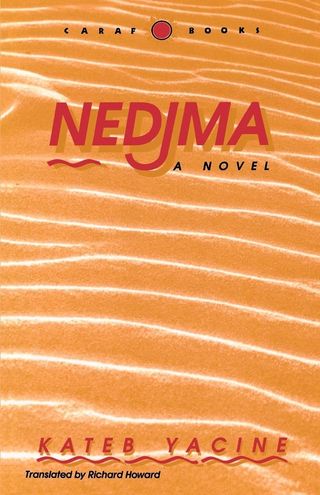
Cover of Nedjma

Nedjma

Kateb Yacine

Original language: French · Paperback · ISBN 978-0813913131

Nedjma, by Kateb Yacine, follows four young men whose lives circle around a single woman. The narrative is deliberately fragmented, moving between voices, time periods, and viewpoints in ways that resist straightforward reading. Nedjma is married to a man she does not love and pursued by several suitors, yet she also stands as a figure for Algeria itself. Her presence pulls the book between personal desire and collective memory.

The story reaches back across centuries, from the Roman conquest of Numidia through Ottoman expansion to French colonial rule. Kateb ties these layers to the tangled kinship and rivalry among his characters, linking private struggle to longer patterns of conquest and resistance. The novel first appeared in French in 1956, during the early years of the Algerian war of independence.

Rather than one ordered plot, the book offers repetitions, returns, and shifting narrators, a form closer to spoken storytelling than to conventional realist fiction. Its subjects include ancestry, land, violence, tenderness, and the search for freedom and happiness, all gathered around the woman whose name gives the novel its title.

Plot

Its intricate plot involves four men in love with a beautiful woman whose name serves as the title of the novel. Nedjma is the central figure of this disorienting novel, but more than the unfortunate wife of a man she does not love, more than the unwilling cause of rivalry among many suitors, Nedjma is the symbol of Algeria. Kateb has crafted a novel that is the saga of the founding ancestors of Algeria through the conquest of Numidia by the Romans, the expansion of the Ottoman Empire, and the French colonial conquest. Nedjma is symbolic of the rich and sometimes bloody past of Algeria, of its passions, of its tenderness; it is the epic story of a human quest for freedom and happiness.

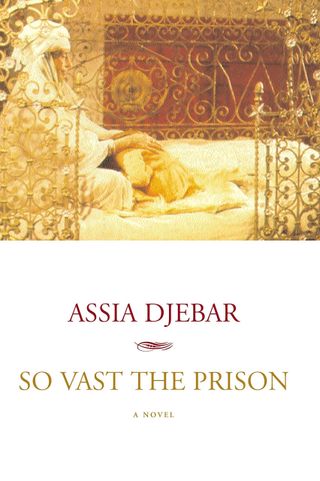
Cover of So Vast the Prison

So Vast the Prison

Assia Djebar

Original language: French · Paperback · ISBN 978-1583220672

So Vast the Prison by Assia Djebar is a semi-autobiographical novel set in Algeria, built around the life of a modern, educated woman navigating a society shaped by male authority. The book unfolds across several distinct sections, moving between personal experience and broader historical ground. One thread follows the narrator through love, marriage, and the constraints placed on women in both domestic and public life. Another turns to ancient history, tracing the decipherment of an old Berber inscription found at Dougga, connecting language and identity across centuries.

Djebar wrote in French about an Arab and Berber society, and this choice of language is itself a tension running through the novel. Writing in the colonizer's language while drawing on the oral traditions of indigenous culture places the narrator between worlds. The book also reflects on Algeria's post-colonial condition and on what exile means for someone whose ties to home remain strong but complicated.

The structure moves freely between memoir, historical investigation, and reflection on filmmaking and storytelling. Djebar uses these shifts to examine how women's voices persist or disappear within cultures that have favored oral transmission over written record.

Plot

So Vast the Prison is the double-threaded story of a modern, educated Algerian woman existing in a man's society, and, not surprisingly, living a life of contradictions. Djebar, too, tackles cross-cultural issues just by writing in French of an Arab society (the actual act of writing contrasting with the strong oral traditions of the indigenous culture), as a woman who has seen a revolution in a now post-colonial country, and as an Algerian living in exile.

Cover of The Art of Losing

The Art of Losing

Alice Zeniter

Original language: French · Hardcover · ISBN 978-0374182304

Naïma grows up in Normandy with only fragments of Algeria: dishes her grandmother prepares, a language Naïma cannot follow, and a handful of objects carried out during a hasty departure. Her grandfather is dead. Her father, who has built a thoroughly French life, says he remembers nothing of the country the family left behind. The novel follows three generations of one family whose path from Algeria to France was shaped by war, displacement, and the pressure to belong somewhere new.

Alice Zeniter structures the story around the silences that collect inside a family when the past is painful and politically charged. The first generation lived through the Algerian War of Independence in the early 1960s and the upheaval that followed. The second generation, including Naïma's father, chose erasure as a survival strategy. Naïma, born in France with no personal memory of Algeria, eventually travels there to confront what her relatives left behind and what they chose not to pass on.

The book spans roughly seventy years and moves between both shores of the Mediterranean. Its central tension sits in the gap between inherited identity and lived experience, and in the cost of secrets kept across decades.

Plot

Across three generations, three wars, two continents, and the mythic waters of the Mediterranean, one family’s history lead to an inevitable question: What price do our descendants pay for the choices that we make? Naïma knows Algeria only by the artifacts she encounters in her grandparents’ tiny apartment in Normandy: the language her grandmother speaks but Naïma can’t understand, the food her grandmother cooks, and the precious things her grandmother carried when they fled. Naïma’s father claims to remember nothing; he has made himself French. Her grandfather died before he could tell her his side of the story. But now Naïma will travel to Algeria to see for herself what was left behind―including their secrets.

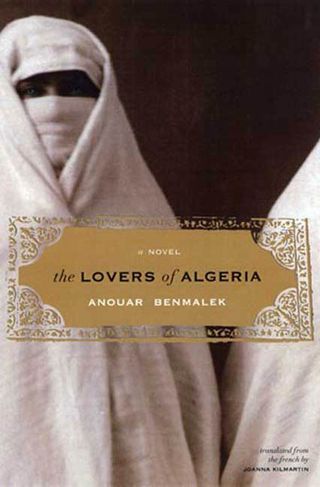
Cover of The Lovers of Algeria

The Lovers of Algeria

Anouar Benmalek

Original language: French · Paperback · ISBN 978-1555974046

Nine-year-old Jallal has already learned to fend for himself on the streets of Algeria, selling peanuts and loose cigarettes after running away from home. His world shifts when an elderly Swiss woman named Anna approaches him with an unlikely request: travel into the mountains as her translator so she can search for the lover she lost decades earlier and pray at the graves of their murdered children.

Anna's ties to Algeria reach back through years of conflict. She and her lover first met during an earlier period of terror, and her return unfolds amid ongoing instability, where corruption and armed violence shape daily life. The novel moves between past and present, setting Anna's memories against the dangers she and Jallal meet on the road. Benmalek uses their uneasy partnership to ask what remains of ordinary human attachment when law and safety break down.

The book was a bestseller in France before appearing in English. Jallal and Anna are separated by age, language, and circumstance, and the boy's hired role as interpreter is what holds them together on a route through territory neither controls.

Plot

Nine-year-old Jallal is old enough to know that his life in Algeria is precarious at best. Having run away from home, he survives by selling peanuts and single cigarettes on the street. The proposal by the elderly Swiss woman named Anna is shocking and preposterous: go to the mountains with her, as a translator, so she can find her lost lover from decades ago and pray over the graves of their murdered children. Anna and Jallal's journey is wrought with danger and unspeakable tragedy.

Cover of The Sexual Life of an Islamist in Paris

The Sexual Life of an Islamist in Paris

Leïla Marouane

Original language: French · Paperback · ISBN 978-1933372853

Basile Tocquard is an Algerian-born bank manager living in Paris, handsome and financially comfortable. For years his life followed a strict pattern: Sunday visits with his mother, family gatherings, religious observance, and careful sobriety. He now decides to break from all of it. He sets out to find a stylish apartment in a fashionable neighborhood, to frequent the literary cafés of Saint-Germain-des-Prés such as the Deux Magots and the Café de Flore, and to pursue a personal life free of the restrictions he once accepted.

The novel's structure holds a notable complication. Basile's story is told by a female narrator who views him without sympathy and declines to grant him the admiration he believes he deserves. This tension between the protagonist's self-image and the narrator's sharp perspective shapes the entire book, turning what could be a straightforward tale of reinvention into something more layered and unpredictable.

Leïla Marouane, born in Algeria and based in France, uses this setup to examine questions of identity, religious expectation, masculinity, and cultural dislocation. The Paris that Basile enters is defined by consumer luxury and social performance, and the distance between who he was and who he wants to become supplies much of the novel's friction.

Plot

Basile Tocquard is a handsome, wealthy, Parisian bank manager. Born in Algeria, his life was once devoted to Sundays with his mother, family reunions, pious sobriety, and devout Islamism. But now the time has come for him to find a suitable apartment in the trendiest neighborhood in Paris, for aperitifs at the Deux Magots and the Café de Flore, for shopping sprees at the most exclusive boutiques in Paris. And for a sex life free of prohibitions! Thus his adventures begin. Unfortunately for him, but to the delight of the reader, his story is filtered through a rather unsympathetic female narrator who refuses to show our hero the attention he feels he deserves.

Cover of The Stranger

The Stranger

Albert Camus

Original language: French · Paperback

The Stranger follows Meursault, a French Algerian clerk whose story begins with the death of his mother. He receives the news with a flatness that unsettles the people around him, and his emotional detachment carries through the days that follow. In colonial Algiers, under heavy sun, he drifts through social encounters and a new relationship with little apparent feeling or direction. Events on a beach lead to a killing, and the second half of the book shifts to a courtroom where Meursault's character is put on trial as much as his actions.

Albert Camus published the novel in 1942 in French as L'Etranger. It is closely associated with his philosophical concept of the absurd, which concerns the tension between human desire for meaning and a universe that offers none. Meursault narrates in short, plain sentences that strip away the justifications and emotional performances people usually rely on. The effect is a voice that feels both honest and disturbing.

The setting of French colonial Algeria is central to the book. Camus was born in Mondovi (now Dréan) in northeastern Algeria in 1913 and grew up in Algiers. The coastal geography, the heat, and the social divisions between French settlers and Arab Algerians all shape the story's atmosphere and its moral landscape.

Plot

With the intrigue of a psychological thriller, The Stranger—Camus's masterpiece—gives us the story of an ordinary man unwittingly drawn into a senseless murder on an Algerian beach.

Cover of The Wretched of the Earth

The Wretched of the Earth

Frantz Fanon

Original language: French · Paperback · ISBN 978-0802141323

Frantz Fanon wrote The Wretched of the Earth while living in Tunisia during the Algerian War of Independence. First published in French in 1961, the year of his death, it examines how colonial rule shapes the psychology of colonized peoples and what paths toward liberation might look like. Fanon, a psychiatrist born in Martinique who worked in Algeria, drew on both clinical experience and political engagement to build his analysis.

The book addresses several distinct problems. It considers the role of violence in struggles against colonial power, treating the subject as a political and psychological question rather than an abstract moral one. It also turns a critical eye on what happens after independence, warning that national elites may simply replace the colonial class without changing the structures that kept ordinary people excluded. Fanon further examines how divisions along ethnic and religious lines can fracture movements that had been united during the fight for independence.

The edition carrying ISBN 978-0802141323 is an English translation by Richard Philcox and includes essays by Jean-Paul Sartre and Homi K. Bhabha. Fanon's original French title, Les Damnés de la Terre, borrows a phrase from the opening line of The Internationale.

Plot

A landmark text for revolutionaries and activists, The Wretched of the Earth is an eternal touchstone for civil rights, anti-colonialism, psychiatric studies, and Black consciousness movements worldwide. Translated by Richard Philcox, featuring now-classic critical essays by Jean-Paul Sartre and Homi K. Bhabha, and a new essay, this sixtieth-anniversary edition of Fanon’s most famous text stands proudly alongside such pillars of anti-colonialism and anti-racism as Edward Said’s Orientalism and The Autobiography of Malcolm X.

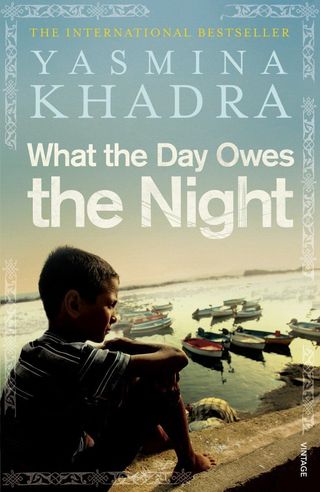
Cover of What the Day Owes the Night

What the Day Owes the Night

Yasmina Khadra

Original language: French · Paperback · ISBN 978-0099540458

Yasmina Khadra, the pen name of former Algerian army officer Mohammed Moulessehoul, sets this novel in colonial Algeria across several decades of the twentieth century. When young Younes is handed over by his impoverished parents to a wealthier uncle, his life splits in two. Renamed Jonas, he grows up in a mixed colonial town where Arab and European communities live side by side, and he forms a close bond with a group of boys from different backgrounds.

Jonas befriends these boys through childhood and into adulthood, a period during which he also meets Emilie, a young woman who draws attention wherever she goes. Their relationship becomes central to the story, complicated by the widening fractures around them. As the Algerian struggle for independence intensifies, Jonas faces choices that pit loyalty against love, and his Algerian roots against his European upbringing.

The novel follows Jonas through these overlapping pressures without reducing them to simple oppositions. His double name reflects a double life, and the story traces how political upheaval reshapes private relationships. Khadra grounds the narrative in specific places and periods of Algerian history, using one person's experience to map a country caught between two eras.

Plot

'Darling, this is Younes. Yesterday he was my nephew, today he is our son' Younes' life is changed forever when his poverty-stricken parents surrender him to the care of his more affluent uncle. Renamed Jonas, he grows up in a colorful colonial Algerian town and forges a unique friendship with a group of boys, an enduring bond that nothing - not even the Algerian Revolt - will shake. He meets Emilie - a beautiful, beguiling girl who captures the hearts of all who see her - and an epic love story is set in motion. Time and again Jonas is forced to choose between two worlds: Algerian or European; past or present; love or loyalty, and finally decide if he will surrender to fate or take control of his own destiny at last.

More from Algeria

See the country page for Algeria for its map, facts and largest cities, or browse books from other countries.

Links go to Amazon; Hookito doesn’t sell books. Know a book that belongs here, or spotted a mistake? Write to submissions@hookito.com.