Hookito

Ecuador · Books

Books from Ecuador

5 books from and about Ecuador: what each is about, the plot, and a note from Professor Kogi.

Cover of Huasipungo

Huasipungo

Jorge Icaza

Original language: Spanish · Paperback · ISBN 978-8401002984

Huasipungo, first published in 1934, is a novel by Ecuadorian writer Jorge Icaza. The title refers to the small plots of land granted to indigenous laborers on large estates in the Ecuadorian highlands, a system rooted in colonial-era land arrangements. The story follows Andrés Chiliquinga, an indigenous worker whose life is shaped by the exploitation built into this system. Icaza revised the novel twice over the years, each time developing Chiliquinga further as a character with clear reasoning and deep awareness of his circumstances.

The central tension builds around land and who has a rightful claim to it. Chiliquinga comes to understand that the ground he and others have worked and improved belongs to the people who labored on it. He moves from endurance toward resistance, urging his community to confront the conditions imposed on them. The novel sits within the indigenista literary movement in Latin America, which centered the lives and struggles of indigenous peoples against structures of dispossession.

The book was translated into at least ten languages and was banned in several countries because of the force of its social message. Icaza became one of Ecuador's most internationally recognized writers largely through this work, which remains closely associated with debates over indigenous land rights across the continent.

Plot

The novel's two revisions enabled Icaza to develop the main character, Andrés Chiliquinga, as a profoundly human and rational being. Through the suffering he is forced to endure, he, as a heroic figure, realizes that the patch of land that he has always labored for is land that belongs to them, to all who had labored it and improved it. Atavistic wisdom had taught him that one must oppose and combat despotism. The time had come to encourage and exhort his people to confront and declare their unwillingness to continue to be submitted to such iniquity. In the same manner in which the actions of the protagonist transcend communities, fragment traditions, and diminish attitudes, the message of the novel profoundly reverberated in a society steeped in traditional values and mores.
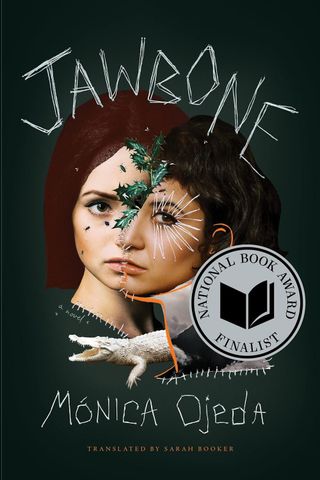
Cover of Jawbone

Jawbone

Monica Ojeda

Original language: Spanish · Paperback · ISBN 978-1566896214

Jawbone follows two teenage girls, Fernanda and Annelise, students at the Delta Bilingual Academy, whose intense bond drives the novel's central tensions. The story opens with Fernanda captive in an abandoned cabin, held by one of her own teachers and separated from Annelise. From this stark starting point, the narrative moves between perspectives and timescales to trace how such an outcome became possible.

At school, Annelise draws her circle of friends into after-hours rituals devoted to a deity she has invented, a rhinestoned, perfume-scented figure modeled on drag aesthetics. These gatherings grow more extreme over time. Beneath them lies a shared secret between Annelise and Fernanda, born from a dare that blurs the boundary between affection and harm. In a parallel thread, their literature teacher Miss Clara is consumed by an effort to replicate her deceased mother, a fixation that steadily erodes her grip on reality.

Monica Ojeda, an Ecuadorian writer, constructs the novel through multiple voices. The structure places adolescent intensity and adult collapse side by side, linking them through overlapping fears and desires. Guayaquil-born Ojeda has been recognized as one of Latin America's notable younger fiction writers.

Plot

Fernanda and Annelise are so close they are practically sisters: a double image, inseparable. So how does Fernanda end up bound on the floor of a deserted cabin, held hostage by one of her teachers and estranged from Annelise? When Fernanda, Annelise, and their friends from the Delta Bilingual Academy convene after school, Annelise leads them in thrilling but increasingly dangerous rituals to a rhinestoned, Dior-scented, drag-queen god of her own invention. Even more perilous is the secret Annelise and Fernanda share, rooted in a dare in which violence meets love. Meanwhile, their literature teacher Miss Clara, who is obsessed with imitating her dead mother, struggles to preserve her deteriorating sanity. Each day she edges nearer to a total break with reality.

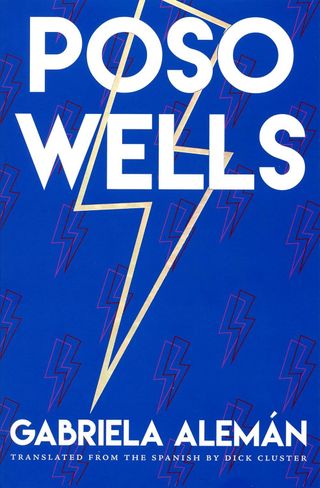
Cover of Poso Wells

Poso Wells

Gabriela Alemán

Original language: Spanish · Paperback · ISBN 978-0872867550

In Poso Wells, a neglected settlement where women have been vanishing without official concern, a presidential candidate arrives for a campaign visit. He and most of his entourage die in a bizarre mass electrocution, observed by a crowd of onlookers. The one survivor, who stands next in line for the presidency, then vanishes without explanation. These two threads of disappearance, the political and the personal, set the plot in motion.

Gustavo Varas, a journalist guided by principle, begins tracing the missing candidate and finds himself pulled into a violent and lawless layer of society. Bella Altamirano, a determined resident of Poso Wells, pursues her own investigation into the missing women, pressing against a local culture of silence despite receiving death threats. Their separate paths converge as the connections between the political disappearance and the fate of the women come into view, pointing toward a multinational scheme to exploit Ecuador's cloud forest.

Gabriela Alemán is an Ecuadorian author, and Poso Wells was her first work published in English. The novel operates across genres, combining elements of noir fiction, ecological thriller, and feminist narrative within a story rooted in questions of political corruption, land exploitation, and institutional indifference.

Plot

"In the squalid settlement of Poso Wells, women have been regularly disappearing, but the authorities have shown little interest. When the leading presidential candidate comes to town, he and his entourage are electrocuted in a macabre accident witnessed by a throng of astonished spectators. The sole survivor—next in line for the presidency—inexplicably disappears from sight.

Cover of The Ecuador Cookbook: traditional vegetarian and seafood recipes

The Ecuador Cookbook: traditional vegetarian and seafood recipes

Christina Buchanan, Cesar Franco

Original language: Spanish · Paperback · ISBN 978-2711837816

The Ecuador Cookbook by Christina Buchanan and Cesar Franco is a bilingual English and Spanish collection of traditional recipes from Ecuador. The book focuses on two areas of Ecuadorian cooking: vegetarian dishes and seafood. Ecuador's geography, stretching from Pacific coastline through Andean highlands to Amazon lowland, shapes a cuisine that draws on a wide range of ingredients, and the recipes here reflect that variety.

Each recipe is presented with step-by-step instructions and uses ingredients that are generally accessible outside Ecuador. The book includes original illustrations throughout, giving it a handmade quality distinct from photo-heavy cookbook formats. By pairing English and Spanish text, the collection serves both English-speaking cooks curious about Ecuadorian food and Spanish-speaking readers looking for a familiar reference in their own language.

Vegetarian and seafood cooking hold a natural place in Ecuadorian tradition. Coastal provinces rely heavily on fish, shrimp, and plantain, while highland and rural kitchens have long centered meals around grains, legumes, and root vegetables such as yuca. The cookbook gathers these regional threads into a single volume organized for practical home use.

Plot

This book features traditional vegetarian and seafood Latin American cuisine; step-by-step instructions; easy to find ingredients; and original illustrations.

Cover of This World Does Not Belong to Us

This World Does Not Belong to Us

Natalia García Freire

Original language: Spanish · Paperback · ISBN 978-1642861150

Lucas was sold by his father to another farmer when he was still a child. Years later, he returns to the family home uninvited, carrying deep resentment and a desire for revenge. But the place he remembers has changed. The garden his mother once tended is overrun with weeds, his father is dead and buried beneath them, and two men named Eloy and Felisberto have taken control of the property and everyone on it. They were originally brought in as workers, but their authority has grown unchecked. The house and land are in decay.

Pushed out as a boy and unwelcome now, Lucas turns toward a world that flourishes in rot and darkness: the world of insects. Natalia García Freire, writing from Ecuador, builds a story around dispossession, land, and the slow corruption of a household. The novel traces what happens when human greed hollows out a place and the people within it, while also suggesting that something unexpected may survive in the wreckage.

The setting is rural and close to the ground, shaped by soil, overgrowth, and neglect. García Freire uses the physical landscape to carry the story's tensions, placing Lucas between a home that no longer belongs to him and a natural world that operates by its own rules.

Plot

Lucas was just a child when his father sold him to another farmer as a laborer. Years later, Lucas returns, full of resentment and burning for revenge. After years away, Lucas returns uninvited to the home he was expelled from as a child. The garden has been conquered by weeds, which blanket his mother’s beloved flowerbeds and his father’s grave alike. A lot has changed since Eloy and Felisberto were invited into the family home to work for Lucas’s father, long ago. The two hulking strangers have brought the land and everyone on it under their control―and removed nuisances like Lucas. Now everything rots. Lucas, a hardened young man, turns to a world that thrives in dirt and darkness: the world of insects.

More from Ecuador

See the country page for Ecuador for its map, facts and largest cities, or browse books from other countries.

Links go to Amazon; Hookito doesn’t sell books. Know a book that belongs here, or spotted a mistake? Write to submissions@hookito.com.