Hookito

Faroe Islands · Books

Books from Faroe Islands
6 books from and about Faroe Islands: what each is about, the plot, and a note from Professor Kogi.

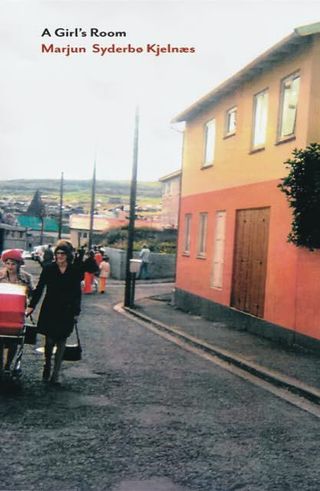
Cover of A Girl's Room

A Girl's Room

Marjun Syderbø Kjelnæs

Original language: Danish · Paperback · ISBN 979-8988473244

A Girl's Room is a play by Faroese writer Marjun Syderbø Kjelnæs, published as one half of a literary pair. Its companion piece, Karma Goat, is a poetry collection. The two works share a female protagonist and can be read in either order. They are not linked by a single storyline or cause-and-effect sequence but instead overlap through shared states of mind, physical spaces, and recurring tensions. Dialogues from the drama and movements from the poems grow into each other, forming a structure that is nested rather than linear.

In A Girl's Room, the central figure exists across several stages of selfhood at once: developing, conflicting, confused, contradictory, and at moments harmonious. The play explores thresholds between these states rather than treating them as steps on a fixed path. Over the course of the work, the girl and the room she inhabits become closely identified with each other. She is a character who learns to resist being corrected and confined.

Kjelnæs writes from the Faroe Islands, a small North Atlantic archipelago whose literary culture produces work in both Faroese and Danish. The paired format of A Girl's Room and Karma Goat gives each piece its own genre and expression while letting them function as parts of a single project.

Plot

They are written in two different genres, poems (Karma Goat) and a play (A Girl's Room). The works can be read in any order, and are not linearly or causally connected, but rather as two nested works, where the dialogues of the drama, the movements of the poems, the states of mind and the physical spaces, grow into each other. As the title A Girl's Room indicates, it is about a female protagonist. The same is the case in Karma Goat. A Girl's Room dissolves the boundaries and thresholds that exist between the stages of the self: in development, in conflict, in confusion – paradoxical, contradictory and at times harmonious – all at the same time. A girl's room and the acclimated girl become a strong force in these works, a being that learns to refuse to be reprimanded and put in place.
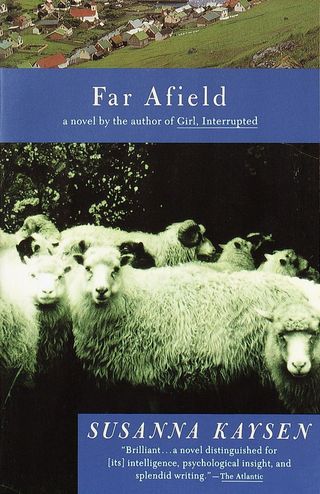
Cover of Far Afield

Far Afield

Susanna Kaysen

Original language: English · Paperback · ISBN 978-0679753766

Jonathan Brand is a Harvard-trained anthropology graduate student who travels to the Faroe Islands to conduct fieldwork. The archipelago, a small cluster of eighteen volcanic islands in the North Atlantic between Norway, Iceland, and Scotland, becomes the setting for his attempt to observe and document a culture that resists easy classification. Jonathan arrives equipped with academic frameworks but finds that his training does little to prepare him for the reality of daily Faroese life.

His difficulties range from the practical to the personal. The local food challenges him, the social customs confuse him, and his relationship with a Danish woman becomes entangled with the expectations of the community around them. The locals have opinions about who he should marry and how he should behave, and Jonathan finds himself caught between the role of outside observer and reluctant participant. Kaysen, known for her memoir Girl, Interrupted, uses fiction here to explore what happens when an outsider tries to study a place while simultaneously being absorbed by it.

The novel carries a satirical edge, particularly in its treatment of academic fieldwork and the gap between scholarly method and lived experience. Kaysen sets the tension between attraction and discomfort at the center of Jonathan's time on the islands, letting neither feeling win out completely.

Plot

Jonathan Brand, a graduate student in anthropology, has decided to do his fieldwork in the remote Faroe Islands in the North Atlantic. But, despite his Harvard training, he can barely understand, let alone "study," the culture he encounters. From his struggles with the local cuisine to his affair with the Danish woman the locals want him to marry, Jonathan is both repelled by and drawn into the Faroese way of life. Wry and insightful, Far Afield reveals Susanna Kaysen's gifts of imagination, satire, and compassion.

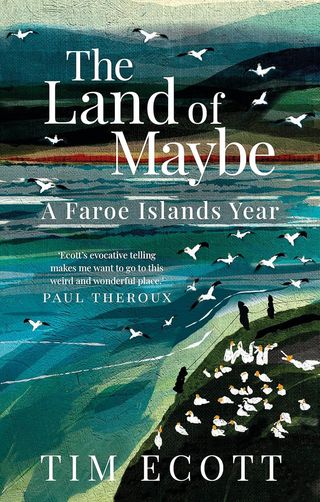
Cover of The Land of Maybe: A Faroe Islands Year

The Land of Maybe: A Faroe Islands Year

Tim Ecott

Original language: English · Paperback · ISBN 978-1780725185

The Faroe Islands are a cluster of 18 small islands in the North Atlantic, situated closer to the United Kingdom than to Denmark, the country to which they are politically linked. Around 50,000 people live there, sharing Viking ancestry and speaking Faroese, a language distinct from the other Scandinavian tongues. Tim Ecott's book follows the rhythm of a single year on the islands, tracing daily life as it shifts with the seasons.

Ecott describes how food gathering still follows older patterns. Sheep overwinter on exposed hillsides, migratory birds arrive and depart on schedules that shape local activity, and communities continue to hunt seabirds and herd pilot whales as a practical source of nutrition. Weather dominates nearly every decision. The book pays close attention to the way an unpredictable marine climate presses on small communities, affecting everything from travel between islands to the drying and fermenting of meat and fish.

The population is small enough that social ties are unusually tight. Ecott records how traditions, language, and seasonal routines hold together a society that sits exposed to some of the harshest conditions in the northeastern Atlantic.

Plot

Following the natural cycle of the year, The Land of Maybe captures the essence of 'slow life' on the 18 remote, mysterious islands which make up the Faroes in the North Atlantic. Closer to the UK than Denmark, this fast disappearing world is home to a close-knit society where just 50,000 people share Viking roots and a language that is unlike any other in Scandinavia. We follow the arrival of the migratory birds, the over-wintering of the sheep and the way food is gathered and eaten in tune with the seasons. Buffeted by the weather and the demands of a volatile natural environment, people still hunt seabirds and herd pilot whales for a significant portion of their basic food needs.

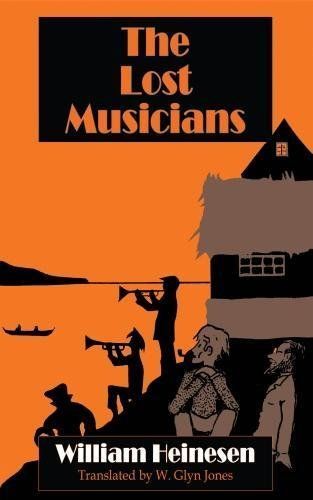
Cover of The Lost Musicians

The Lost Musicians

William Heinesen

Original language: Danish · Paperback · ISBN 978-1903517505

The Lost Musicians follows a group of amateur musicians in early 20th-century Tórshavn, the small capital of the Faroe Islands. At the center are the members of the Boman Quartet, whose shared devotion to music holds them together through poverty, local gossip, and a series of difficult events that might otherwise become unbearable. William Heinesen sets their creative lives against a community shaped by rigid moralism and social pressure, where standing apart draws suspicion.

The novel draws much of its tension from the conflict between the musicians and a faction of local sectarians led by the bank manager Ankersen, who works to undermine their spirit. Heinesen treats this struggle with sharp satire rather than heavy drama. Another source of humor is the blacksmith Janniksen, a physically imposing man caught under the authority of his domineering, pious wife. These contrasts between strength and constraint, between art and conformity, run through the book in ways that are both comic and painful.

Tórshavn at the time was a compact, isolated town on the island of Streymoy. Heinesen, who spent most of his life in the Faroes, wrote in Danish, and his fiction returns often to this same landscape of wind, sea, and close-knit community.

Plot

The Lost Musicians by William Heinesen tells the story of three brothers in early 20th-century Tórshavn, Faroe Islands, who live for music and poetry amid poverty, gossip, and the constraints of small-town life. Their creative spirits clash with the rigid, moralistic society around them, creating both humor and tragedy. The novel paints a vivid portrait of human resilience and the power of art in a world that often misunderstands it.

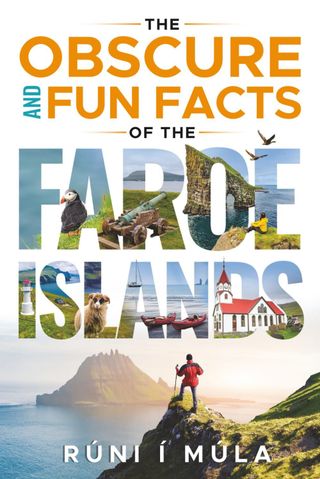
Cover of The Obscure and Fun Facts of the Faroe Islands

The Obscure and Fun Facts of the Faroe Islands

Rúni í Múla

Original language: Danish · Paperback · ISBN 979-8392097807

The Faroe Islands are an archipelago of eighteen volcanic islands in the North Atlantic, roughly midway between Norway, Iceland, and Scotland. Rúni í Múla collects lesser-known details about Faroese history, politics, culture, and daily life, arranged not as a travel guide but as a broad introduction to the islands through their oddities and overlooked stories. The unusual political position of the Faroes, a self-governing territory within the Kingdom of Denmark, sits beside historical events that shaped these scattered communities.

Among the facts presented: the islands once had a breed of sheep so aggressive that herding it along steep mountain slopes endangered shepherds. Elsewhere, a factory producing large catamarans operates from a mountain village, an unlikely setting for boatbuilding. Such examples point to a pattern where geography and isolation pushed Faroese life into unusual arrangements.

The book is aimed at readers planning a visit and at those simply curious about a place that rarely appears in general European knowledge. Its subjects range from farming and industry to governance and local custom, drawn from the specific conditions that eighteen small, steep, closely grouped islands create for the people who live on them.

Plot

Discover incredible feats that will astound you, read about the peculiar political situation of the Faroes, uncover historic events that shaped the Faroe Islands, and investigate strange facts that will leave you scratching your head in wonder. "Obscure Facts from the Faroe Islands" is a must-read if you are planning a trip to the Faroe Islands or simply want to learn more about this fascinating destination. Did you know that the Faroe Islands once had a hostile breed of sheep that were life-threatening to shepherds herding them on the steep mountain sides? Or that there is a Faroese factory that builds large catamarans in a mountain village? These are just a few of the many intriguing and obscure facts contained within the pages of this book.

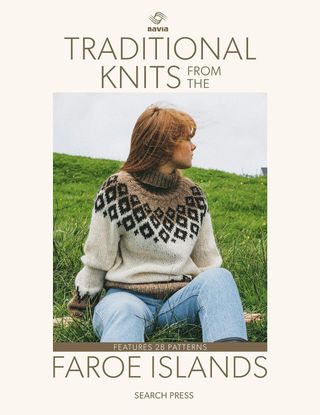
Cover of Traditional Knits from the Faroe Islands

Traditional Knits from the Faroe Islands

Navia

Original language: English · Hardcover · ISBN 978-1800923119

Traditional Knits from the Faroe Islands presents 28 knitting patterns drawn from the textile heritage of the Faroe Islands, a small North Atlantic archipelago situated between Iceland, Norway, and Scotland. The collection is produced by Navia, a Faroese yarn company, and covers garments for adults, children, and babies. Designs range from sweaters and cardigans to a lace-pattern shawl, each accompanied by written instructions, pattern charts, and photographs.

The patterns emphasize elements associated with Faroese knitting tradition: colorwork, textured stitches, and clean geometric lines. Several projects use bold color combinations, while others rely on surface texture for visual interest. The book is aimed at knitters with some experience, particularly those comfortable reading charts and working with multiple techniques in a single project. Garment construction follows traditional Faroese approaches, though the finished pieces are styled with a modern sensibility.

The Faroe Islands have a long history of wool production shaped by their climate and geography. Sheep outnumber people on the islands, and hand-knitting has served both practical and cultural purposes for centuries. This collection documents specific stitch patterns and construction methods that belong to that local tradition.

Plot

Discover 28 stunning knitting patterns for the whole family, from cozy sweaters and cardiga28 timeless Faroese designs: from classic sweaters and cozy cardigans to stylish babies’ clothes, the 28 patterns feature clean lines, bold colors and innovative techniques - ideal for confident knitters looking for heritage designs with a contemporary flavor Easy-to-follow patterns: create the characteristically Faroese designs, featuring stunning colorwork, tactile textures and a range of stitches, with ease. Each project contains detailed instructions, a simple-to-follow pattern chart and stunning photography for guidancens to a snuggly lace-pattern shawl

More from Faroe Islands

See the country page for Faroe Islands for its map, facts and largest cities, or browse books from other countries.

Links go to Amazon; Hookito doesn’t sell books. Know a book that belongs here, or spotted a mistake? Write to submissions@hookito.com.