Hookito

Iran · Books

Books from Iran

13 books from and about Iran: what each is about, the plot, and a note from Professor Kogi.

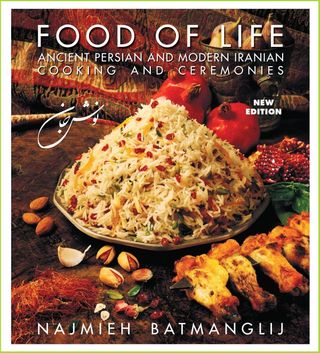
Cover of Food of Life: Ancient Persian and Modern Iranian Cooking and Ceremonies

Food of Life: Ancient Persian and Modern Iranian Cooking and Ceremonies

Najmieh Batmanglij

Original language: English · Hardcover · ISBN 978-1933823478

Food of Life gathers 330 classical and regional Iranian recipes, assembled by Najmieh Batmanglij across about thirty years of collecting, testing and adapting dishes for kitchens in the United States. The title comes from the Persian phrase nush-e jan, which literally means food of life and is spoken in Iran as a wish that a dish will be enjoyed.

Recipes sit alongside an introduction to Persian art, history and culture. Passages are drawn from sources spanning many centuries, among them the tenth-century Book of Kings, tales from the One Thousand and One Nights, verse by Omar Khayyam and the modern poet Sohrab Sepehri, miniature paintings by Mir Mosavvar and Aq Mirak, and comic stories about the folk figure Mulla Nasruddin.

Descriptions of ancient and modern Persian ceremonies run through the collection, joined by folktales, travelogue extracts and personal anecdotes, and hundreds of full-colour photographs of finished dishes and cultural material. Most ingredients were chosen because they can be found widely in American shops, so the recipes are pitched at cooks with very different levels of experience, from beginners to trained chefs.

Plot

Food of Life provides 330 classical and regional Iranian recipes as well as an introduction to Persian art, history, and culture. The book's hundreds of full color photographs are intertwined with descriptions of ancient and modern Persian ceremonies, poetry, folktales, travelogue excerpts and anecdotes. It is the result of 30 years of collecting, testing and adapting authentic and traditional Persian recipes for the American kitchen. Most of its ingredients are readily available throughout the U.S. enabling anyone from a master chef to a novice to reproduce the refined tastes, textures, and beauty of Persian cuisine. Food-related pieces from such classics as the 10th century Book of Kings, and 1,001 Nights to the miniatures of Mir Mosavvar and Aq Mirak, from the poetry of Omar Khayyam and Sohrab Sepehri to the humor of Mulla Nasruddin are all included.
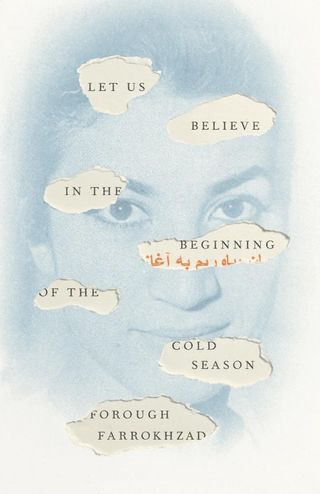
Cover of Let Us Believe in the Beginning of the Cold Season

Let Us Believe in the Beginning of the Cold Season

Forough Farrokhzad

Original language: Persian · Paperback · ISBN 978-0811231657

Forough Farrokhzad was an Iranian poet who died in a car accident in 1967 at the age of thirty-two. In the decades since, her work has gained wide recognition, and she is now considered a pioneer of modernist Persian poetry. Her name is often placed alongside figures such as Federico García Lorca and Anna Akhmatova for the scale of her influence on literary culture beyond her own country.

This English-language selection, titled Let Us Believe in the Beginning of the Cold Season, draws from across Farrokhzad's writing life, including both early and late poems. The collection aims to show the full range of her concerns: everyday life, longing, loss, desire, grief, and hope. Her poetry is also known for its attention to sound and for reworking classical Persian forms in a contemporary voice. Elizabeth Gray, who wrote the preface, describes Farrokhzad as a figure of particular importance to women and marginalized artists seeking freedom in its many forms.

Farrokhzad wrote during a period of significant social and political change in Iran. Her willingness to address personal experience openly, including subjects considered private or transgressive for a woman poet at the time, set her apart from many of her contemporaries.

Plot

In the years since her tragic death in a car accident at age thirty-two in 1967, Forough Farrokhzad has become a poet as iconic and influential as Lorca or Akhmatova, celebrated as a pioneer of modernist Iranian literature and as a leading figure of contemporary world literature. This thoughtfully curated, deftly translated selection of Farrokhzad’s poems includes work from her whole writing life, early to late. Readers will thoroughly treasure this expansive poet of the quotidian; of longing, loss, and desire; of classical reinvention; of lexical variation and sonic beauty; of terrifying wisdom, hope, and grief.

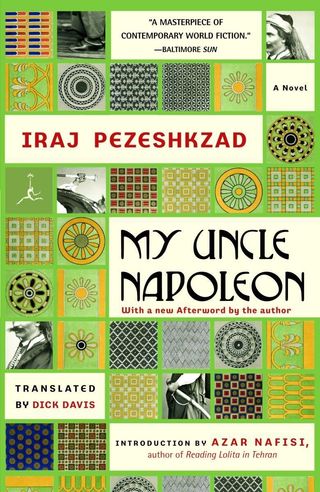
Cover of My Uncle Napoleon

My Uncle Napoleon

Iraj Pezeshkzad

Original language: Persian · Paperback · ISBN 978-0812974430

My Uncle Napoleon is a comic novel by Iraj Pezeshkzad, set within the walls of a large extended Iranian family compound. The story is told by a young narrator who, to his own alarm, falls in love with Layli, the daughter of the family's self-appointed patriarch, Dear Uncle Napoleon. The uncle earned his nickname from his own inflated sense of military glory, and he governs the household with bluster, suspicion, and an unshakable belief that the British are secretly orchestrating every setback in his life.

Around this central pair of conflicts, one romantic and one conspiratorial, the novel follows a cast of relatives, servants, and hangers-on whose feuds, alliances, and schemes shift constantly. Marriages are proposed and blocked, loyalties tested, and minor incidents magnified into crises. The narrator's attachment to Layli puts him directly at odds with Dear Uncle Napoleon, whose paranoia makes any suitor from the wrong branch of the family an automatic suspect.

Pezeshkzad originally published the novel in Persian in 1973, and it became one of the most widely read works of modern Iranian fiction. A popular television adaptation followed in the mid-1970s, further cementing the story in Iranian popular culture.

Plot

“God forbid, I’ve fallen in love with Layli!” So begins the farce of our narrator’s life, one spent in a large extended Iranian family lorded over by the blustering, paranoid patriarch, Dear Uncle Napoleon. When Uncle Napoleon’s least-favorite nephew falls for his daughter, Layli, family fortunes are reversed, feuds fired up and resolved, and assignations attempted and thwarted.

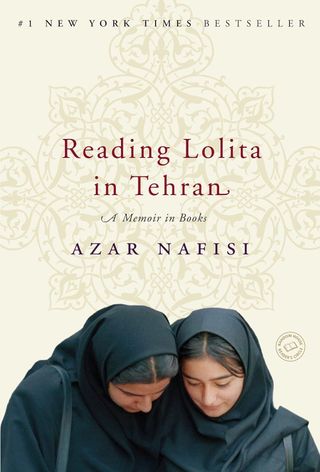
Cover of Reading Lolita in Tehran

Reading Lolita in Tehran

Azar Nafisi

Original language: English · Paperback · ISBN 978-0812979305

In the mid-1990s, as Iran's Islamic Republic tightened its grip on universities and public life, literature professor Azar Nafisi began holding a private weekly class in her Tehran home. Every Thursday morning for two years, seven of her former female students gathered to read Western novels that were officially forbidden. The group included women from both religious and secular backgrounds; some had been imprisoned. At first they were hesitant to voice their own thoughts, but the sessions gradually became a space where they spoke openly about the books and about their own lives.

The novels they studied included works by Jane Austen, Henry James, Vladimir Nabokov, and F. Scott Fitzgerald. Nafisi's memoir traces how these fictional worlds intersected with the women's daily reality in Tehran during the Iran-Iraq war era and its aftermath. Scenes from Pride and Prejudice, Washington Square, Daisy Miller, and Lolita took on unexpected meanings when read against a backdrop of morality patrols, censorship, and restricted personal freedoms.

Nafisi left Iran in 1997, and the book draws on her experiences across more than a decade of teaching there. It is structured around the four authors the group read, each section pairing the literary material with episodes from the women's circumstances and from the political changes unfolding around them.

Plot

For two years before she left Iran in 1997, Nafisi gathered seven young women at her house every Thursday morning to read and discuss forbidden works of Western literature. They were all former students whom she had taught at university. Some came from conservative and religious families, others were progressive and secular; several had spent time in jail. They were shy and uncomfortable at first, unaccustomed to being asked to speak their minds, but soon they began to open up and to speak more freely, not only about the novels they were reading but also about themselves, their dreams and disappointments. Their stories intertwined with those they were reading—Pride and Prejudice, Washington Square, Daisy Miller and Lolita—their Lolita, as they imagined her in Tehran.

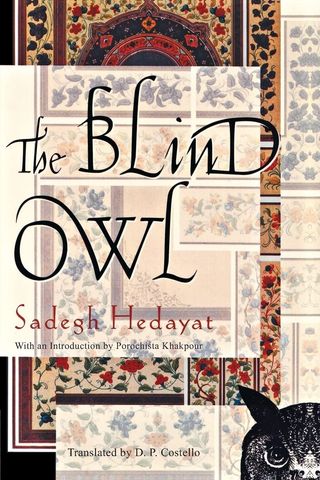
Cover of The Blind Owl

The Blind Owl

Sadegh Hedayat

Original language: Persian · Paperback · ISBN 978-0802144287

The Blind Owl is a short novel by Sadegh Hedayat, first printed in a limited edition in Bombay in 1937. Hedayat, born in Tehran in 1903, is widely regarded as one of Iran's most important modern fiction writers. The book was initially distributed only among close acquaintances and was banned in Iran for years before eventually being published there. It has since been translated into numerous languages and remains central to discussions of modern Persian literature.

The story is told by an unnamed narrator whose grip on reality is unstable. He describes obsessive memories, recurring images, and encounters that blur the line between waking life and hallucination. A mysterious woman, a peculiar old man, and a painted pen case all recur in shifting forms across the narrative. The structure loops and folds back on itself, creating a disorienting effect in which events seem to repeat with slight and unsettling differences.

Hedayat drew on both Persian literary traditions and European modernist techniques. The novel's atmosphere owes something to Edgar Allan Poe and Franz Kafka, while its imagery connects to older Persian motifs of shadow, wine, and death. Its tone is one of isolation and dread rather than action or resolution.

Plot

The Blind Owl by Sadegh Hedayat is a haunting, surreal novel that delves into the fragmented mind of a man consumed by obsession, guilt, and despair. Through feverish visions and shifting realities, the narrator reflects on love, death, and the futility of existence. Blending psychological horror with poetic symbolism, the book captures the loneliness and existential anguish of the modern human condition.

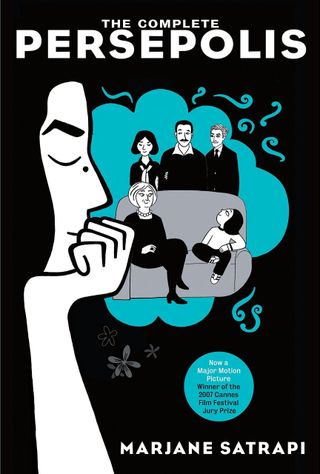
Cover of The Complete Persepolis

The Complete Persepolis

Marjane Satrapi

Original language: French · Paperback · ISBN 978-0375714832

The Complete Persepolis collects Marjane Satrapi's two-part graphic memoir about growing up in Tehran during and after the 1979 Islamic Revolution. Drawn in stark black-and-white panels, the book follows Satrapi from early childhood through adolescence and into young adulthood. She belongs to an unusual family: her great-grandfather was Iran's last emperor, and her parents were committed Marxists. The household is politically outspoken, and Satrapi grows up surrounded by relatives who have been imprisoned or have lived in exile.

As political conditions in Iran tighten, her parents send the teenage Satrapi to Vienna for school. There she faces isolation, language barriers, and the ordinary confusion of adolescence, all far from her family. She eventually returns to Tehran, where she finds both comfort and new difficulties in a country that has continued to change. The tension between public restrictions and private freedoms runs through the entire narrative. Satrapi later leaves Iran again, this time on her own terms.

The memoir is presented in a simple, direct drawing style that suits its tone. Satrapi uses the graphic format to compress years of personal and political history into clear visual sequences, moving between family scenes, school life, and the larger events shaping Iran during the 1980s and 1990s.

Plot

Persepolis is the story of Satrapi's unforgettable childhood and coming of age within a large and loving family in Tehran during the Islamic Revolution; of the contradictions between private life and public life in a country plagued by political upheaval; of her high school years in Vienna facing the trials of adolescence far from her family; of her homecoming—both sweet and terrible; and, finally, of her self-imposed exile from her beloved homeland. It is the chronicle of a girlhood and adolescence at once outrageous and familiar, a young life entwined with the history of her country yet filled with the universal trials and joys of growing up.

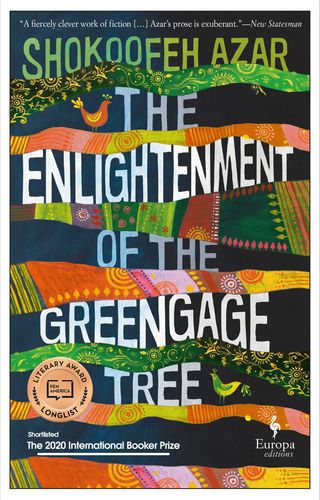
Cover of The Enlightenment of the Greengage Tree

The Enlightenment of the Greengage Tree

Shokoofeh Azar

Original language: Persian · Paperback · ISBN 978-1609455651

This novel takes place in Iran during the decade that followed the revolution of 1979. Its narrator is Bahar, a girl of thirteen who speaks from beyond death. She describes how her relatives abandon Tehran for a distant village, hoping the move will keep their lives and their freedom of thought intact. The disorder of those years reaches the countryside anyway.

Much of the emotional weight rests with Bahar's mother. After a severe loss, she begins a long and eventful search for meaning in a country turned unpredictable. The story moves between small village routines and the wider violence of the period, filtered through a narrator who is both young and no longer living. That double position lets the book stay close and distant at once.

Shokoofeh Azar writes with imagination pressed against cruelty, mixing folk tradition and the supernatural with events from the post-revolutionary years. The book looks at how a family holds on to its identity when familiar structures fall apart, and at storytelling as a ritual through which people try to make sense of harm they have suffered.

Plot

Set in Iran in the decade following the 1979 Islamic Revolution, this moving, richly imagined novel is narrated by the ghost of Bahar, a thirteen-year-old girl, whose family is compelled to flee their home in Tehran for a new life in a small village, hoping in this way to preserve both their intellectual freedom and their lives. But they soon find themselves caught up in the post-revolutionary chaos that sweeps across their ancient land. Bahar’s mother, after a tragic loss, will embark on a long, eventful journey in search of meaning in a world swept up in post-revolutionary madness. Told from the wise yet innocent gaze of a young girl, The Enlightenment of the Greengage Tree speaks of the power of imagination when confronted with cruelty, and of our human need to make sense of trauma through the ritual of storytelling itself.

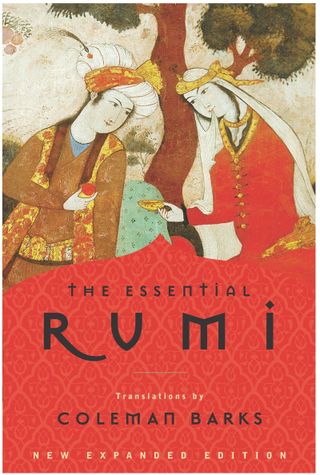
Cover of The Essential Rumi

The Essential Rumi

Jalal Al-Din Rumi

Original language: Persian · Paperback · ISBN 978-0062509598

Jelaluddin Rumi was a thirteenth-century Sufi mystic and poet born in 1207 in what is now Afghanistan, though he spent much of his life in Konya, in present-day Turkey. His poetry, composed in Persian, circles around themes of love, longing, union with the divine, and the inner life of the soul. Centuries after his death, his work continues to be read across many languages and traditions.

The Essential Rumi is a collection of his poems rendered into English by Coleman Barks. Barks worked from earlier scholarly translations to produce versions aimed at capturing the energy and directness of the originals. The selection covers a wide span of Rumi's output, from short lyric pieces to longer meditative passages. A revised and expanded edition added a new introduction by Barks along with more than eighty poems not included in previous printings.

Rumi's poetry often moves between the concrete and the abstract, using images drawn from everyday life, from wine and bread to rivers and birds, to point toward spiritual states that resist plain description. The poems shift between joy and grief, stillness and urgency, frequently addressing an unnamed beloved whose identity remains deliberately open.

Plot

Through his lyrical translations, Coleman Barks has been instrumental in bringing this exquisite literature to a remarkably wide range of readers, making the ecstatic, spiritual poetry of thirteenth-century Sufi Mystic Rumi more popular than ever. The Essential Rumi continues to be the bestselling of all Rumi books, and the definitive selection of his beautiful, mystical poetry.

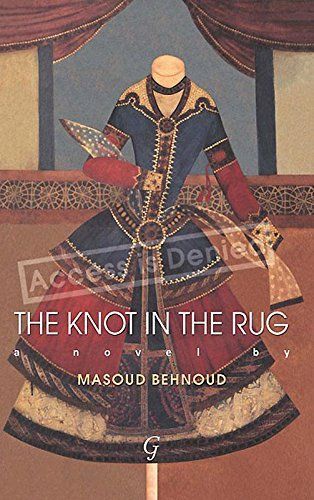
Cover of The Knot in the Rug

The Knot in the Rug

Masoud Behnoud

Original language: Persian · Paperback · ISBN 978-1859642887

The Knot in the Rug follows a woman known as Khanoum through the final years of Persia's Qajar dynasty and the upheavals that followed. Forced to leave Persia during the Constitutional Revolution of 1906, she is raised by her uncle's family in exile. Her teenage years bring family loss, a difficult overland crossing through Persia, and constant uncertainty about what comes next. Masoud Behnoud uses her story to open a window onto Persian customs surrounding birth, marriage, and death, many of which persist in present-day Iran.

Once in Russia, Khanoum's aunt takes charge of the displaced household, rebuilding routines and a sense of home modeled on the life they left behind. That stability does not last. The Bolshevik revolution uproots the family again, sending them onward to Istanbul. Each move strips away more of the familiar world Khanoum knew, while the social codes she carries with her prove more durable than any single address.

The novel traces how ordinary domestic life continues under political pressure, and how exile reshapes family roles. Behnoud grounds the narrative in specific historical events, connecting personal fate to the wider collapse and reformation of power across early twentieth-century Persia, Russia, and the Ottoman capital.

Plot

The book’s heroine, Khanoum, is in the courts of Persia’s Qajar dynasty. The twists and turns in Khanoum’s life make for a gripping read, whilst at the same time shedding light on traditional Persian customs of birth, marriage, and death, still followed in modern-day Iran. Forced to flee Persia during the Constitutional Revolution of 1906, Khanoum is brought up by her uncle and his immediate family. Her teenage years are marked by her struggles: family tragedy, her horrendous journey through Persia, and her uncertain future. Once in Russia her aunt, a woman of great strength and wisdom, manages to bring some sense of order to their exiled gathering by creating a home akin to what they were accustomed to. However, some years later, the Bolshevik revolution brings another upheaval and they flee once more; this time to Istanbul.

Cover of The Mourners of Bayal

The Mourners of Bayal

Gholam-Hossein Sa'edi

Original language: Persian · Paperback · ISBN 978-1588141491

The Mourners of Bayal is a collection of eight interrelated stories by Iranian writer Gholam-Hossein Sa'edi, set in an imaginary Iranian village called Bayal. The stories are numbered rather than titled, and they follow the lives of villagers in a remote, isolated setting during the early 1970s. Sa'edi uses this small community as a lens for exploring the manners, beliefs, hopes, and quiet desperations of rural Iranian life during that period.

The collection is often cited as a very early example of magical realism, predating the internationally celebrated works of writers such as Gabriel Garcia Marquez and Jose Saramago. The fourth story is the most widely known of the eight. It was adapted into the Iranian film The Cow, which became one of the most recognized films in Iranian cinema. In that story, a villager named Mashdi Hassan leaves home, and during his absence a crisis involving his beloved cow upends the small community. The villagers struggle with how to handle the situation and its consequences for Hassan.

Sa'edi builds each story around the tensions between individual lives and collective village identity, between what people believe and what they endure. The rural setting, with its physical distance from cities and institutions, shapes how the characters respond to loss, fear, and change.

Plot

This work is a penetrating allegory of the manners, beliefs, hopes, and desperations of rural Iranians in the early seventies. The Mourners of Bayal is a very early example of magical realism. It precedes the works of masters of the genre, José Saramago, and Gabriel García Márquez. The most famous of the eight stories is the fourth (they are numbered without a title) which was adapted into a popular movie, The Cow. While away, Mashdi Hassan's cow, the center of his universe, dies. His wife is desperate and no one dares to tell him the truth. He gradually finds out, descends into madness and takes the identity of the cow. The townspeople attempt to cure him to no avail. He dies while being taken to the regional hospital.

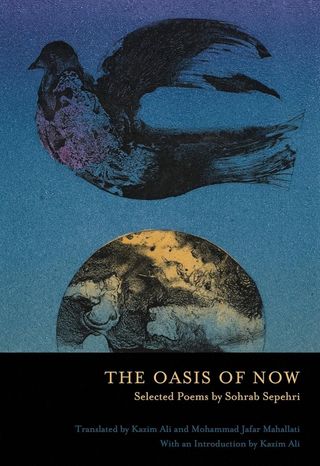
Cover of The Oasis of Now

The Oasis of Now

Sohrab Sepehri

Original language: Persian · Paperback · ISBN 978-1938160226

Sohrab Sepehri (1928-1980) is one of the most widely read Iranian poets of the twentieth century. The Oasis of Now is the first full-length American publication of his work, drawing poems from three of his major collections, among them the acclaimed Water's Footfall. Sepehri's Persian verses remain part of everyday cultural life in Iran, recited at public gatherings. Lines from his poetry were adopted as slogans by protesters during the 2009 demonstrations.

Sepehri traveled extensively through Japan, China, and India, and those experiences shaped his writing in visible ways. He studied Buddhist, Taoist, and Hindu spiritual traditions alongside Western literary and philosophical ones. His poetry sits at a crossing point between these influences, folding ideas from different continents into the sounds and structures of Persian verse.

The collection offers English-language readers a chance to encounter a poet whose name is familiar across Iran but who has had limited book-length publication in the United States. His subjects often circle around nature, presence, and perception, filtered through the particular calm that his cross-cultural study brought to his writing voice.

Plot

Well-versed in Buddhism, mysticism, and Western traditions, Sepehri mingled Western concepts with Eastern ones, creating a poetry unsurpassed in the history of Persian literature. In Iran, his Persian verses are often recited in public gatherings and lines from them were used as slogans by the protesters in 2009. This first full-length American volume collects poems from three of Sepehri's most important books, including the highly acclaimed Water's Footfall. Sohrab Sepehri wrote the poems collected in The Oasis of Now after traveling through Japan, China, and India, where he was exposed to the arts of those countries as well as the spiritual disciplines of Buddhism, Taoism, and Hinduism. This book is crucial for anyone interested in Iranian arts and culture.

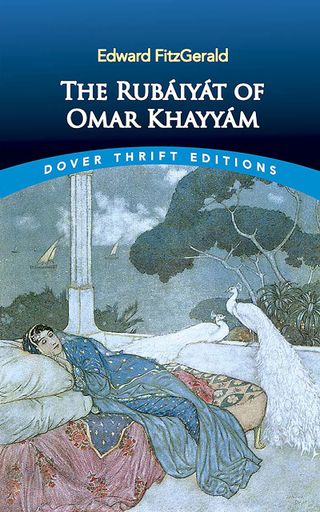
Cover of The Rubáyát

The Rubáyát

Omar Khayyám

Original language: Persian · Paperback · ISBN 978-0486264677

Omar Khayyam (1048-1122) was a Persian polymath based in Nishapur and later Isfahan, known during his lifetime for his contributions to mathematics and astronomy rather than poetry. He helped reform the Persian calendar and wrote influential work on algebra. A collection of short four-line poems, or quatrains, became associated with his name over the centuries, though scholars continue to debate how many he actually composed. The verses address mortality, pleasure, doubt, the passing of time, and the limits of human knowledge.

In 1859, the English writer Edward FitzGerald published a loose English adaptation of these Persian quatrains. The translation was not a strict word-for-word rendering but a creative reshaping of the originals into flowing English verse. Initially the publication attracted little attention. After the poet and painter Dante Gabriel Rossetti and others encountered it, interest grew steadily, and FitzGerald's version eventually became one of the most widely quoted works in the English language.

The result is a text with two layers of authorship: the medieval Persian originals and FitzGerald's nineteenth-century English voice. The quatrains move between skepticism toward certainty and open enjoyment of earthly life, giving the collection a tone that has appealed to readers across very different cultures and periods.

Plot

Omar Khayyám (1048–1122) was a Persian mathematician, astronomer, and philosopher who was not known as a poet in his lifetime. Later, a body of quatrains became attached to his name, although not all were his works. These verses lay in obscurity until 1859, when Edward FitzGerald (1809–1883), an English country gentleman, published a free adaptation of this Persian poetry. After its discovery by D. G. Rossetti and others, the verse became extremely popular. Essentially a hedonist and a skeptic, Omar Khayyám, through FitzGerald, spoke with both an earthy and spiritual freedom that stirred a universal response. As a result, the Rubáiyát became one of the best-known and most often quoted English classics.

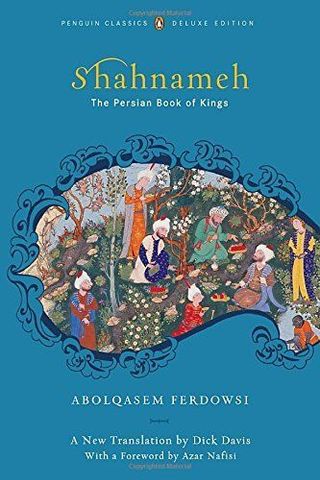
Cover of The Shahnameh

The Shahnameh

Abolqasem Ferdowsi

Original language: Persian · Paperback · ISBN 978-0143104933

The Shahnameh, composed by the poet Abolqasem Ferdowsi around the late tenth century, is one of the longest works of epic poetry ever written by a single author. It narrates the history of Iran from the creation of the world through a succession of mythical and historical kings, ending with the Arab conquest in the seventh century. The poem moves through three broad phases: a mythological age of early kings and supernatural beings, a heroic age dominated by warriors and their feuds, and a semi-historical age covering the Sasanian dynasty and its eventual fall.

Among the poem's many episodes, the story of the warrior Rostam and his son Sohrab stands out as one of its most widely known passages, a conflict built on mistaken identity and irreversible consequences. Ferdowsi wrote the Shahnameh in Persian at a time when Arabic was the dominant literary language across much of the region, and the work became central to the survival of the Persian language and its literary traditions.

This English edition, translated by Dick Davis for Penguin Classics, is described in the record as one of the most complete English-language versions of the poem. The Shahnameh has had a lasting presence across Persian-speaking cultures and appears as a cultural reference point in later Persian poetry and modern literature alike.

Plot

Wherever Persian influence has spread, the stories of the Shahnameh become deeply embedded in the culture, as amply attested by their appearance in such works as The Kite Runner and the love poems of Rumi and Hafez. Among the greatest works of world literature, this prodigious narrative, composed by the poet Ferdowsi in the late tenth century, tells the story of pre-Islamic Iran, beginning in the mythic time of creation and continuing forward to the Arab invasion in the seventh century. The sweep and psychological depth of the Shahnameh is nothing less than magnificent as it recounts classic tales like the tragedy of Rostam and Sohrab.

More from Iran

See the country page for Iran for its map, facts and largest cities, or browse books from other countries.

Links go to Amazon; Hookito doesn’t sell books. Know a book that belongs here, or spotted a mistake? Write to submissions@hookito.com.