Hookito

Italy · Books

Books from Italy

32 books from and about Italy: what each is about, the plot, and a note from Professor Kogi.

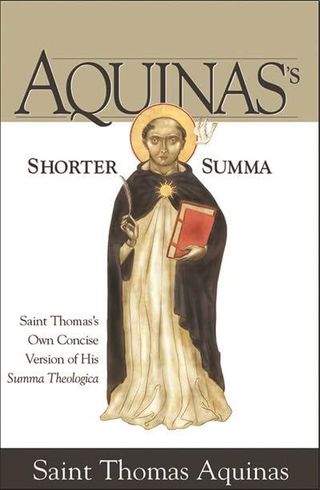
Cover of Aquinas's Shorter Summa

Aquinas's Shorter Summa

St. Thomas Aquinas

Original language: Latin · Paperback · ISBN 978-1928832430

Thomas Aquinas, the thirteenth-century Dominican friar and theologian, produced one of the largest systematic works in Western philosophy and theology: the Summa Theologica. That text, running to thousands of pages, was structured as a series of questions and replies covering topics from the existence of God to ethics and human nature. Near the end of his life, Aquinas reportedly began a shorter companion work at the request of his assistant, Brother Reginald of Piperno. The aim was to present the core positions of Catholic theology in a form accessible to readers without advanced training in philosophy.

This condensed text covers central subjects of Christian doctrine, including the Trinity, Divine Providence, the Incarnation of Christ, and the Last Judgment. Aquinas organizes the material around the three theological virtues of faith, hope, and charity, following the structure of the Creed, the Lord's Prayer, and the Ten Commandments. The language is noticeably more direct than in the full Summa, and the arguments are compressed rather than expanded through the detailed objection-and-reply format found in the longer work.

Aquinas spent most of his working life in Italy and France, teaching at the University of Paris and at Dominican houses in Naples, Rome, and Orvieto. This shorter text remains one of the most concise entry points into his theological system.

Plot

Two years before he died, St. Thomas Aquinas probably the greatest teacher the Church has ever known was asked by his assistant, Brother Reginald, to write a simple summary of the Faith of the Catholic Church for those who lacked the time or the stamina to tackle his massive Summa Theologica. In response, the great saint quickly set down in language that non-scholars can understand his peerless insights into the major topics of theology: the Trinity, Divine Providence, the Incarnation of Christ, the Last Judgment, and much more. Here, then, is not only St. Thomas's concise statement of the key elements of his thought, but a handy reference source for the essential truths of the Catholic Faith.
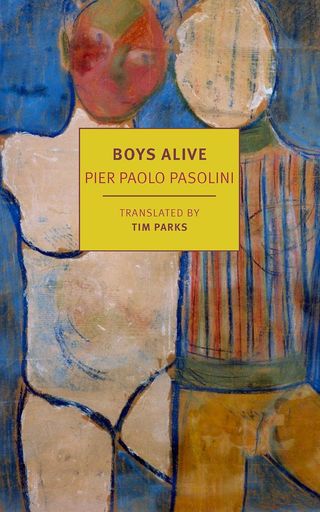

Cover of Boys Alive

Boys Alive

Pier Paolo Pasolini

Original language: Italian · Paperback · ISBN 978-1681377629

Boys Alive, originally published in Italian as Ragazzi di vita in 1955, was Pier Paolo Pasolini's first novel. It follows groups of young people living on the margins of Rome, scraping by through petty schemes, odd jobs, and improvisation in the borgate, the poor outer neighborhoods that expanded rapidly after the Second World War. Pasolini had moved to Rome from the rural northeast of Italy a few years earlier, and the city he encountered supplied both the setting and the language of the book. Much of the dialogue draws on Roman street slang, giving the prose a rough, local texture unusual in Italian literary fiction of that period.

The novel attracted immediate controversy. Italian authorities pursued an obscenity case against it, and it was censored in several countries. The charge centered on its frank depiction of poverty, petty crime, and the daily reality of young people surviving without stable housing or family support. Pasolini, who later became widely known as a filmmaker, treated these lives with close, unsparing observation rather than sentimentality. The book remains his most recognized work of prose fiction, and this English-language edition carries the title Boys Alive.

Plot

Boys Alive, published in 1955, was Pier Paolo Pasolini's first work of fiction and it remains his best known. Written in the aftermath of Pasolini's move from the provinces to Rome, the novel captures the. hunger and anger, waywardness and squalor of the big city. The life of the novel is the life of the city streets; from the streets, too, come its raw, mongrel, assaultive language. Here unblinkered realism and passionate lyricism meet in a vision of a vast urban inferno, blazing with darkness and light.

Cover of Call Me by Your Name

Call Me by Your Name

André Aciman

Original language: English · Paperback · ISBN 978-1250169440

Set during the summer of 1983, Call Me by Your Name follows Elio Perlman, a 17-year-old spending the season with his family at their old villa in northern Italy. Oliver, a doctoral student, arrives to work with Elio's father for several weeks. What begins as cautious curiosity between the two gradually shifts into something far more consuming, shaped by proximity, long days, and the particular freedom of a household built around books and ideas.

The novel tracks the progress of attraction in close, sometimes uncomfortable detail. Elio narrates from inside his own uncertainty, cataloguing small gestures, silences, and the gap between what he wants and what he is willing to say aloud. André Aciman writes desire as a form of attention, where even ordinary moments carry a secondary meaning that only the person watching can decode. The Italian setting, with its heat and unhurried pace, provides a backdrop that makes both intimacy and avoidance feel equally possible.

Time is central to the story's structure. The weeks of summer impose a fixed boundary on whatever happens between the two characters, and the awareness of that limit colors every exchange. Aciman returns to the question of memory repeatedly, exploring how an experience changes shape when viewed from a distance of years.

Plot

Andre Aciman's Call Me by Your Name is the story of a sudden and powerful romance that blossoms between an adolescent boy and a summer guest at his parents’ cliffside mansion on the Italian Riviera. Each is unprepared for the consequences of their attraction, when, during the restless summer weeks, unrelenting currents of obsession, fascination, and desire intensify their passion and test the charged ground between them. Recklessly, the two verges toward the one thing both fear they may never truly find again: total intimacy. It is an instant classic and one of the great love stories of our time.

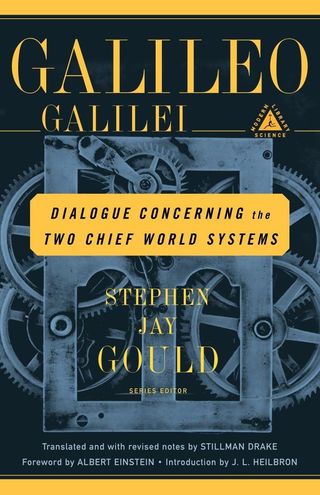
Cover of Dialogue Concerning the Two Chief World Systems: Ptolemaic and Copernican

Dialogue Concerning the Two Chief World Systems: Ptolemaic and Copernican

Galileo Galilei

Original language: Italian · Paperback · ISBN 978-0375757662

Printed in Florence in 1632, Galileo Galilei's Dialogue stages a conversation among three speakers who compare two accounts of the heavens: the older Ptolemaic picture, with Earth fixed at the centre, and the Copernican one, in which Earth travels around the Sun. Salviati presents the Copernican reasoning, Simplicio defends the traditional view, and Sagredo questions both men. Writing philosophy as conversation was an old classical practice.

Galileo builds his case from observation and argument rather than authority, discussing falling bodies, ships, and the motion of the tides to show why a spinning, orbiting Earth need not feel as if it moves. Because the work argued so plainly for the Copernican side, it became the immediate reason for his trial before the Inquisition, and the book was banned. He lived his last years under house arrest.

This edition prints Stillman Drake's English translation of the text as settled by the University of California Press. It carries a foreword by Albert Einstein and an introduction by J. L. Heilbron, which set the discussion in its seventeenth-century context. Galileo wrote in Italian rather than Latin, which put the debate within reach of readers outside the universities.

Plot

Using the dialogue form, a genre common in classical philosophical works, Galileo masterfully demonstrates the truth of the Copernican system over the Ptolemaic one, proving, for the first time, that the earth revolves around the sun. Its influence is incalculable. The Dialogue is not only one of the most important scientific treatises ever written, but a work of supreme clarity and accessibility, remaining as readable now as when it was first published. This edition uses the definitive text established by the University of California Press, in Stillman Drake’s translation, and includes a Foreword by Albert Einstein and a new Introduction by J. L. Heilbron.

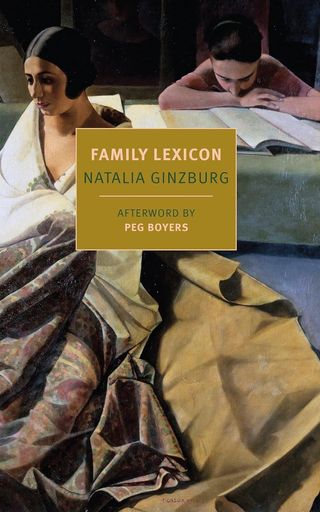
Cover of Family Lexicon

Family Lexicon

Natalia Ginzburg

Original language: Italian · Paperback · ISBN 978-1590178386

Family Lexicon follows the Levi family through several decades in Turin, beginning under Mussolini's rise and continuing through the Second World War and its aftermath. Giuseppe Levi, the father, is a scientist with a passion for mountain hiking and a short temper for anyone who speaks carelessly, dresses badly, or falls short of his standards. His wife Lidia is Catholic, Giuseppe is Jewish, and neither is observant. Their children find separate paths into medicine, literature, politics, and marriage.

Natalia Ginzburg, one of those children, built the book around the phrases, habits, and repeated stories that held the household together. In her opening note she stated that the people and events are real and that she destroyed whatever she caught herself inventing. The Levis were firm anti-fascists, a position that grew more dangerous as Italy moved toward racial laws and war. Her first husband joined the resistance and was killed by the Nazis.

The structure relies less on conventional plot than on the accumulation of small domestic details, pet expressions, and household routines. Turin appears as an industrial city where ordinary family life continued alongside a widening political crisis, recorded largely through the private vocabulary the Levis used among themselves.

Plot

An Italian family, sizable, with its routines and rituals, crazes, pet phrases, and stories, doubtful, comical, indispensable, comes to life in the pages of Natalia Ginzburg’s Family Lexicon. Giuseppe Levi, the father, is a scientist, consumed by his work and a mania for hiking—when he isn’t provoked into angry remonstration by someone misspeaking or misbehaving or wearing the wrong thing. Giuseppe is Jewish, married to Lidia, a Catholic, though neither is religious; they live in the industrial city of Turin where, as the years pass, their children find ways of their own to medicine, marriage, literature, politics. It is all very ordinary, except that the background to the story is Mussolini’s Italy in its steady downward descent to race law and world war. The Levis are, among other things, unshakeable anti-fascists. That will complicate their lives.

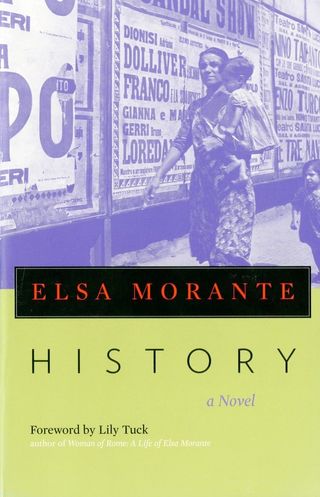
Cover of History

History

Elsa Morante

Original language: Italian · Paperback · ISBN 978-1586420048

History is a novel by Elsa Morante set in Rome and its surroundings during the Second World War. At its center is Ida Mancuso, a widowed schoolteacher struggling to hold her small family together as the conflict closes in. Her older teenage son drifts through the war as though it were an adventure, while Ida herself is assaulted by a German soldier passing through on his way to North Africa. She becomes pregnant, and the child born from that violence becomes the focus of her fierce, quiet determination to survive.

Morante populates the novel with a broad cast of ordinary people swept along by forces they cannot control. Bombing raids flatten neighborhoods, a cattle car passes through carrying people whose cries can be heard from outside, and an Italian soldier freezes on the Eastern Front. Peasants who have always lived with very little now face even less. The war moves through the story like floodwater, reshaping every life it touches.

Morante wrote the novel nearly three decades after she and Alberto Moravia spent a year hiding among farming communities in the mountains south of Rome during the German occupation. That direct experience of rural wartime Italy sits visibly behind the book's detailed, ground-level portrait of civilian life under occupation.

Plot

The central character in this powerful and unforgiving novel is Ida Mancuso, a schoolteacher whose husband has died and whose feckless teenage son treats the war as his playground. A German soldier on his way to North Africa rapes her, falls in love with her, and leaves her pregnant with a boy whose survival becomes Ida's passion. Around these two other characters come and go, each caught up by the war which is like a river in flood. We catch glimpses of bombing raids, street crimes, a cattle car from which human cries emerge, an Italian soldier succumbing to frostbite on the Russian front, the dumb endurance of peasants who have lived their whole lives with nothing and now must get by with less than nothing.

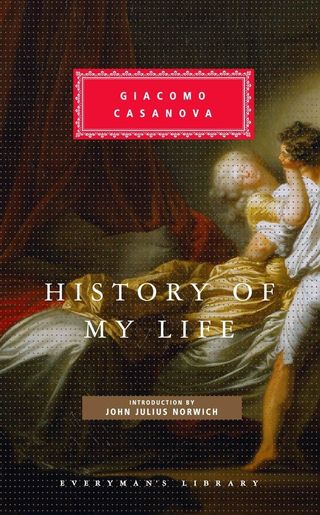
Cover of History of My Life

History of My Life

Giacomo Casanova

Original language: Italian · Hardcover · ISBN 978-0307265579

Giacomo Casanova, born in Venice in 1725, is remembered primarily for his romantic pursuits. His autobiography, however, covers far more ground. Written late in his life and left unfinished, History of My Life records decades of activity across eighteenth-century Europe. Casanova worked at various times as a diplomat, a gambler, a businessman, and a trainee priest. He organized lotteries, wrote opera libretti, and involved himself in political affairs. He was also imprisoned and managed to escape, eventually leaving Venice behind.

His travels took him through cities including Moscow, London, Berlin, and Constantinople, where he encountered figures such as Catherine the Great, Voltaire, Louis XV, and Rousseau. He recorded these meetings and countless smaller episodes in a memoir that runs to enormous length. The present edition draws from roughly one third of the full text, selecting the major episodes and the most substantial personal stories.

Casanova wrote the memoir in French during his final years, while living in the castle of Dux in Bohemia as a librarian. The result is a detailed, often comic, and occasionally contradictory account of a long life lived across borders, social classes, and occupations.

Plot

The name of Giacomo Casanova, Chevalier de Seingalt (1725-98), is now synonymous with amorous exploits, and there are plenty of these, vividly narrated, in his memoirs. But Casanova was not just an energetic lover. In his time he was a diplomat, businessman, trainee priest, traveler, prisoner, magician, confidence man, gambler, professional entertainer, and charlatan. He financed business projects, organized lotteries, wrote opera libretti, and dabbled in high politics. Above all he was an autobiographer of enduring brilliance and subtlety who left behind him what is probably the most remarkable confession ever written.

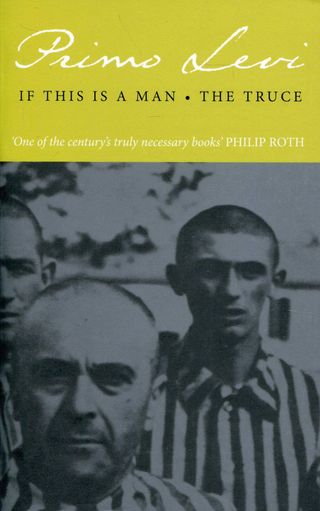
Cover of If This Is a Man and The Truce

If This Is a Man and The Truce

Primo Levi

Original language: Italian

This volume collects two linked works by the Italian chemist and writer Primo Levi. If This Is a Man, first published in 1947, is his account of the eleven months he spent as a prisoner in Auschwitz during 1944 and 1945. Levi was a young chemist from Turin, deported as part of the Nazi persecution of Italian Jews. His writing records daily conditions in the camp with a measured, analytical attention to detail, documenting the systematic destruction of human dignity alongside small acts of connection between prisoners.

The Truce, published in 1963, picks up where the first book ends. It follows the long and disorienting months Levi spent crossing Eastern Europe after liberation, passing through Soviet transit camps and displaced-person networks before finally reaching home. Where the first book is tightly focused on survival inside Auschwitz, the second opens outward into a chaotic landscape of uprooted people, improvised economies, and uncertain borders.

Levi wrote in plain, precise Italian prose, approaching his subject as both witness and observer. His background as a working chemist shaped his habit of looking closely at materials, processes, and human behavior under pressure. The two books together cover the full arc from imprisonment through the slow, uneven process of return.

Plot

With the moral stamina and intellectual pose of a twentieth-century Titan, this slightly built, dutiful, unassuming chemist set out systematically to remember the German hell on earth, steadfastly to think it through, and then to render it comprehensible in lucid, unpretentious prose. He was profoundly in touch with the minutest workings of the most endearing human events and with the most contemptible. What has survived in Levi's writing isn't just his memory of the unbearable, but also, in THE PERIODIC TABLE and THE WRENCH, his delight in what made the world exquisite to him. He was himself a "magically endearing man, the most delicately forceful enchanter I've ever known" - PHILIP ROTH

Cover of Italian Folktales

Italian Folktales

Italo Calvino

Original language: Italian · Paperback · ISBN 978-0156454896

Italian Folktales gathers two hundred traditional stories selected and retold by Italo Calvino, translated into English by George Martin. The tales come from regions across Italy and carry figures familiar to folk literature: kings and peasants, saints and ogres, together with unusual plants and animals that take decisive roles in the action. Calvino drew on nineteenth-century regional collections and recorded oral material, keeping local detail while shaping the language for a wider Italian readership.

The tone shifts from earthy humor to quiet mystery to plain nonsense, sometimes inside a single story. Some tales follow narrative patterns known across Europe, while others belong to Sicilian, Tuscan, Piedmontese and other local traditions. Calvino added an introduction describing his method and his decisions as both editor and rewriter, which shows how such stories move between villages and change across geography and time.

In the year the collection first appeared, the New York Times placed it among the ten best books of that season, and it found a steady audience among readers of traditional tales. The English edition carries illustrations and was published as a Helen and Kurt Wolff Book, an imprint long associated with literary work translated from European languages.

Plot

Filled with kings and peasants, saints and ogres—as well as some quite extraordinary plants and animals—these two hundred tales bring to life Italy’s folklore, sometimes with earthy humor, sometimes with noble mystery, and sometimes with the playfulness of sheer nonsense.

Cover of La Cucina: The Regional Cooking of Italy

La Cucina: The Regional Cooking of Italy

The Italian Academy of Cuisine

Original language: Italian · Hardcover · ISBN 978-0847831470

La Cucina began as an effort to record what was at risk of disappearing. Around fifty years ago, scholars in Italy founded the Italian Academy of Cuisine with a specific mission: to document traditional recipes from every region of the country before they were lost. The academy eventually grew to include over seven thousand associates, who traveled to villages across Italy to interview home cooks, farmers, and grandmothers, writing down recipes that in many cases had never been formally recorded.

The result is a collection of roughly two thousand recipes, each labeled with its region of origin. The book treats Italian cooking not as a single tradition but as a patchwork of local ones, shaped by geography, climate, and available ingredients. Techniques shift from one area to another alongside the recipes themselves. Historical recipes appear throughout the collection, offering glimpses into older food customs and the everyday culture that surrounded them.

The scope of the project gives the book an unusual character. It functions less as a personal cookbook and more as a reference compiled through fieldwork, closer in method to ethnography than to the work of a single chef or food writer.

Plot

They formed the Italian Academy of Cuisine to document classic recipes from every region. The academy’s more than seven thousand associates spread out to villages everywhere, interviewing grandmothers and farmers at their stoves, transcribing their recipes—many of which had never been documented before. This is the culmination of that research, an astounding feat—2,000 recipes that represent the patrimony of Italian country cooking. Each recipe is labeled with its region of origin, and it’s not just the ingredients but also the techniques that change with the geography. Sprinkled throughout are historical recipes that provide fascinating views into the folk culture of the past.

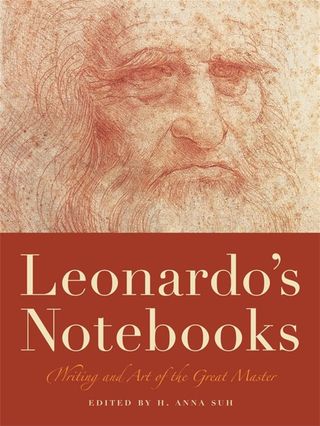
Cover of Leonardo's Notebooks

Leonardo's Notebooks

Leonardo da Vinci

Original language: Italian · Flexibound · ISBN 978-1579129460

Leonardo's Notebooks gathers writings, drawings, and observations from Leonardo da Vinci's own hand, organized by subject rather than chronology. The collection covers a broad sweep of his interests, from human anatomy and botany to architecture, optics, geography, and mechanical inventions. Each section pairs his written notes with the detailed sketches and studies he produced alongside them, offering a direct view of how he moved between disciplines.

Da Vinci kept private notebooks throughout his life, filling thousands of pages with mirror-script text and precise illustrations. Many of these pages survived in scattered archives across Europe. This edition sorts that material into thematic groups, including studies of light and shade, perspective and visual perception, landscape, the physical sciences, and astronomy. The arrangement makes it possible to follow a single line of inquiry across different periods of his career.

Because the source material is da Vinci's own writing and drawing rather than a later biography, the book functions as a primary document. His observations on subjects like water flow, bird flight, and the structure of the human body sit alongside plans for paintings and architectural projects, showing the range of questions he carried at the same time.

Plot

This book is a collection of da Vinci's intricately detailed artistic and intellectual pursuits, and highlights the classic pieces of art he produced in connection with his writings. Leonardo's Notebooks provides a fascinating look into da Vinci's most private world, and sorts his wide range of interests into subjects such as human figures, light and shade, perspective and visual perception, anatomy, botany and landscape, geography, the physical sciences and astronomy, architecture, inventions and so much more. Exploring this image-filled book is as close to reading da Vinci's diaries as we can get.

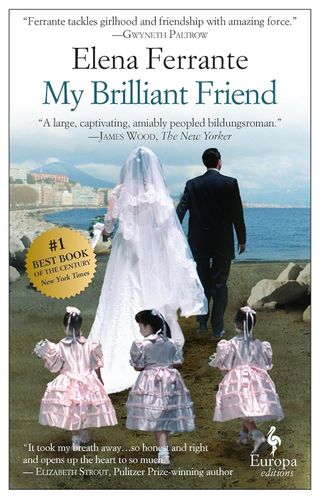
Cover of My Brilliant Friend

My Brilliant Friend

Elena Ferrante

Original language: Italian · Paperback · ISBN 978-1609450786

My Brilliant Friend is the first of four novels by Elena Ferrante, set in a poor neighborhood on the outskirts of Naples beginning in the 1950s. It follows two girls, the studious narrator Elena Greco and her fierce, unpredictable friend Lila Cerullo, from their first meeting at age ten through adolescence. Their friendship is intense and uneven, shaped by rivalry, admiration, and the pressures of growing up in a place where violence and poverty limit what girls can become.

Ferrante populates the neighborhood with a large cast of secondary characters, families whose rivalries and alliances form a tight social web around the two protagonists. The novel tracks how education begins to separate Elena and Lila, offering one of them a possible route out of the neighborhood while the other faces early adulthood on different terms. Class, gender, and the slow transformation of postwar Italy all press against the friendship without reducing it to a single theme.

The book is the opening volume of what became a four-part series spanning roughly sixty years. It was originally published in Italian as L'amica geniale. Ferrante writes under a pseudonym, and her true identity has been a subject of public speculation for decades.

Plot

Beginning in the 1950s in a poor but vibrant neighborhood on the outskirts of Naples, Elena Ferrante’s four-volume story spans almost sixty years, as its main characters, the fiery and unforgettable Lila and the bookish narrator, Elena, become women, wives, mothers, and leaders, all the while maintaining a complex and at times conflicted friendship. This first novel in the series follows Lila and Elena from their fateful meeting as ten-year-olds through their school years and adolescence. Through the lives of these two women, Ferrante tells the story of a neighborhood, a city, and a country as it is transformed in ways that, in turn, also transform the relationship between two women.

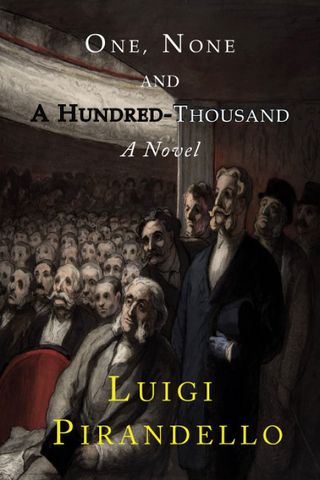
Cover of One, None and a Hundred Thousand

One, None and a Hundred Thousand

Luigi Pirandello

Original language: Italian · paperback

Luigi Pirandello's novel One, None and a Hundred Thousand follows Vitangelo Moscarda, a man whose sense of identity collapses after his wife makes an offhand remark about his appearance. From this small, almost trivial moment, Vitangelo realizes that every person he has ever known carries a different version of him in their mind, and that none of these versions matches the person he believes himself to be. The discovery is both absurd and destabilizing.

Vitangelo's response is not passive acceptance. He sets out to dismantle every false image others have built of him, a campaign that those around him interpret as erratic or hostile. The novel traces this effort and its consequences as Vitangelo tries to locate something authentic beneath the accumulated projections of social life. Pirandello, in a 1924 letter, described the book as the bitterest of all his works, calling it profoundly humoristic and concerned with the decomposition of life.

The story is set in an Italian town where reputation and social role define a person's standing. Vitangelo's position as the son of a banker gives him visibility, which makes his rebellion against fixed identity all the more disruptive to the people around him. The tension between individual self-perception and the images imposed by others runs through every stage of the plot.

Plot

Vitangelo, the protagonist, discovers by way of a completely irrelevant question that his wife poses to him that everyone he knows, and everyone he has ever met, has constructed a Vitangelo persona in their own imagination and that none of these personas corresponds to the image of Vitangelo that he himself has constructed and believes himself to be. The reader is immediately immersed in a cruel game of confusing projections, mirroring the reality of social existence itself, which imperiously dictate their rules. As a result, the first, ironic "awareness" of Vitangelo consists in the knowledge of that which he definitely is not; the preliminary operation must therefore consist in the spiteful destruction of all of these fictitious masks.

Cover of Orlando Furioso

Orlando Furioso

Ludovico Ariosto

Original language: Italian · Paperback · ISBN 978-1444430417

Orlando Furioso is a long narrative poem by Ludovico Ariosto, first published in 1516 and revised through 1532. It is written in ottava rima, a stanza of eight rhymed lines, and continues a story begun by Matteo Maria Boiardo. The setting is a war between Charlemagne's Christian forces and a Saracen army threatening Paris, though the fighting mainly frames dozens of intertwined personal stories.

The poem follows knights, princesses, sorcerers, and monsters across Europe, North Africa, and places further afield. Orlando, a paladin of Charlemagne modelled on the French hero Roland, is consumed by his love for Angelica, a princess from Cathay. That passion turns into violent madness, which gives the poem its title. A second major thread traces the warrior Ruggiero and the female knight Bradamante.

Ariosto arranged the 46 cantos so that storylines break off and resume later, keeping many plots in motion at the same time. The work draws on Arthurian romance, classical epic, and earlier Italian chivalric poetry, mixing combat, enchantment, and satire with an ironic narrator who comments on the action from a distance. Ariosto worked in Ferrara, and the poem gives a place of honour to the Este family who ruled there.

Plot

The poem follows the exploits of various knights, including the valiant Orlando (Roland), the fearless Ruggiero, and the beautiful Angelica. These characters embark on a series of quests, confront monsters, and engage in epic battles, all while navigating the complex world of courtly love and intrigue. The central theme of the poem is the love of Orlando for Angelica, a passion that drives him to madness, earning the nickname "Furioso." "Orlando Furioso" is celebrated for its poetic brilliance, imaginative storytelling, and its influence on subsequent literature, including the works of Shakespeare and Cervantes. Ariosto's vivid descriptions, witty commentary, and compelling characters continue to captivate readers and scholars to this day.

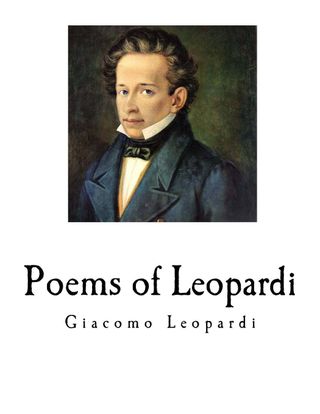
Cover of Poems of Leopardi

Poems of Leopardi

Giacomo Leopardi

Original language: Italian · Paperback · ISBN 978-1981312115

Giacomo Leopardi was born on 29 June 1798 in Recanati, a hilltop town in the Marche region of central Italy, near Ancona and the Adriatic coast. He was the eldest son of Count Monaldo Leopardi, who maintained a large private library and had his own literary ambitions. Leopardi grew up surrounded by books and by the landscape visible from Recanati's elevated position in the Apennines, with views stretching to the sea. He did not leave his hometown until the age of twenty-four, and those years of close observation shaped a distinctive sensitivity to the natural world.

This collection gathers poems from a writer widely regarded as the foremost Italian poet of the nineteenth century. Leopardi's verse returns often to questions of nature, beauty, and the limits of human experience. His language is precise and controlled, grounded in the specific terrain he knew from childhood. The hills, light, and distances around Recanati appear throughout his work, not as decoration but as a way of thinking about what it means to perceive and to feel.

Leopardi also produced significant prose and philosophical writing during his short life. He died in 1837 at the age of thirty-eight. His poetry remains central to Italian literary tradition and continues to be translated into many languages.

Plot

Giacomo Leopardi was born at Recanati, a town of the March of Ancona, on the twenty-ninth of June, 1798; the eldest son of Count Monaldo Leopardi, and Adelaide, his wife, daughter of the Marquis Antici. He had four brothers and one sister—Paolina. His father possessed a splendid library, and was a man of learning and literary tastes, appearing himself as an author in prose and verse. Recanati is situated on an eminence in the Appenines, not far from Ancona and the celebrated shrine of Loreto; and as a biographer of our poet says: "Its natural beauties are superb, and the genius of its great son has made them incomparable." Up to the age of twenty-four Leopardi did not leave his native place. The constant sight of so lovely a landscape, bordered in the distance by the Adriatic, contributed in no slight measure to give him that exquisite taste and sympathy for nature, for which he is unique among the poets of his country.

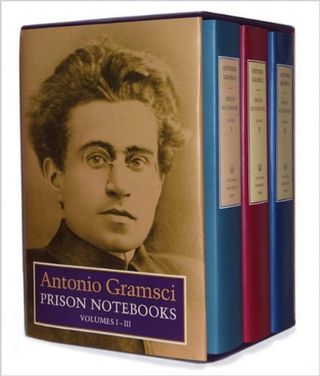
Cover of Prison Notebooks

Prison Notebooks

Antonio Gramsci

Original language: Italian · Paperback · ISBN 978-0231157551

Antonio Gramsci wrote the Prison Notebooks while held in Italian fascist prisons during the late 1920s and 1930s. Arrested in 1926 as a leading figure of the Italian Communist Party, he spent years in detention, filling over thirty notebooks with observations on philosophy, history, politics, education, and culture. The notebooks were not composed as a single unified text but as a series of drafts, fragments, and extended notes, many of them revised or restarted across different volumes.

This English edition, published by Columbia University Press, is based on the Italian critical edition known as Quaderni del Carcere. It covers notebooks 1 through 8 and includes detailed editorial notes intended to place Gramsci's arguments within the context of his earlier writings and correspondence. The notes also clarify references to historical events, cultural figures, and intellectual sources that Gramsci engaged with during his imprisonment.

Gramsci developed several concepts in these pages that became widely discussed in political theory and the social sciences, including his thinking on cultural hegemony, the role of intellectuals in society, and the relationship between civil society and the state. The notebooks remain a primary source for understanding his political thought in its unfinished, working form.

Plot

Based on the authoritative Italian edition of Gramsci's work, Quaderni del Carcere, this comprehensive translation presents the intellectual as he ought to be read and understood, with critical notes that clarify Gramsci's history, culture, and sources; an index of names; and a contextualization of the thinker's ideas against his earlier writings and letters. This set includes notebooks 1 through 8 with all attendant notes and materials and is an indispensible resource for scholars in the humanities and social sciences.

Cover of Reeds in the Wind

Reeds in the Wind

Grazia Deledda

Original language: Italian · paperback

Reeds in the Wind follows the Pintor sisters, members of a once-prominent landowning family in the Baronia region of Sardinia. Their fortunes have faded, and their household now depends heavily on Efix, a devoted servant carrying the burden of a past wrongdoing he has never disclosed. When their nephew Giacinto arrives, his presence sets off a chain of events shaped by old guilt, family loyalty, and the question of whether any act of devotion can truly settle an unpaid debt.

Grazia Deledda, who was awarded the Nobel Prize in Literature in 1926, sets the novel firmly in the physical and cultural world of rural Sardinia. The Mediterranean storms, rocky mountains, forests, and springs surrounding the characters function almost as participants in the story. Deledda also draws on the island's folk traditions, including religious festivals held in mountain camps and local belief in supernatural beings such as fairies living inside rocks and sprites said to wear seven red caps.

The novel's central tensions arise from the gap between the Pintor family's former standing and their present circumstances, and from Efix's private struggle with a secret that shapes every decision he makes. Crime, guilt, and the possibility of retribution run through the narrative against a landscape that feels both ancient and unforgiving.

Plot

This novel presents the story of the Pintor sisters - from a family of noble landowners now in decline - their nephew Giacinto, and their servant Efix, who is trying to make up for a mysterious sin committed many years before. Around, below, and inside them, the raging Mediterranean storms, the jagged mountains, the murmuring forests, and the gushing springs form a Greek chorus of witnesses to the tragic drama of this unforgiving land. Deledda tells her story with her characteristic love of the natural landscape and fascination with the folk culture of the island, with details about the famous religious festivals held in mountain encampments and the lore of the "dark beings who populate the Sardinian night, the fairies who live in rocks and caves, and the sprites with seven red caps who bother sleep.

Cover of Tartar Steppe

Tartar Steppe

Dino Buzzati

Original language: Italian · Paperback · ISBN 978-1786891648

Giovanni Drogo, a young military officer, arrives at Fort Bastiani expecting a brief posting before moving on to greater things. The fort sits on the edge of a vast, empty desert along a remote border. Its garrison watches for an enemy that has never appeared. Drogo plans to leave quickly, but the routine of the fortress, the open horizon, and the faint possibility of a meaningful encounter keep pulling him back into staying a little longer.

The soldiers at Fort Bastiani have spent years, sometimes decades, scanning the northern desert for signs of movement. Their duty has no clear purpose, yet leaving feels like abandoning the one event that might give their service meaning. Drogo gradually falls into the same pattern, trading months and then years for the chance that something important will finally happen. Buzzati uses this premise to examine how waiting itself can become a way of life, quietly replacing action, ambition, and ordinary human connection.

Dino Buzzati wrote the novel in 1938, while he was working as a journalist in Milan. The story draws on his own experience of repetitive office routines and the feeling of time passing without visible result. It has been translated widely and adapted into a 1976 Italian-French film directed by Valerio Zurlini.

Plot

Idealistic young officer Giovanni Drogo is full of determination to serve his country well. But when he arrives at a bleak border station in the Tartar desert, where he is to take a short assignment at Fort Bastiani, he finds the castle manned by veteran soldiers who have grown old without seeing a trace of the enemy. As his length of service stretches from months into years, he continues to wait patiently for the enemy to advance across the desert, for one great and glorious battle . . .

Cover of The Adventures of Pinocchio

The Adventures of Pinocchio

Carlo Collodi

Original language: Italian · paperback

The Adventures of Pinocchio was written by Carlo Collodi, the pen name of Carlo Lorenzini, and first published in serial form in an Italian children's newspaper starting in 1881. The story begins when a carpenter discovers a block of wood that can talk. He passes it along to his poor neighbor Geppetto, who shapes it into a marionette and names him Pinocchio. From that moment the wooden figure behaves less like a puppet and more like a willful child, running away, skipping school, and falling into one dangerous situation after another.

Collodi wrote the book in Pescia, a small town in Tuscany. The story follows Pinocchio through encounters with swindlers, magical creatures, and his own repeated poor decisions. His nose famously grows when he lies, a detail that has become one of the most recognized symbols in children's literature worldwide. Through each episode, Pinocchio confronts the gap between what he promises and what he actually does.

Carol Della Chiesa produced one of the well-known English translations of the novel. The original Italian text has been translated into hundreds of languages, and the character of Pinocchio remains closely associated with Italian storytelling tradition. A monument to the character stands in Pescia's neighboring town of Collodi, the village from which Lorenzini took his pen name.

Plot

The Adventures of Pinocchio is a novel for children by Italian author Carlo Collodi, written in Pescia. A carpenter finds a talking piece of wood and gives it to his poor neighbor, Geppetto, who carves the block into a marionette and names him Pinocchio.

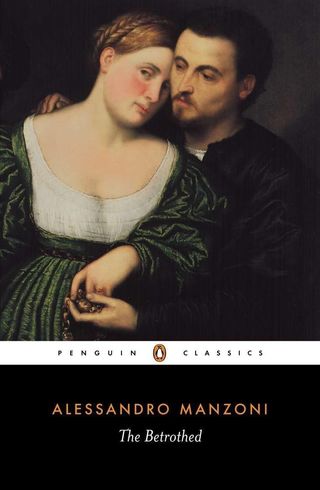
Cover of The Betrothed: I Promessi Sposi

The Betrothed: I Promessi Sposi

Alessandro Manzoni

Original language: Italian · Paperback · ISBN 978-0140442748

Alessandro Manzoni's The Betrothed is set in Lombardy during the late 1620s, when the region was under Spanish rule. The story follows Renzo and Lucia, two young people whose planned marriage is blocked by Don Rodrigo, a local tyrant who wants Lucia for himself. The couple is forced to flee their home and soon find themselves separated, each facing a different set of dangers across northern Italy.

Their paths cross with a cast of distinct figures: Father Cristoforo, a passionate friar who tries to protect them; the Nun of Monza, whose history is shadowed by secrecy; and a powerful figure known only as the Unnamed. Meanwhile, the broader world presses in. Plague and famine sweep through Lombardy, and Manzoni draws on historical records of the 1630 Milan plague to ground his fiction in documented events.

First published in Italian between 1825 and 1827, the novel became central to the development of modern written Italian. Manzoni revised the language extensively for a later edition, aiming for a Florentine-based standard. The book sits within the tradition of European historical fiction and remains widely read in Italy, where it is a standard part of school curricula.

Plot

Set in Lombardy during the Spanish occupation of the late 1620s, The Betrothed tells the story of two young lovers, Renzo and Lucia, prevented from marrying by the petty tyrant Don Rodrigo, who desires Lucia for himself. Forced to flee, they are then cruelly separated, and must face many dangers including plague, famine and imprisonment, and confront a variety of strange characters—the mysterious Nun of Monza, the fiery Father Cristoforo and the sinister "Unnamed"—in their struggle to be reunited.

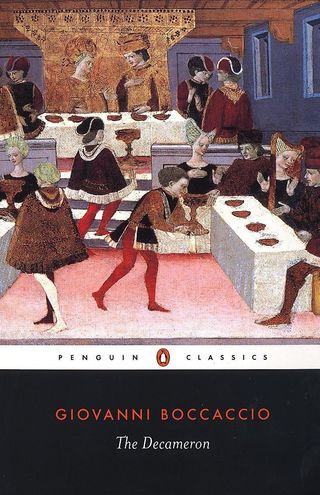
Cover of The Decameron

The Decameron

Giovanni Boccaccio

Original language: Italian · Paperback · ISBN 978-0140449303

In 1348 the Black Death reached Florence. Giovanni Boccaccio, writing probably between 1349 and 1353, used that catastrophe as the frame for a work of fiction. Ten young people, seven women and three men, leave the stricken city for a villa in the hills near Fiesole. Each tells one story a day across ten days, producing one hundred tales. The title reflects that structure: Decameron means roughly ten days of work.

The stories range widely in subject and tone. Some are comic and sexually frank, such as the tale of Peronella hiding her lover inside a tub. Others follow tricksters, merchants, lovers and clergy through situations that test wit, loyalty and luck. One concerns Ser Cepperello, whose brazen dishonesty leads toward veneration as a saint. Rather than dwelling on moral or religious abstractions, the collection attends to human resourcefulness and the workings of fortune.

Each day has a chosen leader who sets the theme for that day's tales. The remaining days of the group's fortnight are set aside for rest or devotion. Every day closes with a canzone, a sung poem, and some of these count among Boccaccio's finest verse. It has long been counted among the masterpieces of classical Italian prose.

Plot

In the summer of 1348, as the Black Death ravages their city, ten young Florentines take refuge in the countryside. They amuse themselves by each telling a story a day for the ten days they are destined to remain there—a hundred stories of love, adventure and surprising twists of fate. Less preoccupied with abstract concepts of morality or religion than with earthly values, the tales range from the bawdy Peronella hiding her lover in a tub to Ser Cepperello, who, despite his unholy effrontery, becomes a Saint. The result is a towering monument of European literature and a masterpiece of imaginative narrative.

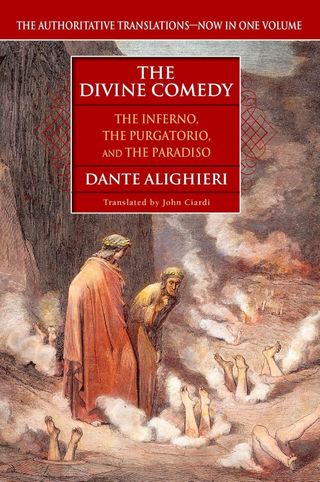
Cover of The Divine Comedy

The Divine Comedy

Dante Alighieri

Original language: Italian · Paperback · ISBN 978-0451208637

The Divine Comedy, written by Dante Alighieri in the early fourteenth century, is a long narrative poem divided into three parts: Inferno, Purgatorio, and Paradiso. Each part contains thirty-three cantos, with an additional introductory canto at the start, bringing the total to one hundred. This number was deliberate. In medieval number symbolism, one hundred represented perfection, while three corresponded to the Holy Trinity and thirty-three to the years of the life of Christ.

The poem opens with Dante lost in a dark forest. There he meets the Roman poet Virgil, who becomes his guide. Together they descend into Hell, imagined as a series of concentric circles narrowing toward the center of the Earth. They then climb upward through Purgatory, depicted as a tall mountain on an island in the southern hemisphere, where souls undergo gradual purification along terraced paths that grow narrower as they rise. At the summit lies an earthly paradise.

When they reach this point, Virgil departs and Beatrice takes over as guide, leading Dante upward into Paradise. The three realms form a structured geography of the afterlife, each with its own physical logic and moral order, shaped by the theological and philosophical ideas of medieval Europe.

Plot

Belonging in the immortal company of the great works of literature, Dante Alighieri’s poetic masterpiece, The Divine Comedy, is a moving human drama, an unforgettable visionary journey through the infinite torment of Hell, up the arduous slopes of Purgatory, and on to the glorious realm of Paradise—the sphere of universal harmony and eternal salvation.

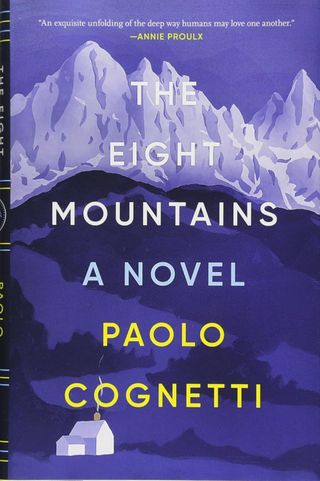
Cover of The Eight Mountains

The Eight Mountains

Paolo Cognetti

Original language: Italian · Hardcover · ISBN 978-1501169885

Pietro grows up in Milan, where his family life is quiet and strained. His parents grow more distant from each other over time, but the one thing that still holds them together is a shared attachment to the mountains of northeastern Italy. During summers spent at the foot of the Aosta Valley, Pietro meets Bruno, a local boy whose life is rooted in the alpine landscape. The two form a close friendship built on long days spent walking through meadows and climbing peaks together.

As they grow older, their paths split. Pietro moves through cities around the world, while Bruno stays in the mountains. The novel follows the shape of their friendship across years, tracking how distance and different choices test a bond formed in childhood. Alongside this central relationship, the book explores the complicated pull between fathers and sons, and the way a particular place can anchor a person's sense of identity even when they leave it behind.

Paolo Cognetti sets the story against the physical reality of the Italian Alps, where altitude, seasons, and terrain are constant presences rather than background scenery. The title refers to a Nepali model of the universe, connecting the local mountain setting to a broader idea of how landscapes shape the people who live among them.

Plot

Pietro is a lonely boy living in Milan. With his parents becoming more distant each day, the only thing the family shares is their love for the mountains that surround Italy. While on vacation at the foot of the Aosta Valley, Pietro meets Bruno, an adventurous, spirited local boy. Together they spend many summers exploring the mountains’ meadows and peaks and discover the similarities and differences in their lives, their backgrounds, and their futures. The two boys come to find the true meaning of friendship and camaraderie, even as their divergent paths in life—Bruno’s in the mountains, Pietro’s across the world—test the strength and meaning of their connection.

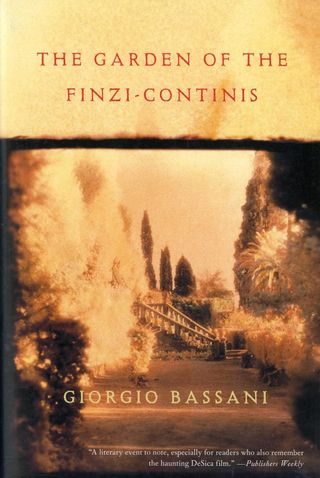
Cover of The Garden of the Finzi-Continis

The Garden of the Finzi-Continis

Giorgio Bassani

Original language: Italian · Paperback · ISBN 978-0156345705

The Garden of the Finzi-Continis is set in Ferrara, a city in northern Italy, during the late 1930s. At its center is a wealthy Jewish family who live behind the high walls of their private estate, separated from the rest of the town. The narrator, a young middle-class Jewish man, has watched the family from a distance since childhood, drawn especially to the two Finzi-Contini children, Alberto and Micol. In the autumn of 1938, as Fascist Italy introduces racial laws restricting Jewish life, he is finally invited inside their grounds.

Within the garden, daily existence appears to continue undisturbed. Tennis is played, conversations unfold, and the outside world seems far away. The narrator's growing attachment to Micol becomes one of the novel's central threads, but the story is told from a distance of thirteen years, long after the war has ended. That gap between the sheltered present of the garden and the narrator's later knowledge of what followed gives the book its particular tension.

Giorgio Bassani published the novel in 1962. It was later adapted into a film that received an Academy Award. Bassani himself grew up in Ferrara, and much of his fiction returns to that city and its Jewish community during the Fascist period.

Plot

The Finzi-Continis are an aristocratic Jewish family who live an insular life behind the walls of their estate in the northern Italian city of Ferrera. The narrator, a young middle-class Jew, has been intrigued by the Finzi-Continis from boyhood and especially by the two children, Alberto and Micol. Not until he is twenty-two, in the autumn of 1938, is he invited to enter their private world, a place seemingly immune from the racial laws of Fascist Italy. Thirteen years after the war, he traces his intricate relationship with the beautiful Micol and shares the predicament of all the Ferrarese Jews on the eve of their destruction. Critically acclaimed and award-winning, The Garden of the Finzi-Continis is an unforgettable, wrenching novel that re-creates a tragic era in history.

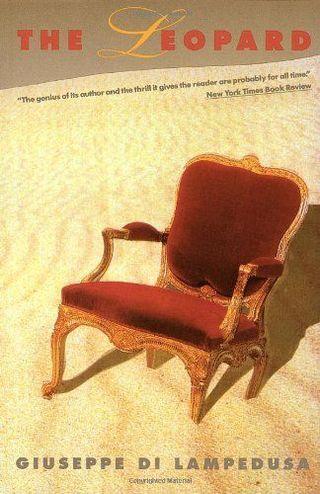
Cover of The Leopard

The Leopard

Giuseppe Tomasi di Lampedusa

Original language: Italian · paperback

The Leopard follows Don Fabrizio, Prince of Salina, through the upheavals that reshaped Sicily in the 1860s. Garibaldi's forces have landed on the island, and the old Bourbon kingdom is collapsing. Don Fabrizio, an aging aristocrat with a deep attachment to his inherited world, watches the political landscape shift beneath his family. He is perceptive enough to understand what is coming but too rooted in his class to do much about it. Around him, younger figures adapt more willingly, and the novel traces the friction between generations as power changes hands.

Giuseppe Tomasi di Lampedusa wrote the book drawing on his own aristocratic Sicilian background. He was himself a prince, and the novel was published posthumously in 1958, a year after his death. It became one of the most widely read Italian novels of the twentieth century. The story is set against real historical events, particularly the unification of Italy, but its focus stays close to private life: marriages, meals, social rituals, and the slow awareness that a familiar order is ending. Luchino Visconti later adapted the novel into a film released in 1963.

Plot

The Prince of Salina, a noble aristocrat of impeccable integrity, tries to preserve his family and class amid the tumultuous social upheavals of 1860s Sicily

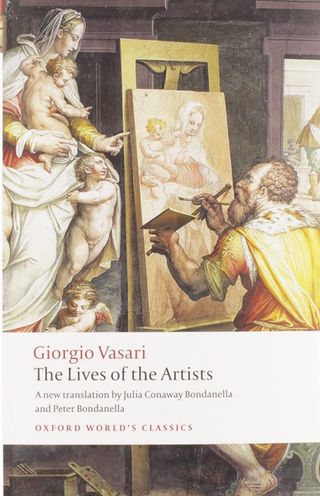
Cover of The Lives of the Artists

The Lives of the Artists

Giorgio Vasari

Original language: Italian · Paperback · ISBN 978-0199537198

Giorgio Vasari published his collection of artist biographies in Florence in 1550, with an expanded edition following in 1568. The book covers painters, sculptors, and architects working in Italy from the late 1200s onward, organized around a central argument: that the arts declined after the Roman period and were gradually revived over several centuries. Vasari structured this revival as a three-stage progression, beginning with Giotto, advancing through Brunelleschi and other fifteenth-century figures, and reaching its peak with Leonardo da Vinci, Michelangelo, and Raphael.

Vasari was himself a working painter and architect in the service of the Medici family, which gave him direct access to studios, patrons, and surviving relatives of the artists he wrote about. His accounts mix technical observations about fresco, tempera, and marble with anecdotes about personality, rivalry, and working habits. Some of these stories have been questioned by later scholars, but many details remain the earliest written record available for figures whose own papers did not survive.

The book is also credited with popularizing the Italian word rinascita, meaning rebirth, a term that eventually became the basis for the English word Renaissance. Vasari applied it to describe what he saw as the recovery of classical skill and ambition in Italian art.

Plot

Vasari, who invented the term "Renaissance," was the first to outline the influential theory of Renaissance art that traces a progression through Giotto, Brunelleschi, and finally the titanic figures of Michaelangelo, Da Vinci, and Raphael.

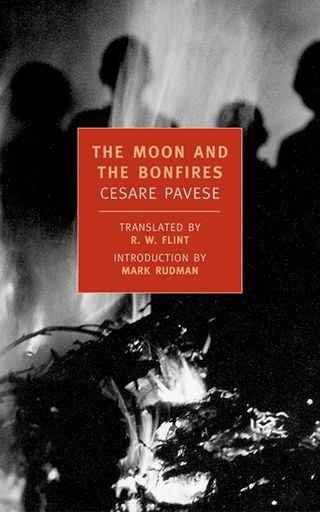
Cover of The Moon and the Bonfires

The Moon and the Bonfires

Cesare Pavese

Original language: Italian · Paperback · ISBN 978-1590170212

A man with no name returns from California to the rural Italian hills where he grew up. The Second World War is over and he has prospered in America, but money has not dulled the memories of his earliest years, when he was an orphan raised by a struggling farmer in deep poverty. He walks through familiar places hoping to learn what Fascism and war did to the people he knew.

What he finds is a local history of violence and retribution that the village has only partly buried. Old neighbors hold secrets about wartime betrayal and reprisal. He pieces the events together with Nuto, a friend from his youth, measuring the distance between the country he left and the one he returned to. The title points to rural customs tied to harvests and seasons, rituals that persist as the social world around them fractures.

Cesare Pavese published this novel in 1950, the last he completed. It is set in the Langhe hills of Piedmont, a wine-growing area in northwestern Italy where Pavese was born. The English translation by R.W. Flint returned the book to American readers after a long absence.

Plot

The nameless narrator of The Moon and the Bonfires, Cesare Pavese's last and greatest novel, returns to Italy from California after the Second World War. He has done well in America, but success hasn't taken the edge off his memories of childhood, when he was an orphan living at the mercy of a bitterly poor farmer. He wants to learn what happened in his native village over the long, terrible years of Fascism; perhaps, he even thinks, he will settle down. And yet as he uncovers a secret and savage history from the war—a tale of betrayal and reprisal, sex and death—he finds that the past still haunts the present.

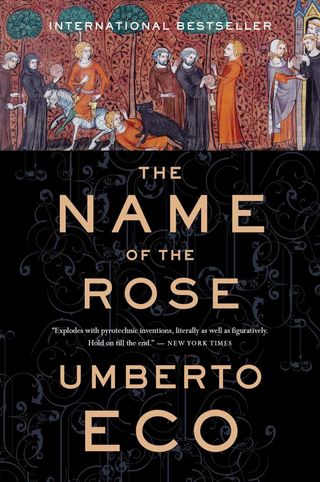
Cover of The Name Of The Rose

The Name Of The Rose

Umberto Eco

Original language: Italian · Paperback · ISBN 978-0544176560

In the final week of November 1327, a Franciscan friar named William of Baskerville arrives at a wealthy Benedictine abbey in northern Italy. He is accompanied by his young apprentice, the novice Adso of Melk, and his official purpose is a delicate diplomatic mission connected to accusations of heresy. But within the abbey's walls, a series of strange deaths begins to unfold, seven over the course of seven days, and William's role shifts from diplomat to detective.

William's methods draw on the logic of Aristotle, the theology of Thomas Aquinas, and the experimental thinking of Roger Bacon. He deciphers coded manuscripts, interprets symbols, and navigates the abbey's labyrinthine library, a vast and deliberately confusing structure that the monks themselves are forbidden to enter freely. The killings appear tied to secrets hidden within that library, and the investigation pulls William through layers of religious dispute, political maneuvering, and centuries of accumulated knowledge.

Umberto Eco, a scholar of medieval philosophy and semiotics, published the novel in Italian in 1980. The book received the Premio Strega and the Prix Medicis Etranger. Its narrator is the elderly Adso, recounting the events of that distant week from memory long after they occurred.

Plot

The year is 1327. Benedictines in a wealthy Italian abbey are suspected of heresy, and Brother William of Baskerville arrives to investigate. When his delicate mission is suddenly overshadowed by seven bizarre deaths, Brother William turns detective. His tools are the logic of Aristotle, the theology of Aquinas, the empirical insights of Roger Bacon — all sharpened to a glistening edge by wry humor and a ferocious curiosity. He collects evidence, deciphers secret symbols and coded manuscripts, and digs into the eerie labyrinth of the abbey, where “the most interesting things happen at night.”

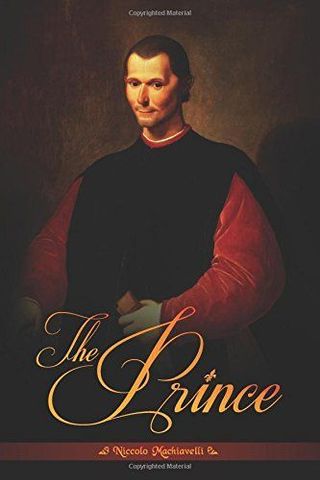
Cover of The Prince

The Prince

Niccolo Machiavelli

Original language: Italian · Paperback · ISBN 978-1503017825

Niccolò Machiavelli composed Il Principe, known in English as The Prince, around 1513 while living in political exile outside Florence. A diplomat and political theorist, Machiavelli addressed the work as a practical guide for rulers, particularly those who had recently gained power. A manuscript version circulated during his lifetime under the Latin title De Principatibus, but the printed edition did not appear until 1532, five years after his death. Publication was authorized by Pope Clement VII, himself a member of the Medici family to whom the treatise was dedicated.

The book examines how princes acquire and hold territories, how they should manage their armies, and when they may need to act against conventional morality to preserve their rule. Machiavelli draws examples from Roman history as well as from the Italian wars and power struggles he witnessed firsthand. His central argument is that a ruler's survival and effectiveness sometimes require methods that ordinary ethics would condemn.

One notable feature of the work is that Machiavelli wrote it in vernacular Italian rather than Latin, following a trend that had grown since Dante's time. Though structured like earlier advice manuals for rulers, the text broke with that tradition by describing political power as it functioned in practice rather than as moral philosophy suggested it should.

Plot

This eminently quotable treatise on the nature of rulers is unsettling in that it does not merely discuss the specific political geography of 16th century Europe, a world comprised of kings and nobles who ruled absolutely; it has endured for nearly 500 years because it is an all-encompassing understanding of men in power, and the common traits, motives and struggles which have characterized leaders from Roman emperors to modern-day presidents.

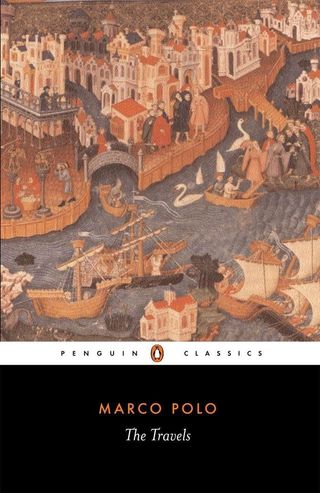
Cover of The Travels of Marco Polo

The Travels of Marco Polo

Marco Polo

Original language: Italian · Paperback · ISBN 978-0140440577

In 1271, the Venetian merchant Marco Polo set out for Asia alongside his father Niccolo and uncle Maffeo. Their destination was Cathay, the medieval European name for China, where the Mongol emperor Kublai Khan held court over a vast territory. Marco Polo spent years in the Khan's service, carrying out diplomatic missions across the empire. The book records what he observed along the way: local religions, customs, ceremonies, trade in spices and silks, precious stones, unfamiliar plants, and animals unknown in Europe.

Polo did not write the text himself. After returning west, he was captured and held as a prisoner of war in Genoa. There he met Rustichello of Pisa, a fellow prisoner and writer, and the two of them composed the account together. The result mixes direct observation with secondhand reports and stories collected during Polo's travels, including tales of holy men, rulers, and local legends.

The book shaped how medieval Europeans pictured Asia at a time when reliable information about the continent was scarce. It circulated widely in manuscript form across Europe and later became one of the texts associated with the Age of Exploration, when navigators looked for sea routes to the places Polo had described overland.

Plot

Marco Polo was the most famous traveller of his time. His voyages began in 1271 with a visit to China, after which he served the Kubilai Khan on numerous diplomatic missions. On his return to the West he was made a prisoner of war and met Rustichello of Pisa, with whom he collaborated on this book. The accounts of his travels provide a fascinating glimpse of the different societies he encountered: their religions, customs, ceremonies and way of life; on the spices and silks of the East; on precious gems, exotic vegetation and wild beasts. He tells the story of the holy shoemaker, the wicked caliph and the three kings, among a great many others, evoking a remote and long-vanished world with colour and immediacy.

Cover of To Each His Own

To Each His Own

Leonardo Sciascia

Original language: Italian · Paperback · ISBN 978-0856359910

A pharmacist named Manno receives an anonymous letter declaring that he will die for something he has done. The threat is puzzling because Manno cannot identify any offense that would provoke it. The following day, he and a hunting companion are both shot dead. Police look into the killings but reach no firm conclusions, and the case drifts toward being filed away.

A quiet high school teacher with a habit of close reading notices something in the threatening letter that the investigators missed. Believing this detail can lead him to the killer, he begins his own careful, methodical inquiry. What he uncovers is a tangle of sexual intrigue and political calculation rooted in the social hierarchies of a Sicilian town. His inquiry pulls him into territory where secrets are guarded by silence and mutual obligation rather than by law.

Leonardo Sciascia set the novel in Sicily, the landscape he returned to throughout his writing life. The story works as both a crime narrative and a study of how power, complicity, and unspoken agreements shape ordinary life in a community where official institutions offer little clarity, and where an outsider's curiosity carries its own risks.

Plot

This letter is your death sentence. To avenge what you have done you will die. But what has Manno the pharmacist done? Nothing that he can think of. The next day he and his hunting companion are both dead. The police investigation is inconclusive. However, a modest high school teacher with a literary bent has noticed a clue that, he believes, will allow him to trace the killer. Patiently, methodically, he begins to untangle a web of erotic intrigue and political calculation. But the results of his amateur sleuthing are unexpected—and tragic.

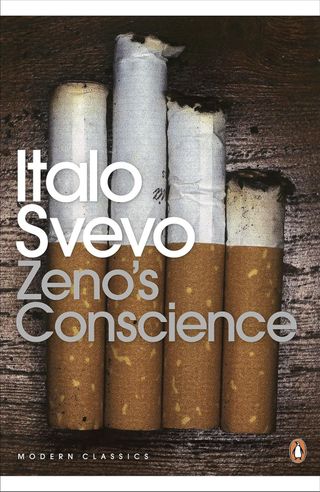
Cover of Zeno's Conscience

Zeno's Conscience

Italo Svevo

Original language: Italian · Paperback · ISBN 978-0140187748

Zeno's Conscience, first published in Italian in the 1920s by Italo Svevo, takes the form of a written confession. Its narrator, Zeno Cosini, is an Italian businessman who has been asked by his psychiatrist to set down an account of his life. What follows is a long, winding, and frequently comic self-portrait shaped by Zeno's inability to see himself clearly.

Zeno describes his repeated and always unsuccessful campaigns to stop smoking, each attempt tied to a supposedly final cigarette. He recounts his pursuit of a woman named Ada, who does not return his interest, and his eventual marriage to her less striking sister Augusta, a union that turns out to be surprisingly contented. He also becomes involved with a young aspiring singer. Through these episodes, Zeno narrates his efforts to manage a family business he barely understands, stumbling from one situation to the next with earnest confusion.

The novel's structure mirrors the unreliability of its narrator. Zeno constantly reinterprets his own motives, and the gap between what he claims and what appears to have happened gives the book much of its energy. Svevo set the story in Trieste, a port city that at the time sat at the edge of the Austro-Hungarian Empire.

Plot

This enormously engaging, strange novel is both an engrossing saga of a family and a hilarious account of addiction and failure as its helpless hero, notionally undergoing psychiatric help, manages spectacularly to fail to give up smoking, run his business or make sense of his private life.

More from Italy

See the country page for Italy for its map, facts and largest cities, or browse books from other countries.

Free editions are on Project Gutenberg, matched by title and author. Links go to Amazon; Hookito doesn’t sell books. Know a book that belongs here, or spotted a mistake? Write to submissions@hookito.com.