
Hookito

Jordan · Books

Books from Jordan

7 books from and about Jordan: what each is about, the plot, and a note from Professor Kogi.

Cover of Guapa

Guapa

Saleem Haddad

Original language: Arabic · Paperback · ISBN 978-1590517697

Saleem Haddad's debut novel unfolds within a single day in an unnamed Arab country. Rasa, a young gay man raised by his grandmother, works as a translator for foreign journalists while keeping his private life hidden. When his grandmother discovers him in bed with his lover Taymour, the careful partition between his public and private worlds collapses overnight.

The next morning, Rasa learns that Maj, his closest friend, a drag performer and activist at the underground bar called Guapa, has been arrested. Unable to return home and face his grandmother, Rasa moves through the city searching for Maj. His path crosses slums, police stations, elite social gatherings, and the bars where dissidents gather. Along the way, memories of his childhood surface, pulling apart old family silences and forcing him to reckon with how his sense of displacement took shape.

The novel is set against a period of political turmoil, with a revolution that once promised change now fading from view. Rasa's personal crisis runs parallel to the broader public disappointment, and the story traces both threads through the geography of a single restless day in a fractured city.

Plot

Set over the course of twenty-four hours, Guapa follows Rasa, a gay man living in an unnamed Arab country, as he tries to carve out a life for himself in the midst of political and social upheaval. Rasa spends his days translating for Western journalists and pining for the nights when he can sneak his lover, Taymour, into his room. One night Rasa's grandmother — the woman who raised him — catches them in bed together. The following day Rasa is consumed by the search for his best friend Maj, a fiery activist and drag queen star of the underground bar, Guapa, who has been arrested by the police. Ashamed to go home and face his grandmother, and reeling from the potential loss of the three most important people in his life, Rasa roams the city’s slums and prisons, the lavish weddings of the country’s elite, and the bars where outcasts and intellectuals drink to a long-lost revolution. Each new encounter leads him closer to confronting his own identity, as he revisits his childhood and probes the secrets that haunt his family.

Cover of Laila

Laila

Fadi Zaghmout

Original language: Arabic · Paperback · ISBN 978-9887794967

Laila is a novel by Jordanian author Fadi Zaghmout set in modern-day Jordan. Its central character, Laila, is a woman trapped in a marriage to a man she finds physically repulsive. As her dissatisfaction deepens, she begins to confront hidden truths about her own sexuality and what it means to be a woman navigating expectations in a society shaped by enduring customs and traditions. The book uses her private life as a lens onto broader questions about gender, autonomy, and desire in the contemporary Arab world.

Zaghmout frames the story as a kind of trial, placing the men in Laila's society under scrutiny through her perspective. Where a conventional narrative might keep its female protagonist confined to quiet endurance, Laila acts on her impulses and breaks with the role assigned to her. The consequences of her choices ripple outward, raising the stakes for those around her to a point where survival itself comes into question. The novel sits within a small but growing body of Jordanian fiction that addresses sexuality and personal freedom with directness, drawing on the specific social landscape of Amman and its surroundings rather than treating the Arab world as a single undifferentiated setting.

Plot

Although the Arabic world is as diverse as any other region, customs and traditions endure. Injustices continue. And then there is Laila. Trapped in a marriage to a man she finds physically revolting, Laila begins to realize secret truths about her sexuality, about her very identity as a modern Jordanian woman. "Good" Arab women may have occasional lurid fantasies about dominating men in bed... but Laila actually finds the strength to do it. And when she dies suddenly in an encounter with a lover, the stakes for the survivors become a matter of life and death.

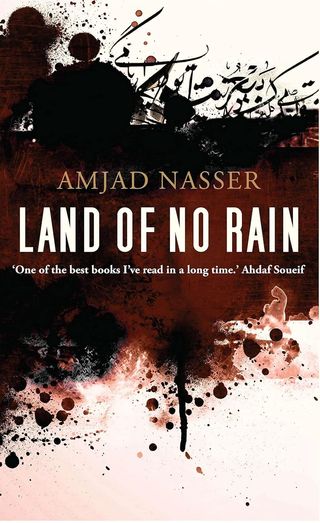
Cover of Land of No Rain

Land of No Rain

Amjad Nasser

Original language: Arabic · Paperback · ISBN 978-9992194584

Hamiya is a fictional Arab state where military rulers pass authority through family lines as though it were private property. In this invented country, the leader known as the Grandson holds power inherited from those before him. The novel's unnamed protagonist took part in a failed attempt on the Grandson's life and was driven into exile as a result. Twenty years pass before he is able to return.

Written by Jordanian poet and novelist Amjad Nasser, Land of No Rain follows the protagonist's homecoming and the disorientation that comes with it. The people he left behind have continued without him. Family members, old friends, former political allies, and a first love all still exist in Hamiya, but the relationships have shifted in ways he could not have predicted from a distance. The central tension is less about the political danger that forced him out and more about the gap between the person he was and the person he has become.

Exile in the novel is not only geographic. The protagonist must confront a version of himself preserved in other people's memories, one that no longer matches who he is. Nasser sets this personal fracture against a society shaped by inherited authoritarian control, where both the country and the individual have been reshaped by time.

Plot

Land of No Rain takes place in Hamiya, a fictional Arab country run by military commanders who treat power as a personal possession to be handed down from one generation to the next. The main character was forced into exile from Hamiya twenty years earlier for taking part in a failed assassination attempt on the military ruler known as the Grandson. On his return to his homeland, he encounters family, childhood friends, former comrades and his first love, but most importantly he grapples with his own self, the person he left behind.

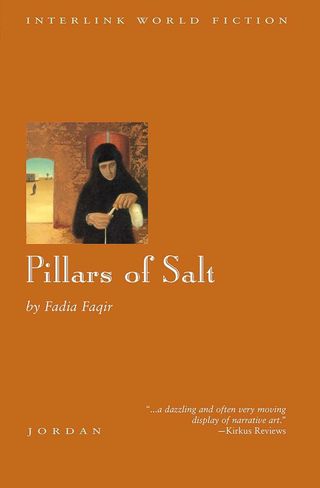
Cover of Pillars of Salt

Pillars of Salt

Fadia Faqir

Original language: English · Paperback · ISBN 978-1566562539

Pillars of Salt is a novel by Jordanian author Fadia Faqir, set in 1940s Jordan. The story centers on two women held in a mental hospital who begin sharing their histories with each other. One is a mother of eight whose husband cast her aside in order to marry a younger woman. Through their exchanges, the novel traces how patriarchal authority and colonial presence have pressed down on their lives, shaping the choices available to them and the consequences they face.

Faqir, who writes in English, draws on folklore, personal memory, and the historical conditions of mid-twentieth-century Jordan to build the narrative. The structure moves between the two women's accounts, layering individual experience over broader social patterns. Rather than following a single linear plot, the novel assembles its picture through converging voices and fragments of oral tradition.

The book addresses questions of gender, power, and silence within a specific time and place. By grounding the story inside the walls of an institution, Faqir narrows the physical space while expanding the scope of what each woman recalls and reveals about the world outside.

Plot

Pillars of Salt by Fadia Faqir is a compelling novel that weaves the stories of two women confined in a mental asylum in Jordan. Through their conversations, the novel reveals how patriarchy, colonialism, and societal norms have shaped—and often broken—their lives. Blending folklore, history, and personal memory, Faqir creates a narrative that challenges traditional storytelling and gives voice to the silenced.

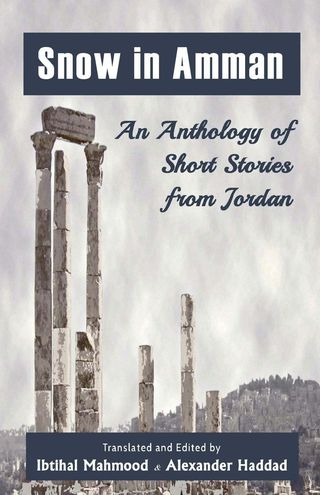
Cover of Snow in Amman: An Anthology of Short Stories from Jordan

Snow in Amman: An Anthology of Short Stories from Jordan

Ibtihal Mahmood, Alexander Haddad

Original language: Arabic · Paperback · ISBN 978-9995748166

Snow in Amman is an anthology of eleven short stories from Jordan, all appearing in English for the first time in this collection. The stories were selected and translated by Ibtihal Mahmood and Alexander Haddad, and they cover a range of social and feminist concerns drawn from contemporary Jordanian life. The title itself carries a quiet signal: snowfall in Amman is uncommon but real, and the phrase suggests something ordinary seen from an unexpected angle.

Jordan is widely recognized for its archaeological sites, but everyday fiction from the country has had limited visibility in English-language publishing. These stories work against that gap by presenting characters and situations rooted in specific domestic, urban, and social realities rather than broad regional generalizations. The settings and tensions are particular to Jordan, yet the human situations described, including family pressures, gender expectations, and personal independence, connect to patterns found in many parts of the world.

The collection draws from multiple Jordanian authors rather than a single voice, which means styles and perspectives shift from one story to the next. This structure gives the anthology a wider view of the country's literary landscape than a single-author work would offer.

Plot

Filled with deeply nuanced storytelling and vividly drawn, often heartbreaking human characters, Snow in Amman: An Anthology of Short Stories From Jordan is a rich selection of contemporary Jordanian fiction which stands in stark contrast to many of the prevailing stereotypes of Arabic culture. Outside the archaeological lens, very little is known about life in Jordan, particularly in the English-speaking world. Such lack makes it more susceptible to falling into the soup of widespread generalizations about the Middle East.

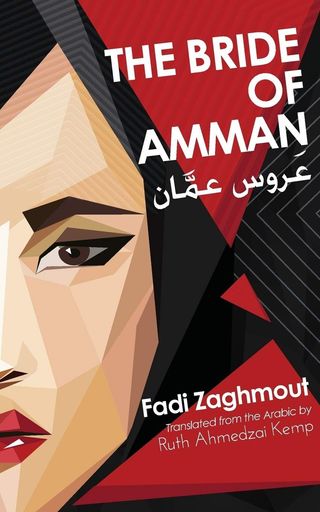
Cover of The Bride of Amman

The Bride of Amman

Fadi Zaghmout

Original language: Arabic · Paperback · ISBN 978-1608643684

The Bride of Amman follows five young people in Jordan's capital whose private lives collide with social expectations. Rana falls for a man whose faith differs from hers, a situation that grows more urgent when their relationship leads to consequences neither can easily manage. Ali, a gay man, faces pressure to enter a heterosexual marriage he knows he cannot sustain. Hayat pursues hidden relationships while carrying the burden of an abusive childhood. Each character navigates a version of the same problem: the gap between who they are and what their community demands they become.

Leila and her sister Salma round out the group. Leila dreads the social stigma attached to divorce, while Salma, unmarried and past the age her society considers acceptable, writes an anonymous blog pushing back against the city's conventions. The novel was originally published in Arabic by Fadi Zaghmout and became a bestseller, generating significant controversy in its home region. Its English translation brought these characters and their tensions to a wider audience.

The story is set in contemporary Amman, a city where ancient hilltop neighborhoods sit alongside modern commercial districts. Zaghmout uses this landscape to ground the characters' conflicts in a specific, recognizable place rather than a generalized Middle Eastern backdrop.

Plot

When Rana finds herself not only falling for a man of the wrong faith, but also getting into trouble with him, where can they go to escape? Can Hayat's secret liaisons really suppress the memories of her abusive father? When Ali is pressured by society's homophobia into a fake heterosexual marriage, how long can he maintain the illusion? And when spinsterhood and divorce spell social catastrophe, is living a lie truly the best option for Leila? What must she do to avoid reaching her 'expiry date' at the age thirty like her sister Salma, Jordan's secret blogger and a self-confessed spinster with a plot up her sleeve to defy her city's prejudices? These five young lives come together and come apart in ways that are distinctly modern yet as unique and timeless as Amman itself.

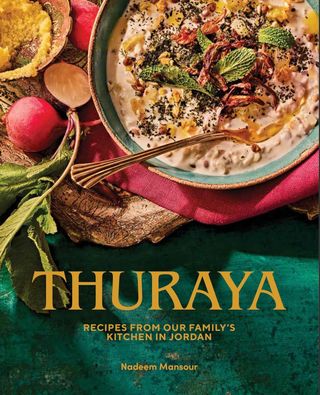
Cover of Thuraya: Recipes From Our Family's Kitchen in Jordan

Thuraya: Recipes From Our Family's Kitchen in Jordan

Nadeem Mansour

Original language: English · Hardcover · ISBN 978-1738203406

Thuraya is a cookbook by Nadeem Mansour that records over 120 recipes from Jordan and the broader Middle East. The collection draws on dishes passed down within Mansour's family, organized around Levantine cooking traditions. Recipes range from small plates to large shared meals, covering options for both meat eaters and those following a plant-based diet. The book takes its name from a family member, and the recipes are presented as a personal archive of home cooking rather than restaurant cuisine.

Each recipe is paired with original photography and short written accounts that place the food in the context of family life. Mansour frames cooking as an act of memory, linking specific dishes to the people and occasions that shaped them. The approach treats a household kitchen in Jordan as both a practical workspace and a site where food knowledge travels between generations.

The Levant, the eastern Mediterranean region that includes Jordan, Syria, Lebanon, and Palestine, shares many ingredients and techniques across borders. Thuraya sits within that wider culinary geography while keeping its focus on one family's particular versions of classic dishes, noting the small differences that distinguish a home cook's repertoire from a generalized regional standard.

Plot

At its heart, the book Thuraya is a culinary diary and loving tribute to the plates of Jordan and the Middle East, documenting and preserving the recipes and traditions passed down from mother to son. Throughout its pages, Nadeem has richly captured over 120 of these delicious recipes and illustrated them with delightful stories and stunning photography. From small dishes to large feasts for meat eaters and vegans alike, Thuraya brings you a diverse collection of classic Levantine recipes and family favourites to enjoy at home in your kitchen with your loved ones.

More from Jordan

See the country page for Jordan for its map, facts and largest cities, or browse books from other countries.

Links go to Amazon; Hookito doesn’t sell books. Know a book that belongs here, or spotted a mistake? Write to submissions@hookito.com.