Hookito

Japan · Books

Books from Japan

20 books from and about Japan: what each is about, the plot, and a note from Professor Kogi.

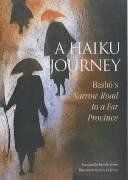
Cover of A Haiku Journey: Bashos Narrow Road to a Far Province

A Haiku Journey: Bashos Narrow Road to a Far Province

Matsuo Basho

Original language: Japanese · Paperback · ISBN 978-4770028587

In 1689, the poet Matsuo Basho set out on foot from Edo, now Tokyo, toward the remote northeastern provinces of Honshu, Japan's main island. The route took roughly five months and covered areas that were, at the time, difficult to reach and sometimes dangerous. Basho was already recognized as a master of haiku, the compact poetic form built around seasonal images and precise observation. He traveled with a single companion, visiting places tied to older poets and historical events, often sleeping in rough lodgings or temples along the way.

Basho recorded his impressions in a prose-poetry diary that mixes short stretches of travel narrative with haiku composed at specific stops. The form, known in Japanese as haibun, gives each location a double texture: a factual account of arriving somewhere, followed by a poem that fixes one moment or detail in place. The result is a work where landscape, weather, memory, and literary tradition overlap on nearly every page.

The diary, later called The Narrow Road to a Far Province, became one of the central works of Japanese classical literature. This edition presents the text in a bilingual format designed to keep Basho's language close to the translation.

Plot

In the seventeenth century, the pilgrim-poet Basho undertook on foot a difficult and perilous journey to the remote northeastern provinces of Honshu, Japan's main island. Throughout the five-month journey, the master of haiku kept a record of his impressions in a prose-poetry diary later called The Narrow Road to a Far Province. His diary was to become one of the classics of Japanese literature.
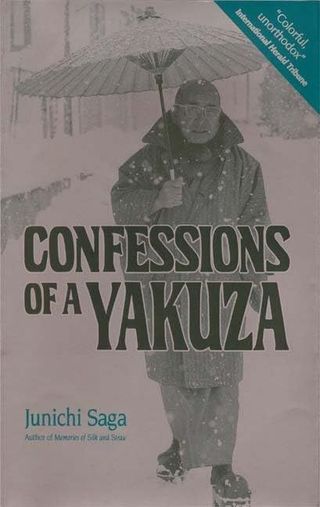

Cover of Confessions of a Yakuza

Confessions of a Yakuza

Dr. Junichi Saga

Original language: Japanese · Paperback · ISBN 978-1568365046

Confessions of a Yakuza presents the life story of an aging gangster as told to his doctor, Junichi Saga, shortly before the man's death. The narrator grew up as the son of a prosperous rural shopkeeper, then drifted into Tokyo's criminal underworld and eventually led a gang running illegal dice games in one of the city's liveliest entertainment districts. Saga recorded the conversations and shaped them into a first-person account.

The narrator recalls his first police raid, and the harsh interrogation and imprisonment that followed. He speaks about the ritual amputation of the little finger on his left hand, offered as an apology. He remembers a love affair and weeks of wandering the countryside with the girl he left home with. He explains how the dice games were organized, where the profits went, why bonds among brotherhood members mattered, and how he ended up killing one of his own men.

Saga worked as a doctor in a country town and gathered oral histories from elderly patients. This account comes from one of the last yakuza of the older traditional kind, whose story reaches back through decades of Japanese life at the margins of the law.

Plot

In his low, hoarse voice, he describes the random events that led the son of a prosperous country shopkeeper to become a member, and ultimately the leader, of a gang organizing illegal dice games in Tokyo's liveliest entertainment area. He talks about his first police raid, and the brutal interrogation and imprisonment that followed it. He remembers his first love affair, and the girl he ran away with, and the weeks they spent wandering about the countryside together. Briefly, and matter-of-factly, he describes how he cut off the little finger of his left hand as a ritual gesture of apology. He explains how the games were run and the profits spent; why the ties between members of "the brotherhood" were so important; and how he came to kill a man who worked for him.

Cover of Convenience Store Woman

Convenience Store Woman

Sayaka Murata

Original language: Japanese · paperback

Keiko Furukura is thirty-six and has worked at the same Tokyo convenience store for eighteen years. She joined the Hiiromachi branch of Smile Mart at eighteen, and the job gave her something she had never found at school or at home: clear rules for how to behave around other people. The manual sets out much of it line by line, and she studies her coworkers, copying their clothing, speech, and gestures.

Managers rotate in and out over the years, but Keiko stays. Her sense of herself and the store have grown so close that separating them is difficult. She is content, yet the people around her are not. Family members and colleagues press her to marry and to build what they consider a proper career, and their discomfort pushes her toward a drastic decision.

Sayaka Murata's novel sold about 660,000 copies in Japan and was her first book to appear in English. Its setting stays within the narrow orbit of one shop and the expectations of the people who surround its narrator. The themes are conformity, work as identity, and the pressure to look ordinary in contemporary Japan.

Plot

Convenience Store Woman is the heartwarming and surprising story of thirty-six-year-old Tokyo resident Keiko Furukura. Keiko has never fit in, neither in her family, nor in school, but when at the age of eighteen she begins working at the Hiiromachi branch of “Smile Mart,” she finds peace and purpose in her life. In the store, unlike anywhere else, she understands the rules of social interaction―many are laid out line by line in the store’s manual―and she does her best to copy the dress, mannerisms, and speech of her colleagues, playing the part of a “normal” person excellently, more or less. Managers come and go, but Keiko stays at the store for eighteen years. It’s almost hard to tell where the store ends and she begins. Keiko is very happy, but the people close to her, from her family to her coworkers, increasingly pressure her to find a husband, and start a proper career, prompting her to take desperate action…

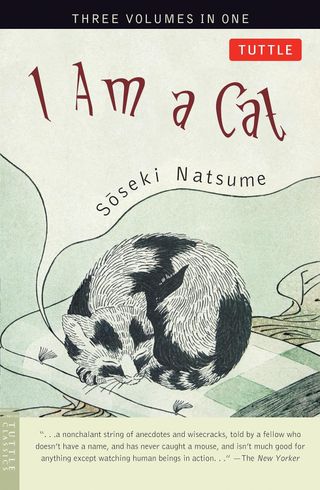
Cover of I Am a Cat

I Am a Cat

Soseki Natsume

Original language: Japanese · Paperback · ISBN 978-0804832656

Soseki Natsume wrote I Am a Cat in serial form between 1904 and 1906, during a period of rapid social change in Japan. The novel is narrated by a stray kitten with no name, taken in by a schoolteacher and his household. From this low vantage point, the cat observes the daily lives, arguments, pretensions, and small vanities of the people around him. The setting is urban, educated, upper-middle-class Meiji-era Japan, a society caught between older traditions and Western-influenced modernity.

The cat is not a heroic or sentimental figure. He has never caught a mouse, contributes little to the household, and views the humans with dry, detached amusement. Soseki uses this outsider perspective to satirize the social habits of his own class and era, picking apart polite conversation, intellectual posturing, and the gap between how people present themselves and how they actually behave. The humor is sharp and often pointed, closer to social comedy than to gentle animal fiction.

Soseki published the novel while working as an English literature lecturer in Tokyo. The book was his first major work of fiction and established his reputation as a writer. Its structure is episodic, built from loosely connected scenes and observations rather than a single continuous plot.

Plot

Written from 1904 through 1906, Soseki Natsume's comic masterpiece, I Am a Cat, satirizes the foolishness of upper-middle-class Japanese society during the Meiji era. With acerbic wit and sardonic perspective, it follows the whimsical adventures of a world-weary stray kitten who comments on the follies and foibles of the people around him.

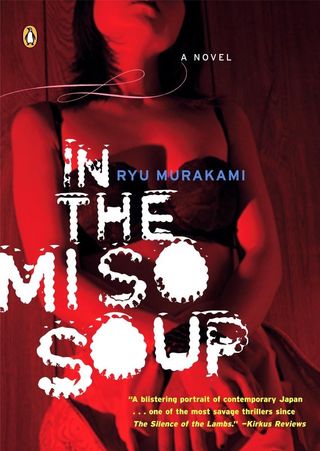
Cover of In the Miso Soup

In the Miso Soup

Ryu Murakami

Original language: Japanese · Paperback · ISBN 978-0143035695

Kenji earns his living guiding foreign visitors through Tokyo's nightlife, leading them to bars, clubs, and the districts where the sex trade operates openly. In the days before New Year, an American tourist named Frank hires him for several evenings. Almost at once something feels off. Frank's manner shifts without warning, his stories do not hold together, and Kenji starts to wonder what his client really wants.

Ryu Murakami keeps the action inside a few nights in Tokyo's entertainment quarters, told in Kenji's uneasy first-person voice. The suspicion that Frank may harbour murderous intentions grows through small details: a change of expression, an odd silence, a claim that cannot be checked. Kenji is not blameless either. He works at the edge of the law and profits from what foreign customers come looking for.

His sixteen-year-old girlfriend, Jun, stands outside that world and becomes his one steady connection as the situation with Frank turns dangerous. Around them the novel observes loneliness inside a crowded city, the routines people keep even when something disturbing sits close, and how going along quietly can matter as much as any deliberate act.

Plot

It's just before New Year, and Frank, an American tourist, has hired Kenji to take him on a guided tour of Tokyo's nightlife. But, Frank's behaviour is so odd that Kenji begins to entertain a horrible suspicion: his client may in fact have murderous desires. Although Kenji is far from innocent himself, he unwillingly descends with Frank into an inferno of evil, from which only his sixteen-year-old girlfriend, Jun, can possibly save him.

Cover of Just One Cookbook Essential Japanese Recipes

Just One Cookbook Essential Japanese Recipes

Namiko Hirasawa Chen

Original language: Japanese · Paperback · ISBN 979-8636640608

Just One Cookbook Essential Japanese Recipes collects 33 dishes drawn from the popular cooking site Just One Cookbook, run by Namiko Hirasawa Chen. The selection covers familiar home-cooked standards such as chawanmushi (a savory steamed egg custard), gyudon (beef and rice bowl), and tamagoyaki (a layered rolled omelette). It also includes dishes that have traveled well beyond Japan, like California rolls and green tea ice cream. Chen describes these as recipes she learned from her grandmother and mother, presented with attention to how Japanese home cooks actually prepare them.

Before the recipes begin, the book covers pantry essentials and foundational techniques. Readers will find instructions for steamed rice, seasoned sushi rice, and dashi, the stock made from kombu seaweed and bonito flakes that forms the base of many Japanese soups and sauces. These basics appear early because so many of the 33 recipes depend on them.

The cookbook grew out of reader requests to Chen's blog, where the recipes had already been tested and rated by an international audience. This first volume gathers the most frequently cooked selections from that site into a single printed reference, organized around the idea that reliable Japanese meals can be prepared in any home kitchen with accessible ingredients.

Plot

With 33 recipes, this cookbook includes the classic chawanmushi, gyudon, and tamagoyaki, as well as modern favorites like California rolls and green tea ice cream. Nami focuses on the authentic methods on how the Japanese cooks prepare these delicious meals at home. You'll learn to make chicken teriyaki just like how her grandmother and mother taught her. The book also includes essential pantry items and cooking basics like making perfect steamed rice, sushi rice, and dashi soup stock. These published recipes have been tested and highly rated by her worldwide blog readers, so you too can make them in your kitchen with ease and confidence.

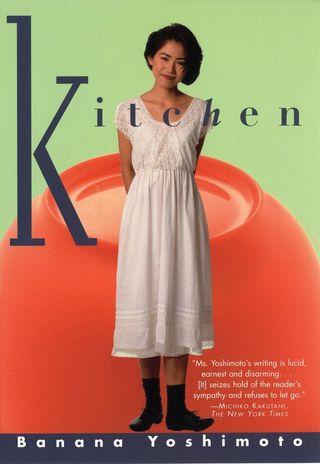
Cover of Kitchen

Kitchen

Banana Yoshimoto

Original language: Japanese · Paperback · ISBN 978-0802142443

Kitchen by Banana Yoshimoto follows Mikage, a young woman in contemporary Japan who has just lost her grandmother, the last relative who raised her. Left alone, Mikage is invited to live with her friend Yoichi and his parent Eriko, a figure whose personal history complicates the conventional idea of family. The three form an improvised household, bound not by obligation but by mutual care, with the kitchen as a steady, grounding presence in their shared life.

The book pairs two connected stories that circle around mothers, grief, and the slow work of rebuilding after loss. Yoshimoto writes about food and domestic space as sources of real comfort rather than mere background detail. Mikage's attachment to kitchens is not decorative; it is where she finds warmth and a sense of continuity when everything familiar has fallen away. The tone stays close to everyday life even as the characters face serious upheaval.

First published in Japan in 1988, Kitchen became Yoshimoto's best-known work internationally after its English-language translation. The novel is set in urban Japan and draws its atmosphere from small apartments, late-night meals, and the quiet rituals that hold a household together.

Plot

With the publication of Kitchen, the dazzling English-language debut that is still her best-loved book, the literary world realized that Yoshimoto was a young writer of enduring talent whose work has quickly earned a place among the best of contemporary Japanese literature. Kitchen is an enchantingly original book that juxtaposes two tales about mothers, love, tragedy, and the power of the kitchen and home in the lives of a pair of free-spirited young women in contemporary Japan. Mikage, the heroine, is an orphan raised by her grandmother, who has passed away. Grieving, Mikage is taken in by her friend Yoichi and his mother (who is really his cross-dressing father) Eriko. As the three of them form an improvised family that soon weathers its own tragic losses, Yoshimoto spins a lovely, evocative tale with the kitchen and the comforts of home at its heart.
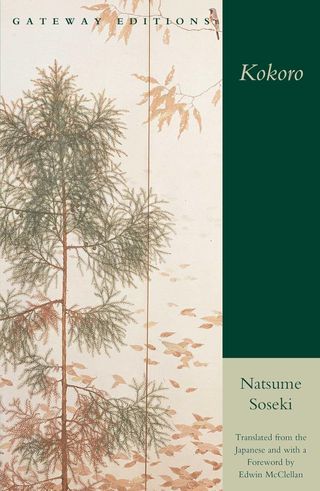
Cover of Kokoro

Kokoro

Natsume Soseki

Original language: Japanese · Paperback · ISBN 978-0895267153

Kokoro, a novel by Natsume Soseki, follows the relationship between a young man and an older figure he refers to as Sensei. Set during a period when Japan was shifting from its older cultural traditions into a modern era, the story is shaped by the tension between these two generations. Sensei appears outwardly settled, with a wife, social standing, and material comfort, yet he carries a deep sense of isolation that colors his daily life.

The young narrator is drawn to Sensei without fully understanding the older man's withdrawn nature. Over time, Sensei begins to share fragments of his past, particularly events from his own student years that left him burdened with guilt. The novel builds slowly around this disclosure, exploring how moral weight can persist across decades and how difficult it can be for one person to truly grasp another's inner conflict.

The title, which can be translated as heart, points to the emotional and psychological core of the book. Soseki wrote Kokoro late in his life, and it became one of his most widely read works. The story is structured in three parts, each shifting perspective and gradually narrowing toward the source of Sensei's long-held secret.

Plot

Sensei, a man seen against the rich background of old Japan entering the modern era, is outwardly successful. He has position, wealth, a charming wife. But deep in the heart of things, he is harried with a profound sense of isolation whose cure lies only in "faith, madness, or death." His long-hidden secret, divulged to a young friend who faces a similar dilemma, is told with mounting intensity.

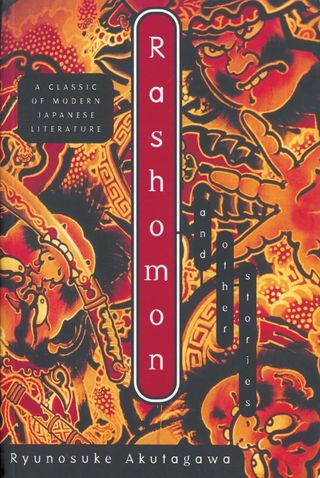
Cover of Rashomon and Other Stories

Rashomon and Other Stories

Ryunosuke Akutagawa

Original language: Japanese · Paperback · ISBN 978-0871401731

Ryunosuke Akutagawa wrote in the early twentieth century, when Japan was absorbing rapid cultural change. This collection gathers six of his short stories, written in controlled, carefully weighted prose. Some are set centuries in the past and others closer to his own time, yet the attention to human need and failing stays consistently modern across all of them.

The best known piece here is In a Grove, which Akira Kurosawa used as the basis for his film Rashomon. A samurai has been killed, and a series of witnesses, among them the spirit of the dead man, give testimony that does not agree. The story sets accounts against each other rather than resolving them into one version.

Yam Gruel works more like a fable, tracing a modest man's long-standing appetite for a particular dish and the humiliation attached to it. Sympathy is offered and then complicated, so the reader is never fully settled about where to stand. Across the collection, Akutagawa keeps his stories short and turns them on small shifts of understanding rather than long explanation.

Plot

Writing at the beginning of the twentieth century, Ryunosuke Akutagawa created disturbing stories out of Japan's cultural upheaval. Whether his fictions are set centuries past or close to the present, Akutagawa was a modernist, writing in polished, superbly nuanced prose subtly exposing human needs and flaws. "In a Grove," which was the basis for Kurosawa's classic film Rashomon, tells the chilling story of the killing of a samurai through the testimony of witnesses, including the spirit of the murdered man. The fable-like "Yam Gruel" is an account of desire and humiliation, but one in which the reader's sympathy is thoroughly unsettled. All six tales in the collection show Akutagawa as a master storyteller and an exciting voice of modern Japanese literature.

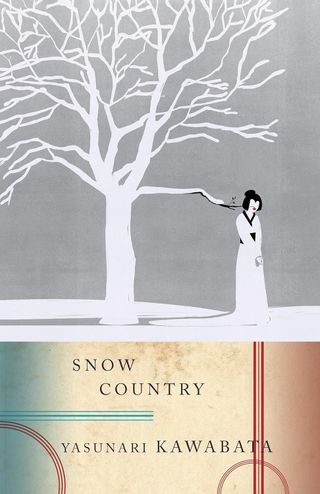
Cover of Snow Country

Snow Country

Yasunari Kawabata

Original language: Japanese · Paperback · ISBN 978-0679761044

Snow Country follows Shimamura, a Tokyo dilettante with no real occupation or direction, as he travels to a hot spring town on the western side of Japan's mountains. There he meets Komako, a young geisha whose life in the remote town is shaped by obligation and limited choices. The two begin an affair that both understand has no future, yet Komako commits herself to it with an intensity Shimamura cannot match. The contrast between her sincerity and his detachment runs through the entire novel.

Yasunari Kawabata first published parts of Snow Country as separate episodes during the 1930s and 1940s, later assembling them into a single work. The setting is the heavy-snow region along the Sea of Japan coast, where winters bury entire villages and the landscape carries a particular stillness. Kawabata uses this geography to frame the emotional distance between his characters, letting the cold and isolation press against every conversation.

The Nobel Committee cited Snow Country as one of three novels when awarding Kawabata the Nobel Prize in Literature in 1968. The Japanese title, Yukiguni, has become one of the most recognized titles in modern Japanese fiction.

Plot

At an isolated mountain hot spring, with snow blanketing every surface, Shimamura, a wealthy dilettante meets Komako, a lowly geisha. She gives herself to him fully and without remorse, despite knowing that their passion cannot last and that the affair can have only one outcome. In chronicling the course of this doomed romance, Kawabata has created a story for the ages—a stunning novel dense in implication and exalting in its sadness.

Cover of Strange Weather in Tokyo

Strange Weather in Tokyo

Hiromi Kawakami

Original language: Japanese · Paperback · ISBN 978-1640090163

Tsukiko is thirty-eight, single, and works in an office in Tokyo. One evening she recognizes a man sitting alone at a neighborhood bar: her former high school teacher, whose real name she never uses. She calls him only Sensei, as she did years ago in class. He is now retired, about thirty years older than her, and apparently a widower. At first they barely speak, each comfortable enough in solitary drinking not to need conversation. Over time, a loose routine forms between them.

Their connection builds through small, concrete shared moments: meals at the bar, walks through the city, day trips to collect mushrooms or visit a flea market. Kawakami tracks these encounters against the turning seasons, marking time through what the two characters eat and drink together, from warm sake in winter to cold beer in summer, from bare branches to cherry blossoms. The seasonal rhythm gives the story a quiet structure and underlines how slowly and unevenly closeness can develop between two guarded people.

The novel was originally published in Japanese in 2001 and was shortlisted for the 2013 Man Asian Literary Prize. Its central subject is the gap between solitude and companionship, and the particular awkwardness that arises when affection crosses a wide difference in age and temperament.

Plot

Tsukiko, thirty-eight, works in an office and lives alone. One night, she happens to meet one of her former high school teachers, "Sensei," in a local bar. Tsukiko had only ever called him "Sensei" ("Teacher"). He is thirty years her senior, retired, and presumably a widower. Their relationship develops from a perfunctory acknowledgment of each other as they eat and drink alone at the bar, to a hesitant intimacy which tilts awkwardly and poignantly into love.

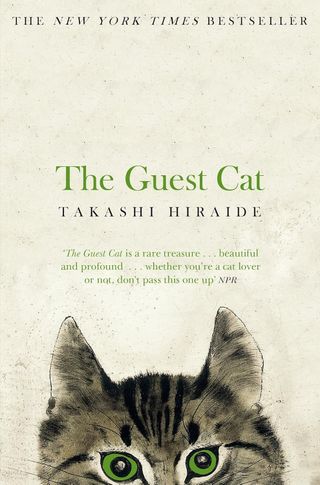
Cover of The Guest Cat

The Guest Cat

Hiraide Takashi

Original language: Japanese · Paperback · ISBN 978-1447279402

A couple in their thirties share a small rented cottage in a quiet residential part of Tokyo. Both work from home as freelance writers, and their daily routines have settled into something close to silence. They no longer talk much. Then a cat begins visiting their kitchen, arriving uninvited one afternoon and returning the next day, and the day after that. The animal is graceful and self-possessed, and its presence starts to shift the texture of their life together.

Small pleasures return. The couple begins walking in the nearby garden, exchanging observations about the cat's habits and moods. Light and detail re-enter their conversations. The story follows the way an outside creature, one that belongs to no one in particular, can quietly reorganize a household's emotional landscape. The novel is short and precisely shaped, concerned less with dramatic events than with how attention itself can change when something living enters a still room.

Hiraide Takashi originally published the book in Japanese, and it won the Kiyama Shohei Literary Award in Japan. It later became a bestseller in both France and the United States. The setting stays close to the cottage and its immediate surroundings, keeping the scale personal and local throughout.

Plot

A couple in their thirties live in a small rented cottage in a quiet part of Tokyo. They work at home as freelance writers. They no longer have very much to say to one another. One day a cat invites itself into their small kitchen. She is a beautiful creature. She leaves, but the next day comes again, and then again and again. New, small joys accompany the cat; the days have more light and colour. Life suddenly seems to have more promise for the husband and wife; they go walking together, talk and share stories of the cat and its little ways, play in the nearby garden. But then something happens that will change everything again.

Cover of The Housekeeper and the Professor

The Housekeeper and the Professor

Yoko Ogawa

Original language: Japanese · Paperback · ISBN 978-0312427801

A mathematics professor in Japan lives with a condition that limits his short-term memory to eighty minutes. After a traumatic head injury, every new encounter resets for him. Each morning, when a young housekeeper arrives at his door, he meets her as if for the first time. She brings practical skill and patience; he brings a deep, unshaken love of numbers. The two begin to form a bond that must be rebuilt from scratch each day.

The housekeeper's ten-year-old son becomes part of this daily routine as well. The professor takes a warm interest in the boy, and their shared time often turns toward mathematical ideas. Concepts like prime numbers, amicable numbers, and simple proofs become a kind of common language among the three of them. Yoko Ogawa uses these mathematical details not as puzzles to be solved but as a way of showing how pattern and order can offer comfort in uncertain circumstances.

The novel is set in a quiet domestic world where small rituals carry weight. Meals, baseball broadcasts, and homework sessions fill the days. Because the professor cannot retain new experiences beyond his eighty-minute window, the story returns again and again to the question of what holds people together when memory cannot.

Plot

He is a brilliant math professor with a peculiar problem―ever since a traumatic head injury, he has lived with only eighty minutes of short-term memory. She is an astute young housekeeper, with a ten-year-old son, who is hired to care for him. And every morning, as the Professor and the Housekeeper are introduced to each other anew, a strange and beautiful relationship blossoms between them. Though he cannot hold memories for long (his brain is like a tape that begins to erase itself every eighty minutes), the Professor’s mind is still alive with elegant equations from the past. And the numbers, in all of their articulate order, reveal a sheltering and poetic world to both the Housekeeper and her young son.

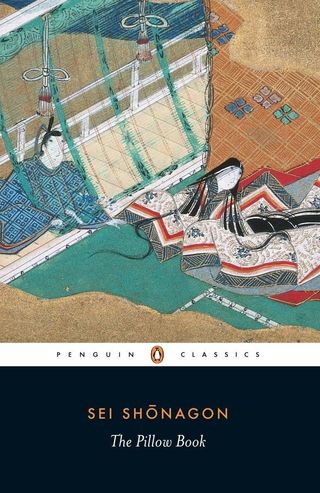
Cover of The Pillow Book

The Pillow Book

Sei Shonagon

Original language: Japanese · Paperback · ISBN 978-0140448061

Sei Shonagon wrote The Pillow Book during the late 990s and early 1000s while serving as a gentlewoman at the imperial court in Heian-kyo, the city now known as Kyoto. The text is not a diary in a strict sense but a loose collection of observations, lists, anecdotes, and personal reflections assembled over several years. Shonagon recorded what she found delightful or irritating, from the sound of rain on a summer night to an awkward visitor who overstays a welcome.

Court life during the Heian period placed enormous value on aesthetic sensitivity. A person's standing could rise or fall based on the quality of a poem composed on the spot or the color combination chosen for layered robes. Shonagon writes from inside this world with sharp attention, cataloguing moments of elegance and social misstep alike. Her lists, such as things that make the heart race or things that are near yet far, give a compressed view of how the court measured the world around it.

The book also reflects limits. The nobility Shonagon describes occupied a small district of the capital, and much of ordinary Japanese life falls outside her frame. That narrowness is itself part of the record, showing how completely the court's rituals and aesthetics could fill a person's daily horizon.

Plot

Written by the court gentlewoman Sei Shonagon, ostensibly for her own amusement, The Pillow Book offers a fascinating exploration of life among the nobility at the height of the Heian period, describing the exquisite pleasures of a confined world in which poetry, love, fashion, and whim dominated, while harsh reality was kept firmly at a distance. Moving elegantly across a wide range of themes including nature, society, and her own flirtations, Sei Shonagon provides a witty and intimate window on a woman's life at court in classical Japan.

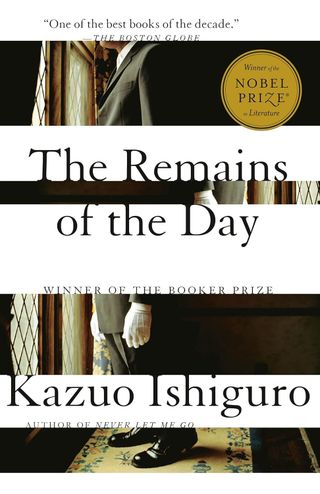
Cover of The Remains of the Day

The Remains of the Day

Kazuo Ishiguro

Original language: Japanese · Paperback · ISBN 978-0679731726

In the summer of 1956, an English butler named Stevens sets out on a short motoring trip through the countryside. He has spent three decades in service at Darlington Hall, and the drive becomes an occasion for him to look back over those years. As the landscape passes, Stevens recalls his relationship with Lord Darlington, the employer whose moral standing he never questioned, and with Miss Kenton, the former housekeeper whose departure still occupies his thoughts.

Stevens tells his story in a careful, formal voice that reveals as much through what it avoids as through what it states. His memories circle around moments of political influence at Darlington Hall during the interwar period, when Lord Darlington hosted figures involved in Anglo-German diplomacy. Gradually, details surface that unsettle the butler's confident account of loyalty and professional duty.

Kazuo Ishiguro, born in Nagasaki and raised in England from the age of five, published the novel in 1989. The story is set entirely in England, but its questions about duty, self-deception, and the things people leave unsaid carry no particular nationality. Stevens measures his life by the standard of dignified service, and the tension of the book lies in whether that standard has cost him something he cannot recover.

Plot

This is Kazuo Ishiguro's profoundly compelling portrait of a butler named Stevens. Stevens, at the end of three decades of service at Darlington Hall, spending a day on a country drive, embarks as well on a journey through the past in an effort to reassure himself that he has served humanity by serving the "great gentleman," Lord Darlington. But lurking in his memory are doubts about the true nature of Lord Darlington's "greatness," and much graver doubts about the nature of his own life.

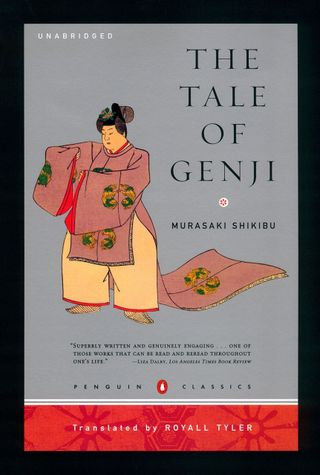
Cover of The Tale of Genji

The Tale of Genji

Murasaki Shikibu

Original language: Japanese · paperback

The Tale of Genji was written by Murasaki Shikibu, a lady-in-waiting at the Japanese imperial court, during the early eleventh century. The story follows Genji, known as the Shining Prince, an emperor's son whose life unfolds through love affairs, family conflicts, and the shifting loyalties of court politics in Heian-era Japan. Genji is gifted and charming but also impulsive, and much of the narrative traces how his relationships shape and complicate his position within the aristocratic world of Kyoto.

The book is often identified as the world's first novel, a claim that depends partly on how one defines the form. What sets it apart from earlier long narratives is its sustained attention to the inner lives of its characters, their emotions, jealousies, and moments of reflection. Murasaki Shikibu wrote in Japanese at a time when men at court typically composed formal texts in Chinese, and women writing in the vernacular had more freedom to explore personal and psychological subjects.

The setting is the Heian court, roughly 794 to 1185, a period when political power centered on elaborate rituals, poetry exchanges, and strategic marriages. Seasons, clothing, music, and architecture all carry meaning in the story, and social rank governs nearly every interaction between characters.

Plot

Genji, the Shining Prince, is the son of an emperor. He is a passionate character whose tempestuous nature, family circumstances, love affairs, alliances, and shifting political fortunes form the core of this magnificent epic.

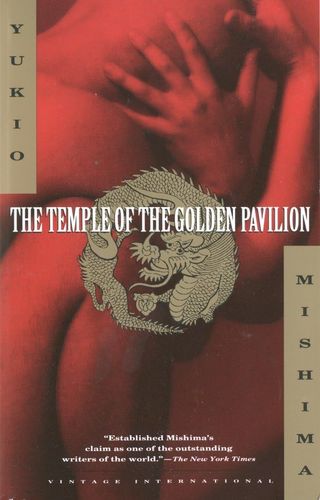
Cover of The Temple of the Golden Pavilion

The Temple of the Golden Pavilion

Yukio Mishima

Original language: Japanese · Paerback · ISBN 978-0679752707

Yukio Mishima's novel draws on a real event from 1950 in Kyoto, where a young acolyte monk set fire to the historic Kinkaku-ji, one of Japan's most celebrated structures. In the novel, Mizoguchi is the son of a rural priest who grows up with a severe stutter that isolates him from others. His father speaks to him of the Golden Pavilion as the most beautiful thing in existence, and the boy constructs an image of perfect beauty around it long before he ever sees it in person.

Sent to train at the temple after his father's death, Mizoguchi finds that the real building both confirms and undermines his ideal. He befriends Kashiwagi, a cynical fellow student whose bitter outlook on life pulls Mizoguchi further from ordinary human connection. As he struggles with desire, inadequacy, and the gap between the beauty he has imagined and the world he inhabits, Mizoguchi's obsession with the pavilion grows more extreme.

The novel is set in the years following Japan's defeat in the Second World War, a period when longstanding cultural symbols carried complicated weight. Mishima uses the tension between an inherited ideal and lived experience to explore how fixation on perfection can distort a person's relationship with everything around them.

Plot

Because of the boyhood trauma of seeing his mother make love to another man in the presence of his dying father, Mizoguchi becomes a hopeless stutterer. Taunted by his schoolmates, he feels utterly alone and develops a childhood fascination with Kyoto’s famous Golden Temple. While an acolyte at the temple, he fixates on the structure’s aesthetic perfection and it becomes his one and only object of desire. But as Mizoguchi begins to perceive flaws in the temple, he determines that the only true path to beauty lies in an act of horrific violence.

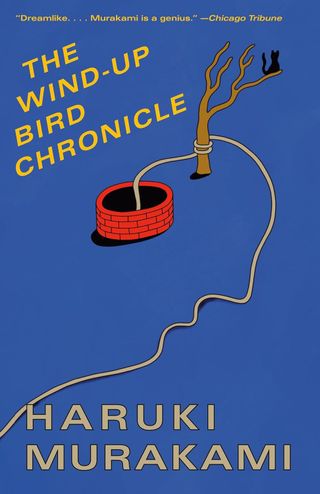
Cover of The Wind-Up Bird Chronicle

The Wind-Up Bird Chronicle

Haruki Murakami

Original language: Japanese · Paperback · ISBN 978-0679775430

Toru Okada is a young, unemployed man living in a quiet Tokyo suburb when his cat disappears. The search for the cat leads him into stranger territory: encounters with a psychic, an unsettling teenage neighbor, and an aging veteran scarred by his experiences during Japan's military campaign in Manchuria in the 1930s and 1940s. Before long, Okada's wife also vanishes, and his search widens into something far less ordinary than a missing-pet case.

The novel moves between present-day Tokyo and wartime Manchuria, connecting domestic unease with buried historical violence. Okada's antagonists include a politically powerful figure whose public charm conceals something darker. His allies are no less unusual. As the story unfolds, Murakami threads together a disintegrating marriage, an underground world beneath Tokyo's surface, and memories of wartime atrocity that still shape the lives of those who survived them.

Originally published in Japanese in three volumes between 1994 and 1995, the English translation by Jay Rubin appeared in 1997 in a condensed single volume. The book blends elements of detective fiction, domestic realism, and historical excavation, shifting between comedy and threat with little warning.

Plot

In a Tokyo suburb, a young man named Toru Okada searches for his wife’s missing cat—and then for his wife as well—in a netherworld beneath the city’s placid surface. As these searches intersect, he encounters a bizarre group of allies and antagonists. Gripping, prophetic, and suffused with comedy and menace, this is one of Haruki Murakami’s most acclaimed and beloved novels.

Cover of The Woman in the Dunes

The Woman in the Dunes

Kobo Abe

Original language: Japanese · Paperback · ISBN 978-0679733782

An amateur entomologist travels to the Japanese coast to collect insects among the sand dunes. After missing the last bus home, he accepts an offer to stay overnight in a house at the bottom of a deep sand pit. When morning comes, the ladder he climbed down has been removed. The villagers above have no intention of letting him leave. His task, shared with a quiet woman who already lives in the pit, is to shovel sand every night to keep the dunes from burying the settlement.

The sand is relentless. It pours in from every direction, filling containers, clogging skin, wearing down resistance. As days stretch into weeks, the man shifts between escape attempts and a strange adaptation to his new life. His relationship with the woman changes slowly, shaped by confinement, routine, and mutual dependence. Kobo Abe uses this situation to examine how people define freedom, purpose, and identity when the ordinary structures of society fall away.

Abe published the novel in 1962 in Japan, and it was later adapted into a widely known 1964 film directed by Hiroshi Teshigahara. The story draws on existentialist ideas while staying grounded in physical detail, particularly the constant, abrasive presence of sand as both obstacle and metaphor.

Plot

After missing the last bus home following a day trip to the seashore, an amateur entomologist is offered lodging for the night at the bottom of a vast sand pit. But when he attempts to leave the next morning, he quickly discovers that the locals have other plans. Held captive with seemingly no chance of escape, he is tasked with shoveling back the ever-advancing sand dunes that threaten to destroy the village. His only companion is an odd young woman. Together their fates become intertwined as they work side by side at this Sisyphean task.

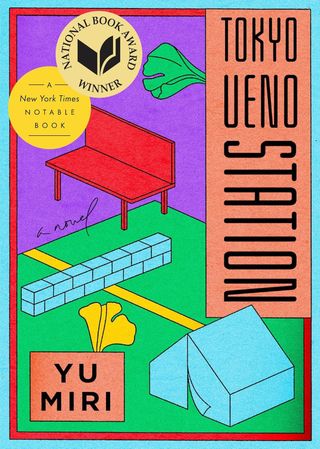
Cover of Tokyo Ueno Station

Tokyo Ueno Station

Yu Miri

Original language: Japanese · Paperback · ISBN 978-0593187524

Yu Miri's novel is narrated by Kazu, a man who has died and cannot find rest. He was born in Fukushima in 1933, the same year the Japanese Emperor was born, and a run of coincidences ties his life to the Imperial household without bringing him any of its comfort. Modern Japanese history shapes almost every turn of his path.

Kazu's time in Tokyo began at the park beside Ueno Station, where he arrived as a laborer while the city prepared for the 1964 Olympics. Years later he came back to the same ground and lived in the large homeless settlements that grew there. He carried the trauma of the 2011 tsunami, and news that Tokyo would host the 2020 Games hit him hard.

The book moves between memory and the present of a spirit fixed to one location, half listening to passersby and returning again to his own misfortunes. Ueno Park is one of Tokyo's busiest public spaces, sitting next to a station that handles enormous daily crowds. Yu Miri places national celebrations alongside the people who are moved on or unseen when such events arrive.

Plot

Kazu is dead. Born in Fukushima in 1933, the same year as the Japanese Emperor, his life is tied by a series of coincidences to the Imperial family and has been shaped at every turn by modern Japanese history. But his life story is also marked by bad luck, and now, in death, he is unable to rest, doomed to haunt the park near Ueno Station in Tokyo. Kazu's life in the city began and ended in that park; he arrived there to work as a laborer in the preparations for the 1964 Tokyo Olympics and ended his days living in the vast homeless village in the park, traumatized by the destruction of the 2011 tsunami and shattered by the announcement of the 2020 Olympics.

More from Japan

See the country page for Japan for its map, facts and largest cities, or browse books from other countries.

Free editions are on Project Gutenberg, matched by title and author. Links go to Amazon; Hookito doesn’t sell books. Know a book that belongs here, or spotted a mistake? Write to submissions@hookito.com.