Hookito

Kenya · Books

Books from Kenya

9 books from and about Kenya: what each is about, the plot, and a note from Professor Kogi.

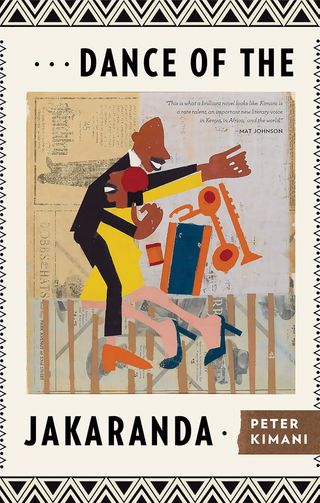
Cover of Dance of the Jakaranda

Dance of the Jakaranda

Peter Kimani

Original language: English · Paperback · ISBN 978-1617754968

Dance of the Jakaranda by Peter Kimani is set in Kenya around the period of independence from Britain. The novel follows three men whose lives become entangled during the construction of the Kenya-Uganda Railway: Richard Turnbull, a preacher; Ian McDonald, a colonial administrator; and Babu Salim, an Indian technician. Their connection deepens when all three are drawn into the controversial birth of a child, an event whose consequences stretch across generations.

Years later, Babu's grandson Rajan survives by performing songs based on Babu's stories about building the railway. One night, an accidental kiss with a stranger in a dark nightclub sets off a chain of revelations about the three men's shared and hidden past. Through this layered structure, Kimani connects the physical labor of laying track with the personal entanglements of the people who built, administered, and lived alongside it.

The novel brings together the experiences of African, Indian, and British characters within a single national project, examining how colonial infrastructure shaped private lives and family lines. Kenya's railway, constructed in the late 1890s and early 1900s, relied heavily on workers recruited from British India, and the novel draws on that history to frame its story of overlapping communities and buried secrets.

Plot

Set in the shadow of Kenya’s independence from Great Britain, Dance of the Jakaranda reimagines the special circumstances that brought black, brown, and white men together to lay the railroad that heralded the birth of the nation. The novel traces the lives and loves of three men―preacher Richard Turnbull, the colonial administrator Ian McDonald, and Indian technician Babu Salim―whose lives intersect when they are implicated in the controversial birth of a child. Years later, when Babu’s grandson, Rajan―who ekes out a living by singing Babu’s epic tales of the railway’s construction―accidentally kisses a mysterious stranger in a dark nightclub, the encounter provides the spark to illuminate the three men’s shared, murky past.
Cover of Dust

Dust

Yvonne Adhiambo Owuor

Original language: English · Hardcover · ISBN 978-0307961204

Dust opens on the day of Kenya's 2007 election, when Odidi Oganda is shot dead in the streets of Nairobi. His sister Ajany, recently returned from Brazil, and their father carry his body back to the family homestead in the Kenyan drylands. The killing cracks open years of buried history. Their mother disappears in a sudden fury, a young Englishman arrives searching for his own missing father, a hardened policeman reopens a cold case, and a figure known as the Trader sets a long-delayed plan in motion.

Yvonne Adhiambo Owuor moves the story across several decades of Kenyan history. The narrative reaches back to the Mau Mau uprisings of the 1950s, when Kenyans fought against British colonial rule, and forward through the 1969 political assassination that reshaped the country's power structures. Each layer of the past is bound up with the Oganda family, whose private losses mirror national fractures.

The novel's geography stretches from Nairobi to the arid northern landscapes of Kenya, with a thread running to Brazil. Owuor uses these distances to trace how political violence, colonial legacies, and personal secrets travel through generations and across borders, settling into the land and the people who remain.

Plot

Odidi Oganda, running for his life, is gunned down in the streets of Nairobi. His grief-stricken sister, Ajany, just returned from Brazil, and their father bring his body back to their crumbling home in the Kenyan drylands, seeking some comfort and peace. But the murder has stirred memories long left untouched and unleashed a series of unexpected events: Odidi and Ajany’s mercurial mother flees in a fit of rage; a young Englishman arrives at the Ogandas’ house, seeking his missing father; a hardened policeman who has borne witness to unspeakable acts reopens a cold case; and an all-seeing Trader with a murky identity plots an overdue revenge. In scenes stretching from the violent upheaval of contemporary Kenya back through a shocking political assassination in 1969 and the Mau Mau uprisings against British colonial rule in the 1950s, we come to learn the secrets held by this parched landscape, buried deep within the shared past of the family and of a conflicted nation.

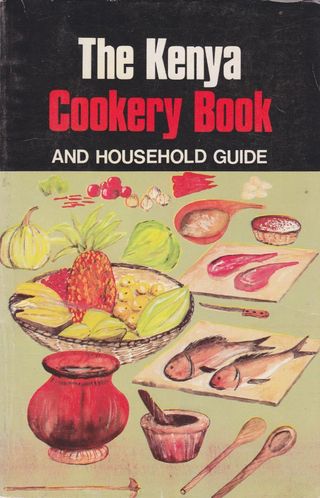
Cover of Kenya Cookery Book and Household Guide

Kenya Cookery Book and Household Guide

St. Andrew's Church Woman's Guild of Nairobi

Original language: English · Paperback · ISBN 978-9966461087

The Kenya Cookery Book and Household Guide is a practical manual compiled by the St. Andrew's Church Woman's Guild of Nairobi. It collects recipes from across Kenya's various communities, drawing on local ingredients and cooking methods. The book covers meal planning, kitchen organization, and general household management alongside its recipe sections.

Beyond the recipes themselves, the guide includes useful words and phrases in Kiswahili, the widely spoken language across East Africa. This makes it partly a language reference for readers unfamiliar with Kenyan kitchen vocabulary and ingredient names. The range of dishes reflects the diversity of Kenyan food traditions, shaped by coastal, highland, and pastoral communities as well as the influences that arrived through centuries of Indian Ocean trade.

The household sections address everyday domestic tasks and offer guidance on running a home in Kenya's specific climate and conditions. St. Andrew's Church in Nairobi, the guild behind the book, is a Presbyterian congregation located in the city center. The book has been reprinted over several decades, suggesting steady local demand for a single volume that gathers Kenyan cooking knowledge in one place.

Plot

The Kenya Cookery Book and Household Guide is a practical manual that offers clear, everyday recipes and useful household advice. It provides guidance on preparing a wide range of dishes, managing the kitchen efficiently, planning meals, and organizing home tasks, making it a helpful resource for understanding traditional approaches to cooking and domestic care.

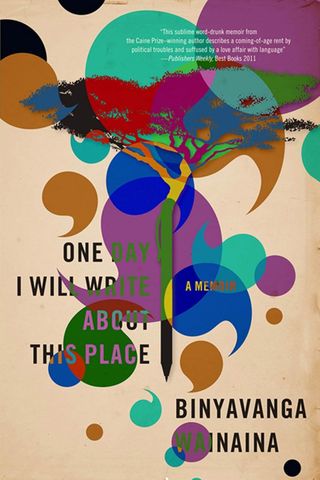
Cover of One Day I Will Write About This Place

One Day I Will Write About This Place

Binyavanga Wainaina

Original language: English · Paperback · ISBN 978-1555976248

One Day I Will Write About This Place is a memoir by Kenyan writer Binyavanga Wainaina, tracing his life from childhood in Nakuru through years spent in South Africa and eventually back to Nairobi. The book moves through decades of personal and political change, beginning in the 1970s and continuing into the early 2000s. Wainaina writes about family life, school, languages spoken at home and outside it, and the layered experience of growing up in a country where ethnic, economic, and cultural lines shift constantly.

Wainaina's writing style is fragmented and sensory, built from short impressions rather than smooth chronological narration. He records how music, television, food, and overheard conversation shaped his sense of who he was and where he fit. Kenya's political transitions appear not as history-textbook events but as things felt at home, in classrooms, and on the street. The memoir also follows his time studying in South Africa during the post-apartheid period, where questions about identity took on new dimensions.

The book addresses language directly, noting how English, Swahili, Gikuyu, and other languages carry different social weight in different settings. Wainaina pays close attention to the gap between how Africa is described from outside and how daily life actually feels from within it.

Plot

One Day I Will Write About This Place is a lyrical and vivid memoir by Kenyan writer Binyavanga Wainaina that explores his coming of age in post-colonial Africa. Blending personal narrative with social and political observation, the book captures his life from childhood through adulthood, weaving in his reflections on identity, language, family, and belonging. Wainaina’s prose is rich and experimental, offering readers an intimate and often dreamlike journey through Kenya and beyond, as he navigates his inner world alongside a rapidly changing continent.

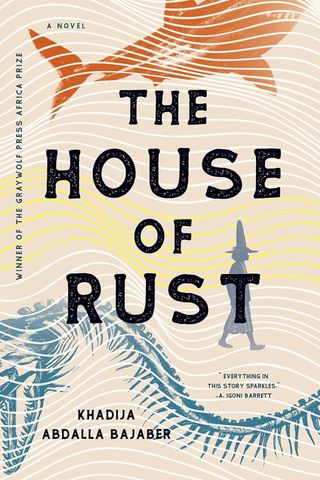
Cover of The House of Rust

The House of Rust

Khadija Abdalla Bajaber

Original language: English · Paperback · ISBN 978-1644450680

Aisha lives in Mombasa, Kenya, in a Hadhrami community whose roots stretch back to the Hadhramaut region of southern Yemen. Her father is a fisherman, and when he disappears at sea, she sets out to find him. Her vessel is strange: a boat built from a skeleton. Her guide is stranger still: a talking cat with scholarly leanings, who draws her attention toward a place called the House of Rust. Along the way, crows, goats, and other animals join the conversation.

Three sea monsters wait beneath the waves, each one a trial Aisha must face before she can reach her father. The largest threat is Baba wa Papa, described as the father of all sharks. The story follows Aisha through these encounters and beyond, into complications that persist even after she returns home. Khadija Abdalla Bajaber sets her debut novel inside the specific textures of Swahili coastal life and the diasporic Hadhrami culture that has shaped parts of East Africa's Indian Ocean coast for centuries.

The novel blends magical realism with a coming-of-age structure. Its fantastical elements grow from the oral traditions and everyday realities of Mombasa rather than from imported folklore, giving the story a geography and voice that feel grounded in a particular place and community.

Plot

The House of Rust is an enchanting novel about a Hadhrami girl in Mombasa. When her fisherman father goes missing, Aisha takes to the sea on a magical boat made of a skeleton to rescue him. She is guided by a talking scholar’s cat (and soon crows, goats, and other animals all have their say, too). On this journey Aisha meets three terrifying sea monsters. After she survives a final confrontation with Baba wa Papa, the father of all sharks, she rescues her own father, and hopes that life will return to normal. But at home, things only grow stranger.

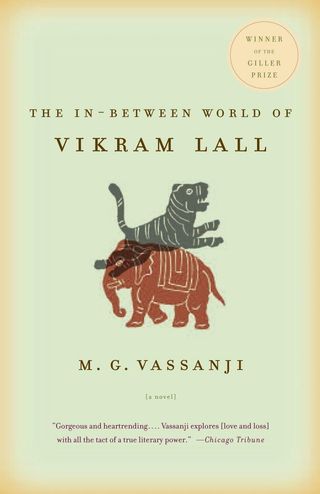
Cover of The In-Between World of Vikram Lall

The In-Between World of Vikram Lall

M.G. Vassanji

Original language: English · Paperback · ISBN 978-1400076567

Vikram Lall grows up in 1950s colonial Kenya, the grandchild of an Indian railroad worker. His family belongs to neither the British ruling class nor the African majority, occupying an uncertain middle ground in a society organized along racial lines. As a boy, Vic and his sister Deepa form friendships that cross these lines, but the Mau Mau uprising, an armed resistance against British colonial rule, reshapes daily life with suspicion and violence.

Vassanji traces post-colonial Kenya through one family's experience. The 1960s bring optimism and a new national identity, while the 1970s and 1980s introduce political corruption and a climate of fear. Vic moves through each period at a distance from both African and European communities, and his personal story, including friendships tested by politics and a love strained by the divisions around it, raises questions about loyalty, belonging, and complicity.

Spanning several decades, the narrative marks specific historical shifts rather than treating Kenya's independence era as a single episode. Vassanji, born in Nairobi and raised in Dar es Salaam, writes from within the East African Indian diaspora, whose communities grew around the railway and the trades that followed it.

Plot

Vikram Lall comes of age in 1950s Kenya, at the same time that the colony is struggling towards independence. Against the unsettling backdrop of Mau Mau violence, Vic and his sister Deepa, the grandchildren of an Indian railroad worker, search for their place in a world sharply divided between Kenyans and the British. We follow Vic from a changing Africa in the fifties, to the hope of the sixties, and through the corruption and fear of the seventies and eighties.

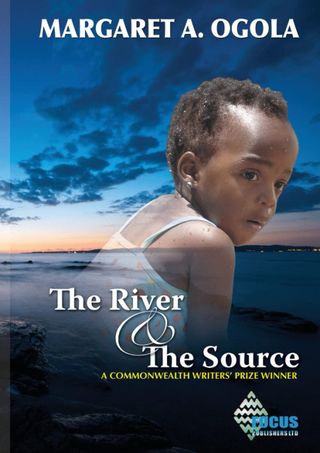
Cover of The River & The Source

The River & The Source

Margaret A Ogola

Original language: English · Paperback · ISBN 978-9966011459

The River and The Source by Margaret A. Ogola follows three generations of women in Kenya, beginning with Akoko, who lives within the customs and rhythms of traditional Luo society. From Akoko's world, the story moves forward through her descendants, tracing the changes each generation encounters as colonialism, Christianity, education, and urban life reshape the landscape around them. The novel reaches into the late twentieth century, where Akoko's grandchildren and great-grandchildren face pressures and choices that would have been unrecognizable in her time.

Ogola sets the opening sections among the Luo people of western Kenya, near Lake Victoria. The cultural details of that setting, including marriage customs, leadership structures, and community obligations, form the foundation from which later upheavals are measured. As the generations advance, the women in the family respond to shifting expectations about gender, faith, and personal ambition in ways shaped by both inherited values and new circumstances.

The book won the Jomo Kenyatta Prize for Literature in 1995 and the Commonwealth Writers' Prize for Best First Book in the Africa region. Margaret Ogola was a Kenyan physician and novelist who lived and worked in Nairobi.

Plot

The novel traces the lives of three generations of women. Beginning with the story of AKOKO set in her rich traditional Luo surroundings through to the children of Awiti who live and die in the full swell of the 20th century. This is an epic story spanning cultures; filled with laughter and tears. A book that demands to be read at a sitting!

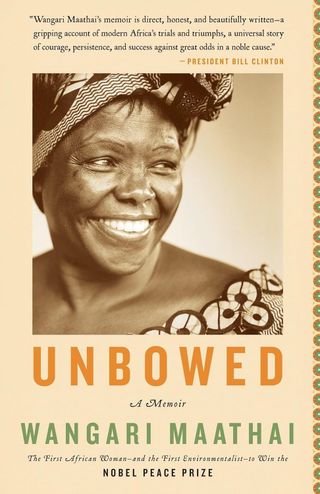
Cover of Unbowed

Unbowed

Wangari Maathai

Original language: English · Paperback · ISBN 978-0307275202

Wangari Maathai was born in 1940 in a rural village in Kenya, at a time when few girls in the region had access to formal schooling. She pursued education with unusual determination, eventually becoming the first woman in East and Central Africa to earn a doctorate and the first to lead a university department in Kenya. Her memoir, Unbowed, traces this path from her childhood in the Kenyan highlands through decades of scientific work, political resistance, and environmental organizing.

In 1977 Maathai founded the Green Belt Movement, an initiative that paid rural women to plant indigenous trees in their communities. The program addressed deforestation and soil erosion while also creating income for women across Kenya and, later, in other parts of Africa. Maathai's environmental work brought her into repeated conflict with the government of Daniel arap Moi. She was arrested, jailed, and physically attacked on multiple occasions, yet continued to press for both forest conservation and democratic reform.

Maathai was awarded the Nobel Peace Prize in 2004, recognized for linking environmental sustainability with democratic governance and the rights of women. Unbowed covers these events alongside her experiences as a single mother raising three children during years of political upheaval in Kenya.

Plot

In Unbowed, Nobel Prize winner Wangari Maathai recounts her extraordinary life. When Maathai founded the Green Belt Movement in 1977, she began a vital poor people’s environmental movement, focused on the empowerment of women, that soon spread across Africa. Persevering through run-ins with the Kenyan government and personal losses, and jailed and beaten on numerous occasions, Maathai continued to fight tirelessly to save Kenya’s forests and to restore democracy to her beloved country.

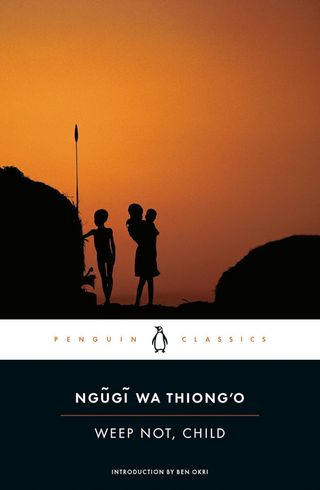
Cover of Weep Not, Child

Weep Not, Child

Ngũgĩ wa Thiong'o

Original language: English · Paperback · ISBN 978-0143106692

Weep Not, Child follows two brothers in colonial Kenya as their paths split early in life. Njoroge, the younger, is chosen to attend school, carrying his family's hopes for a future shaped by education. Kamau, the elder, begins an apprenticeship as a carpenter. The novel opens with both standing together, looking ahead from a garbage heap, a starting point that frames the distance between aspiration and circumstance.

The story is set during the Mau Mau uprising of the 1950s, when armed resistance against British colonial rule in Kenya forced ordinary families into difficult positions. The conflict reaches into the brothers' household, pressing each member to decide where loyalty and survival point. Kamau finds the political choice straightforward, but Njoroge clings to the idea that schooling can carry him beyond the crisis. The tension between personal ambition and collective struggle runs through the book.

First published in 1964, this was Ngũgĩ wa Thiong'o's first novel. It centers on how large-scale political violence reshapes daily life for people who did not choose it, examining what happens to a family's plans when the ground beneath them shifts. The story is set primarily in the Kenyan highlands, where much of the Mau Mau conflict took place.

Plot

Two brothers, Njoroge and Kamau, stand on a garbage heap and look into their futures: Njoroge is to attend school, while Kamau will train to be a carpenter. But this is Kenya, and the times are against them: In the forests, the Mau Mau is waging war against the white government, and the two brothers and their family need to decide where their loyalties lie. For the practical Kamau, the choice is simple, but for Njoroge the scholar, the dream of progress through learning is a hard one to give up.

More from Kenya

See the country page for Kenya for its map, facts and largest cities, or browse books from other countries.

Links go to Amazon; Hookito doesn’t sell books. Know a book that belongs here, or spotted a mistake? Write to submissions@hookito.com.