
Hookito

Liechtenstein · Books

Books from Liechtenstein

4 books from and about Liechtenstein: what each is about, the plot, and a note from Professor Kogi.

Cover of Cuisines of the Alps

Cuisines of the Alps

Kay Shaw Nelson

Original language: English · Hardcover · ISBN 978-0781810586

The Alps stretch nearly 750 miles across south-central Europe, curving from the Mediterranean coast through France, Italy, Switzerland, Liechtenstein, Germany, Austria, and into Slovenia. Seven countries share portions of this mountain range, and each has developed its own cooking traditions shaped by altitude, climate, and local ingredients. Kay Shaw Nelson's cookbook collects recipes, drinks, and food history from across these Alpine regions, organized by country.

The book covers well-known dishes alongside less familiar ones. Northern Italian contributions include risotto a la Milanese and osso buco. Austria is represented by goulash and linzer torte, Bavaria by dumplings, and Switzerland by raclette. French Alpine cooking appears through preparations like trout au bleu, while Slovenian entries feature eggplant stew and walnut cake. Nelson pairs the recipes with background on the food cultures that produced them, connecting each dish to its geographic and culinary context.

Mountain cooking across Europe often shares certain practical foundations: preserved meats, dairy from high-pasture herds, hearty grain-based dishes, and seasonal use of foraged ingredients. Nelson's collection highlights both these common threads and the distinct national and regional variations that separate, for example, a Swiss Alpine table from an Austrian or Slovenian one.

Plot

A majestic mountain system in south-central Europe, the Alps form an arc spanning almost 750 miles from the Mediterranean Sea through northern Italy and southeast France, Switzerland, southern Germany, and Austria and into the northwest part of the Balkan Peninsula. Cuisines of the Alps takes a culinary tour through the region, with stops in Northern Italy for risotto a la Milanese and osso buco; in Austrian for goulash and linzer torte; for dumplings in Bavaria; raclette in Switzerland; French trout au bleu, and in Slovenia for eggplant stew and walnut cake, among many other delights. Cuisines of the Alps will enhance your knowledge of the region's cookery, bringing the snow-capped peaks, with their robust, homey dishes into your kitchen.
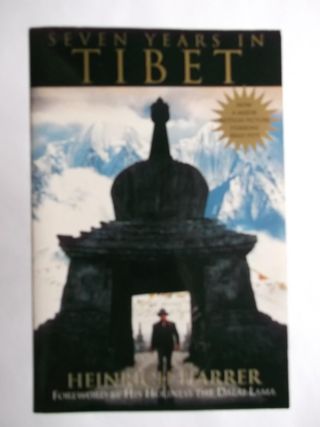
Cover of Seven Years in Tibet

Seven Years in Tibet

Heinrich Harrer

Original language: German · Paperback · ISBN 978-0874778885

Heinrich Harrer was an Austrian mountain climber held in a British internment camp in India after the Second World War broke out. After several failed attempts, he escaped and began a grueling trek across the Himalayas, a journey lasting twenty-one months through some of the highest and most inhospitable terrain on Earth. He survived by relying on the kindness of villagers and by talking his way past government officials, eventually arriving in Lhasa without money or permission to enter Tibet.

In Lhasa, Harrer found unexpected acceptance among Tibetan society. His European background and curiosity drew the attention of the young Dalai Lama, and over time Harrer became a tutor and close companion to the boy. The memoir covers daily life in a city that was then largely closed to outsiders, offering concrete observations about Tibetan customs, governance, and religious practice during the 1940s.

The book's timeframe ends as Chinese forces entered Tibet in 1950, a period of upheaval that forced both Harrer and the Dalai Lama to leave the country. First published in the 1950s, the memoir has since sold millions of copies worldwide and has been translated into numerous languages.

Plot

Harrer was traveling in India when the Second World War erupted. He was subsequently seized and imprisoned by British authorities. After several attempts, he escaped and crossed the rugged, frozen Himalayas, surviving by duping government officials and depending on the generosity of villagers for food and shelter. Harrer finally reached his ultimate destination-the Forbidden City of Lhasa-without money, or permission to be in Tibet. But Tibetan hospitality and his own curious appearance worked in Harrer?s favor, allowing him unprecedented acceptance among the upper classes. His intelligence and European ways also intrigued the young Dalai Lama, and Harrer soon became His Holiness?s tutor and trusted confidant. When the Chinese invaded Tibet in 1950, Harrer and the Dalai Lama fled the country together. This timeless story illuminates Eastern culture, as well as the childhood of His Holiness and the current plight of Tibetans. It is a must-read for lovers of travel, adventure, history, and culture.

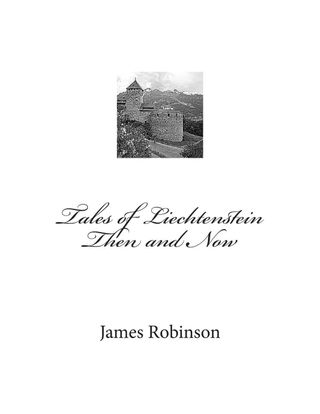
Cover of Tales of Liechtenstein Then and Now

Tales of Liechtenstein Then and Now

James Foster Robinson

Original language: English · Paperback · ISBN 978-1499793864

Liechtenstein, wedged between Switzerland and Austria along the upper Rhine, is one of the smallest countries in Europe. Despite its size, the principality carries a long store of local tales involving devils, witches, ghosts, dragons, and robber barons, alongside stories of war and victory drawn from its centuries as an alpine territory. James Foster Robinson gathers a selection of these narratives in this collection, mixing older folklore with accounts that touch on more recent life in the country.

The book moves between traditional legend and contemporary observation. Some entries follow the pattern of alpine folk stories familiar across the German-speaking regions, while others reflect the particular history and geography of Liechtenstein itself. The principality has been an independent state since 1719, ruled by the same family whose name it bears, and its small population and compact landscape give its stories an unusually local quality. Robinson presents these tales without heavy academic framing, keeping the tone accessible and letting the stories carry their own weight.

The collection offers a window into a country that many readers may know only as a name on a map, providing concrete scenes and characters rooted in a specific alpine setting rather than generic European folklore.

Plot

The Principality of Liechtenstein has many tales to tell of the devil, witches, ghosts, dragons, robber barons, war and victory. You will find some of them here.

Cover of The State in the Third Millennium

The State in the Third Millennium

Prince Hans-Adam of Liechtenstein

Original language: English · Hardcover · ISBN 978-3905881042

The State in the Third Millennium is a political essay by Prince Hans-Adam II of Liechtenstein, examining how the modern nation-state developed and where it might be headed. The author draws on his unusual combination of roles: reigning monarch of a small European state, participant in Liechtenstein's system of direct democracy, and internationally active businessman. His argument considers how shifts in military technology, transportation, and economics have historically reshaped the structure of states, and asks which of those forces are likely to matter most in the decades ahead.

Liechtenstein itself serves as a quiet reference point throughout. With roughly 160 square kilometres of territory between Switzerland and Austria, it is one of the smallest sovereign states in the world, yet it operates with a high degree of self-determination and a distinctive constitutional arrangement that blends monarchy with direct popular votes. The book uses this small-state perspective to question assumptions that large centralized governments are the only workable model. Hans-Adam proposes that future states could function more effectively by granting communities greater autonomy, including, in his framework, the theoretical right of local populations to separate peacefully from the states they belong to.

Plot

Prince Hans-Adam of Liechtenstein is able to look at the modern nation-state from many different angles: as a head of state; as a politician, who had to win popular votes in a direct democracy; as a businessman active in different continents; and as an historian who has studied the influence of military technology, transportation and the economy on the workings of the state.

More from Liechtenstein

See the country page for Liechtenstein for its map, facts and largest cities, or browse books from other countries.

Links go to Amazon; Hookito doesn’t sell books. Know a book that belongs here, or spotted a mistake? Write to submissions@hookito.com.