Hookito

Liberia · Books

Books from Liberia

7 books from and about Liberia: what each is about, the plot, and a note from Professor Kogi.

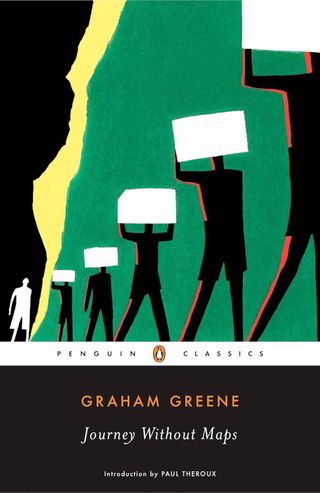
Cover of Journey Without Maps

Journey Without Maps

Graham Greene

Original language: English · Paperback · ISBN 978-0143039723

In 1935, Graham Greene traveled on foot from Sierra Leone into the interior of Liberia, a West African republic established in the nineteenth century as a settlement for formerly enslaved people from the Americas. The route took him across red-clay landscapes to the coast of Grand Bassa, accompanied by a line of porters. At the time, much of the Liberian interior was poorly mapped by outside powers, and Greene found communities whose daily patterns had developed largely apart from European colonial administration.

Greene's account records what he observed along the way: local social structures, the physical demands of the trek, encounters with illness, and the routines of village life. The title reflects both the literal absence of reliable maps for the region and a broader sense of entering unfamiliar territory, psychological as well as geographic. Greene was still in the earlier part of his writing career, and the book sits among a small number of travel works he produced alongside his novels.

A later edition of the book includes an introduction by Paul Theroux. The narrative is set firmly in a particular moment in Liberian and West African history, before many of the political changes that would reshape the region over the following decades.

Plot

Now with a new introduction by Paul Theroux, Journey Without Maps is the spellbinding record of Greene's journey. Crossing the red-clay terrain from Sierra Leone to the coast of Grand Bassa with a chain of porters, he came to know one of the few areas of Africa untouched by colonization. Western civilization had not yet impinged on either the human psyche or the social structure, and neither poverty, disease, nor hunger seemed able to quell the native spirit.
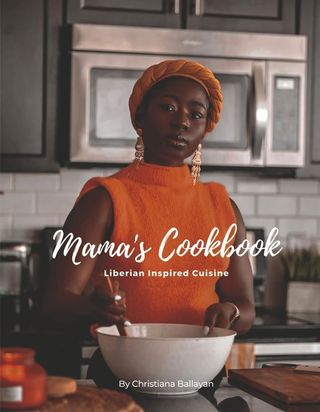
Cover of Mama's Cookbook: Liberian Inspired Cuisine

Mama's Cookbook: Liberian Inspired Cuisine

Christiana Ballayan

Original language: English · Hardcover · ISBN 978-1667891002

Mama's Cookbook is a collection of 27 recipes rooted in Liberian cooking traditions, written by Chef Christiana Ballayan. The book covers dishes that reflect the flavors and ingredients common in Liberian kitchens, including Jollof Rice, a seasoned one-pot rice dish popular across West Africa, and Potato Greens, a stew built around sweet potato leaves. Each recipe is paired with illustrations and step-by-step instructions intended for cooks at varying skill levels.

Liberia sits on the West African coast, bordered by Sierra Leone, Guinea, and Cote d'Ivoire. Its cuisine draws on tropical ingredients such as cassava, palm oil, hot peppers, and leafy greens, and shares certain dishes and techniques with neighboring countries while keeping its own regional variations. Jollof Rice, for example, appears in kitchens from Senegal to Nigeria, but Liberian versions tend to follow their own proportions and seasoning choices.

The cookbook is structured as a practical kitchen guide rather than a cultural survey. Ballayan focuses on giving clear preparation steps and visual references for each dish, keeping the format accessible to people who may be encountering these ingredients and methods for the first time.

Plot

Written by Chef Christiana Ballayan, this cookbook features 27 delicious recipes inspired by Liberian Cuisine. From the comforting spices of Jollof Rice to the savory flavors of Potato Greens, Mama's Cookbook takes you on a culinary journey through the diverse tastes of Africa. Each recipe is beautifully illustrated and accompanied by easy-to-follow instructions, making it simple for even novice cooks to bring the authentic flavors of Africa to their kitchen.

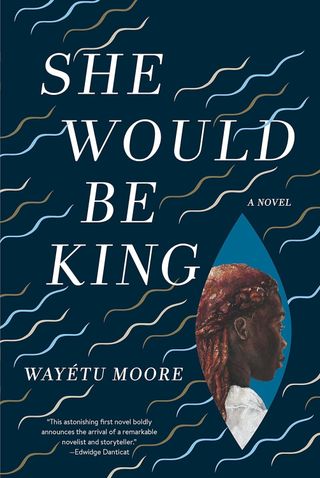
Cover of She Would Be King

She Would Be King

Wayétu Moore

Original language: English · Hardcover · ISBN 978-1555978174

She Would Be King follows three characters whose lives converge in Monrovia during the early formation of Liberia. Gbessa is cast out from the village of Lai in West Africa, subjected to starvation and snakebite, yet she does not die. June Dey grows up enslaved on a Virginia plantation, concealing extraordinary physical strength until a violent encounter with his overseer leaves him no choice but to escape. Norman Aragon, born in Jamaica to a British colonizer and a Maroon woman held in slavery, possesses the ability to vanish from sight.

The three arrive separately in the coastal settlement that would become the capital of a new country. Liberia's founding involved deep friction between the formerly enslaved African Americans who arrived as settlers and the indigenous communities already living on the land. Moore sets her characters at this fault line, using elements of magical realism to explore the strains of building a nation from such different histories.

A narrating wind moves through the story, carrying an older perspective that predates the settlement. The novel draws on the real geography and early history of Liberia while granting its central figures abilities that place them somewhere between folklore and fiction.

Plot

Gbessa, exiled from the West African village of Lai, is starved, bitten by a viper, and left for dead, but still she survives. June Dey, raised on a plantation in Virginia, hides his unusual strength until a confrontation with the overseer forces him to flee. Norman Aragon, the child of a white British colonizer and a Maroon slave from Jamaica, can fade from sight when the earth calls him. When the three meet in the settlement of Monrovia, their gifts help them salvage the tense relationship between the African American settlers and the indigenous tribes, as a new nation forms around them. Moore’s intermingling of history and magical realism finds voice not just in these three characters but also in the fleeting spirit of the wind, who embodies an ancient wisdom. “If she was not a woman,” the wind says of Gbessa, “she would be king.” In this vibrant story of the African diaspora, Moore, a talented storyteller and a daring writer, illuminates with radiant and exacting prose the tumultuous roots of a country inextricably bound to the United States.

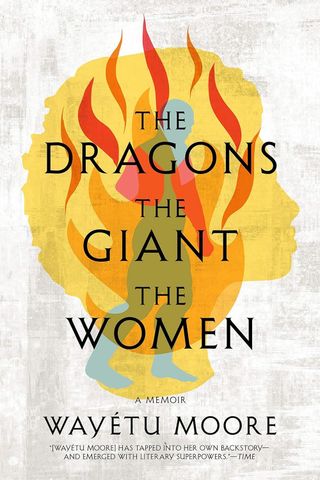
Cover of The Dragons, the Giant, the Women: A Memoir

The Dragons, the Giant, the Women: A Memoir

Wayétu Moore

Original language: English · Hardcover · ISBN 978-1644450314

Wayétu Moore was nearly five years old and living in Monrovia, Liberia, when the First Liberian Civil War began in 1989. Her mother was abroad in New York, studying and working, while Moore remained with her father and grandmother. As fighting reached the capital, the family had no choice but to leave their home on foot. They spent three weeks walking and hiding before reaching the village of Lai. From there, a rebel soldier helped smuggle them across the border into Sierra Leone, beginning a longer path toward reuniting with her mother in the United States.

The memoir draws on Moore's childhood memories and her adult effort to reconstruct events she experienced too young to fully understand at the time. The title refers to figures from her early perception of the conflict, where real dangers took on shapes a small child could process. The book moves between her family's escape from Liberia and her later life in the United States, where questions of belonging, displacement, and identity followed her into adulthood.

Moore grew up in Texas after the family settled in the United States. Her account connects a specific family story to the wider displacement caused by the Liberian civil war, which lasted from 1989 to 1997 and forced hundreds of thousands of people from their homes.

Plot

When Wayétu Moore turns five years old, her father and grandmother throw her a big birthday party at their home in Monrovia, Liberia, but all she can think about is how much she misses her mother, who is working and studying in faraway New York. Before she gets the reunion her father promised her, war breaks out in Liberia. The family is forced to flee their home on foot, walking and hiding for three weeks until they arrive in the village of Lai. Finally, a rebel soldier smuggles them across the border to Sierra Leone, reuniting the family and setting them off on yet another journey, this time to the United States.

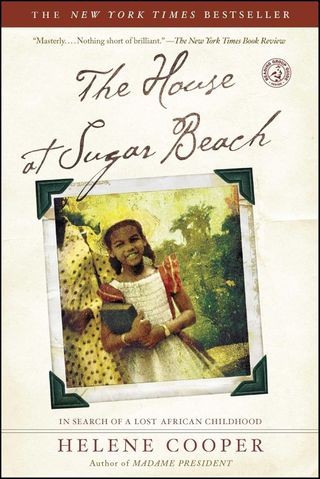
Cover of The House at Sugar Beach: In Search of a Lost African Childhood

The House at Sugar Beach: In Search of a Lost African Childhood

Helene Cooper

Original language: English · Paperback · ISBN 978-0743266253

Helene Cooper's memoir traces her early life in Liberia, where she grew up among the Congo elite, descendants of freed African Americans who sailed from New York in 1820 to found what became Monrovia. Her family lived at Sugar Beach, a twenty-two-room house near the ocean, with servants, expensive cars, a villa in Spain, and a farm up-country.

It was also an African childhood of knock foot games and hot pepper soup, and of stories about heartmen and neegee. When Helene was eight, the Coopers took in a foster child, Eunice, a Bassa girl, following a custom among the Liberian elite, and she became known as Mrs. Cooper's daughter. The two girls grew up side by side across a social divide that ran through the whole country.

The 1980 military coup ended the long political dominance of the settler descendants, and Cooper sets out the violence that followed and how it separated her family from the country and from Eunice. Working later as a journalist, she returns to Liberia in search of the people and places she left behind. The book was a finalist for the 2008 National Book Critics Circle Award.

Plot

Helene Cooper is “Congo,” a descendant of two Liberian dynasties—traced back to the first ship of freemen that set sail from New York in 1820 to found Monrovia. Helene grew up at Sugar Beach, a twenty-two-room mansion by the sea. Her childhood was filled with servants, flashy cars, a villa in Spain, and a farmhouse up-country. It was also an African childhood, filled with knock foot games and hot pepper soup, heartmen and neegee. When Helene was eight, the Coopers took in a foster child—a common custom among the Liberian elite. Eunice, a Bassa girl, suddenly became known as “Mrs. Cooper’s daughter.”

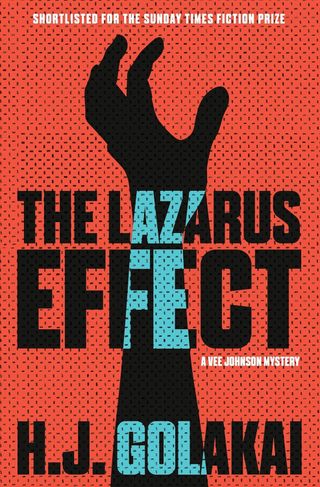
Cover of The Lazarus Effect: A Vee Johnson Mystery

The Lazarus Effect: A Vee Johnson Mystery

H.J. Golakai

Original language: English · Paperback · ISBN 978-1911115083

Vee Johnson is an investigative journalist at a Cape Town magazine called Urban. A photograph of a girl who looks familiar, seen at a local hospital, sets her off on an inquiry that she covers by proposing an article about missing children. The girl she is looking for is Jacqui Paulsen, who left home two years earlier and has not been seen since.

Vee does not work alone. Her assistant, Chloe Bishop, is an unconventional partner, and the pair begin pulling at threads that lead into two fractured households, the Fouries and the Paulsens. Both families hold secrets, and the search for one missing young woman keeps running into relatives who would rather leave old questions closed. The cover story about missing children shapes how Vee is able to ask her questions.

This is the opening book in the Vee Johnson series and the debut novel of H.J. Golakai, a Liberian writer. It belongs to a growing body of crime fiction set in African cities, and its themes gather around disappearance, strained family loyalty, and the reasons people bury painful truths.

Plot

Vee Johnson is an investigative journalist for the Cape Town magazine Urban. When she spots a photo of a familiar-looking girl at a local hospital, Vee launches an investigation, under the pretext of writing an article about missing children. Alongside her oddball assistant Chloe Bishop, Vee delves into the secrets of the fractured Fourie and Paulsen families. What happened to Jacqui Paulsen, who left home two years ago and hasn't been seen since?

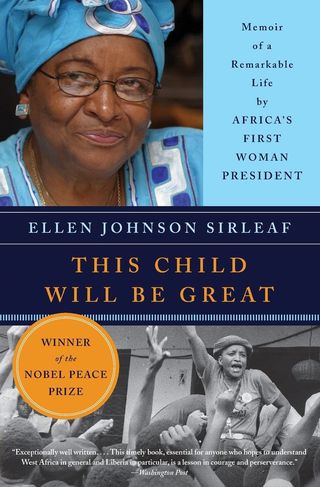
Cover of This Child Will Be Great

This Child Will Be Great

Ellen Johnson Sirleaf

Original language: English · Paperback · ISBN 978-0061353482

Ellen Johnson Sirleaf became president of Liberia in January 2006, following fourteen years of civil conflict that had devastated the West African country. She was the first woman elected head of state in Africa. This memoir traces her path from childhood in Liberia through education in the United States, a career in international banking, imprisonment and exile under authoritarian rule, and eventually a successful campaign for the presidency.

Sirleaf writes about navigating between worlds. She studied and worked abroad while maintaining deep ties to Liberian political life, where she openly opposed successive dictatorships. That opposition brought serious personal consequences, including detention and periods of forced separation from her country. The book covers her eventual return to Liberia and the grassroots campaign work she carried out across communities still bearing the marks of war.

The memoir also addresses her experiences with abuse and the obstacles she encountered as a woman seeking political authority in settings where few women held power. Sirleaf describes the practical realities of running for office in a country rebuilding its institutions, from organizing in remote villages to confronting the legacy of prolonged armed conflict.

Plot

In January 2006, after the Republic of Liberia had been racked by fourteen years of brutal civil conflict, Ellen Johnson Sirleaf—Africa's "Iron Lady"—was sworn in as president, an event that marked a tremendous turning point in the history of the West African nation. In this stirring memoir, Sirleaf shares the story of her rise to power, including her early childhood; her experiences with abuse, imprisonment, and exile; and her fight for democracy and social justice. She reveals her determination to succeed in multiple worlds, from her studies in the United States to her work as an international bank executive, to campaigning in some of Liberia's most desperate and war-torn villages and neighborhoods. It is the tale of an outspoken political and social reformer who fought the oppression of dictators and championed change.

More from Liberia

See the country page for Liberia for its map, facts and largest cities, or browse books from other countries.

Links go to Amazon; Hookito doesn’t sell books. Know a book that belongs here, or spotted a mistake? Write to submissions@hookito.com.