Hookito

Lithuania · Books

Books from Lithuania
6 books from and about Lithuania: what each is about, the plot, and a note from Professor Kogi.

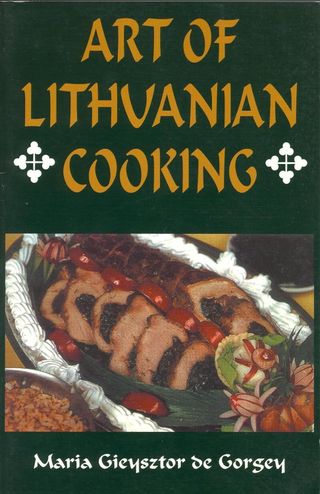
Cover of Art of Lithuanian Cooking

Art of Lithuanian Cooking

Maria Gieysztor de Gorgey

Original language: English · Paperback · ISBN 978-0781808996

Art of Lithuanian Cooking by Maria Gieysztor de Gorgey is a cookbook presenting over 150 recipes drawn from Lithuanian culinary tradition. The collection covers a wide range of categories, from appetizers and breads through soups, vegetables, salads, and aspics, to meat dishes, poultry, game, and fish. Chapters on pancakes, noodle dishes, dumplings, and egg dishes reflect the central role of simple, filling preparations in Lithuanian home cooking.

Lithuanian food tends toward hearty, sustaining meals shaped by long winters and an agricultural landscape. Soups, stews, and dumplings appear frequently, and the cookbook gives considerable space to these staples. The desserts and cakes section alone contains close to fifty recipes, making it one of the larger chapters in the book. A separate section on drinks and cocktails rounds out the collection.

The author's name suggests a connection to both Polish and Hungarian naming traditions, which fits the layered cultural history of Lithuania and its neighbors. The book has been described as a long-standing favorite among readers interested in Baltic cooking, and it serves as a practical entry point for anyone looking to cook Lithuanian dishes at home.

Plot

Lithuanian cuisine is famed for its hearty and satisfying meat dishes, soups, stews, noodles and dumplings, and desserts. This perennial favorite cookbook includes over 150 authentic recipes. Among the chapters included are Appetizers & Breads, Soups, Vegetables & Salads, Aspics, Garnishes & Sauces, Meat Dishes, Poultry & Game Dishes, Fish, Pancakes, Noodle Dishes, Dumplings & Egg Dishes, Cakes & Desserts, and Drinks & Cocktails.
Cover of Between Shades of Gray

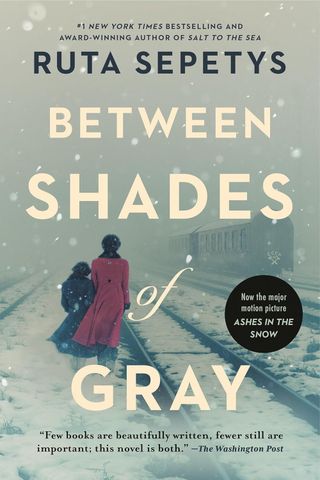
Between Shades of Gray

Ruta Sepetys

Original language: English · Paperback · ISBN 978-0142420591

In 1941, fifteen-year-old Lina lives an ordinary life in Lithuania, spending her time painting and drawing. That changes when Soviet officers arrive at her family's door in the middle of the night. Lina, her mother, and her younger brother are seized and forced into a cattle car heading north. Her father is taken separately, to a different destination. The train crosses into increasingly remote territory, eventually passing the Arctic Circle on its way to a labor camp in Siberia.

At the camp, conditions are severe. The prisoners work in extreme cold, digging for beets and struggling to stay alive under Stalin's deportation policies. Lina uses her ability to draw as a way to record what is happening around her. She creates images that double as messages, hoping they might somehow reach the prison camp where her father is held and show him that his family has survived. This act of documentation carries real danger.

The story covers a deportation spanning thousands of miles and several years. Ruta Sepetys, whose own family background is Lithuanian, based the novel on extensive research into the mass deportations carried out by the Soviet Union in the Baltic states during and after the Second World War. Many of those deported were civilians with no political involvement.

Plot

A knock comes at the door in the dead of night, and Lina’s life changes in an instant. With her young brother and mother, she is hauled away by the Soviet secret police from her home in Lithuania and thrown into a cattle car en route to Siberia. Separated from her father, Lina secretly passes along clues in the form of drawings, hoping they will reach his prison camp. But will her letters, or her courage, be enough to reunite her family? Will they be enough to keep her alive?

Cover of Forest of the Gods

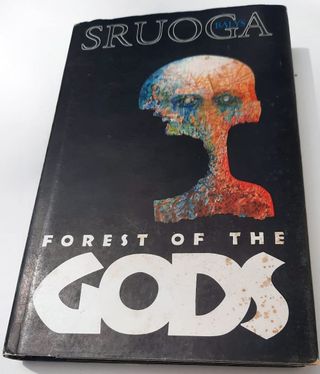
Forest of the Gods

Balys Sruoga

Original language: Lithuanian · Hardcover · ISBN 978-5415004638

Forest of the Gods is a novel by Lithuanian writer Balys Sruoga, drawn from his own imprisonment in the Stutthof concentration camp. In March 1943, Sruoga was arrested alongside forty-seven other Lithuanian intellectuals after Nazi authorities began targeting suspected anti-Nazi sentiment in occupied Lithuania. The camp was located in Sztutowo, then part of the Free City of Danzig and now within the Nowy Dwór Gdański County of Poland's Pomeranian Voivodeship.

Sruoga's account filters the daily reality of the camp through persistent irony and dry humor. Guards and prisoners alike appear as flawed, exhausted human beings rather than symbols of ideology. The narrative voice uses this distance as a means of psychological survival, observing cruelty with a tone that undercuts the authority of the captors without minimizing what is happening. The approach sets the book apart from many other accounts of camp life from the same period.

Soviet censors suppressed the manuscript after the war. It was not published until 1957, a full decade after Sruoga's death. The novel is widely regarded as his best-known work and holds a distinct place in Lithuanian literature.

Plot

Sruoga's best-known work is the novel Forest of the Gods, based on his own life experiences as a prisoner in Stutthof concentration camp in Sztutowo, Free City of Danzig now present-day Nowy Dwór Gdański County, Pomeranian Voivodeship, Poland, where he was sent in March 1943 together with forty-seven other Lithuanian intellectuals after the Nazis started a campaign against possible anti-Nazi agitation in occupied Lithuania. In the book, Sruoga revealed life in a concentration camp through the eyes of a man whose only way to save his life and maintain his dignity was to view everything through a veil of irony and humor, where torturers and their victims are exposed as imperfect human beings, being far removed from the false ideals of their political leaders. For example, he wrote "A man is not a machine. He gets tired.", referring to the guards beating prisoners.

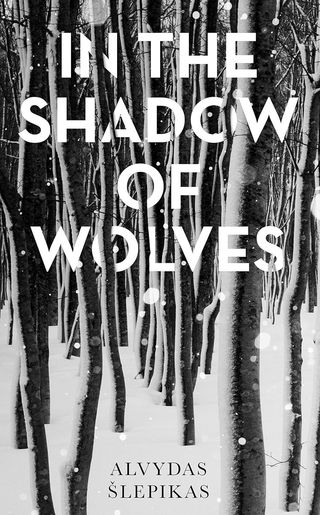
Cover of In the Shadow of Wolves

In the Shadow of Wolves

Alvydas Šlepikas

Original language: Lithuanian · Hardcover · ISBN 978-1786074683

In the final months of the Second World War, Russian forces advance across East Prussia, displacing civilians from their homes. Women and children left behind face not only the arriving soldiers but also severe hunger and cold. With no reliable source of food or heat, survival becomes its own daily crisis, separate from the larger conflict still unfolding around them.

Alvydas Šlepikas builds his novel around the so-called wolf children, young boys and girls sent by their mothers to slip across the border into Lithuania. There, they beg local farmers for work or scraps of food to carry back to their starving families. The name itself captures their situation: children forced to live like wild animals, moving through forests and relying on the uncertain generosity of strangers. Some encounter harshness and danger; others find unexpected help.

The story is set in a narrow corridor between East Prussia and Lithuania, a border region shaped by shifting national boundaries and overlapping populations. Šlepikas, a Lithuanian writer, drew on extensive research into these historical events. The novel follows multiple children and women rather than a single protagonist, assembling their experiences into a broader picture of civilian displacement during wartime.

Plot

As victorious Russian troops sweep across East Prussia, a group of desperate children face a new battle. Confronted by critical food shortages and the onset of a bitterly cold winter, these 'wolf children' secretly cross the border into Lithuania in search of work or food to take back to their starving families. In a world still reeling from the devastation of war, the children must risk everything to survive.

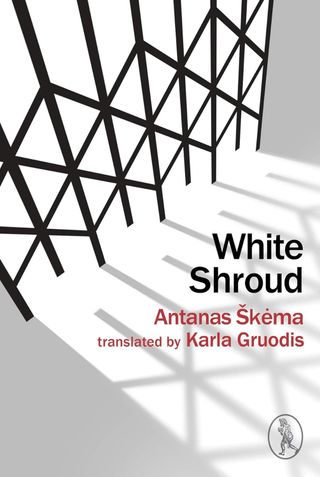
Cover of White Shroud

White Shroud

Antanas Skema

Original language: Lithuanian · Paperback · ISBN 978-1908251848

White Shroud follows an emigre poet from Lithuania who works as an elevator operator in a New York hotel during the mid-1950s. The novel draws heavily on Antanas Skema's own experience as an immigrant, and it uses a stream-of-consciousness style to move between sharply different times and places. Scenes set in Lithuania before and during World War II alternate with the narrator's present life in New York, where he navigates the disorientation of starting over in a foreign country.

The structure reflects the narrator's fractured inner life. Memory, language, and identity shift as the story passes between wartime Europe and postwar Manhattan. Rather than following a single chronological line, the novel layers episodes so that past and present press against each other constantly. The effect is a portrait of someone whose sense of self has been reshaped by displacement and historical violence.

Skema wrote the novel in Lithuanian, and it is widely regarded as one of the central works of Lithuanian modernist fiction. This English translation opens the text to readers outside the Lithuanian-speaking world. Skema himself lived as an emigre in the United States, and the book's setting in a large hotel gives the narrator a confined, repetitive daily routine that contrasts with the turbulence of his memories.

Plot

Drawing heavily on the author's own immigrant experience, this psychological, stream-of-consciousness work tells the story of an ‚migr‚ poet working as an elevator operator in a large New York hotel during the mid-1950s. The novel moves through sharply contrasting settings and stages in the narrator's life in Lithuania before and during World War II, returning always to New York and the recent immigrant's struggle to adapt to a completely different world. Strong characters and evocative utterances convey how historical context shapes language and consciousness, breaking down any stable sense of self. This translation will appeal to various audiences: readers of modernist and world literature, scholars of Baltic literature and refugee studies, and members of the Lithuanian diaspora unable to access this novel in Lithuanian. Written from the perspective of a newcomer to an Anglophone country, White Shroud encourages readers to better understand the complexities of immigrant life.

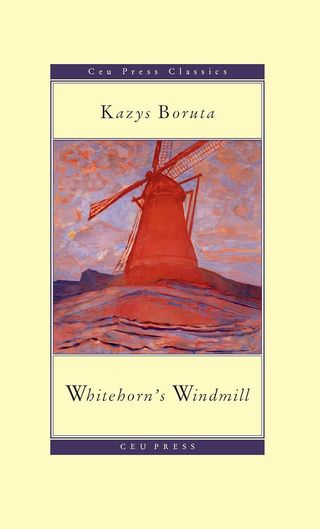
Cover of Whitehorn's Windmill

Whitehorn's Windmill

Kazys Boruta

Original language: Lithuanian · Paperback · ISBN 978-9639776715

Whitehorn's Windmill, known in Lithuanian as Baltaragio malunas, is a novel by Kazys Boruta written largely in 1942 during the German occupation of Lithuania. It tells the story of a miller called Whitehorn and his attempts to find a suitable husband for his daughter Jurga. The search draws in suitors, neighbors, priests, and other villagers, while a series of misfortunes and the interference of the devil complicate matters at every turn.

Boruta drew heavily on Lithuania's oral folktale tradition, giving the novel a lyrical, spoken quality that shifts between comedy, romance, fantasy, and darker episodes. The spiritual world of the story reflects a landscape where older pagan beliefs sit alongside a Catholicism that arrived comparatively recently and sometimes with excessive zeal. This layering of belief systems shapes the characters and the conflicts they face.

Boruta's own life was marked by political persecution. He spent years imprisoned both before and after the Second World War, and during the Soviet period in Lithuania he was forced to publish translations under a false name. The novel's accessible plot also made it popular among younger readers in Lithuania.

Plot

Most of Whitehorn’s Windmill (Baltaragio malunas) was written in 1942, during the German occupation. Bearing a lyrical style that gives full rein to the oral folktale tradition Lithuania is famous for, the novel is by turns romantic, farcical, fantastic, and tragic. The sense of spirituality that permeates the work reflects Lithuania’s pagan roots that were overlaid with an occasionally over-zealous Catholicism not so very long ago. The story is about Whitehorn the miller’s efforts to find a match for his beautiful daughter, Jurga, against various calamities with and among suitors, neighbors, priests and other inhabitants of the village, and ultimately against the devil’s spell. The interesting plot made the novel popular as juvenile literature, too.

More from Lithuania

See the country page for Lithuania for its map, facts and largest cities, or browse books from other countries.

Links go to Amazon; Hookito doesn’t sell books. Know a book that belongs here, or spotted a mistake? Write to submissions@hookito.com.