
Hookito

Moldova · Books

Books from Moldova

7 books from and about Moldova: what each is about, the plot, and a note from Professor Kogi.

Cover of All-Night Pharmacy: A Novel

All-Night Pharmacy: A Novel

Ruth Madievsky

Original language: English · Hardcover · ISBN 978-1646221509

An unnamed young woman graduates from high school and follows her older sister Debbie to Salvation, a Los Angeles bar filled with energy healers, aspiring actors, and assorted outcasts. They share a bag of unidentified pills, and the night dissolves into reckless encounters. This is familiar territory for the sisters, whose bond runs on impulse and dependency. Then Debbie disappears, and the narrator must reckon with a life built around someone who is no longer there.

Rather than pulling away from the chaos, the narrator moves further into it. She takes a job as an emergency room secretary and begins stealing medication to sell. Into this unstable situation arrives Sasha, a Jewish refugee from the former Soviet Union who appears at the hospital calling herself a psychic sent to act as the narrator's spiritual guide. Their connection shifts between friendship, attraction, mysticism, and an uneasy exchange of power.

Ruth Madievsky sets the novel in a Los Angeles defined by late nights, pharmaceutical haze, and characters living at the edges of conventional life. The story follows its narrator through questions of identity, autonomy, and what remains once a defining relationship is suddenly absent.

Plot

On the night of her high school graduation, a young woman follows her older sister Debbie to Salvation, a Los Angeles bar patronized by energy healers, aspiring actors, and all-around misfits. After the two share a bag of unidentified pills, the evening turns into a haze of sensual and risky interactions—nothing unusual for two sisters bound in an incredibly toxic relationship. Our unnamed narrator has always been under the spell of the alluring and rebellious Debbie and, despite her own hesitations, she has always said yes to nights like these. That is, until Debbie disappears. Falling deeper into the life she cultivated with her sister, our narrator gets a job as an emergency room secretary where she steals pills to sell on the side. Cue Sasha, a Jewish refugee from the former Soviet Union who arrives at the hospital claiming to be a psychic tasked with acting as the narrator’s spiritual guide. The nature of this relationship evolves and blurs, a kaleidoscope of friendship, sex, mysticism, and ambiguous power dynamics.
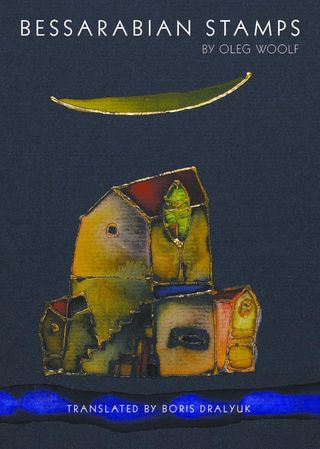
Cover of Bessarabian Stamps

Bessarabian Stamps

Oleg Woolf

Original language: Romanian · Paperback · ISBN 978-1939419286

Bessarabian Stamps is a cycle of sixteen stories by Oleg Woolf, set largely in the village of Sănduleni. Bessarabia is a historical region between the Prut and Dniester rivers, now split between Moldova and Ukraine, that changed rulers repeatedly over centuries. The village sits in this contested territory, and its inhabitants live with the practical consequences of shifting borders: languages change, currencies change, the state itself changes, while ordinary life continues underneath.

Woolf's stories present Sănduleni as a place caught between solidity and dissolution. The people there adapt to each new political reality without fully belonging to any of them. The writing carries a surreal quality, bending the familiar details of village life into something stranger and harder to pin down. Comparisons have been drawn to Bruno Schulz, the Polish writer whose own fiction transformed a small Galician town into a site of constant metamorphosis. Both writers work at the scale of a single settlement to examine what happens when borders move but people stay.

The collection returns often to the experience of living at the margin of successive empires. Sănduleni endures while the powers that claim it do not, and Woolf treats this persistence with a dry, understated irony rooted in the region's own storytelling traditions.

Plot

Set mostly in the village of Sănduleni, Bessarabian Stamps is a vivid, surreal evocation of a liminal world. Sănduleni’s denizens are in permanent flux, forever shifting languages, cultures, and states, in every sense of the word. With a warm, Bessarabian irony recalling one of Eastern Europe’s long-forgotten regions, the Stamps explore what it means to live on the edges of empires, which rise and fall while Sănduleni abides.

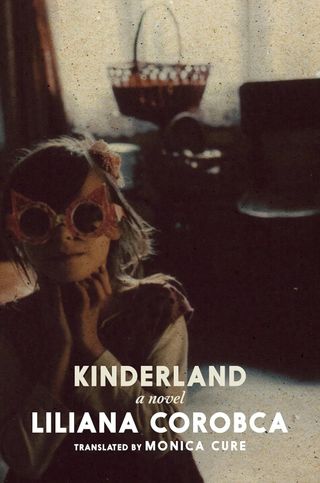
Cover of Kinderland

Kinderland

Liliana Corobca

Original language: Romanian · Paperback · ISBN 978-1644213278

Kinderland follows twelve-year-old Cristina, who lives in a Moldovan village where many adults have left to find work abroad. Her mother has gone to Italy, her father to Siberia, and Cristina is left to care for her two younger brothers. The novel is narrated through her perspective as she tries to fill the role of a parent while still being a child herself.

Cristina and her brothers drift through their village, mimicking the habits and routines of the grown-ups who are no longer there. Their daily life is shaped by a quiet tension between independence and abandonment, between the freedom of unsupervised days and duties no child should carry. Memories of ordinary family life fade slowly, and the children build their own version of normality from what remains.

Liliana Corobca, a Moldovan-born author also known for The Censor's Notebook, sets the story in present-day Moldova, where labor migration has reshaped whole communities. Across Eastern Europe and Central Asia, many children grow up with one or both parents working in distant countries. Cristina is fictional, but the circumstances she navigates are common in the region.

Plot

With her parents gone in search of work, twelve-year-old Cristina must act as a mother to her two younger brothers. Through her eyes, we experience the feeling of wonderment and loneliness as they roam the streets of a contemporary Moldovan village. Her mother has gone to Italy, her father to Siberia, and the children grow up fast, imitating the gestures of the absent adults, and chasing their fading memories of normal family life.

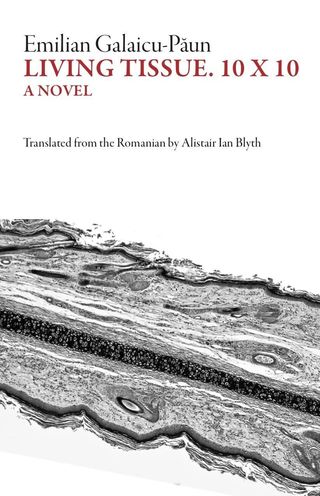
Cover of Living Tissue

Living Tissue

Emilian Galaicu-Paun

Original language: Romanian · Paperback · ISBN 978-1628973389

Living Tissue, 10x10 is a novel by Moldovan writer Emilian Galaicu-Paun, structured around the Ten Commandments. Each chapter corresponds to a single Commandment, forming a framework that holds together dozens of interconnected stories spanning four decades. The narrative follows its protagonist from 1968, the year Soviet cosmonaut Yuri Gagarin died in a training flight accident, through to the 2009 protests in Moldova that became known informally as the twitter revolution.

The book is set largely in Moldova during and after the Soviet period, a stretch of history marked by repeated political upheaval. Galaicu-Paun uses this backdrop to move between tones and registers freely. Some episodes are historical, others fantastical or comic, and the novel shifts between them without settling into any single mode. Locations extend well beyond Moldova itself, with scenes set in Paris, Moscow, and Tibet among other places.

The structure recalls the Decameron in its accumulation of varied tales within a governing frame, though here the frame is theological rather than narrative. Galaicu-Paun is also known as a poet, and the novel reflects an interest in bending conventional boundaries between the real and the invented, treating form as something to be folded and reshaped rather than followed.

Plot

With each chapter embodying a separate Commandment, Living Tissue, 10x10 is both a Decalogue and a ribald, exuberant, deliriously inventive postmodern Decameron, which covers four decades in the life of the protagonist, unfolding against the backdrop of Soviet and post-communist Moldova, from the untimely death of Yuri Gagarin in 1968 to the so-called twitter revolution of 2009. Tens of tragical, comical, fantastical, historical tales intertwine, punctuated by the endless upheavals suffered by twentieth-century Moldova. But the narrative also takes euphoric flight, in episodes that travel as far afield as Paris, Moscow, and Tibet.

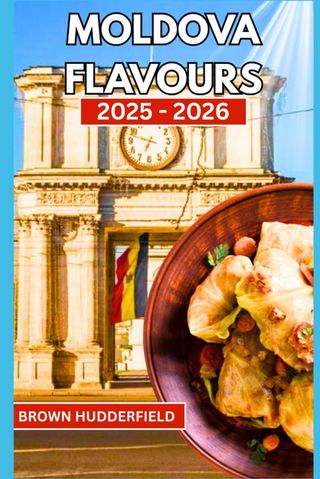
Cover of Moldova flavours: From Village Kitchens to Vineyards

Moldova flavours: From Village Kitchens to Vineyards

Brown Hudderfield

Original language: English · Paperback · ISBN 979-8287679774

Moldova Flavours by Brown Hudderfield combines food writing, regional recipes, and wine trail guidance focused on Moldova, a small landlocked country between Romania and Ukraine. The book turns its attention to village kitchens, farm traditions, and the cellars where Moldovan wine is stored and aged. Hudderfield presents the country as a place where cooking methods and recipes pass between generations, with clay ovens and seasonal ingredients playing a central role in everyday meals.

The book covers vineyards and wine routes alongside its food content. Moldova has one of the highest ratios of vineyard area to total land in the world, and wine production has shaped the country's rural economy and social customs for centuries. Hudderfield treats these subjects together, connecting what people grow, cook, and drink to the landscapes and communities where those traditions continue.

Alongside descriptions of places and food culture, the book includes recipes intended for home preparation. It is structured both for readers planning to visit Moldova and for those interested in trying Moldovan dishes at home. The writing blends practical detail with observations about how food and memory are linked in Moldovan family life.

Plot

Moldova Flavours is not just a travel guide,it’s a journey into the heart of one of Europe’s best-kept culinary secrets. Blending authentic storytelling with must-try recipes and unforgettable wine trails, this beautifully written book invites you into the kitchens, farms, and cellars of Moldova, a place where food is not just cooked, but handed down like heirlooms. Written by Brown Hudderfield, a seasoned traveler and culinary storyteller, this guide offers more than recommendations, it offers connection. Whether you’re planning a real-life trip or simply want to discover Moldova from your own kitchen, every page gives you a taste of something real, rustic, and deeply satisfying.

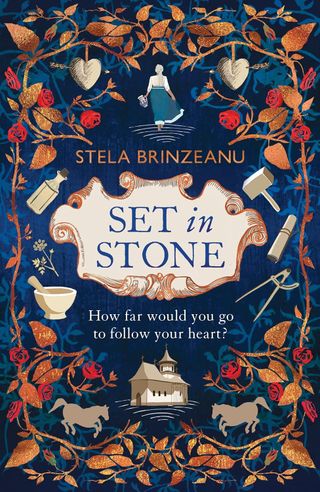
Cover of Set in Stone

Set in Stone

Stela Brinzeanu

Original language: English · Paperback · ISBN 978-1915054586

Set in Stone by Stela Brinzeanu is a historical novel set in medieval Moldova, where two women from different social backgrounds form a relationship that places them in direct conflict with the institutions governing their lives. Mira and Elina come from opposing positions in a society shaped by the Orthodox Church, feudal law, and rigid expectations for women. As their bond deepens, both face escalating consequences for refusing the roles their world has assigned to them.

Mira's defiance puts her in serious physical danger, while Elina pursues a different kind of struggle. She seeks to have her legal status changed to that of a son, a classification that would allow her to inherit her father's land. This legal mechanism, rooted in actual medieval Moldovan practice, becomes the key to any possible future the two women might share. The novel draws on the historical reality that inheritance and property rights in the region were tightly bound to gender, and that exceptions, though rare, did exist under specific circumstances.

The story is shaped by questions of class, religious authority, and the limited legal standing available to women in this period. Brinzeanu grounds these tensions in a specific geographic and cultural setting rather than a generalized medieval backdrop.

Plot

In medieval Moldova, two women from opposing backgrounds fall in love. But this is a world where a woman’s role is defined by religion and class. To make a life together means defying their families, the law, and the Church. The closer they become, and the more they refuse the roles assigned to them, the more sacrifices they have to make. While Mira’s rebellion puts her life in the gravest danger, Elina must fight to change her legal status to "son" so she can inherit her father’s land and change their destiny.

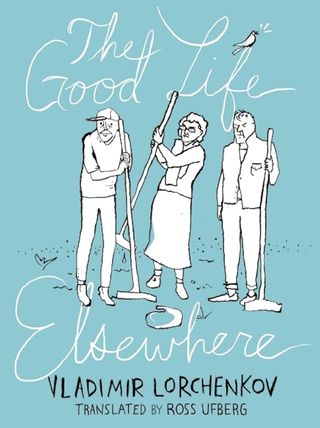
Cover of The Good Life Elsewhere

The Good Life Elsewhere

Vladimir Lorchenkov

Original language: Romanian · Paperback · ISBN 978-1939931016

The Good Life Elsewhere follows a cast of Moldovan villagers consumed by a single obsession: getting to Italy. Written by Vladimir Lorchenkov, the novel is set in a country where poverty and limited opportunity push people toward increasingly desperate and absurd schemes to emigrate. The tone mixes dark comedy with genuine sadness, treating migration not as a political issue but as a force that reshapes entire communities from the inside out.

The storylines pile up in unpredictable directions. An Orthodox priest loses his wife to an art-dealing atheist. A mechanic modifies his tractor so it can travel by air and sea. A village curling team finds its way to an international competition. Eventually, thousands of villagers set out together on a mass march toward Italy, framed as a kind of modern religious crusade. Through it all, the country's politicians carry on as usual, unmoved and unhelpful.

Lorchenkov uses exaggeration and wild invention to expose real frustrations. The villagers are not passive victims but determined schemers whose plans keep collapsing in spectacular ways. Moldova sits between Romania and Ukraine, and the novel draws on the particular tensions of a small landlocked country where emigration has become almost a national reflex.

Plot

In this uproarious tale, an Orthodox priest is deserted by his wife for an art-dealing atheist; a mechanic redesigns his tractor for travel by air and sea; thousands of villagers take to the road on a modern-day religious crusade to make it to the promised land of Italy; meanwhile, politicians remain politicians.

More from Moldova

See the country page for Moldova for its map, facts and largest cities, or browse books from other countries.

Links go to Amazon; Hookito doesn’t sell books. Know a book that belongs here, or spotted a mistake? Write to submissions@hookito.com.