4 books from and about Montenegro: what each is about, the plot, and a note from Professor Kogi.
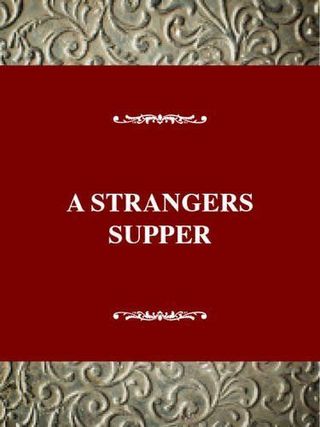
A Stranger's Supper: An Oral History of Centenarian Women in Montenegro
Zorka Milich
Original language: English · Hardcover · ISBN 978-0805791310
A Stranger's Supper is an oral history built from interviews with ten women aged one hundred or older, all living in Montenegro. Zorka Milich, whose parents were born in the country and who speaks the language fluently, conducted the conversations. Her family connection helped open doors in a culture where reserve toward outsiders is common. The women describe daily life in a mountainous, isolated land they call Crna Gora, meaning Black Mountain.
Their accounts cover marriage, childbirth, and the division of labor in a tribal society organized around its male warriors. Childbirth sometimes took place outdoors or in a barn, and women were often alone during delivery. When sons were killed in conflict, mothers were expected to express pride rather than visible grief. The women also provide firsthand observations of events spanning the Balkan Wars, the First World War, and the Second World War, describing how each conflict reached their villages.
Milich's role as interviewer shapes the book. Because she could speak to the women in their own language and understood their customs, the conversations move between the practical and the personal with a directness that a less familiar interviewer might not have achieved.
Plot
Interviewed by Zorka Milich, herself a descendant of Montenegrins and a fluent speaker of their language, these articulate centenarians explain what life was like for the women behind Montenegros warriors. They talk about their relationship with their husbands, their experience of childbirth (which women often underwent outdoors or in a barn, sometimes alone), the pain of losing a son to war and not being able to grieve openly (pride that he gave his life for Montenegro was the correct response). And they give eyewitness accounts of historic events---the Balkan Wars, World War I, and World War II---as they played themselves out in this remote and barren country the Montenegrins call Crna Gora, or Black Mountain.
Original language: Montenegrin · Paperback · ISBN 978-1908236401
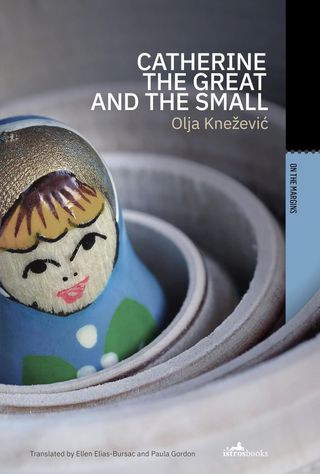
Catherine the Great and the Small is a novel by Olja Knezevic, originally from Montenegro and translated into English. The story follows a woman named Catherine through decades of life in the Balkan region, beginning in the 1980s and continuing into the present day. Her personal history unfolds against a backdrop of political change, starting with the final years of communism and moving through the upheavals that followed in the region.
Catherine's life is shaped by difficult family relationships, disappointments in love, and a romance with a man named Sinisa. The novel traces her efforts to define herself across shifting roles as daughter, granddaughter, friend, wife and mother. She moves between cities, and each place becomes part of her changing sense of identity. She is written as a strong but uneasy figure who does not fit the expectations placed on her.
The book sets private experience beside regional history, using one woman's path to register how political change reached ordinary households. Its English edition carries the language of the original across, and the narrative moves between intimate detail and the wider story of the Balkans across roughly four decades of shifting borders and daily life.
Plot
Catharine's tragectory in life is accompanied by failures in love, family traumas and an incredible romance with handsome Sinisa. The novel takes us through turbulent times in the Balkan region, from the eighties to the present day, portraying growing up in the twilight of communism, and giving intimate insights into all that happened to the region after that.
Carefully crafted characters and masterful, dynamic storytelling place Catherine the Great and the Small in the company of the very best of novels, which speak about the reality of their geographic setting and are remembered for their convincing, strong, maladjusted characters. Catherine is certainly one of them: a powerful female voice seeking her place within her family, among friends, in the cities she lives in, and constructing her unique identity as a daughter, granddaughter, friend, mistress, wife and a mother.
Original language: Montenegrin · Paperback · ISBN 978-1908236081
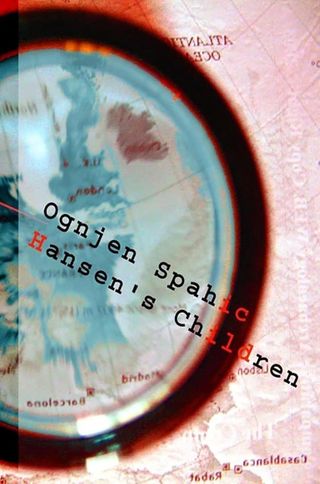
Hansen's Children is set in a leper colony in Romania during the final years of Nicolae Ceausescu's rule. The title refers to Hansen's disease, the medical name for leprosy, and the story follows two men living inside this isolated institution as the late 1980s bring political upheaval to the country and to Eastern Europe as a whole. Their physical confinement mirrors a broader sense of waiting: the old order is cracking, but what follows remains unclear.
Ognjen Spahic, a Montenegrin author, uses the colony as a contained space in which to observe larger fractures. The residents exist at the margins of a society that is itself at the margins of a changing continent. As Romania's revolution approaches, the distance between the colony and the outside world begins to collapse. The novel is short and tightly controlled, moving between dark, uncomfortable scenes and moments of unexpected warmth or humor.
The setting raises questions about exclusion, both medical and political. People sealed off from a failing state still feel its consequences. The fall of Communism, seen from inside a place most of the world had forgotten, takes on a different shape than the version told from capital cities and public squares.
Plot
It is the end of the 1980s, and Europe is about to change forever; in a corner of Romania, two men await their fate as their reality literally begins to fall apart. Unafraid to speak the truth, Spahić takes us on a journey through the revolution, changing our way of seeing this chapter of history while simultaneously challenging our own sense of identity.
Original language: Montenegrin · Paperback · ISBN 978-1908236241
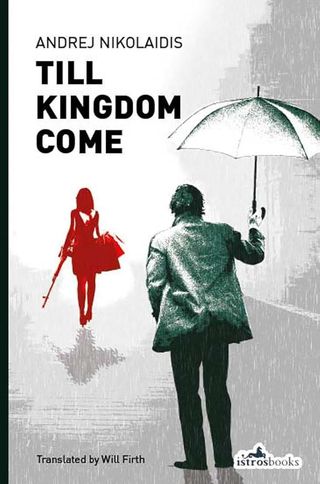
Till Kingdom Come follows a journalist living in Ulcinj, a coastal town in southern Montenegro, whose understanding of his own life fractures when he learns that the grandmother who raised him has no biological connection to him. Worse, evidence surfaces suggesting his mother may have operated as a covert agent tied to Yugoslav intelligence services. What begins as a personal crisis quickly turns into something stranger, as the narrator experiences episodes that seem to pull him into other lives and other cities entirely.
His search for the truth behind his origins leads through falsified records, conspiracies, and traces of wartime violence in the region. Andrej Nikolaidis layers detective-story mechanics over existential uncertainty, folding in dark humor and metafictional turns that keep the ground shifting beneath both narrator and reader. The novel treats identity not as something fixed but as something assembled from inherited stories, many of which may be unreliable or deliberately constructed. Questions about memory, trauma, and the gap between official history and personal experience run through the narrative, set against the specific landscape and layered past of Montenegro and the wider former Yugoslavia.
Plot
Till Kingdom Come centers on a cynical journalist in Ulcinj, Montenegro, who discovers that the grandmother who raised him isn’t related by blood—and that his mother may have been a covert operative linked to Yugoslav intelligence. As seemingly supernatural episodes transport him into other lives and cities, he sets off on a surreal investigation into his origins, uncovering falsified histories, conspiracies, and wartime atrocities. Nikolaidis blends detective mystery with existential dread, dark humor, regional history, and metafictional elements to challenge perceptions of identity and truth. Ultimately, the novel becomes a meditation on memory, trauma, and the unreliability of inherited stories.

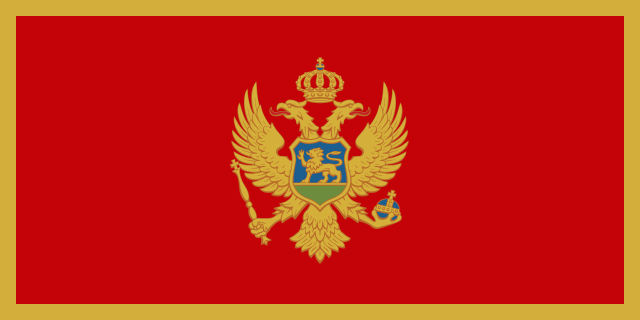 Books from Montenegro