Hookito

Mali · Books

Books from Mali

6 books from and about Mali: what each is about, the plot, and a note from Professor Kogi.

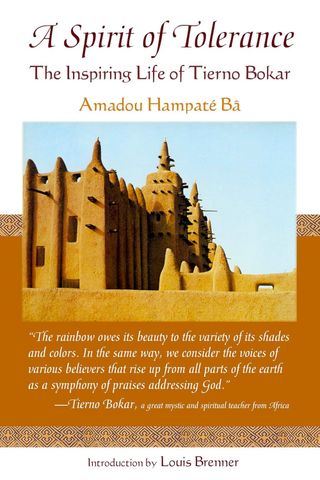
Cover of A Spirit of Tolerance: The Inspiring Life of Tierno Bokar

A Spirit of Tolerance: The Inspiring Life of Tierno Bokar

Amadou Hampate Bah

Original language: French · Paperback · ISBN 978-1933316475

Tierno Bokar was a Muslim spiritual teacher born in 1875 in what is now Mali. He spent his life in the towns of the inland Niger Delta region, teaching students and developing a philosophy centered on tolerance among faiths and compassion across social boundaries. Amadou Hampâté Bâ, himself a student of Bokar and a widely respected figure in the preservation of West African oral tradition, wrote this account of his teacher's life and ideas.

Bokar lived during a period of French colonial rule in West Africa, and the book traces the pressures he faced from both colonial authorities and from divisions within the Muslim communities around him. His insistence on openness toward other religious paths placed him at odds with more rigid local currents. He died in 1939, largely isolated from the community that had once gathered around him. The account draws heavily on oral sources, reflecting Hampâté Bâ's lifelong commitment to recording spoken knowledge before it disappeared.

Peter Brook later adapted elements of Bokar's story into a stage production, bringing the teacher's circumstances to a wider international audience. The book remains one of the few detailed records of Bokar's philosophy and the specific West African setting in which it took shape.

Plot

Tierno Bokar (1875-1939), African mystic and Muslim spiritual teacher, was remarkable for the drama of his life story (which was made into a recent play directed by Peter Brook). His message of religious tolerance and universal love is profoundly important in a world where different faiths are often at odds with each other.
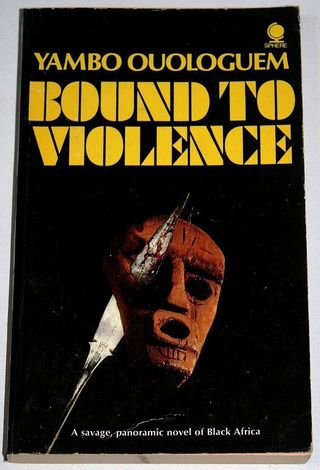
Cover of Bound to Violence

Bound to Violence

Yambo Ouologuem

Original language: French · Paperback · ISBN 978-0435900991

Bound to Violence is set in the fictional empire of Nakem, a territory whose history stretches across several centuries of conquest, slavery, and shifting rule. Yambo Ouologuem, a Malian writer, uses this invented setting to examine cycles of domination carried out by local aristocracies, foreign invaders, and colonial administrations alike. The novel does not present any single group as purely heroic or purely villainous. Instead, it traces how power concentrates, how it corrupts those who hold it, and how violence becomes embedded in the structures that outlast individual rulers.

The book's form is as confrontational as its subject matter. Ouologuem mixes historical chronicle, myth, and satire into a fragmented narrative that shifts in tone and time. The style is dense, sometimes deliberately disorienting, and resists the kind of straightforward national storytelling that was common in African fiction of the period. By refusing to idealize precolonial societies, the novel broke with conventions that many readers and critics had come to expect.

Originally published in French as Le Devoir de violence, the book won the Prix Renaudot in 1968. Ouologuem was the first African writer to receive that prize. The novel later became the subject of controversy over similarities between certain passages and works by other authors, a dispute that complicated its reception for decades.

Plot

Bound to Violence by Yambo Ouologuem is a bold, unconventional novel that challenges romanticized portrayals of African history. Set in the fictional empire of Nakem, it traces the brutal legacy of power, slavery, and colonialism across centuries. The book combines myth, satire, and raw realism to critique both African elites and Western imperialism. Its structure is fragmented and intense, offering a provocative reimagining of postcolonial literature.

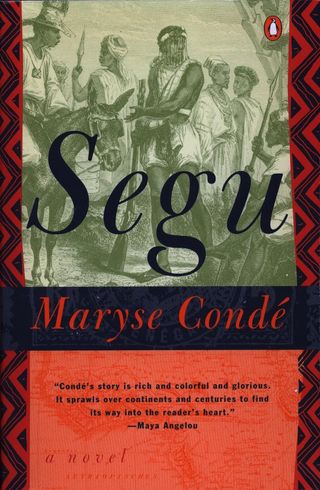
Cover of Segu

Segu

Maryse Conde

Original language: French · Paperback · ISBN 978-0140259490

Set in 1797, Segu is rooted in the history of the Bambara kingdom centered on the city of Ségou in present-day Mali. The kingdom was prosperous then, sustained by its warriors and governed through nobles, griots (oral historians and musicians), and priests whose authority rested on local spiritual traditions. Maryse Condé draws on documented events to build a story around Dousika Traoré, a trusted advisor to the king, and his four sons.

Each son is carried in a different direction by the pressures bearing down on the region. Tiekoro leaves his family's spiritual practices and converts to Islam, which was spreading across the Sahel. Siga holds to Bambara custom yet is pulled into trade. Naba is seized by slave traders. Malobali becomes a mercenary and a half-hearted Christian. Through these paths, the novel traces how the slave trade and the growth of Islam reshaped households from within.

Condé, born in Guadeloupe, lived and taught in West Africa for years. Her novel is set against real upheavals in the inland Niger region during the late eighteenth century, when established kingdoms met overlapping outside pressures from two directions at once.

Plot

The year is 1797, and the kingdom of Segu is flourishing, fed by the wealth of its noblemen and the power of its warriors. The people of Segu, the Bambara, are guided by their griots and priests; their lives are ruled by the elements. But even their soothsayers can only hint at the changes to come, for the battle of the soul of Africa has begun. From the east comes a new religion, Islam, and from the West, the slave trade. Segu follows the life of Dousika Traore, the king’s most trusted advisor, and his four sons, whose fates embody the forces tearing at the fabric of the nation. There is Tiekoro, who renounces his people’s religion and embraces Islam; Siga, who defends tradition, but becomes a merchant; Naba, who is kidnapped by slave traders; and Malobali, who becomes a mercenary and halfhearted Christian.

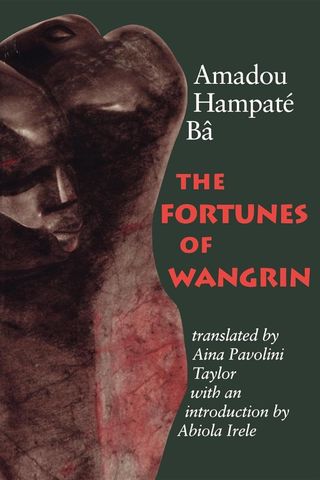
Cover of The Fortunes of Wangrin

The Fortunes of Wangrin

Amadou Hampaté Bâ

Original language: French · Paperback · ISBN 978-0253212269

The Fortunes of Wangrin follows a quick-witted trickster figure navigating life under French colonial rule in West Africa. Wangrin works within the colonial system while simultaneously exploiting it, playing French administrators and local leaders against each other for his own benefit. He is charming, morally flexible, and resourceful, a character shaped by the contradictions of a society caught between indigenous traditions and foreign authority.

Amadou Hampaté Bâ, a Malian writer and ethnologist, built the novel from oral sources. The stories of Wangrin circulated as spoken accounts before Bâ shaped them into a written narrative, applying his own literary craft to material rooted in an older storytelling tradition. The result sits at a crossing point between two ways of preserving memory and experience. Bâ spent much of his career collecting and recording oral traditions from across the Sahel region, and this book reflects that long practice.

The novel is considered a landmark in Francophone African literature. Its tone is comic and picaresque rather than solemn, following Wangrin through schemes and reversals with an energy closer to folk narrative than to European realism. Colonial power appears not as an abstract force but as a system full of gaps that a clever operator can turn to advantage.

Plot

Wangrin is a rogue and an operator, hustling both the colonial French and his own people. He is funny, outrageous, corrupt, traditional, and memorable. Bâ's book bridges the chasm between oral and written literature. The stories about Wangrin are drawn from oral sources, but in the hands of this gifted writer these materials become transformed through the power of artistic imagination and license.

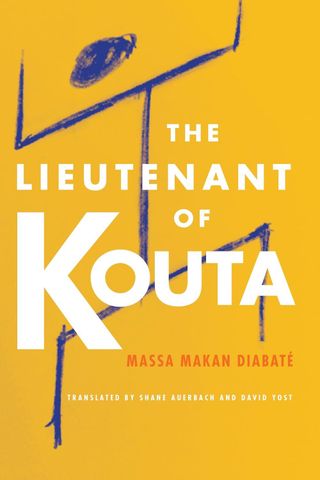
Cover of The Lieutenant of Kouta

The Lieutenant of Kouta

Massa Makan Diabaté

Original language: French · Paperback · ISBN 978-1611862270

Siriman Keita is an African lieutenant in the French Army who returns to his village of Kouta after serving in the wars of Europe. He comes home decorated and changed, but the village he left behind has its own rhythms. Kouta is a fictionalized version of Kita, the Malian town where author Massa Makan Diabaté was born. The story follows Siriman as he tries to find his footing in a predominantly Muslim community whose customs and expectations do not always align with the life he has known as a soldier abroad.

The novel sits at a specific historical moment: Mali on the edge of independence from France. Siriman's personal difficulty adjusting to village life runs alongside broader tensions between traditional Mandinka social structures and the French colonial system. Diabaté treats these tensions with a tone described as both tragicomic and hagiographic, giving Siriman's story a layered quality that moves between sympathy and gentle satire.

The Lieutenant of Kouta is the first novel in a trilogy by Diabaté. This edition includes an introduction by Diabaté scholar Cheick M. Chérif Keïta and Shane Auerbach, which provides context for the work and its place within Diabaté's broader writing on Mandinka culture and Malian history.

Plot

Featuring an introduction by leading Diabaté scholar Cheick M. Chérif Keïta and Shane Auerbach, it tells the story, part tragicomic and part hagiographic, of an African lieutenant in the French Army who returns as a decorated hero from the battlefields of Europe to Kouta, a fictionalized version of the author’s own birthplace, the Malian town of Kita. Upon his return, Siriman Keita finds it difficult to adjust to village life as he navigates traditional customs in his attempts to create his place in the predominantly Muslim Kouta. The novel offers a rich and nuanced representation of Mali on the brink of independence; it is a tapestry of traditional Mandinka society and the French colonial apparatus, illustrating the dynamic interplay between the two. This text is, ultimately, a story of one man’s transformation coinciding with that of his country.

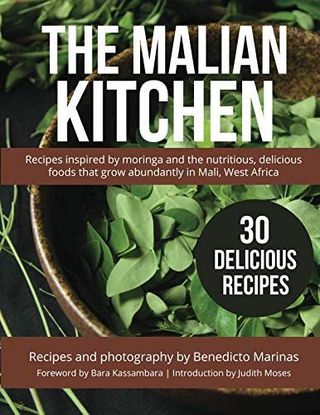
Cover of The Malian Kitchen

The Malian Kitchen

Benedicto Marinas

Original language: English · Paperback · ISBN 978-1090601797

The Malian Kitchen is a cookbook by Benedicto Marinas built around moringa, a plant whose leaves are unusually dense in nutrients. Moringa oleifera, sometimes called the Tree of Life, contains notable levels of B vitamins, vitamin C, provitamin A in the form of beta-carotene, vitamin K, manganese, and protein. The tree grows widely across Mali and other parts of West Africa, and its leaves appear as an ingredient in all thirty recipes collected here.

Marinas, a chef, visited Mali in 2016 and worked with local villagers to develop dishes using moringa alongside other ingredients commonly available in the region. The recipes are designed to be straightforward, with simple instructions and photographs of the finished dishes. Rather than adapting Malian food for outside kitchens stocked with imported goods, the book focuses on what already grows in abundance locally. This gives the collection a practical shape: each recipe is tied to ingredients that people in Mali can find nearby.

The book sits at the intersection of nutrition education and home cooking. By centering one highly nutritious plant and pairing it with familiar local foods, it functions as both a recipe collection and a small guide to moringa as a dietary resource.

Plot

In Mali, West Africa, a very special tree grows. Known as the “Tree of Life,” the leaves of Moringa oleifera are packed with nutrients, including B vitamins, vitamin C, provitamin A as beta-carotene, vitamin K, manganese, and protein. The little leaves of this tree are so potent, it has been said, "Moringa can prevent 300 different diseases."When Chef Benedicto Marinas visited Mali in 2016, he set to work teaching the villagers how to bring this nutritious ingredient to their tables. The result was 30 delicious recipes featuring ingredients readily found in Mali – all containing moringa. With simple instructions and mouth watering photos, The Malian Kitchen will bring a taste of Mali to your table!

More from Mali

See the country page for Mali for its map, facts and largest cities, or browse books from other countries.

Links go to Amazon; Hookito doesn’t sell books. Know a book that belongs here, or spotted a mistake? Write to submissions@hookito.com.