Hookito

Nigeria · Books

Books from Nigeria

15 books from and about Nigeria: what each is about, the plot, and a note from Professor Kogi.

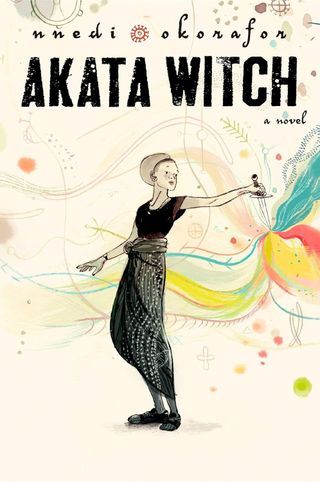
Cover of Akata Witch

Akata Witch

Nnedi Okorafor

Original language: English · Hardcover · ISBN 978-0670011964

Sunny Nwazue is twelve years old, albino, and caught between two countries. Born in the United States to Nigerian parents, she has moved with her family to southeastern Nigeria, where she stands out in ways she cannot control. Her pale skin makes outdoor sports painful, and her American upbringing sets her apart from classmates. She does not quite belong in either place.

Then Sunny discovers she is what her world calls a free agent, a person born with hidden magical ability outside any known magical lineage. She joins three other young students who share this status, and together they begin learning how to perceive and reshape layers of reality that most people never notice. Their education draws on a system of knowledge rooted in West African traditions rather than European ones, with its own rules, hierarchies, and dangers. The group is eventually called on to confront a criminal whose own command of magic makes him a serious threat.

Nnedi Okofor sets the story in a recognizable modern Nigeria, with its school uniforms, market streets, and family expectations, then layers a parallel magical society on top of it. The book is the first in a series that continues with Akata Warrior.

Plot

Twelve-year-old Sunny lives in Nigeria, but she was born American. Her features are African, but she's albino. She's a terrific athlete, but can't go out into the sun to play soccer. There seems to be no place where she fits in. And then she discovers something amazing—she is a "free agent" with latent magical power. Soon she's part of a quartet of magic students, studying the visible and invisible, learning to change reality. But will it be enough to help them when they are asked to catch a career criminal who knows magic too?
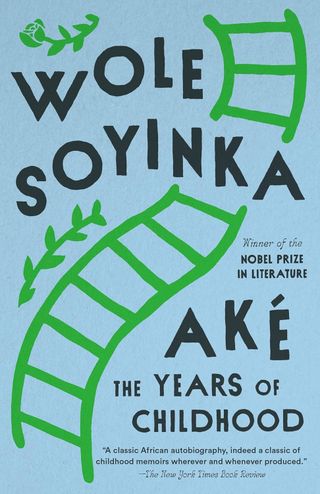
Cover of Aké: The Years of Childhood

Aké: The Years of Childhood

Wole Soyinka

Original language: English · Paperback · ISBN 978-0679725404

Wole Soyinka's memoir covers his early years in Aké, a Yoruba community in western Nigeria, during the period leading up to and through World War II. Soyinka, who later became the first African writer to receive the Nobel Prize in Literature, grew up on a parsonage compound where Christian family life overlapped with older Yoruba spiritual practices. His grandfather served as a bridge to those traditions, while his parents maintained close ties to the church and its routines.

The book follows a young Soyinka who was intensely curious, drawn to books, and frequently in trouble. His observations of daily life in Aké carry specific detail about the food, sounds, and atmosphere of the compound and the town around it. Rather than offering a smooth retrospective summary, the memoir stays close to the perspective of the child encountering things for the first time, mixing confusion with clarity and ordinary domestic scenes with larger forces shaping colonial Nigeria.

Soyinka's parents and extended family appear as distinct figures with their own temperaments and loyalties. The tensions between different belief systems and social expectations run through the household without being reduced to simple contrasts.

Plot

Aké: The Years of Childhood gives us the story of Soyinka's boyhood before and during World War II in a Yoruba village in western Nigeria called Aké. A relentlessly curious child who loved books and getting into trouble, Soyinka grew up on a parsonage compound, raised by Christian parents and by a grandfather who introduced him to Yoruba spiritual traditions. His vivid evocation of the colorful sights, sounds, and aromas of the world that shaped him is both lyrically beautiful and laced with humor and the sheer delight of a child's-eye view. A classic of African autobiography, Aké is also a transcendantly timeless portrait of the mysteries of childhood.

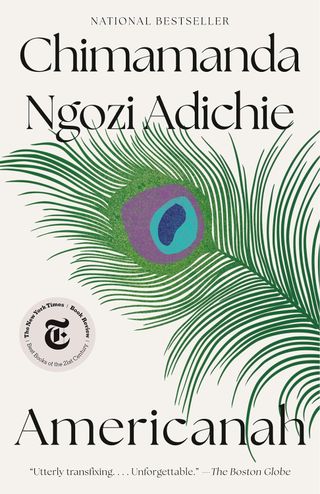
Cover of Americanah

Americanah

Chimamanda Ngozi Adichie

Original language: English · Paperback · ISBN 978-0307455925

Ifemelu and Obinze grow up together in Nigeria during a period of military rule, falling in love as teenagers. When both decide to leave the country in search of better prospects, their paths split. Ifemelu moves to the United States, where she succeeds academically but finds herself confronting questions about race and identity that had never shaped her daily life in Lagos. Obinze, unable to enter the US after the tightening of immigration controls following September 2001, ends up in London, where he lives without legal status and faces a different set of dangers.

The novel follows each character across years and continents. Ifemelu eventually starts a blog about her observations on race in America, writing as a non-American Black person navigating a society whose racial categories feel foreign to her. Obinze, meanwhile, builds a precarious existence in England before circumstances push him back to Nigeria, where the country itself has changed around a growing Lagos economy.

Chimamanda Ngozi Adichie sets the story across three countries and roughly fifteen years, grounding it in specific details of Nigerian, American, and British life. The book examines how migration reshapes not only where people live but how they understand themselves, and how returning to a home country can feel as disorienting as leaving it.

Plot

Ifemelu and Obinze are young and in love when they depart military-ruled Nigeria for the West. Beautiful, self-assured Ifemelu heads for America, where despite her academic success, she is forced to grapple with what it means to be Black for the first time. Quiet, thoughtful Obinze had hoped to join her, but with post–9/11 America closed to him, he instead plunges into a dangerous, undocumented life in London.

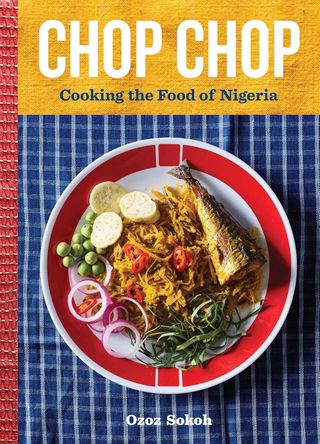
Cover of Chop Chop: Cooking the Food of Nigeria

Chop Chop: Cooking the Food of Nigeria

Ozoz Sokoh

Original language: English · Hardcover · ISBN 978-1648291890

The word chop, in Nigerian usage, points to eating and feasting, and chop chop names a person who loves food. Ozoz Sokoh, a culinary anthropologist and Nigerian native, takes that phrase as her title for a collection of about 100 recipes drawn from everyday home cooking. It is framed as an introduction to classic Nigerian home cooking rather than a specialist survey.

Nigeria counts more than 250 ethnicities and over 50 nationally recognized languages, and that variety shapes its cooking. Sokoh gathers ingredients and recipes from all six regions of the country, so dishes appear alongside one another rather than under a single regional label. Foodways, the customs around growing, preparing and sharing meals, run through the book.

The book is highly photographic, setting recipe instructions beside images of finished dishes and raw ingredients. Sokoh's attention falls on flavors and textures, and on making familiar classics workable for a cook at home. She describes herself as a food explorer, interested in why these dishes are widely loved as well as how they are made.

Plot

In Nigeria, the word “chop” is all about food and feasting and “chop chop” a nickname given to someone who loves to eat. And it's no surprise Nigeria has an entire vocabulary dedicated to eating—with more than 50 nationally recognized languages and over 250 ethnicities, Nigeria's food is as rich and diverse as its people.This book reflects the foodways’ incredibly flavorful complexity, ingredients, and recipes from all six regions, gathered and showcased in a highly photographic cookbook. In Chop Chop, author, culinary anthropologist, and Nigerian native Ozoz Sokoh celebrates classic and traditional Nigerian cuisine to underscore the ingredients, flavors, and textures that make it not only beloved, but delicious and easy for the home cook.

Cover of Diaries of a Dead African

Diaries of a Dead African

Chuma Nwokolo

Original language: English · Paperback · ISBN 978-9782190130

Diaries of a Dead African by Nigerian writer Chuma Nwokolo follows three protagonists whose lives are shaped by scarcity and sudden opportunity. Meme is a farmer whose wife has left him along with most of his stored harvest. With only a few tubers to last until the next crop, he faces a practical crisis: whether relatives and friends will help, and whether he can stretch what remains.

Calamatus has spent years apprenticed to a con artist and his break has finally arrived. His test reverses Meme's: having survived poverty, he must learn whether he can survive wealth. Abel, a writer, finds his manuscripts drawing attention for reasons unrelated to their literary quality. His father died at fifty and his brother at twenty-five, and Abel weighs the opportunities he has wanted against the risk of not outliving them.

The book presents itself as a merciless comedy, a description that suits its method of placing ordinary people in situations where staying alive turns absurd. The three strands share a concern with debt, obligation, and the thin margin between getting by and losing everything, and each character's danger comes from the same source as his hope.

Plot

Meme's wife has left him with the bulk of his barn. He has a few tubers to last until harvest. Can he stretch it? Will his friends and relatives help out? Calamatus' break has finally come after an apprenticeship to a con-artist. Can he survive wealth as readily as he did, poverty? Finally Abel's manuscripts are attracting attention, but not, as he discovers, for their literary value... his fondest dreams were on the verge of realisation, yet his father had died at 50 and his brother at 25. How to outlive them both, without fleeing the very opportunities he had craved all his life.

Cover of My Sister, the Serial Killer

My Sister, the Serial Killer

Oyinkan Braithwaite

Original language: English · Hardcover · ISBN 978-0385544238

Korede works as a nurse at a Lagos hospital, keeps her life orderly, and has spent years cleaning up after her younger sister Ayoola. The cleanup is not metaphorical. Ayoola's third boyfriend has just turned up dead, and Korede is once again the one scrubbing blood and disposing of evidence. Ayoola, the family favorite and effortlessly beautiful, shows little remorse. Korede, plain-spoken and practical, keeps everything running while receiving none of the gratitude.

The situation tightens when a doctor Korede has quietly loved for some time meets Ayoola and asks for her phone number. Korede now faces a problem she cannot solve with bleach and a car trunk: warning the doctor means exposing her sister, but staying silent may put him in real danger. The novel is set in contemporary Lagos, and its clipped, deadpan narration draws dark comedy from sibling loyalty, family favoritism, and the question of how far obligation should stretch.

Oyinkan Braithwaite's debut is notably short and tightly constructed, running under 230 pages. It moves between Korede's present-tense dilemmas and her memories of growing up alongside Ayoola, layering their history without slowing the forward pressure of the plot.

Plot

Korede is bitter. How could she not be? Her sister, Ayoola, is many things: the favorite child, the beautiful one, possibly sociopathic. And now Ayoola's third boyfriend in a row is dead. Korede's practicality is the sisters' saving grace. She knows the best solutions for cleaning blood, the trunk of her car is big enough for a body, and she keeps Ayoola from posting pictures of her dinner to Instagram when she should be mourning her "missing" boyfriend. Not that she gets any credit. Korede has long been in love with a kind, handsome doctor at the hospital where she works. She dreams of the day when he will realize that she's exactly what he needs. But when he asks Korede for Ayoola's phone number, she must reckon with what her sister has become and how far she's willing to go to protect her. Sharp as nails and full of deadpan wit, Oyinkan Braithwaite's deliciously deadly debut is as fun as it is frightening.

Cover of Open City

Open City

Teju Cole

Original language: English · Paperback · ISBN 978-0571279432

Open City follows Julius, a young Nigerian-born psychiatry resident living in New York, as he takes long, unplanned walks through Manhattan. These walks serve as a counterpoint to the controlled routines of his medical work and a way of sorting through a recent breakup and his own unsettled past. The novel unfolds through what Julius notices and thinks about as he moves through the city on foot, block by block.

Julius crosses not only streets but social boundaries, meeting people whose lives and origins differ sharply from his own. Conversations with immigrants, academics, and strangers open up questions about displacement, belonging, and the layered histories held inside a single city. His observations reach back across the Atlantic to Nigeria and forward into the daily texture of a post-September 11 New York. Brussels also appears as a setting when Julius travels there briefly, adding a European dimension to the novel's geography.

Teju Cole structures the book around walking and looking rather than conventional plot. Julius is an attentive but not always reliable observer, and the novel gradually complicates his self-understanding. The prose stays close to the rhythm of thought, moving between art, music, politics, and memory without settling on any single subject for long.

Plot

A haunting novel about national identity, race, liberty, loss and surrender, Open City follows a young Nigerian doctor as he wanders aimlessly along the streets of Manhattan. For Julius the walks are a release from the tight regulations of work, from the emotional fallout of a failed relationship, from lives past and present on either side of the Atlantic. Isolated amid crowds of bustling strangers, Julius criss-crosses not just physical landscapes but social boundaries too, encountering people whose otherness sheds light on his own remarkable journey from Nigeria to New York - as well as into the most unrecognisable facets of his own soul.

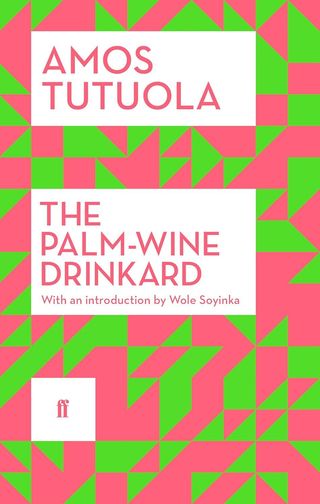
Cover of Palm-Wine Drinkard

Palm-Wine Drinkard

Amos Tutuola

Original language: English · Paperback · ISBN 978-0571311538

The Palm-Wine Drinkard follows a man whose life revolves around drinking palm wine. When his tapster, the only person who can keep up with his enormous thirst, falls from a tree and dies, the drinkard sets out on a long and strange quest to find him in the land of the dead. What begins as a search driven by appetite becomes a wandering passage through places and encounters that draw heavily on Yoruba oral tradition.

Along the way, the drinkard meets figures that feel closer to folklore than to conventional fiction. A gentleman encountered on the road is strikingly handsome, but his borrowed body parts must be returned one by one to their original owners. A creature with limitless hunger threatens everything around it. These episodes arrive in a loose, episodic structure, each one shaped by its own internal logic rather than by the expectations of a Western novel. Tutuola wrote the book in a distinctive English that carries the rhythms and patterns of Yoruba storytelling, and it was first published in 1952.

The novel is set in a landscape where the boundaries between the living and the dead are porous, and ordinary motivations lead into supernatural territory. It is widely regarded as a foundational work of Nigerian literature.

Plot

This classic novel tells the phantasmagorical story of an alcoholic man and his search for his dead palm-wine tapster. As he travels through the land of the dead, he encounters a host of supernatural and often terrifying beings - among them the complete gentleman who returns his body parts to their owners and the insatiable hungry-creature.

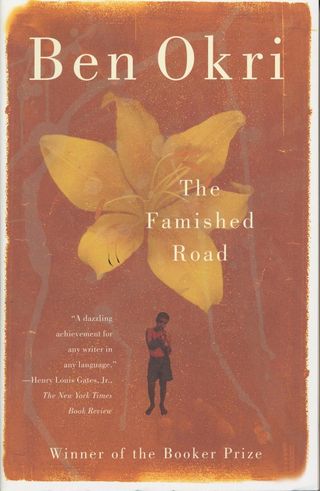
Cover of The Famished Road

The Famished Road

Ben Okri

Original language: English · Paperback · ISBN 978-0385425131

The Famished Road is narrated by Azaro, an abiku, a spirit child caught between the worlds of the living and the dead. In Yoruba tradition, an abiku is a child who cycles between birth and early death, returning repeatedly to the spirit world. Azaro, however, chooses to stay among the living, even though the spirits continue to pull at him. He is born smiling despite foreseeing a life filled with hardship, and the story follows his precarious hold on the physical world.

Azaro's parents struggle to keep him alive and present. Their efforts to protect their child from spiritual forces drain them of what little they have, pushing the family into poverty. The novel is set in a poor urban neighborhood in Nigeria, where everyday difficulties overlap with visions and encounters from the spirit realm. Political tensions, local power struggles, and the pressures of survival shape the world around Azaro as much as the unseen forces do.

Ben Okri draws on Yoruba cosmology to build a narrative where the boundary between ordinary life and the spirit world is thin and porous. The book won the Booker Prize, and its combination of realism and spiritual storytelling is grounded in a specific Nigerian cultural framework.

Plot

The narrator, Azaro, is an abiku, a spirit child, who in the Yoruba tradition of Nigeria exists between life and death. The life he foresees for himself and the tale he tells is full of sadness and tragedy, but inexplicably he is born with a smile on his face. Nearly called back to the land of the dead, he is resurrected. But in their efforts to save their child, Azaro's loving parents are made destitute.

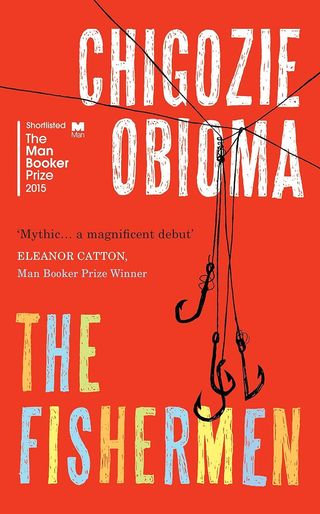
Cover of The Fishermen

The Fishermen

Chigozie Obiama

Original language: English · Hardcover · ISBN 978-0957548855

The Fishermen is set in Akure, a small town in southwestern Nigeria, during the 1990s. Four brothers begin sneaking off to fish at a forbidden river after their strict father leaves for work in a distant city. There they meet a local madman who tells the eldest boy that one of his own siblings will kill him. That prophecy starts to strain the family's bonds.

Chigozie Obiama tells the story through nine-year-old Benjamin, the youngest brother, and shapes it around a pattern familiar from the biblical account of Cain and Abel. The father's long absence, the boys' truancy, and local fear surrounding the madman all affect how the prediction takes hold. Benjamin narrates events he only partly understands, which keeps the account close to a child's view.

Akure is a real city, the capital of Ondo State in Nigeria's Yoruba-speaking southwest, and the novel keeps its childhood scenes anchored there: school routines, riverbanks, and the close quarters of a household with four sons. The book presents violence and grief in plain terms, and it treats prophecy as something a community can believe into action.

Plot

In this striking novel about an unforgettable childhood, four Nigerian brothers encounter a madman whose mystic prophecy of violence threatens the core of their close-knit family Told by nine-year-old Benjamin, the youngest of four brothers, The Fishermen is the Cain and Abel-esque story of a childhood in Nigeria, in the small town of Akure. When their father has to travel to a distant city for work, the brothers take advantage of his absence to skip school and go fishing. At the forbidden nearby river, they meet a madman who persuades the oldest of the boys that he is destined to be killed by one of his siblings. What happens next is an almost mythic event whose impact-both tragic and redemptive-will transcend the lives and imaginations of the book's characters and readers.

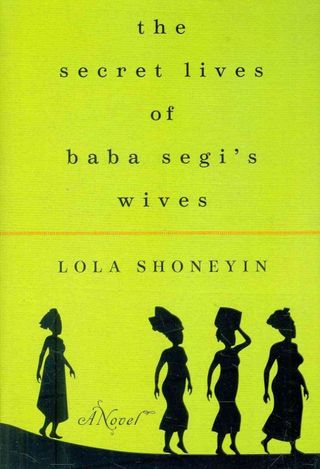
Cover of The Secret Lives of Baba Segi's Wives

The Secret Lives of Baba Segi's Wives

Lola Shoneyin

Original language: English · Hardcover · ISBN 978-0061946370

Baba Segi is a prosperous man in modern-day Nigeria with three wives and a household shaped by years of careful hierarchy. When he brings home a fourth wife, Bolanle, a young university-educated woman, the balance inside the compound shifts. Bolanle's arrival unsettles the older wives, each of whom has her own history, her own reasons for entering the marriage, and her own methods for holding her position.

The novel follows the internal world of this polygamous family through multiple perspectives. Iya Segi, Iya Tope, and Iya Femi each narrate portions of the story, revealing private grievances, alliances, and secrets they have kept from Baba Segi and from one another. As tensions build around the question of why Bolanle has not yet become pregnant, the careful architecture of loyalty and deception inside the household begins to crack.

Lola Shoneyin, a Nigerian-born poet, wrote this as her fiction debut. The story is set in the city of Ibadan and examines how power, fertility, and status operate within a single domestic space. Shoneyin gives each wife a distinct voice, grounding the novel in the everyday details of cooking, childrearing, and household negotiation.

Plot

The struggles, rivalries, intricate family politics, and the interplay of personalities and relationships within the complex private world of a polygamous union come to life in The Secret Lives of Baba Segi’s Wives—Big Love and The 19th Wife set against a contemporary African background.

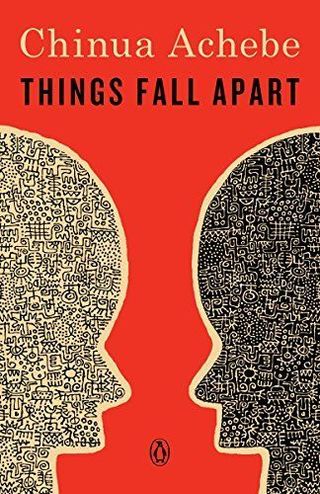
Cover of Things Fall Apart

Things Fall Apart

Chinua Achebe

Original language: English · Paperback · ISBN 978-0385474542

Things Fall Apart, published in 1958, follows Okonkwo, a respected Igbo warrior and farmer in the fictional village of Umuofia, set in what is now southeastern Nigeria during the late 1800s. Okonkwo has built his status through personal effort, driven partly by shame over his father's reputation as lazy and indebted. The novel opens with detailed portrayals of daily Igbo life: harvest cycles, religious customs, family structure, judicial gatherings, and the social rules that govern standing within the clan.

The arrival of British missionaries and colonial administrators gradually reshapes the village. Some community members convert to Christianity or cooperate with the new political order, while others resist. Okonkwo finds the changes intolerable and struggles against what he sees as the erosion of everything he values. The tension between adaptation and resistance runs through both the community and within Okonkwo himself.

Chinua Achebe wrote the novel partly in response to European fiction that portrayed African societies as primitive or without internal complexity. The book has sold over twenty million copies and been translated into fifty-seven languages. It is the first volume in a sequence of three novels, often called the African Trilogy, that Achebe set in Nigeria across different periods of colonial contact.

Plot

Things Fall Apart is the first of three novels in Chinua Achebe's critically acclaimed African Trilogy. It is a classic narrative about Africa's cataclysmic encounter with Europe as it establishes a colonial presence on the continent. Told through the fictional experiences of Okonkwo, a wealthy and fearless Igbo warrior of Umuofia in the late 1800s, Things Fall Apart explores one man's futile resistance to the devaluing of his Igbo traditions by British political and religious forces and his despair as his community capitulates to the powerful new order.

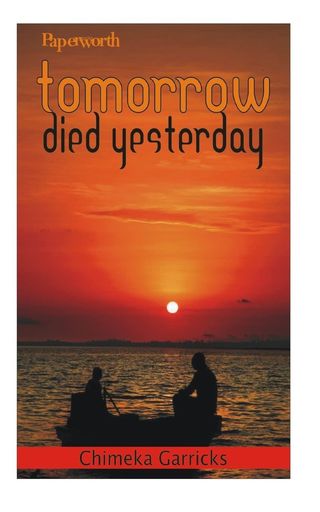
Cover of Tomorrow Died Yesterday

Tomorrow Died Yesterday

Chimeka Garricks

Original language: English · Paperback · ISBN 978-1523697397

Tomorrow Died Yesterday is set in Port Harcourt in 2004, during a period when kidnappings of oil workers in the Niger Delta were widespread. The story begins when one such kidnapping goes wrong, pulling four men back into each other's lives. Douye, known as Doughboy, is a career militant who carried out the abduction. Amaibi is a university professor and environmental activist who stands accused of the crime. Kaniye, a lawyer who left the profession to run a restaurant, agrees to defend him. And Tubo is an oil company executive whose moral compass points wherever profit leads.

The four characters are old friends, and their separate paths trace the ways oil extraction has shaped the Niger Delta and Nigerian society at large. Through their perspectives, the novel maps out corruption, failing institutions, and the uneven distribution of consequences in a region where enormous wealth flows outward while local communities absorb the damage.

Chimeka Garricks uses Port Harcourt, the commercial center of the oil-producing south, as both setting and subject. The city's streets, courtrooms, and social circles become the ground on which questions of complicity and loyalty play out among people bound by shared history and divided by very different stakes.

Plot

Its 2004 Port Harcourt at the height of the kidnap of oil workers in the Niger Delta, a kidnapping goes awry and four lives are reconnected. Douye aka Doughboy the career militant responsible for the crime. Amaibi the gentle university professor / eco-warrior accused. Kaniye the lawyer turned restaurateur who tries to get him off and Tubo an amoral oil company executive. Against a backdrop of corrupt practises, failed systems and injustice, these four friends tell the story of oil in a region and its effects on local communities and the Nigerian larger society.

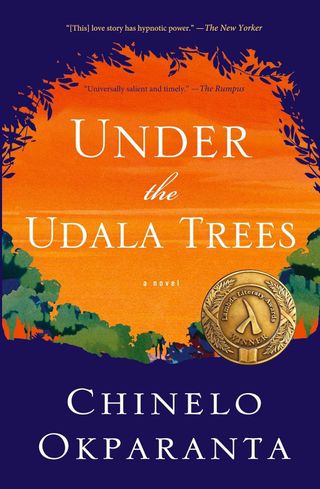
Cover of Under The Udala Trees

Under The Udala Trees

Chinelo Okparanta

Original language: English · Paperback · ISBN 978-0544811799

Ijeoma is born in Nigeria shortly before independence, and she is eleven years old when the country's civil war begins in the late 1960s. Displaced from her home and sent to live with relatives for safety, she meets another girl who has also been uprooted by the conflict. The two come from different ethnic communities, and their growing closeness develops into a first love that neither of them expected.

When the relationship is found out, Ijeoma faces intense pressure to suppress who she is. The novel follows her across years as she navigates a society shaped by both the aftermath of war and deeply rooted cultural taboos around same-sex relationships. Okparanta draws on Nigerian folktales and biblical passages throughout the story, weaving them into Ijeoma's attempts to reconcile what she has been taught with what she knows to be true about herself.

The setting spans several decades of Nigerian history, from the Biafran war period through the country's long process of reconstruction. Okparanta uses this timeline to place personal identity and social belonging side by side, showing how national fractures along ethnic and religious lines can mirror the divisions imposed on individual lives.

Plot

Ijeoma comes of age as her nation does; born before independence, she is eleven when civil war breaks out in the young republic of Nigeria. Sent away to safety, she meets another displaced child and they, star-crossed, fall in love. They are from different ethnic communities. They are also both girls. When their love is discovered, Ijeoma learns that she will have to hide this part of herself. But there is a cost to living inside a lie. As Edwidge Danticat has made personal the legacy of Haiti's political coming of age, Okparanta's Under the Udala Trees uses one woman's lifetime to examine the ways in which Nigerians continue to struggle toward selfhood. Even as their nation contends with and recovers from the effects of war and division, Nigerian lives are also wrecked and lost from taboo and prejudice. This story offers a glimmer of hope -- a future where a woman might just be able to shape her life around truth and love.

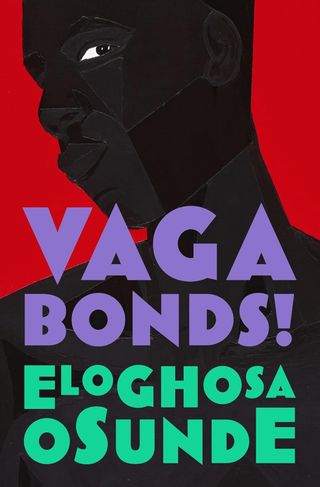
Cover of Vagabonds!

Vagabonds!

Eloghosa Osunde

Original language: English · Hardcover · ISBN 978-0008498016

Vagabonds! is a debut novel by Eloghosa Osunde set in Lagos, Nigeria. The city itself appears as a character: Èkó, the spirit of Lagos, moves through the streets alongside a figure called Tatafo, stirring events in the lives of people pushed to the margins. Osunde uses the word vagabonds to describe those whom the state and society label as outsiders, including queer Nigerians, displaced workers, and people surviving through informal economies.

The novel follows several interlocking stories. A driver works for a corrupt politician. A lesbian couple navigates both their private bond and their involvement in underground sex work. A mother attends a secret spiritual gathering that reshapes her sense of reality. These characters cross paths in markets, churches, hotel rooms, and nightclubs, their separate lives pulled together by forces they do not fully understand. Spirits intervene, challenge, and occasionally control the people they encounter.

Osunde builds Lagos as a place where the physical and the spiritual overlap constantly. The structure moves between perspectives and registers, blending realism with elements drawn from Yoruba cosmology. Capitalism, corruption, and systems of oppression run through the background, shaping the conditions under which each character operates.

Plot

Èkó, the spirit of Lagos, and his loyal minion Tatafo weave trouble through the streets of Lagos and through the lives of the ‘vagabonds’ powering modern Nigeria: the queer, the displaced and the footloose. With Tatafo as our guide we meet these people in the shadows. Among them are a driver for a debauched politician; a lesbian couple whose tender relationship sheds unexpected light on their experience with underground sex work; a mother who attends a secret spiritual gathering that shifts her reality. As their lives begin to intertwine—in markets and underground clubs, in churches and hotel rooms—the vagabonds are seized and challenged by the spirits who command the city. A force is drawing them all together, but for what purpose?

More from Nigeria

See the country page for Nigeria for its map, facts and largest cities, or browse books from other countries.

Links go to Amazon; Hookito doesn’t sell books. Know a book that belongs here, or spotted a mistake? Write to submissions@hookito.com.