Hookito

Norway · Books

Books from Norway

5 books from and about Norway: what each is about, the plot, and a note from Professor Kogi.

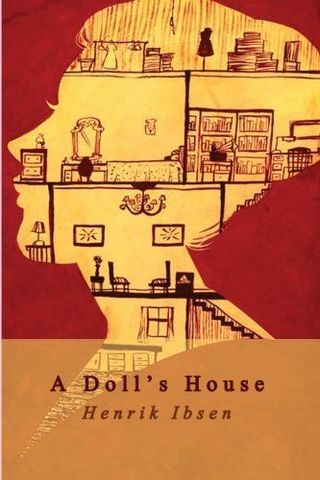
Cover of A Doll's House

A Doll's House

Henrik Ibsen

Original language: Norwegian · Paperback · ISBN 978-1503213807

A Doll's House is a three-act prose play by Henrik Ibsen, first published in 1879 under the Norwegian title Et dukkehjem. It follows Nora Helmer, a married woman in a comfortable middle-class household with her husband Torvald and their children. At the start she seems settled in her domestic role, managing the small performances that keep the home running smoothly.

Across the three acts, a secret from Nora's past presses on the marriage and exposes how little legal and financial standing she holds. Ibsen built the drama around the distance between social expectation and private self. He described his starting point as the idea that a woman cannot be herself in a society whose laws and judgments are made by men.

The ending caused loud argument when the play reached stages across Europe, and some productions were performed with an altered final scene, a change Ibsen resisted. Its criticism of nineteenth-century marriage norms placed it at the centre of public debate about women's independence, and it has stayed in theatre repertoires ever since, translated also as A Doll House.

Plot

The play is significant for its critical attitude toward 19th-century marriage norms. It aroused great controversy at the time, as it concludes with the protagonist, Nora, leaving her husband and children because she wants to discover herself. Ibsen was inspired by the belief that "a woman cannot be herself in modern society," since it is "an exclusively male society, with laws made by men and with prosecutors and judges who assess feminine conduct from a masculine standpoint."

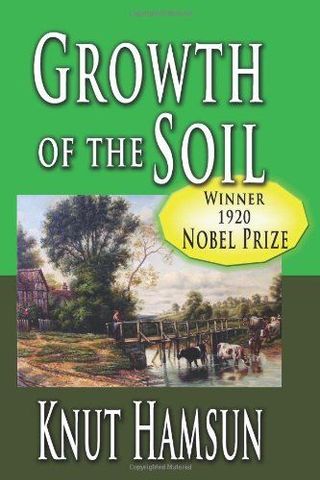
Cover of Growth Of The Soil

Growth Of The Soil

Knut Hamsun

Original language: Norwegian · Paperback · ISBN 978-1440414220

Growth of the Soil, published in 1917 under its Norwegian title Markens Grøde, follows a man named Isak who walks into an unpopulated stretch of northern Norwegian wilderness and begins clearing land. He builds a turf hut, breaks the soil, and starts farming. A woman named Inger eventually arrives and stays, and together they establish a small holding that grows over the years into something more permanent. The novel tracks decades of their life on this patch of ground, through births, losses, difficult seasons, and the slow arrival of neighbors and outside society.

The prose style is notably plain, shaped to fit its subject. Hamsun writes about plowing, sowing, milking, and building with close attention and without ornament. Alongside these routines, darker episodes surface, including acts driven by shame, isolation, and the pressures that modernity places on rural communities. The story moves between stretches of steady agricultural labor and sudden disruptions that test the people living on the land.

Hamsun received the Nobel Prize in Literature in 1920, and Growth of the Soil was cited as a central work in that award. The novel is set in a landscape that reflects the sparse, forested interior of northern Norway, far from the coast and from any town of consequence.

Plot

Stylistically it has a simplicity that reflects its subject matter and there prevails what Worster calls a "Miltonic monumental calm". Hamsun also has the qualities of a Norwegian Steinbeck in his tale of the tragedies and joys of everyday life. There are also 'Bergmanesque' elements in its blacker episodes

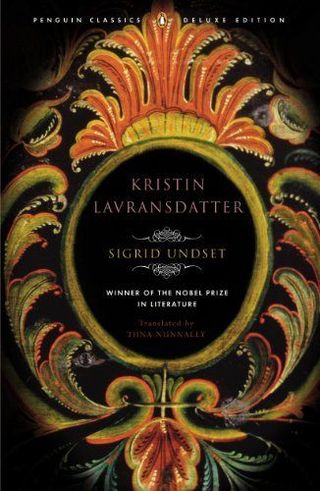
Cover of Kristin Lavransdatter

Kristin Lavransdatter

Sigrid Undset

Original language: Norwegian · Paperback · ISBN 978-0143039167

Kristin Lavransdatter is a trilogy by Sigrid Undset, set in fourteenth-century Norway. It follows the life of Kristin, a strong-willed woman, from her childhood in the Gudbrandsdal valley through marriage, motherhood, and old age. The three parts, originally published between 1920 and 1922, trace her choices and their consequences across decades, against a landscape of farms, fjords, churches, and medieval trading towns.

Undset builds the story around the details of daily life in this period: how households were run, how marriages were arranged, how the Catholic Church shaped social expectations, and how political tensions between noble families and the crown played out at the local level. Kristin's personal struggles with love, loyalty, and faith are set firmly inside these structures, giving the novel both an intimate and a broad historical scope.

This edition collects the trilogy in a single volume, using Tiina Nunnally's English translation. Undset received the Nobel Prize in Literature in 1928, with the committee citing Kristin Lavransdatter among her principal achievements. She drew on extensive research into medieval Scandinavian sources, and much of the story unfolds in regions of central Norway she knew from her own life.

Plot

In her great historical epic Kristin Lavransdatter, set in fourteenth-century Norway, Nobel laureate Sigrid Undset tells the life story of one passionate and headstrong woman. Painting a richly detailed backdrop, Undset immerses readers in the day-to-day life, social conventions, and political and religious undercurrents of the period. Now in one volume, Tiina Nunnally’s award-winning definitive translation brings this remarkable work to life with clarity and lyrical beauty.

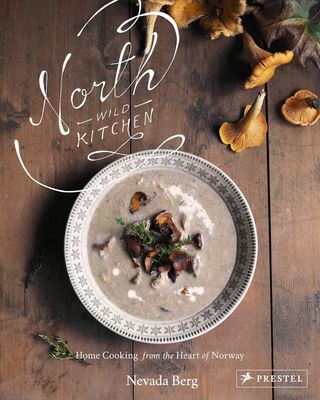
Cover of North Wild Kitchen: Home Cooking from the Heart of Norway

North Wild Kitchen: Home Cooking from the Heart of Norway

Nevada Berg

Original language: English · Hardcover · ISBN 978-3791384139

North Wild Kitchen is a cookbook by Nevada Berg, an American food writer who lives on a 17th-century mountain farm in rural Norway. Berg is a self-taught cook, and the book draws on her daily life in the Norwegian countryside, where seasonal ingredients and practical preparation guide the kitchen. The recipes are Norwegian-inspired and built around accessible home cooking rather than restaurant technique.

The book is organized around different aspects of Norwegian food culture. Chapters cover foraging, fishing, and farming alongside hunting, harvesting, camping, baking, grilling, and frying. Each section pairs recipes with photography of both the finished dishes and the surrounding landscape. Berg's approach favors simplicity and ingredients tied to the time of year, reflecting a way of eating shaped by climate, terrain, and tradition.

Berg's blog, also called North Wild Kitchen, was named Blog of the Year and Best New Voice by Saveur magazine in 2016. The blog and her Instagram feed built a following before the book's publication, and the cookbook extends that work into a longer format with more recipes and context about how Norwegian food traditions connect to the land.

Plot

Named by Saveur magazine as the 2016 Blog of the Year and Best New Voice, North Wild Kitchen and its author Nevada Berg have become one of the best-known voices of Norwegian cooking around the world. Written from her 17th-century mountain farm in rural Norway, Nevada Berg's blog and Instagram feed are brimming with gorgeous--and achievable--ideas for home cooking and entertaining. Berg is a self-taught cook, and her simple and charming approach focuses on seasonal food prepared without a lot of fuss. With dozens of mouthwatering recipes for Norwegian-inspired dishes, this book features equally enticing photography of the food and the country's landscape. Each chapter focuses on a different aspect of Norwegian food culture--foraging, fishing, and farming; hunting, harvesting, and camping; baking, grilling, and frying.

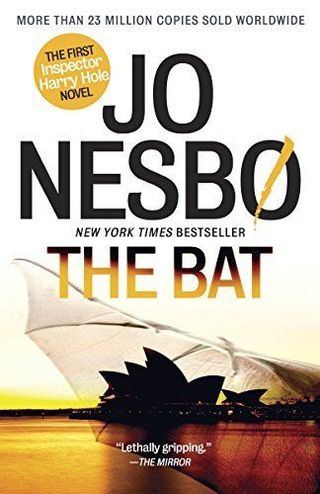
Cover of The Bat: The First Inspector Harry Hole Novel

The Bat: The First Inspector Harry Hole Novel

Jo Nesbo

Original language: Norwegian · Paperback · ISBN 978-0345807090

Inspector Harry Hole of the Oslo Crime Squad is sent to Sydney, Australia, to observe the investigation of a murdered Norwegian woman. The victim, a twenty-three-year-old with minor celebrity status in Norway, has been found dead under circumstances that Australian police are working to untangle. Harry arrives with clear orders to assist if asked but to avoid causing problems. He does neither particularly well.

Rather than keeping a polite distance, Harry builds connections with one of the Australian detectives on the case and with a witness. As they compare notes, a broader pattern begins to surface. The killing appears connected to a series of unsolved murders stretching across the country, suggesting someone has been operating undetected for some time. The investigation shifts from a single crime to a hunt for a figure whose movements span vast distances across the Australian landscape.

The Bat is the first novel in Jo Nesbø's long-running Harry Hole series, originally published in Norwegian in 1997. Setting the opener outside Norway gives the book an unusual starting point for a Scandinavian crime series, placing its Oslo-based detective in unfamiliar territory from the very first chapter. The Australian setting shapes both the atmosphere and the investigative dynamics throughout.

Plot

The victim is a twenty-three-year-old Norwegian woman who is a minor celebrity back home. Harry is free to offer assistance, but he has firm instructions to stay out of trouble. Never one to sit on the sidelines, Harry befriends one of the lead detectives, and one of the witnesses, as he is drawn deeper into the case. Together, they discover that this is only the latest in a string of unsolved murders, and the pattern points toward a psychopath working his way across the country.

More from Norway

See the country page for Norway for its map, facts and largest cities, or browse books from other countries.

Free editions are on Project Gutenberg, matched by title and author. Links go to Amazon; Hookito doesn’t sell books. Know a book that belongs here, or spotted a mistake? Write to submissions@hookito.com.