Hookito

Panama · Books

Books from Panama

5 books from and about Panama: what each is about, the plot, and a note from Professor Kogi.

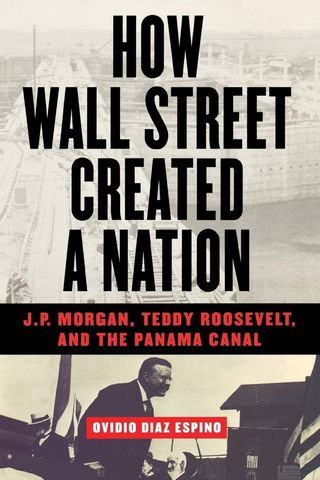
Cover of How Wall Street Created a Nation: J.P. Morgan, Teddy Roosevelt, and the Panama Canal

How Wall Street Created a Nation: J.P. Morgan, Teddy Roosevelt, and the Panama Canal

Ovidio Diaz Espino

Original language: English · Paperback · ISBN 978-1568582665

In the early 1900s the narrow isthmus linking North and South America became the site of one of the largest engineering and financial undertakings of the era. Ovidio Diaz Espino traces the money and politics behind the Panama Canal, beginning with the bankrupt French Panama Canal Company, which had already failed in its own attempt to cut a waterway across the land.

A secretive group of Wall Street financiers set out to acquire the French company's holdings and revive the project under American control. The book follows how figures including J.P. Morgan and President Theodore Roosevelt worked around objections from the United States Congress and the press, combining private financial alliances with the forceful foreign policy sometimes described as gunboat diplomacy.

Panama's separation from Colombia in 1903 belongs to this sequence of events, and Espino examines how the canal shaped the early political and economic life of the new republic. Writing with a background in finance and a connection to Latin America, he presents the canal as a case study in how state power and private profit could align during a period of American expansion.

Plot

With the drama of detective fiction, How Wall Street Created a Nation illustrates how a combination of financial gain and arrogant American imperialism culminated in the building of the Panama Canal. Ovidio Diaz Espino has artfully pieced together the tale of a dark alliance of greed between the bankrupt French Panama Canal Company and a secret syndicate of Wall Street financiers. With the full force of Teddy Roosevelt's Wall Street cabal and his gunboat diplomacy behind it, there was no stopping the canal project despite the objections of the American Congress and press.
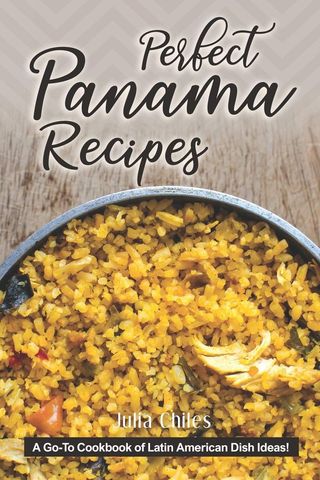
Cover of Perfect Panama Recipes: A Go-To Cookbook of Latin American Dish Ideas!

Perfect Panama Recipes: A Go-To Cookbook of Latin American Dish Ideas!

Julia Chiles

Original language: English · Paperback · ISBN 979-8629735779

Perfect Panama Recipes is a cookbook by Julia Chiles that gathers dish ideas rooted in Panamanian cooking. Panama's food culture draws from several traditions, including Spanish, African, Afro-Antillean, and Amerindian influences, and the book uses this diversity as its starting point. Rice appears throughout, from side dishes to desserts and even drinks, while fish, chicken, beef, corn, and plantains form the other common building blocks of the cuisine.

The collection covers meals across the day. Breakfast in Panama often features fried items made from bread, corn, and meat, served alongside cheese, coffee, and orange juice. Lunch dishes tend to combine rice with meat, fish, coconut, or vegetables. Weekday meals are generally lighter, though weekend cooking can be more elaborate. The book also addresses Sancocho, a chicken and rice soup widely regarded as Panama's national dish.

Beyond home cooking, the cookbook acknowledges the broader range of food found in Panama today, from burger restaurants to kosher dining, reflecting how newer influences have joined the older culinary layers. The recipes aim to give readers practical access to these Latin American flavors using accessible instructions.

Plot

The cuisine of Panama reflects the influences of numerous ethnic groups, including the African, Spanish, Afro-Antillean and Amerindian, who are native to Panama. In fact, you’ll even find burger joints and kosher restaurants in Panama, reflecting the infusion of other ideas on the foods and cooking in Panama. Most of the foods in Panama trace to Spanish and other European colonists who fused their own recipes with the Caribbean foods native to Panama. Rice is often used, in everything from side dishes to drinks and desserts. Fish, chicken and beef are also staples, as are corn and plantains. Soup is popular in Panama, especially their national dish, Sancocho, which is made with rice and chicken. In cafes, Panamanian breakfasts consist of fried treats made with bread, corn and meat, along with cheeses, coffee and orange juice. For lunch, dishes made with rice, meat, fish, coconut and vegetables are served most everywhere. Panamanians usually eat lighter meals on weekdays, but that doesn’t mean the meals aren’t SO tasty. Try a recipe today…

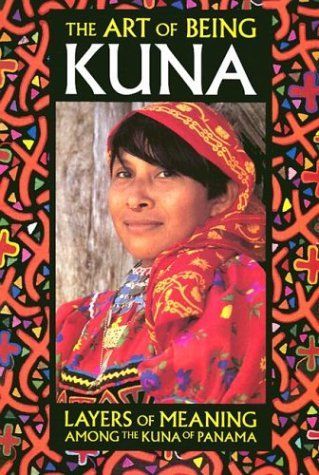
Cover of The Art of Being Kuna: Layers of Meaning Among the Kuna of Panama

The Art of Being Kuna: Layers of Meaning Among the Kuna of Panama

Mari Lyn Salvador

Original language: English · Paperback · ISBN 978-0930741617

The Kuna are an Indigenous people living primarily in the San Blas archipelago along Panama's Caribbean coast, a chain of small coral islands and mainland villages. Mari Lyn Salvador's book surveys their artistic traditions in detail, covering visual, musical, verbal, and performative forms. The most widely recognized of these are molas, textile panels made using a technique called reverse applique, in which layers of colored cloth are cut away to reveal patterns beneath. Salvador places molas within a broader context of Kuna creative life rather than treating them as isolated craft objects.

Beyond textiles, the book examines how music, dance, oral storytelling, and ceremony function together as expressions of shared values and social cohesion. Salvador documents the ways these practices have helped the Kuna maintain political autonomy and cultural continuity, even under pressure from national governments and outside economic forces. The Kuna's history of organized resistance to assimilation policies is unusual among Indigenous groups in Central America and has drawn attention from anthropologists and political observers.

The volume is extensively illustrated and draws on fieldwork conducted among Kuna communities. It serves as both an ethnographic record and a guide to understanding how art operates within a living culture rather than apart from it.

Plot

From the familiar reverse appliquÈd molas to music, dance, and verbal arts, the Kuna live their values and bind their people together. This focus and strength have helped them resist outside forces and maintain their culture and self-determination in the face of far more influential people and governments.

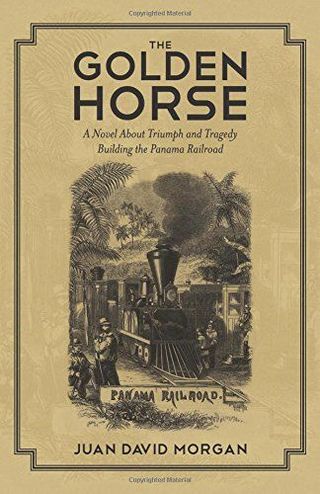
Cover of The Golden Horse

The Golden Horse

David Morgan

Original language: Spanish · Paperback · ISBN 978-1626529533

The Golden Horse by David Morgan follows the rivalry between New York shipping magnates and the consequences that spread across the tropical landscape of Panama. Set during a period when gold fever pushed thousands of travellers toward dangerous crossings, the story traces the personal cost of ambition in a place where disease, extreme weather, and lawlessness claimed lives on a large scale.

Construction work in the region killed thousands, many from tropical illnesses and sudden natural disasters. The narrative moves through jungle terrain and frontier settlements where competition between powerful interests played out at the expense of ordinary workers and travellers, and where outlaws, engineers, and adventurers were caught up in forces far larger than themselves. Cultural clashes between arrivals and existing communities run through the book.

Alongside the hardship, Morgan gives room to romantic entanglements, feats of human inventiveness, and the stubborn resourcefulness that kept people moving. The rivalry among shipping interests works as a frame for showing how determination and greed operated side by side in an environment where survival itself remained uncertain from one day to the next.

Plot

Thousands of people died during the construction, succumbing to tropical diseases and natural disasters. Despite the danger, the lust of gold fever and the challenge of conquering the wilderness drove the men through the perils of torturous journeys, cutthroat competition, ruthless outlaws, savage jungles, the ferocious extremes of the tropical frontier, and violent cultural clashes, but not without the thrill of romantic adventures, the wonder of human inventiveness, and rugged determination to succeed.

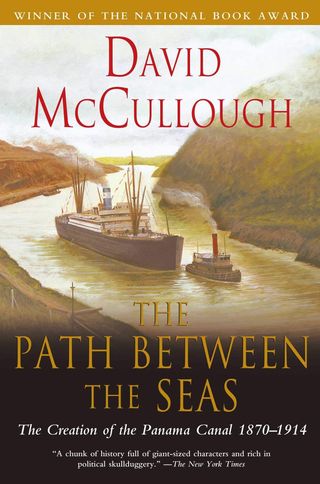
Cover of The Path Between the Seas

The Path Between the Seas

David McCullough

Original language: English · Paperback · ISBN 978-0671244095

David McCullough's The Path Between the Seas traces the decades-long effort to build a waterway across the Isthmus of Panama, connecting the Atlantic and Pacific oceans. The project began under French leadership in the 1880s, when Ferdinand de Lesseps, fresh from his success at Suez, attempted to cut through the jungle and rock of Central America. That effort collapsed amid disease, financial scandal, and staggering loss of life. The United States later took over the enterprise, and the canal opened in 1914, just before the outbreak of World War I.

McCullough draws on sources gathered in Paris, Bogota, Panama, the Canal Zone, and Washington, including interviews with participants and their families. The book follows a large cast: de Lesseps and his son Charles, the diplomat Philippe Bunau-Varilla, army engineer George Washington Goethals, medical officer William Gorgas, the civilian engineer John Stevens, and Theodore Roosevelt, whose 1903 intervention shaped both the canal and the new nation of Panama.

Alongside the engineering and political dimensions, the account covers the campaign against yellow fever and malaria, which had devastated earlier workers. McCullough treats the canal as a convergence of medicine, diplomacy, labor, and geography rather than a single narrative of construction.

Plot

The Path Between the Seas tells the story of the men and women who fought against all odds to fulfill the 400-year-old dream of constructing an aquatic passageway between the Atlantic and Pacific oceans. It is a story of astonishing engineering feats, tremendous medical accomplishments, political power plays, heroic successes, and tragic failures. Applying his remarkable gift for writing lucid, lively exposition, McCullough weaves the many strands of the momentous event into a comprehensive and captivating tale.

More from Panama

See the country page for Panama for its map, facts and largest cities, or browse books from other countries.

Links go to Amazon; Hookito doesn’t sell books. Know a book that belongs here, or spotted a mistake? Write to submissions@hookito.com.