Hookito

Peru · Books

Books from Peru

6 books from and about Peru: what each is about, the plot, and a note from Professor Kogi.

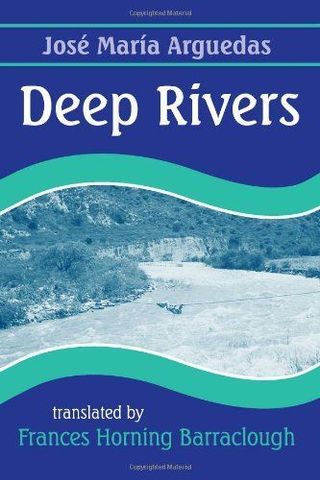
Cover of Deep Rivers

Deep Rivers

José María Arguedas

Original language: Spanish/Quechua · Later Printing Used Edition · ISBN 978-1577662440

Deep Rivers is an autobiographical novel by the Peruvian writer José María Arguedas, published in Spanish as Los ríos profundos. It follows Ernesto, the son of a travelling country lawyer, who is raised by Indian servants and then sent to a Catholic boarding school at the age of fourteen. The novel is set in Peru, where highland Quechua-speaking communities and Spanish-speaking towns sit close together.

In that urban, Spanish-speaking setting Ernesto is a misfit and a loner. He carries the language and memories of his early years, while the school and the town run on different rules. The conflict between Indian and Spanish cultures is worked out inside the boy, as it was in the life of Arguedas himself. Social hierarchy and violence shape the world around him.

Arguedas grew up in the Andean highlands and knew Quechua closely. His handling of language was unusual: he published his poetry in Quechua, and for his novels he built a form of Spanish that follows native syntax while using Spanish vocabulary. For Ernesto, a world of dreams and memories becomes the place where he finds relief.

Plot

Ernesto, the narrator of Deep Rivers, is a child with origins in two worlds. The son of a wandering country lawyer, he is brought up by Indian servants until he enters a Catholic boarding school at age 14. In this urban Spanish environment, he is a misfit and a loner. The conflict between the Indian and the Spanish cultures is acted out within him as it was in the life of Arguedas. For the boy Ernesto, salvation is his world of dreams and memories.

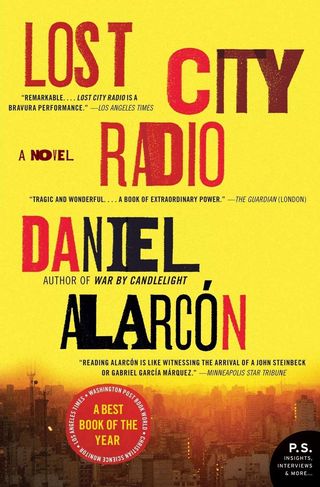
Cover of Lost City Radio

Lost City Radio

Daniel Alarcon

Original language: English · Paperback · ISBN 978-0060594817

In an unnamed South American country shaped by a decade of civil war, a radio host named Norma reads the names of missing people on the airwaves each week. Her program, Lost City Radio, has become a lifeline for communities scattered by conflict. Listeners from mountain villages and overcrowded urban barrios tune in hoping to hear news of relatives who vanished during the fighting or were absorbed into the rapidly growing capital city. Through the show, separated families sometimes find each other again.

Norma carries her own private loss. Her husband disappeared near the end of the war, and she has spent years broadcasting consolation to others while concealing that grief. Her carefully maintained routine fractures when a boy arrives from the jungle carrying a list of names and a connection to her husband's fate. The story follows three lives pulled apart by violence and asks how people rebuild when the structures around them have been destroyed.

Daniel Alarcon's debut novel is set in a place that echoes Peru and other Latin American countries marked by internal armed conflicts. The narrative moves between the capital, the jungle, and the highlands, tracing how war reshapes geography, language, and personal identity long after the fighting ends.

Plot

For ten years, Norma has been the on-air voice of consolation and hope for the Indians in the mountains and the poor from the barrios—a people broken by war's violence. As the host of Lost City Radio, she reads the names of those who have disappeared—those whom the furiously expanding city has swallowed. Through her efforts, lovers are reunited and the lost are found. But in the aftermath of the decade-long bloody civil conflict, her own life is about to forever change—thanks to the arrival of a young boy from the jungle who provides a cryptic clue to the fate of Norma's vanished husband.

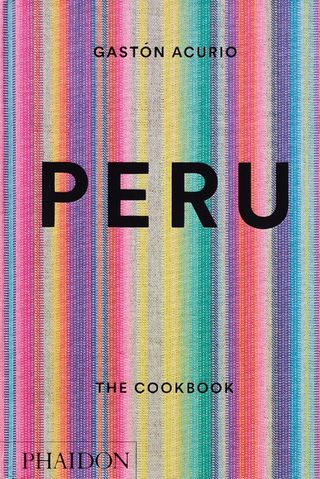
Cover of Peru: The Cookbook

Peru: The Cookbook

Gastón Acurio

Original language: English · Hardcover · ISBN 978-0714869209

Peru: The Cookbook is a large collection of 500 recipes compiled by Gastón Acurio, one of Peru's best-known chefs. The book covers a wide spectrum of traditional home cooking, from well-known preparations like ceviche, quinoa dishes, and lomo saltado to less familiar ingredients and recipes involving amaranth and aji amarillo, the bright yellow pepper central to many Peruvian sauces and stews. Acurio's aim is to present the full range of Peruvian cuisine as it is actually cooked in households across the country.

Peru's food traditions draw from Indigenous, Spanish, African, Chinese, and Japanese influences, a combination shaped by centuries of migration and trade along the Pacific coast and through the Andes. The book reflects this variety, organizing recipes that span coastal seafood, highland grains, and tropical ingredients from the Amazon basin. Rather than focusing on restaurant-style plating, the emphasis stays on accessible home cooking.

Gastón Acurio operates restaurants in several Latin American cities and beyond, and his work has played a visible role in bringing international attention to Peruvian cooking. This volume serves as a reference-style cookbook, structured to let readers locate dishes by type and region rather than by difficulty or occasion.

Plot

One of the world's most innovative and flavorful cuisines, Peruvian food has been consistently heralded by chefs and media around the world as the "next big thing." Peruvian restaurants are opening across the United States, with 20 in San Francisco alone, including Limon and La Mar. Acurio guides cooks through the full range of Peru's vibrant cuisine from popular classics like quinoa and ceviche, and lomo saltado to lesser known dishes like amaranth and aji amarillo. For the first time, audiences will be able to bring the flavors of one of the world's most popular culinary destinations into their own kitchen.

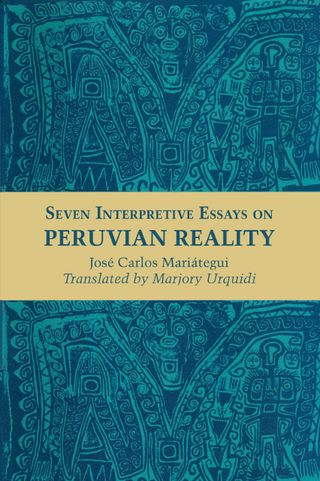
Cover of Seven Interpretive Essays on Peruvian Reality

Seven Interpretive Essays on Peruvian Reality

Jose Carlos Mariátegui

Original language: Spanish · Paperback · ISBN 978-0292776111

José Carlos Mariátegui, born in Peru in 1894, was among the most influential social thinkers in early twentieth-century South America. His Seven Interpretive Essays on Peruvian Reality, first published in Spanish in 1928 as Siete ensayos de interpretación de la realidad peruana, stands as his central intellectual work. The book has been reprinted many times in Peru and across Latin America.

The seven essays each take up a distinct dimension of Peruvian society. Mariátegui examines the country's economic development, the situation and treatment of Indigenous peoples, land ownership and distribution, the state of public education, the role of religion, the tension between regionalism and centralism, and Peru's literary culture. Rather than treating these subjects in isolation, Mariátegui connects them to broader structures of class, colonial inheritance, and political power.

Mariátegui wrote from a Marxist perspective, applying materialist analysis to conditions specific to Peru rather than importing European frameworks without adaptation. His attention to Indigenous communities and to land as a political question gave the essays a focus that distinguished them from much European-oriented social theory of the period. The book has served as a reference point for historians, political scientists, sociologists, and anthropologists studying Peru.

Plot

Seven Interpretive Essays on Peruvian Reality (Siete ensayos de interpretación de la realidad peruana), first published in 1928, is Mariátegui's major statement of his position and has gone into many editions, not only in Peru but also in other Latin American countries. The topics discussed in the essays—economic evolution, the problem of the Indian, the land problem, public education, the religious factor, regionalism and centralism, and the literary process—are in many respects as relevant today as when the book was written.

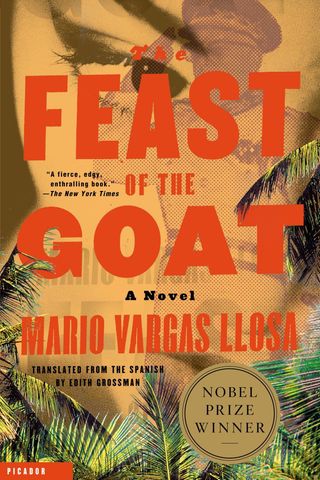
Cover of The Feast of the Goat

The Feast of the Goat

Mario Vargas Llosa

Original language: Spanish · Paperback · ISBN 978-0312420277

Urania Cabral, a forty-nine-year-old woman living abroad, returns to the Dominican Republic after decades away. Her visit coincides with memories of 1961, when the capital still bore the name Trujillo City and the country of three million people lived under the control of Rafael Trujillo. The aging dictator, known to Dominicans as the Goat, maintained power through violence and blackmail, surrounding himself with a court shaped by treachery and fear. Urania's father was a senator within that regime, and her homecoming forces a confrontation with a personal and political past she has carried in silence.

Mario Vargas Llosa, the Peruvian novelist, structures the book across multiple timelines and perspectives. One thread follows Urania in the present as she visits her dying father. Another reconstructs the final days of Trujillo's rule, drawing on historical figures including Joaquin Balaguer, who would go on to hold the presidency for years after the dictatorship ended. A third follows the conspirators plotting against Trujillo. The novel examines how authoritarian power deforms private lives, how cruelty sustains a political system, and what remains when that system collapses.

Plot

Haunted all her life by feelings of terror and emptiness, forty-nine-year-old Urania Cabral returns to her native Dominican Republic - and finds herself reliving the events of l961 when the capital was still called Trujillo City and one old man terrorized a nation of three million. Rafael Trujillo, the depraved ailing dictator whom Dominicans call the Goat, controls his inner circle with a combination of violence and blackmail. In Trujillo's gaudy palace, treachery and cowardice have become a way of life. But Trujillo's grasp is slipping. There is a conspiracy against him, and a Machiavellian revolution already underway that will have bloody consequences of its own.

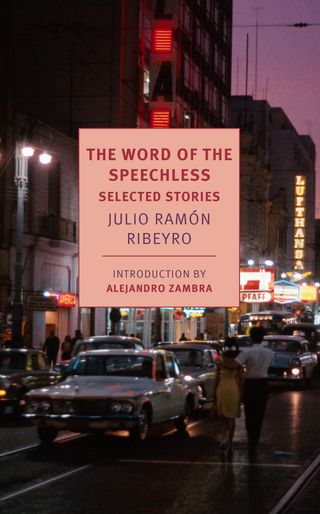
Cover of The Word of the Speechless

The Word of the Speechless

Julio Ramón Ribeyro

Original language: Spanish · Paperback · ISBN 978-1681373232

Julio Ramón Ribeyro built his reputation on short stories about people at the edges of Peruvian life: workers, migrants, the poor, and the forgotten, all with little standing in a country reshaping itself through the twentieth century. Writing to an editor, he said his aim was to give speech to those denied it, letting them voice their own longing, anger, and distress rather than being described from outside.

He is counted among the leading short story writers of the period when Latin American literature expanded widely after the Second World War, a generation whose novels often traveled abroad faster than its shorter fiction did. Ribeyro worked mainly in that shorter form, and his books circulated in Spanish for decades before English-language readers had access to a broad selection of them.

This volume, edited and translated by Katherine Silver, was the first gathering of his stories in English. The record describes the writing as deeply human, carried by a lyricism that can disorient. Ribeyro's Peru appears through ordinary situations, where wider social pressure registers inside a single character's day rather than in commentary about the society around them.

Plot

n a letter to an editor, Ribeyro said about his stories, “in most of [them] those who are deprived of words in life find expression—the marginalized, the forgotten, those condemned to an existence without harmony and without voice. I have restored to them the breath they’ve been denied, and I’ve allowed them to modulate their own longings, outbursts, and distress.” This is a work of deep humanity, imbued with a disorienting lyricism that is Ribeyro’s alone.

More from Peru

See the country page for Peru for its map, facts and largest cities, or browse books from other countries.

Links go to Amazon; Hookito doesn’t sell books. Know a book that belongs here, or spotted a mistake? Write to submissions@hookito.com.