Hookito

Serbia · Books

Books from Serbia

9 books from and about Serbia: what each is about, the plot, and a note from Professor Kogi.

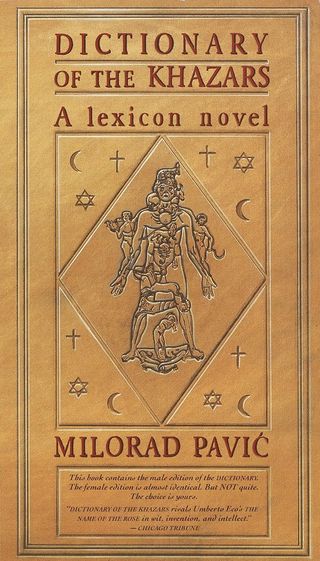
Cover of Dictionary of the Khazars

Dictionary of the Khazars

Milorad Pavic

Original language: Serbian · Paperback · ISBN 978-0679724612

Dictionary of the Khazars by Milorad Pavic takes the form of an encyclopedia rather than a conventional novel. It gathers entries about the Khazars, a real people who held power in the region beyond Transylvania roughly between the seventh and ninth centuries. The book is organized into three smaller dictionaries, each reflecting the perspective of one of the three major monotheistic religions. Entries move freely between historical periods, and readers can approach them in almost any order.

The novel was published in two separate editions, labeled male and female. The two versions are nearly identical, differing by only seventeen lines. Within its entries, the book presents three scholars whose work intersects across centuries, a princess of uncertain origin, a religious sect capable of entering dreams, a book whose pages are printed in poisonous ink, and relationships that cross the boundary between the living and the dead. Pavic, a Serbian writer, structured the work so that each reading path through the entries can produce a slightly different experience of the story.

The book became a national bestseller and was named by The New York Times Book Review as one of the best books of its year. Pavic's approach treats the encyclopedia format itself as a storytelling device, letting fragments of myth, theology, and historical speculation accumulate across its pages.

Plot

Written in two versions, male and female (both available in Vintage International), which are identical save for seventeen crucial lines, Dictionary is the imaginary book of knowledge of the Khazars, a people who flourished somewhere beyond Transylvania between the seventh and ninth centuries. Eschewing conventional narrative and plot, this lexicon novel combines the dictionaries of the world's three major religions with entries that leap between past and future, featuring three unruly wise men, a book printed in poison ink, suicide by mirrors, a chimerical princess, a sect of priests who can infiltrate one's dreams, romances between the living and the dead, and much more.
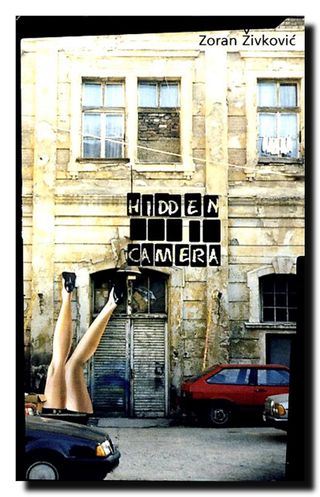

Cover of Hidden Camera

Hidden Camera

Zoran Zivkovic

Original language: Serbian · Paperback · ISBN 978-1564784124

An unnamed narrator in Zoran Zivkovic's Hidden Camera receives a blank envelope slipped into his apartment door. Inside is an invitation to a private film screening. When he arrives at the theater, only one other person is present: a woman he does not know, seated beside him. The film itself contains footage of him sitting in a park, apparently recorded without his knowledge or consent.

Convinced he has been drawn into an elaborate hidden-camera prank, the narrator decides to play along. Each new setup he encounters grows stranger and more layered than the last, pushing further into absurdity. As the situations multiply, his willingness to cooperate starts to conflict with a deepening sense of paranoia. He begins to distrust not only the people around him but the very nature of what is happening to him.

Zivkovic is a Serbian writer known for compact, speculative fiction that operates in the space between the everyday and the surreal. Hidden Camera sits in that territory, using the familiar concept of surveillance entertainment as a starting point and then steadily bending it. The story raises questions about observation, performance, and the line between participation and manipulation.

Plot

Upon arrival at the theatre, he discovers that there’s only one other person in the audience, a very attractive woman whom he’s seated next to. Then things get a bit more mysterious. The movie he’s been invited to see includes a scene showing him sitting in a park. Believing that he’s an unwitting participant in a complicated hidden camera show, he goes along with the variety of setups he’s faced with, which continue to get more involved and absurd. As the show develops, he becomes more and more paranoid and distrustful, but he keeps up the ruse to its thrilling conclusion.

Cover of Serbian Cooking: Popular Recipes from the Balkan Region

Serbian Cooking: Popular Recipes from the Balkan Region

Danijela Kracun

Original language: English · Hardcover · ISBN 978-0764347603

Serbian Cooking by Danijela Kracun is a compact collection of recipes drawn from traditional Serbian and broader Balkan food customs. The book gathers around fifty recipes spanning soups, salads, sauces, filled pastry dishes known as pita, and a variety of desserts including baklava, crepes, and cream puffs. A notable share of the recipes are vegetarian, though the author notes that meat can be added according to personal preference.

The collection reflects how Serbian cuisine shares ingredients and techniques with the cooking of neighboring countries across the Balkans and wider Eastern Europe. Readers familiar with Greek, Turkish, Hungarian, or Bosnian kitchens may recognize certain preparations in slightly different form. The book also touches on everyday Serbian eating patterns, where the main meal of the day is lunch rather than dinner. Evening meals tend to be light, often just cold cuts and bread, while an afternoon pastry with coffee fills the gap between the two. These small details of daily routine give context to the recipes and help explain why certain dishes, particularly baked goods and hearty midday plates, hold the place they do in Serbian households.

Plot

Inside, find all types of traditional Serbian fare, including potato salad, lentil soup, and an assortment of pita dishes, as well as sauces and a multitude of delectable desserts, such as crème puffs, baklava, and crepes. Most Serbian cooking traditions are intertwined with the cultures of its neighboring countries, so don’t be surprised if some of these dishes seem similar to some of your own family’s traditional recipes. And be prepared for some differences. In Serbia, lunch is the biggest meal of the day, while dinner happens to be the lightest, typically focusing on merely cold cuts and bread. Throw in an afternoon snack of a baked pastry and coffee and consider yourself a convert! Many of the recipes are vegetarian, but feel free to add your choice of meat to any dish.

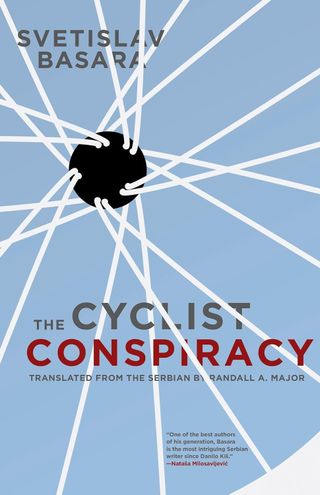
Cover of The Cyclist Conspiracy

The Cyclist Conspiracy

Svetislav Basara

Original language: Serbian · Paperback · ISBN 978-1934824580

The Cyclist Conspiracy follows a secret Brotherhood whose members communicate through dreams, draw obscure wisdom from the bicycle, and attempt to slip in and out of historical events to alter their course. The conspiracy is so enormous and so hidden that many of its own participants do not realize they belong to it. Serbian author Svetislav Basara constructs the novel as a collection of supposed historical documents: memoirs, letters, philosophical essays, blueprints, maps, and illustrations, each one adding a new layer to the Brotherhood's strange interventions across time.

The scope of those interventions stretches from the assassination of Archduke Franz Ferdinand to a fictional lost case involving Sherlock Holmes. Basara uses this wide range to blur the line between documented history and invention, treating both with the same deadpan authority. The result is a comic and conspiratorial fiction where no document can be fully trusted and where the bicycle itself becomes an unlikely vessel for secret knowledge. The novel's fragmented structure keeps the reader assembling the picture from mismatched pieces, much like a puzzle whose final shape remains deliberately uncertain.

Plot

The Cyclist Conspiracy tells the tale of a secret Brotherhood who meet in dreams, gain esoteric knowledge from contemplation of the bicycle, and seek to move in and out of history, manipulating events; the Brothers are part of a conspiracy so vast and so secret that, in many cases, the conspirators themselves are unaware of their participation in it. Told through a series of 'historical documents'—memoirs, illustrations, letters, philosophical treatises, blue prints, and maps—the novel details the story of these interventions and the historical moments where the Brotherhood has made their influence felt, from the assassination of Archduke Ferdinand to a lost story of Sherlock Holmes.

Cover of The House of Remembering and Forgetting

The House of Remembering and Forgetting

Filip David

Original language: Serbian · Paperback · ISBN 978-0720619737

As a child, Albert Weiss was thrown from a train bound for Auschwitz by his parents, who hoped to save him and his brother from the camp. He survived, but his brother was lost that winter night. The novel follows Albert years later as he tries to understand what happened to him and to locate some way of living with the knowledge of what was done to his family and to millions of others.

Filip David, a Serbian writer, constructs the story in a mosaic, non-linear form. The narrative moves between times and perspectives, drawing on semi-autobiographical elements. Other survivors appear throughout, each carrying a different method of confronting or enduring the past. Albert's struggle is shaped not only by the original violence but by a persistent guilt over his brother's fate, a weight that shifts but does not simply resolve.

The book has been compared in structure to Kurt Vonnegut's Slaughterhouse-Five and in its subject matter to the writings of Primo Levi. Both comparisons point to the same territory: fiction that addresses large-scale atrocity through fractured, personal memory rather than conventional chronology.

Plot

Young Albert Weiss was spared the horrors of Auschwitz when his parents threw him and his brother from the transport train. Years later, with the help of other survivors of the holocaust, he explores the myriad ways of confronting not just the evil that robbed him of his childhood, but the guilt he feels for having lost his brother on that wintry night.

Cover of The Modern Classics Encyclopedia of the Dead

The Modern Classics Encyclopedia of the Dead

Danilo Kiš

Original language: Serbian · Paperback · ISBN 978-0141396989

The Encyclopedia of the Dead is a collection of short stories by Danilo Kiš, originally published in Serbo-Croatian in 1983. It was his final work of fiction. The stories move across different centuries and locations, blending documented history with invented detail. In the title story, an enormous encyclopedia records the lives of every ordinary person who has lived since 1789, people too unremarkable to appear in any standard reference work. Other stories follow a young woman who glimpses a terrible vision in a mirror acquired from a traveling seller, and a city shaken by unrest after the death of a woman on its margins.

Kiš was born in Subotica in 1935 and grew up in a region shaped by successive occupations and border changes. His writing often returned to the relationship between individual memory and official record, between what states preserve and what they erase. In this collection, he sets comedy beside horror and compresses large historical spans into brief, precise narratives.

The stories share a persistent interest in how the dead are remembered or forgotten, and in the thin boundary between factual report and storytelling. Kiš structures several pieces as mock documents or scholarly entries, giving fiction the surface texture of archival material.

Plot

A girl sees the hideous fate of her sisters and father in a mirror bought from a gypsy; the death of a prostitute causes an unanticipated uprising; and the lives of every ordinary person since 1789 are recreated in the almighty Encyclopedia of the Dead. These stories about love and death, truth and lies, myth and reality range across many epochs and settings. Brilliantly combining fact and fiction, epic and miniature, horror and comedy, this was Danilo Kiš final work, published in Serbo-Croatian in 1983. Kiš is one of the great European writers of the post-war period.

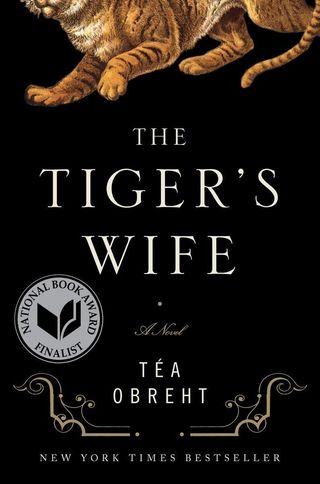
Cover of The Tiger's Wife

The Tiger's Wife

Téa Obreht

Original language: English · Hardcover · ISBN 978-0385343831

In an unnamed Balkan country recovering from war, Natalia, a young doctor, learns that her grandfather has died under unclear circumstances far from home. Trying to understand his final days, she revisits the stories he once shared with her, particularly his accounts of a wandering figure he called the deathless man, someone who claimed to be immortal. Her grandfather was a rational, science-minded person, which makes his apparent pursuit of this figure all the more puzzling to Natalia.

Alongside the present-day search, the novel opens into layered tales from the grandfather's past. One strand follows his childhood encounters with a tiger that escaped into his village and the local woman connected to the animal. Another traces his repeated crossings with the deathless man across decades of Balkan conflict and change. Téa Obreht builds the narrative by moving between these stories and Natalia's own medical work in a post-war border region, where she is vaccinating orphaned children.

Kipling's The Jungle Book appears as a recurring object. The grandfather's battered copy serves as a personal talisman and a thread linking his early life to the mysteries Natalia tries to piece together. The book's structure relies on folklore, family memory, and the gaps between what one generation tells and what the next must discover alone.

Plot

In a Balkan country mending from war, Natalia, a young doctor, is compelled to unravel the mysterious circumstances surrounding her beloved grandfather’s recent death. Searching for clues, she turns to his worn copy of The Jungle Book and the stories he told her of his encounters over the years with “the deathless man.” But most extraordinary of all is the story her grandfather never told her—the legend of the tiger’s wife.

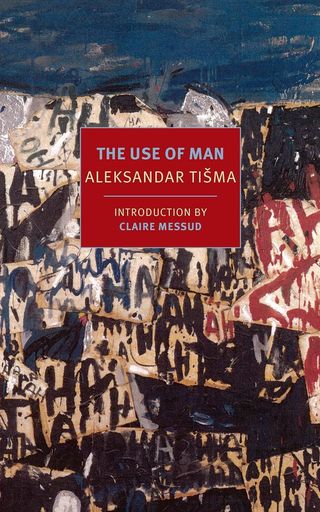
Cover of The Use of Man

The Use of Man

Aleksandar Tisma

Original language: Serbian · Paperback · ISBN 978-1590177266

The Use of Man is set in Novi Sad, a multiethnic city on the Danube near the border between what was then Yugoslavia and Hungary. Before the Second World War, a group of high-school classmates share lessons, friendships, and the ordinary concerns of youth. Among them are Vera, who is half Jewish and of German background; her boyfriend Milinko, a Serb; their friend Sredoje; and their German tutor, referred to as Fräulein. The novel opens near the end of the war, as Sredoje returns to Novi Sad as a Partisan fighter and discovers Fräulein's diary in Vera's abandoned house.

War scatters the group along violently different paths. Vera is sent to a concentration camp. Her cousin Sep joins the Nazis. Milinko enters the resistance. Sredoje adapts to the chaos by becoming a killer. Aleksandar Tišma traces each of these trajectories with close, unsentimental attention, showing how the same small city and the same circle of young people can produce collaborators, victims, resisters, and perpetrators.

When the war ends, survival itself proves difficult to inhabit. Tišma writes about both the open brutality of wartime and the quieter damage that persists afterward, observing his characters with steady precision rather than sentiment. The novel was originally published in Serbian and later translated into several languages.

Plot

The Use of Man starts with an unexpected discovery. World War II is ending. Sredoje Lazukić has been fighting all through it. Now, as one of the victorious Partisans, he has come home to Novi Sad. He visits the house he grew up in. Strangers nervously show him around. He looks up the mother of Milinko, his best friend. Milinko’s girlfriend, Vera, was the daughter of a Jew, a bookish businessman. Her house stands empty and open. Venturing in, Sredoje is surprised to find the diary of the German tutor that Milinko, Vera, and he all shared, Fräulein, who died on the operating table just before the war. Here, however, in a cheap notebook in Vera’s old room, is a record of Fräulein’s lonely days, with the sentimental caption Poésie. . .

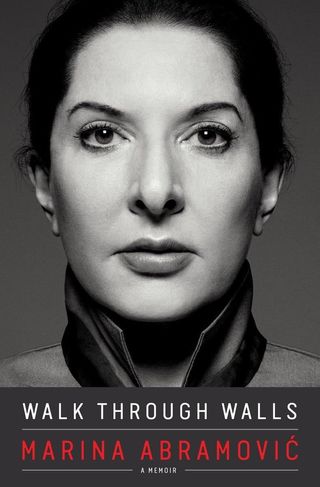
Cover of Walk Through Walls: A Memoir

Walk Through Walls: A Memoir

Marina Abramović

Original language: English · Hardcover · ISBN 978-1101905043

Marina Abramović grew up in postwar Yugoslavia, the daughter of two partisan veterans celebrated under Tito's government. Her mother imposed strict discipline, including a nightly curfew that Abramović obeyed even as an adult already exhibiting work internationally. The memoir traces her path from Belgrade through decades of performance art, a practice in which the artist's own body and endurance serve as the medium. Abramović's pieces have frequently involved physical extremity, testing the boundaries of pain, fatigue, and fear as a means of reaching altered emotional states.

A central thread of the book is her twelve-year partnership with the German-born artist Ulay. The two lived and worked together with very little money, often traveling across Europe in a van. Their collaboration shaped some of Abramović's best-known works, and the memoir follows the relationship from its beginning through its gradual unraveling.

The book also covers her 2010 MoMA retrospective, where she sat silently across from visitors one at a time in a durational performance lasting over 700 hours. More than 750,000 people attended the exhibition. Throughout, Abramović recounts events with a dry humor she attributes to her Balkan upbringing.

Plot

In 2010, more than 750,000 people stood in line at Marina Abramović’s MoMA retrospective for the chance to sit across from her and communicate with her nonverbally in an unprecedented durational performance that lasted more than 700 hours. This celebration of nearly fifty years of groundbreaking performance art demonstrated once again that Marina Abramović is truly a force of nature. The child of Communist war-hero parents under Tito’s regime in postwar Yugoslavia, she was raised with a relentless work ethic. Even as she was beginning to build an international artistic career, Marina lived at home under her mother’s abusive control, strictly obeying a 10 p.m. curfew. But nothing could quell her insatiable curiosity, her desire to connect with people, or her distinctly Balkan sense of humor—all of which informs her art and her life. The beating heart of Walk Through Walls is an operatic love story—a twelve-year collaboration with fellow performance artist Ulay, much of which was spent penniless in a van traveling across Europe—a relationship that began to unravel and came to a dramatic end atop the Great Wall of China.

More from Serbia

See the country page for Serbia for its map, facts and largest cities, or browse books from other countries.

Links go to Amazon; Hookito doesn’t sell books. Know a book that belongs here, or spotted a mistake? Write to submissions@hookito.com.