Hookito

Saudi Arabia · Books

Books from Saudi Arabia
5 books from and about Saudi Arabia: what each is about, the plot, and a note from Professor Kogi.

Cover of An Apartment Called Freedom

An Apartment Called Freedom

Ghazi Al Gosaibi

Original language: Arabic · Paperback · ISBN 978-1138963665

An Apartment Called Freedom follows a young Saudi student living in Cairo during a period of cultural and ideological upheaval. Written by Ghazi Al Gosaibi and first published in 1996, the novel draws on the author's own time in Cairo during the era it depicts, though Al Gosaibi noted that all characters and events are products of his imagination. Even incidents involving real public figures mentioned in the story are presented as fictional.

The narrative centers on questions of identity, political awakening, and personal liberation as the protagonist navigates life in a foreign city. Cairo serves as both backdrop and catalyst, a place where competing ideologies circulate freely and where a young person from the Gulf must sort through unfamiliar pressures and possibilities. The title itself suggests a space where independence can be tested in private, away from the expectations of home.

Al Gosaibi was a Saudi diplomat, poet, and novelist whose career spanned government service and literary work. His writing often explored tensions between tradition and modernity in the Arab world. In this novel, Cairo in a time of change becomes the setting where those tensions play out at an individual, everyday level.

Plot

First published in 1996. The writer was in Cairo in the period with which the novel deals. Nonetheless, all the characters and all the events are the product of his imagination. Furthermore, incidents portraying real personalities mentioned in the novel are also fictional.
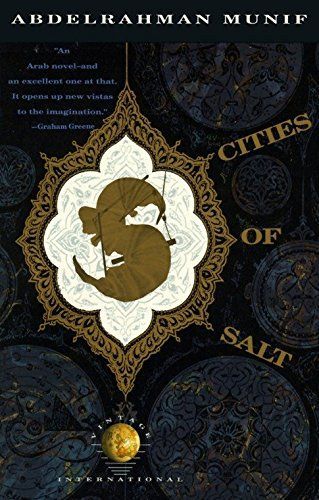
Cover of Cities of Salt

Cities of Salt

Abdul Rahman Munif

Original language: Arabic · Paperback · ISBN 978-0394755267

Cities of Salt follows the people of Wadi al-Uyoun, a small oasis community in an unnamed gulf country, as American oil prospectors arrive and begin reshaping everything around them. Set roughly in the 1930s, the novel opens with a way of life built on desert rhythms and communal knowledge. The foreigners bring machines the local bedouin have never seen before, and much of the early tension comes from their attempts to understand these objects, from bulldozers to radios, through their own frame of reference.

As oil extraction accelerates, the nearby coastal settlement of Harran is transformed into a port city serving American interests. Workers are drawn from surrounding communities, old social structures fracture, and displacement follows. One central figure, Miteb al-Hathal, resists the changes and eventually leads a rebellion among Arab workers. A large cast of bedouin characters carries the story across many years, each thread connecting to the broader pattern of cultural upheaval and foreign control.

Originally published in Beirut in 1984, the novel was banned in several countries, including Saudi Arabia. Munif, a Jordanian novelist who studied oil economics at the University of Belgrade, wrote from direct knowledge of the forces he described. The English translation is by Peter Theroux. Cities of Salt is the first volume of a trilogy.

Plot

Cities of Salt by Abdelrahman Munif is a powerful novel that explores the dramatic transformation of a traditional desert society following the discovery of oil. Set in an unnamed Middle Eastern country, the story portrays the clash between old ways of life and rapid modernization driven by foreign interests. Through vivid imagery and complex characters, Munif highlights themes of displacement, cultural upheaval, and the costs of progress. The novel serves as a sharp critique of colonialism and unchecked development, offering a profound reflection on identity, power, and change in the Arab world.

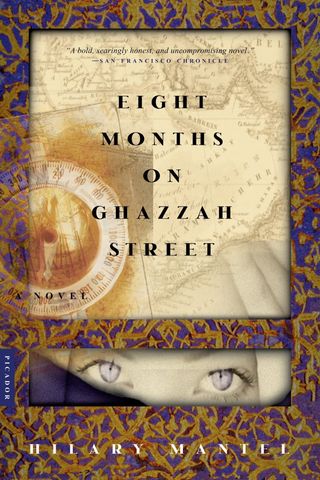
Cover of Eight Months on Ghazzah Street

Eight Months on Ghazzah Street

Hilary Mantel

Original language: English · Paperback · ISBN 978-0274882663

Frances Shore arrives in Jeddah, Saudi Arabia, accompanying her husband on a work contract. She moves into a sublet apartment on Ghazzah Street and expects that patience and openness will help her adjust to an unfamiliar society. Instead, the flat feels airless and dim, and the days stretch out in isolation. Frances fills her time writing in a diary, but her attention keeps drifting to unexplained sounds from the apartment above, sobs carried through the building's pipes, and brief glimpses of figures on the stairwell and rooftop.

When she raises these concerns with neighbors and acquaintances, she is told the upstairs flat is empty and the roof unused. The reassurances do not match what she hears and sees, and the gap between official explanation and private experience steadily widens. Frances begins to question her own perception, uncertain whether the building conceals something real or whether confinement is distorting her judgment.

Hilary Mantel sets the novel in a closed domestic space where cultural codes remain largely unspoken and ordinary social tools lose their grip. The story draws tension from the limits placed on Frances as a foreign woman, the opacity of the world around her, and the slow erosion of confidence that follows when observation is repeatedly denied by those nearby.

Plot

When Frances Shore moves to Saudi Arabia, she settles in a nondescript sublet, sure that common sense and an open mind will serve her well with her Muslim neighbors. But in the dim, airless flat, Frances spends lonely days writing in her diary, hearing the sounds of sobs through the pipes from the floor above, and seeing the flitting shadows of men on the stairwell. It's all in her imagination, she's told by her neighbors; the upstairs flat is empty, and no one uses the roof. But Frances knows otherwise, and day by day, her sense of foreboding grows even as her sense of herself begins to disintegrate.

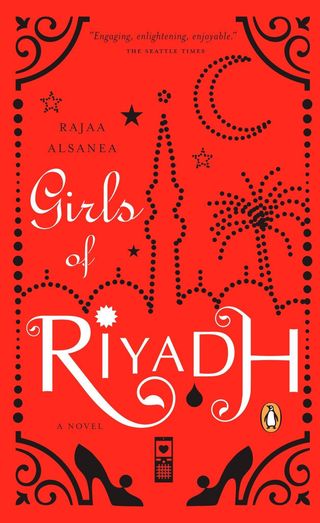
Cover of Girls of Riyadh

Girls of Riyadh

Rajaa Al-Sanea

Original language: Arabic · Paperback · ISBN 978-0143113478

Girls of Riyadh is a debut novel by Rajaa Alsanea, first published in Arabic in 2005. It follows four young women from wealthy families in Riyadh, Saudi Arabia: Qamra, Michelle, Sadim, and Lamis. All are university students navigating questions of love, career, and personal freedom within a society shaped by longstanding cultural and religious customs. The book was banned in Saudi Arabia shortly after its release, though black-market copies circulated widely across the region.

The story is structured as a series of fifty weekly emails sent by an anonymous narrator to the subscribers of an online chat group. Each message, posted after Friday prayers, traces the romantic and social lives of the four women over the course of a year. The characters move between Riyadh and cities abroad, shifting between traditional expectations at home and the habits of a more globalized world. Their daily lives include elements familiar to many young people anywhere, but these routines frequently clash with the conventions of the society they were raised in.

Alsanea uses this fictional email format to examine how education, travel, and access to global culture shape private choices in a city where public life remains tightly regulated. The novel was later translated and published in multiple countries.

Plot

When Rajaa Alsanea boldly chose to open up the hidden world of Saudi women—their private lives and their conflicts with the traditions of their culture—she caused a sensation across the Arab world. Living in restrictive Riyadh but traveling all over the globe, these modern Saudi women literally and figuratively shed traditional garb as they search for love, fulfillment, and their place somewhere in between Western society and their Islamic home.

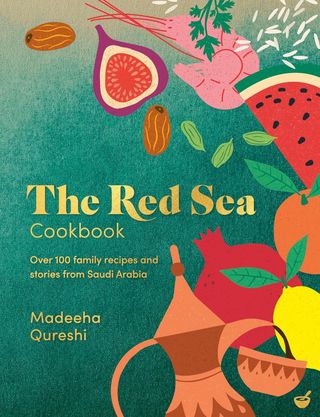
Cover of The Red Sea Cookbook: Over 100 family recipes and stories from Saudi Arabia

The Red Sea Cookbook: Over 100 family recipes and stories from Saudi Arabia

Madeeha Qureshi

Original language: English · Hardcover · ISBN 978-1848994430

The Red Sea Cookbook collects over 100 recipes from across Saudi Arabia, written by Madeeha Qureshi, a MasterChef finalist. The book covers condiments, small plates, salads, main dishes, cakes, baked goods, desserts, and drinks. Qureshi presents each recipe as both authentic to its origins and accessible for home cooks working outside the region, aiming to reflect the range of cooking traditions found across the Arabian Peninsula.

Alongside the recipes, Qureshi shares personal and family stories. The book is shaped in part as a tribute to her father, and cooking serves as a thread connecting generations within her family. Many of the dishes trace how particular ingredients and techniques have traveled through time and across borders, arriving at the table through long histories of trade and migration along the Red Sea coast and beyond.

Saudi Arabia's western coastline stretches roughly 1,800 kilometers along the Red Sea, and the port cities along it have historically linked the peninsula to East Africa, Egypt, and South Asia. The cookbook draws on this geographic position, presenting food as a record of those connections rather than as a sealed national tradition.

Plot

This cookbook is a fascinating and mouth-watering celebration of Saudi Arabia's astonishing culinary diversity and traditions. Madeeha Qureshi presents over 100 easy, generous and heartfelt recipes, which are authentic and modern at the same time. More than this, The Red Sea Cookbook is a daughter’s moving tribute to the redemptive power of cooking and to her father’s memories. Through incredibly delicious condiments, small plates, salads, mains, cakes and bakes, desserts and drinks, explore the historic voyage of ingredients and how food passes through generations. Each recipe brings to life the generosity of the beautiful land and people of Saudi Arabia. This is a one-of-a-kind treasure trove of flavours and aromas.

More from Saudi Arabia

See the country page for Saudi Arabia for its map, facts and largest cities, or browse books from other countries.

Links go to Amazon; Hookito doesn’t sell books. Know a book that belongs here, or spotted a mistake? Write to submissions@hookito.com.