Hookito

Sudan · Books

Books from Sudan

7 books from and about Sudan: what each is about, the plot, and a note from Professor Kogi.

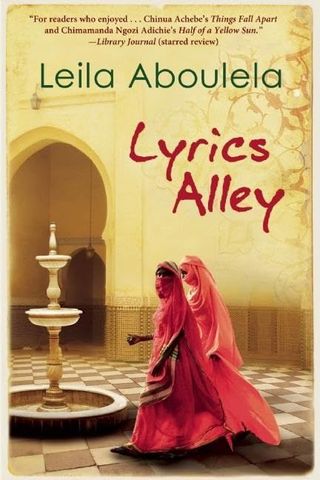
Cover of Lyrics Alley

Lyrics Alley

Leila Aboulela

Original language: English · Paperback · ISBN 978-0802145758

Lyrics Alley is set in 1950s Sudan during the final years of British rule. At its center is the Abuzeid family, whose wealth comes from a large trading firm led by patriarch Mahmoud Bey. His son Nur, expected to inherit the business, suffers a serious accident that leaves him physically diminished and throws the family's plans into disorder. The novel follows the household as it tries to absorb this shock while the country around it moves toward an uncertain independence.

Two of Mahmoud's wives represent opposing responses to the changes underway. Nabilah, the younger wife raised in Egypt, wants to leave Sudan for what she sees as a more modern life. Waheeba, rooted in local customs, lives within traditional boundaries of seclusion and faith. Their friction mirrors a wider national tension between imported modernization and established ways of living. Nur himself occupies a different position altogether, eventually seeking purpose outside the expectations set by either parent.

Leila Aboulela draws on a specific social world: prosperous Sudanese merchant families whose connections stretched across borders to Egypt and beyond. The story is grounded in domestic detail, from household hierarchies to the texture of daily commerce along the Nile, placing personal loss against a landscape of political transition.

Plot

In 1950's Sudan, the powerful Abuzeid dynasty has amassed a fortune through their trading firm. With Mahmoud Bey at its helm, they can do no wrong. But when Mahmoud's son, Nur, the brilliant, handsome heir to the business empire, suffers a debilitating accident, the family stands divided in the face of an uncertain future. As British rule nears its end, the country is torn between modernizing influences and the call of traditions past—a conflict reflected in the growing tensions between Mahmoud's two wives: the younger, Nabilah, longs to return to Egypt and escape "backward-looking" Sudan; while Waheeba lives traditionally behind veils and closed doors. It's not until Nur asserts himself outside the cultural limits of his parents that his own spirit and the frayed bonds of his family begin to mend.
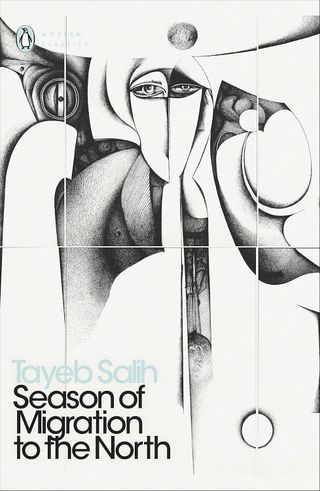
Cover of Season of Migration to the North

Season of Migration to the North

Tayeb Salih

Original language: English · Paperback · ISBN 978-0141187204

A young Sudanese narrator returns to his home village after years of study in Europe, expecting the rhythm of life along the Nile to be unchanged. Instead he meets a newcomer, Mustafa Sa'eed, whose past in London after the First World War is unlike anything the village knows. As their friendship grows, Mustafa describes his years abroad, where English society treated him as an exotic novelty.

Mustafa's account darkens as admiration turns into manipulation and violence, and as the colonial relationship between Sudan and Britain plays out in personal, destructive ways. The consequences of his time in London eventually reach into the daily life of the village. The narrator stands between two positions: the returnee who knows Europe from the inside, and the villager watching his community unsettled.

Tayeb Salih's novel, first published in Arabic in 1966, sets the intimate scale of a village at a bend of the Nile against the wider forces of colonial rule. The narrative moves between Sudan and England, using both settings to trace how people absorb, resist, and are reshaped by foreign power.

Plot

When a young man returns to his village in the Sudan after many years studying in Europe, he finds that among the familiar faces there is now a stranger - the enigmatic Mustafa Sa''eed. As the two become friends, Mustafa tells the younger man the disturbing story of his own life in London after the First World War. Lionized by society and desired by women as an exotic novelty, Mustafa was driven to take brutal revenge on the decadent West and was, in turn, destroyed by it. Now the terrible legacy of his actions has come to haunt the small village at the bend of the Nile.

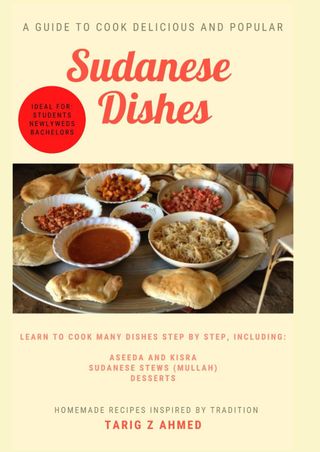
Cover of Sudanese Dishes: A Guide To Cook Delicious and Popular Dishes

Sudanese Dishes: A Guide To Cook Delicious and Popular Dishes

Tarig Zeinelabdeen Ahmed

Original language: English · Paperback · ISBN 979-8325192623

Sudanese Dishes by Tarig Zeinelabdeen Ahmed is a cookbook organized around everyday Sudanese food, arranged in sections that follow the structure of a meal: staples, main dishes, desserts, snacks with sides and sauces, and drinks. The recipes are described as mostly straightforward to prepare, making the collection accessible to cooks unfamiliar with Sudanese ingredients and techniques. Each recipe is paired with a link to a YouTube video by other creators demonstrating how the dish is made, adding a visual reference alongside the written instructions.

The book addresses two overlapping audiences. For readers encountering Sudanese cooking for the first time, it serves as an introductory guide to a cuisine that remains underrepresented in English-language cookbook publishing. For members of the Sudanese diaspora, it gathers dishes associated with home cooking and everyday life in Sudan, foods that may be familiar from childhood but not always written down in recipe form. By collecting these preparations in one place, the book functions as both a practical kitchen reference and a record of culinary knowledge that has often been passed along informally rather than through printed sources.

Plot

If you are new to the cuisine then this a perfect guide of mostly simple to make dishes and drinks. If you are from the Sudanese diaspora then this book will remind you of the dishes that defined your upbringing. The book is organised similar to a menu with the recipes grouped as follows: - Staples - Main Dishes - Desserts - Snacks, Sides and Sauces - Drinks Each recipe comes with a video link from a Youtube video by others demonstrating the cooking of the recipe.

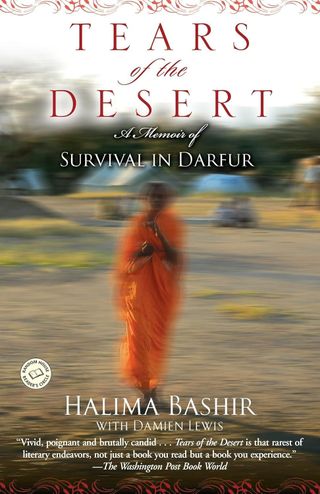
Cover of Tears of the Desert: A Memoir of Survival in Darfur

Tears of the Desert: A Memoir of Survival in Darfur

Halima Bashir

Original language: English · Paperback · ISBN 978-0345510464

Halima Bashir grew up in western Sudan as a member of the Zaghawa tribe. Her father, a cattle herder, recognized the value of formal schooling and arranged for her to study far from their rural home. Bashir proved a strong student, eventually entering medical training. By the age of twenty-four she had returned to her village as its first qualified doctor.

The memoir traces how the conflict in Darfur overtook Bashir's life and community. Janjaweed Arab militias carried out violent attacks against the Zaghawa, frequently supported by the Sudanese military. In early 2004, fighters assaulted Bashir's village and the surrounding area, raping forty-two schoolgirls and their teachers. Bashir treated the survivors, some as young as eight. Faced with what she had witnessed, she chose to speak openly about the attacks. That decision brought severe consequences for her personally.

The book is described as the first memoir by a woman caught up in the Darfur war. Bashir recounts her childhood, her grandmother's influence, the racial discrimination she encountered during her education, and the steady escalation of violence that transformed the region. Her account moves from a close family portrait in the Sudanese desert to the broader reality of a humanitarian crisis.

Plot

Born into the Zaghawa tribe in the Sudanese desert, Halima Bashir received a good education away from her rural surroundings (thanks to her doting, politically astute father) and at twenty-four became her village’s first formal doctor. Yet not even Bashir’s degree could protect her from the encroaching conflict that would consume her homeland. Janjaweed Arab militias savagely assaulted the Zaghawa, often with the backing of the Sudanese military. Then, in early 2004, the Janjaweed attacked Bashir’s village and surrounding areas, raping forty-two schoolgirls and their teachers. Bashir, who treated the traumatized victims, some as young as eight years old, could no longer remain quiet. But breaking her silence ignited a horrifying turn of events.

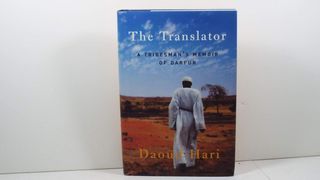
Cover of The Translator: A Tribesman's Memoir of Darfur

The Translator: A Tribesman's Memoir of Darfur

Daoud Hari

Original language: English · Hardcover · ISBN 978-1400067442

Daoud Hari grew up in the Darfur region of Sudan as a member of the Zaghawa people. His childhood included camel racing across the desert, village weddings, and evening games after the day's work. In 2003, that life was destroyed when Sudanese-government-backed militias and helicopter gunships began attacking villages across Darfur, burning homes and killing civilians. Hari's own village was among those destroyed, and his family was scattered.

Rather than take up arms, Hari used his knowledge of languages, learned in school, as a practical tool. He began working as a translator and guide for international journalists and aid workers who arrived in the region. This put him at serious personal risk: the Sudanese government had banned foreign reporters from operating in Darfur, and anyone caught helping them faced severe punishment. Despite this, Hari continued escorting outsiders into conflict zones so they could document what was happening on the ground.

The memoir recounts both the texture of Hari's earlier life and the conditions he moved through during the crisis, including periods spent helping displaced survivors locate food, water, and safe passage. It also describes his eventual capture by government forces.

Plot

The young life of Daoud Hari–his friends call him David–has been one of bravery and mesmerizing adventure. He is a living witness to the brutal genocide under way in Darfur. Hari, a Zaghawa tribesman, grew up in a village in the Darfur region of Sudan. As a child he saw colorful weddings, raced his camels across the desert, and played games in the moonlight after his work was done. In 2003, this traditional life was shattered when helicopter gunships appeared over Darfur’s villages, followed by Sudanese-government-backed militia groups attacking on horseback, raping and murdering citizens and burning villages. Ancient hatreds and greed for natural resources had collided, and the conflagration spread.

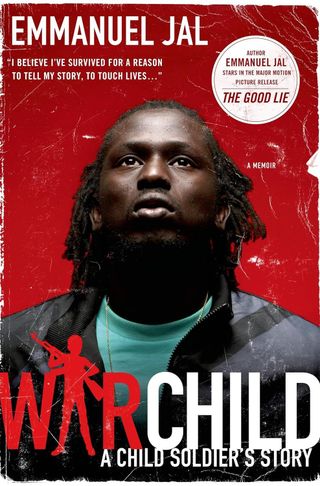
Cover of War Child: A Child Soldier's Story

War Child: A Child Soldier's Story

Emmanuel Jal

Original language: English · Paperback · ISBN 978-0312602970

Emmanuel Jal's memoir begins in a small Sudanese village in the mid-1980s, where he lived as a seven-year-old with his parents, aunts, uncles and siblings. Sudan's civil war gradually closed in as the Islamic government pushed to control tribal lands holding water, oil and other resources. His family moved again and again in search of safety, but the conflict overtook them.

During that upheaval Jal was parted from his mother; word reached him afterwards that she had been killed. His father, Simon, rose through the Christian Sudanese Liberation Army to become a powerful commander in its fight for Sudan's freedom. Jal himself was then conscripted into the same force, one of about 10,000 child soldiers, and he spent close to ten years inside two separate civil wars.

He survived, and was later adopted by a British aid worker, a change that moved him away from armed conflict and toward music. He recorded and released his own album, which included a hip-hop single that reached number one in Kenya, and has since performed with international musicians and used that visibility to support children whose lives were shaped by war.

Plot

In the mid-1980s, Emmanuel Jal was a seven year old Sudanese boy, living in a small village with his parents, aunts, uncles, and siblings. But as Sudan’s civil war moved closer—with the Islamic government seizing tribal lands for water, oil, and other resources—Jal’s family moved again and again, seeking peace. Then, on one terrible day, Jal was separated from his mother, and later learned she had been killed; his father Simon rose to become a powerful commander in the Christian Sudanese Liberation Army, fighting for the freedom of Sudan. Soon, Jal was conscripted into that army, one of 10,000 child soldiers, and fought through two separate civil wars over nearly a decade.

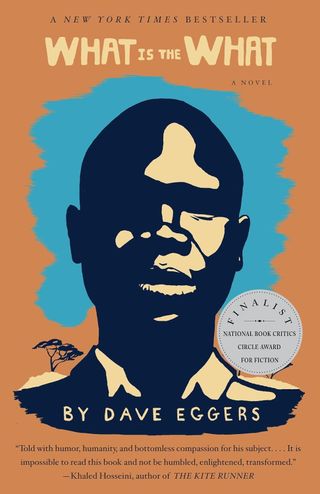
Cover of What is the What

What is the What

Dave Eggers

Original language: English · Paperback · ISBN 978-0307385901

What is the What is a biographical novel by Dave Eggers, built around the life of Valentino Achak Deng. As a young boy in southern Sudan, Deng was separated from his family when his village was attacked. He became one of an estimated 17,000 children later known as the Lost Boys of Sudan, forced to walk hundreds of miles across the borders of several countries. Along the way, the children faced militias, aerial bombardment, harsh desert terrain, and predatory wildlife. The novel follows this long displacement through Deng's eyes, giving shape to years of walking, waiting, and surviving.

Deng eventually spent time in a refugee camp in Kenya before being resettled in Atlanta in 2001. The American chapters of the book explore what arrival in a new country actually looks like: practical difficulties, unfamiliar systems, loneliness, and small moments of unexpected humor alongside continued hardship. Eggers worked closely with Deng to construct the narrative, and the result sits between novel and testimony, using fictional techniques to carry a factual life story.

The book shifts between Sudan, Kenya, and the United States, covering roughly two decades. Its structure moves back and forth in time, placing the reader inside both the long trek across East Africa and the quieter dislocations of resettlement.

Plot

The epic novel based on the life of Valentino Achak Deng who, along with thousands of other children —the so-called Lost Boys—was forced to leave his village in Sudan at the age of seven and trek hundreds of miles by foot, pursued by militias, government bombers, and wild animals, crossing the deserts of three countries to find freedom. When he finally is resettled in the United States, he finds a life full of promise, but also heartache and myriad new challenges. Moving, suspenseful, and unexpectedly funny, What Is the What is an astonishing novel that illuminates the lives of millions through one extraordinary man.

More from Sudan

See the country page for Sudan for its map, facts and largest cities, or browse books from other countries.

Links go to Amazon; Hookito doesn’t sell books. Know a book that belongs here, or spotted a mistake? Write to submissions@hookito.com.