Hookito

Sierra Leone · Books

Books from Sierra Leone
5 books from and about Sierra Leone: what each is about, the plot, and a note from Professor Kogi.

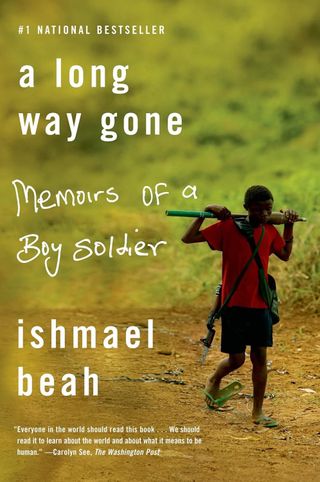
Cover of Long Way Gone

Long Way Gone

Ishmael Beah

Original language: English · Paperback · ISBN 978-0374531263

Ishmael Beah was twelve years old when armed rebels attacked his community in Sierra Leone, forcing him to flee through a country reshaped by civil war. By thirteen he had been recruited into the government army. His memoir recounts how a boy who loved hip-hop and dancing was turned into a participant in violence, given drugs and weapons alongside other children.

At sixteen, Beah was removed from the fighting by UNICEF and placed in a rehabilitation center. The memoir follows his slow process of confronting what he had done and learning to function outside of war. Staff at the center worked with former child soldiers to help them recover a sense of identity beyond combat. Beah later moved to the United States, where he completed his education and wrote this account.

The book is among the first published memoirs written by a former child soldier. It draws on direct experience rather than journalism or fiction, and it addresses the estimated 300,000 children serving in armed conflicts worldwide at the time of writing. Sierra Leone's war, which lasted from 1991 to 2002, displaced roughly two million people.

Plot

This is how wars are fought now: by children, hopped-up on drugs and wielding AK-47s. Children have become soldiers of choice. In the more than fifty conflicts going on worldwide, it is estimated that there are some 300,000 child soldiers. Ishmael Beah used to be one of them. How does one become a killer? How does one stop? Child soldiers have been profiled by journalists, and novelists have struggled to imagine their lives. But until now, there has not been a first-person account from someone who came through this hell and survived.

Cover of Seeking Freedom

Seeking Freedom

Yema Lucilda Hunter

Original language: English · Paperback · ISBN 978-0995639959

Seeking Freedom, originally published under the title Road to Freedom, follows a group of formerly enslaved Africans who were recruited to fight for the British side during the American War of Independence. After Britain's defeat, they were relocated to Nova Scotia, where they formed communities but continued to face harsh conditions and limited prospects. In 1792, more than a thousand of these settlers chose to leave Nova Scotia and cross the Atlantic to West Africa, supported by a company established by British philanthropists.

The novel is narrated from the perspective of one of these settlers and traces the founding of Freetown, the colony that would eventually become the capital of Sierra Leone. Life in West Africa brought its own difficulties. The settlers contended with an unfamiliar and demanding climate, tensions with local populations, and friction with officials of the sponsoring company. Yema Lucilda Hunter grounds the story in the gap between the promise of self-determination and the practical realities the settlers encountered on arrival. The book follows the community as it tries to build something durable while navigating pressures from multiple directions at once.

Plot

Seeking a better life and more meaningful freedom, in 1792, over one thousand of them left Nova Scotia to resettle in West Africa, with the support of a company formed by British philanthropist. Freetown, the colony they founded, later became the capital of Sierra Leone. Told from the point of view of one of the settlers, Seeking Freedom is the stirring tale of their return to Africa and of their struggles to realise their hopes in a trying climate, amid sometimes hostile indigenes, unexpected dangers and conflicts with officials of the company that sponsored them.

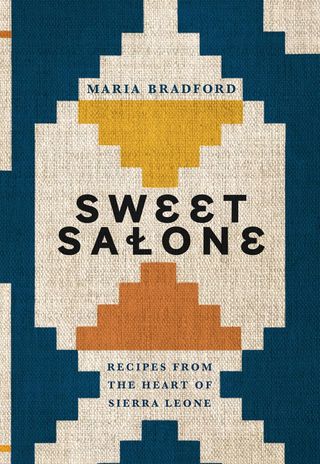
Cover of Sweet Salone: Recipes from the Heart of Sierra Leone

Sweet Salone: Recipes from the Heart of Sierra Leone

Maria Bradford

Original language: English · Hardcover · ISBN 978-1787137967

Sweet Salone is a cookbook rooted in Sierra Leone, a small West African country whose food traditions reflect centuries of cultural exchange. Maria Bradford draws on recipes passed down from her grandmother, centering the book on the traditional meals she grew up eating. The dishes sit within what Bradford describes as Afro-fusion cooking, combining local techniques and flavors with broader influences that have shaped Sierra Leonean kitchens over time.

Key ingredients recur throughout the book: tamarind, beans, sesame seeds, mango, chili, and pineapple. These form the base of a cuisine that Bradford presents as distinct from neighboring West African food traditions, shaped by the particular history and geography of Sierra Leone. The word Salone is a common Krio-language name for the country, used widely in everyday speech.

Beyond recipes, the book includes location photography that documents daily life in Sierra Leone. Bradford uses these images to connect the food to the places and people it comes from, offering context for the dishes rather than treating them in isolation. The result is a cookbook that also functions as a portrait of a national food culture still relatively unfamiliar to many readers outside West Africa.

Plot

As a small country on the west coast of Africa, throughout its history Sierra Leone has always embraced diversity – and this willingness to discover and grow has shaped Sierra Leone's rich food culture. Forged by history, people and place, the cuisine is completely unique. Maria Bradford's recipes, inspired by her grandmother's cooking, have at their heart the traditional meals of Maria's childhood, introducing delicious Afro-fusion dishes and flavors. Characterized by key ingredients including tamarind, beans, sesame seeds, mango, chili and pineapple, in Maria's hands these ingredients become something truly special. Moreover, she tells the story of the cuisine and the people, shedding light on everyday life through exclusive location photography.

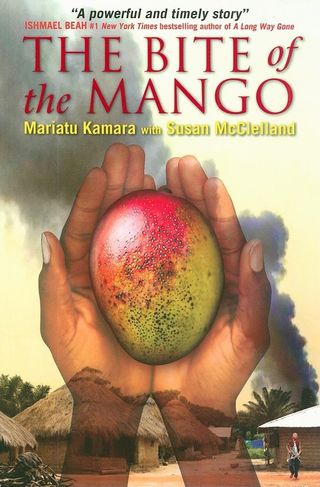
Cover of The Bite of the Mango

The Bite of the Mango

Mariatu Kamara, Susan McClelland

Original language: English · Paperback · ISBN 978-1554511587

Mariatu Kamara grew up in a small rural village in Sierra Leone, where rumors of rebel attacks felt like a distant worry. At twelve, while walking to a neighboring village, she was intercepted by armed rebel soldiers, many of them no older than children. They tortured her and cut off both her hands. Written with Susan McClelland, this memoir recounts how she survived the aftermath and made her way through the countryside.

With no parents or surviving adult guardian, Kamara reached a refugee camp and turned to begging on the streets of Freetown, the capital, to stay alive. The title refers to the mango she ate soon after the attack, her first food since the violence. Holding the fruit without hands marked both her will to live and the scale of what she had lost.

The book won a Next Generation Indie Book Award in 2009. It is set against the Sierra Leone civil war, which lasted from 1991 to 2002 and involved widespread attacks on civilians, including deliberate mutilation. Kamara later became a UNICEF Special Representative for Children and Armed Conflict.

Plot

As a child in a small rural village in Sierra Leone, Mariatu Kamara lived peacefully surrounded by family and friends. Rumors of rebel attacks were no more than a distant worry. But when 12-year-old Mariatu set out for a neighboring village, she never arrived. Heavily armed rebel soldiers, many no older than children themselves, attacked and tortured Mariatu. During this brutal act of senseless violence they cut off both her hands. Stumbling through the countryside, Mariatu miraculously survived. The sweet taste of a mango, her first food after the attack, reaffirmed her desire to live, but the challenge of clutching the fruit in her bloodied arms reinforced the grim new reality that stood before her. With no parents or living adult to support her and living in a refugee camp, she turned to begging in the streets of Freetown.

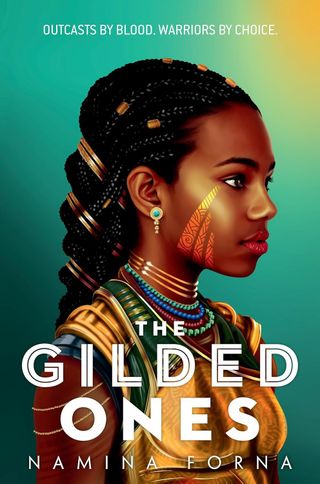
Cover of The Gilded Ones

The Gilded Ones

Namina Forna

Original language: English · Hardcover · ISBN 978-1984848697

In Namina Forna's fantasy novel, sixteen-year-old Deka awaits a blood ceremony that every young person in her village must undergo. Red blood means acceptance into the community. Any other color marks the person as impure. Deka, already set apart by an unusual intuitive ability she cannot explain, hopes desperately that the ritual will finally let her belong. When her blood runs gold instead of red, she faces punishment that her society considers fitting for those deemed corrupt.

A stranger arrives with an unexpected offer: Deka can leave her village and join a military force composed entirely of girls whose blood also ran gold. These fighters, called alaki, possess near-immortal bodies and singular abilities. The empire needs them to confront a threat that ordinary soldiers cannot handle. Deka accepts, trading the only home she has known for a walled capital city where she must train alongside other alaki for open warfare.

The story is set in a world shaped by rigid purity codes enforced through biological markers. Forna, who was raised in Sierra Leone, builds a society where color of blood determines social standing, and where the people cast out as impure may turn out to hold power that the existing order cannot account for.

Plot

Sixteen-year-old Deka lives in fear and anticipation of the blood ceremony that will determine whether she will become a member of her village. Already different from everyone else because of her unnatural intuition, Deka prays for red blood so she can finally feel like she belongs. But on the day of the ceremony, her blood runs gold, the color of impurity–and Deka knows she will face a consequence worse than death. Then a mysterious woman comes to her with a choice: stay in the village and submit to her fate, or leave to fight for the emperor in an army of girls just like her. They are called alaki–near-immortals with rare gifts. And they are the only ones who can stop the empire's greatest threat.

More from Sierra Leone

See the country page for Sierra Leone for its map, facts and largest cities, or browse books from other countries.

Links go to Amazon; Hookito doesn’t sell books. Know a book that belongs here, or spotted a mistake? Write to submissions@hookito.com.