Hookito

Senegal · Books

Books from Senegal

7 books from and about Senegal: what each is about, the plot, and a note from Professor Kogi.

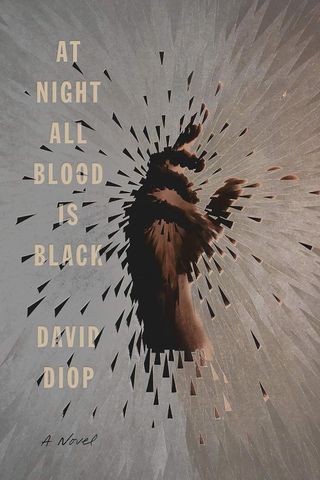
Cover of At Night All Blood Is Black

At Night All Blood Is Black

David Diop

Original language: French · Hardcover · ISBN 978-0374266974

Alfa Ndiaye has never left his village in Senegal before the day he is sent to fight for France during the First World War. Classified as a so-called Chocolat soldier, he serves alongside his childhood friend Mademba Diop in the trenches of the Western Front. When Mademba is gravely wounded in No Man's Land and begs Alfa to end his suffering, Alfa cannot bring himself to do it. That failure becomes the seed of something that overtakes him entirely.

Consumed by guilt and grief, Alfa begins crossing into enemy lines each night, killing a German soldier and returning with a severed hand. His comrades first treat these acts with awe, then with growing fear. Whispers spread that Alfa is not simply brave but something else: a sorcerer, a devourer of souls. The men around him begin looking for ways to remove him from the front and from his accumulating trophies.

David Diop draws on West African oral storytelling patterns to shape Alfa's voice, which circles back on itself with repetition and incantation. The novel is short and tightly compressed, set between the trenches and fragments of memory from Alfa's life before the war. It was originally published in French under the title Frère d'âme.

Plot

Alfa Ndiaye is a Senegalese man who, never before having left his village, finds himself fighting as a so-called “Chocolat” soldier with the French army during World War I. When his friend Mademba Diop, in the same regiment, is seriously injured in battle, Diop begs Alfa to kill him and spare him the pain of a long and agonizing death in No Man’s Land. Unable to commit this mercy killing, madness creeps into Alfa’s mind as he comes to see this refusal as a cruel moment of cowardice. Anxious to avenge the death of his friend and find forgiveness for himself, he begins a macabre ritual: every night he sneaks across enemy lines to find and murder a blue-eyed German soldier, and every night he returns to base, unharmed, with the German’s severed hand. At first his comrades look at Alfa’s deeds with admiration, but soon rumors begin to circulate that this super soldier isn’t a hero, but a sorcerer, a soul-eater. Plans are hatched to get Alfa away from the front, and to separate him from his growing collection of hands, but how does one reason with a demon, and how far will Alfa go to make amends to his dead friend?
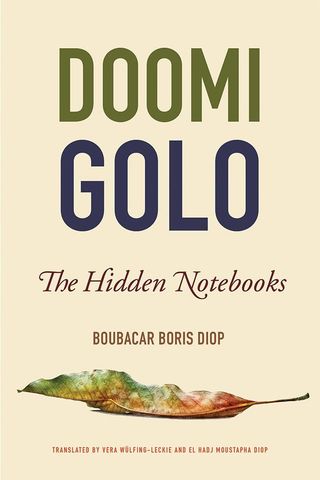

Cover of Doomi Golo―The Hidden Notebooks

Doomi Golo―The Hidden Notebooks

Boubacar Boris Diop

Original language: French · Paperback · ISBN 978-1611862140

Doomi Golo is the work of Senegalese author Boubacar Boris Diop, originally written in Wolof and later translated into English. It is recognized as the first novel translated from Wolof to English. The story centers on Nguirane Faye, an aging man who sits beneath a mango tree in his courtyard, writing notebooks addressed to his grandson Badou. Badou has migrated to an unknown destination, and Faye has received no letters from him. Faye is convinced his grandson will eventually return but equally certain he himself will not be alive to see it. The notebooks become his only way of speaking across that distance.

Faye carries the grief of losing his only son, Assane Tall, and the absence of Badou deepens that loss. He fills seven notebooks with memories, observations, and reflections. Six of these are open to the reader, while the seventh is kept sealed, reserved for Badou alone. The structure of the novel mirrors a musical composition, with recurring themes, repetitions, and wandering passages that circle back on themselves. The narrative moves between loose, conversational stretches and tightly connected threads, giving the book a shape that feels both spontaneous and carefully composed.

Plot

With a narrative structure that beautifully imitates the movements of a musical piece, Diop relates Faye’s trauma of losing his only son, Assane Tall, which is compounded by his grandson Badou’s migration to an unknown destination. While Faye feels certain that his grandson will return one day, he also is convinced that he will no longer be alive by then. Faye spends his days sitting under a mango tree in the courtyard of his home, reminiscing and observing his surroundings. He speaks to Badou through his seven notebooks, six of which are revealed to the reader, while the seventh, the “Book of Secrets,” is highly confidential and reserved for Badou’s eyes only. In the absence of letters from Badou, the notebooks form the only possible means of communication between the two, carrying within them tunes and repetitions that give this novel its unusual shape: loose and meandering on the one hand, coherent and tightly interwoven on the other.

Cover of God's Bits Of Wood

God's Bits Of Wood

Sembène Ousmane

Original language: French · Paperback · ISBN 978-0435909598

God's Bits of Wood by Sembène Ousmane is a novel based on the real railway strike that took place along the Dakar-Niger line in 1947 and 1948. Workers on the colonial railway in French West Africa walked off the job to demand better wages and equal treatment. The strike affected communities across Senegal and into Mali, and the novel follows several of those communities as the stoppage stretches on for months.

Ousmane builds the story around a large cast of characters rather than a single protagonist. Women play central roles, organizing support networks and confronting both colonial authorities and local resistance to change. The novel tracks how hunger, repression, and isolation test the solidarity of the strikers and their families, while also reshaping relationships within the communities themselves.

First published in French in 1960 under the title Les bouts de bois de Dieu, the book draws on a real historical event to explore questions of labor, collective action, and colonial power in West Africa. Ousmane, who was Senegalese, later became widely known as a filmmaker as well as a novelist.

Plot

God’s Bits of Wood is a powerful novel about the 1947–48 railway strike in Senegal and Mali, showing how African workers and their families unite to fight colonial exploitation. Through vivid storytelling and strong female characters, Sembène Ousmane portrays solidarity, sacrifice, and the collective struggle for dignity and justice.

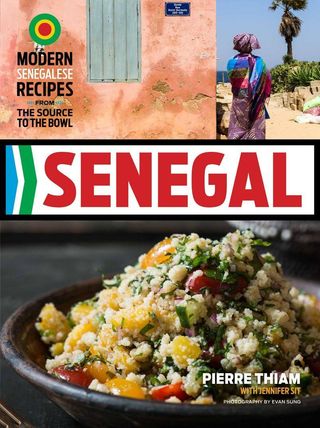
Cover of Senegal: Modern Senegalese Recipes from the Source to the Bowl

Senegal: Modern Senegalese Recipes from the Source to the Bowl

Pierre Thiam

Original language: English · Hardcover · ISBN 978-1891105555

Pierre Thiam's Senegal is a cookbook grounded in the country's ingredients, cooking methods, and the people who grow, catch, and prepare its food. The book covers a wide range of dishes, from slow-cooked stews and grilled seafood with citrus-pepper salsas to salads and preparations built around ancient grains and dark leafy greens. Thiam, who previously wrote Yolele!, uses this second book to go further into the techniques and produce that define Senegalese cooking.

Each chapter connects recipes to the farmers, fishermen, and home cooks behind them. Thiam profiles food producers across the country, placing their work within Senegal's cultural and historical setting. The book addresses both traditional foodways and present-day challenges facing the people who sustain them, including questions about agriculture, fishing, and food security.

Senegal sits on the westernmost point of mainland Africa, and its cuisine draws on coastal seafood, Sahelian grains, and tropical vegetables. The recipes in this book reflect that geographic range, offering a practical window into a food culture shaped by landscape, trade routes, and daily life in homes and markets throughout the country.

Plot

Learn to cook the vibrant, diverse food of Senegal, such as soulful stews full of meat falling off the bone; healthy ancient grains and dark leafy greens with superfood properties; fresh seafood grilled over open flame, served with salsas singing of bright citrus and fiery peppers; and lots of fresh vegetables and salads bursting with West African flavors. Pierre’s first book, Yolele!, introduced Senegalese food to the world, and now Senegal takes a deeper dive, showcasing the ingredients and techniques elemental to Senegalese cooking, the food producers at the heart of its survival, and the unique cultural and historical context it exists in. You’ll meet local farmers, fishermen, humble food producers, and home cooks each with stories to tell and recipes to share and savor. You won’t just be learning to make a few dishes, you’ll learn about the Senegalese people, the stories of their past, and importantly, the issues they face today and tomorrow.

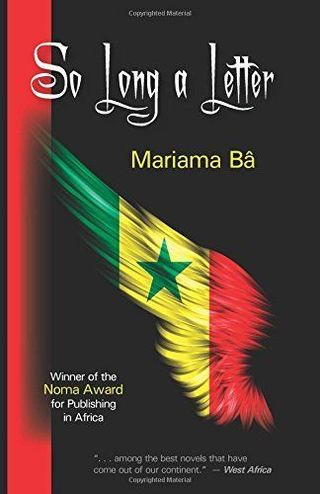
Cover of So Long a Letter

So Long a Letter

Mariama Ba

Original language: French · Paperback · ISBN 978-1577668060

So Long a Letter by Mariama Ba takes the form of an extended letter written by Ramatoulaye Fall, a Senegalese schoolteacher, to her closest friend Aissatou. Recently widowed, Ramatoulaye looks back over the years of her marriage and its turning point: her husband's decision to take a second wife. The letter moves between tender and painful memories as she tries to make sense of what that change meant for her life.

Drawing on semi-autobiographical material, the book portrays the position of educated Muslim women in Senegal. Ramatoulaye is articulate and professionally independent, yet she lives within social structures where polygyny, marriage to more than one wife, is accepted and where women's standing remains unequal to men's. The strain between personal conviction and communal expectation runs through the narrative. She does not reject tradition outright, hoping instead that older customs and newer freedoms might hold together.

Written in French and later translated into English, the book appears on the list titled Africa's 100 Best Books of the 20th Century. At short length it holds a wide span of feeling and social observation within a compact form shaped by a single voice.

Plot

The brief narrative, written as an extended letter, is a sequence of reminiscences—some wistful, some bitter—recounted by recently widowed Senegalese schoolteacher Ramatoulaye Fall. Addressed to a lifelong friend, Aissatou, it is a record of Ramatoulaye's emotional struggle for survival after her husband betrayed their marriage by taking a second wife. This semi-autobiographical account is a perceptive testimony to the plight of educated and articulate Muslim women. Angered by the traditions that allow polygyny, they inhabit a social milieu dominated by attitudes and values that deny them status equal to men. Ramatoulaye hopes for a world where the best of old customs and new freedom can be combined.

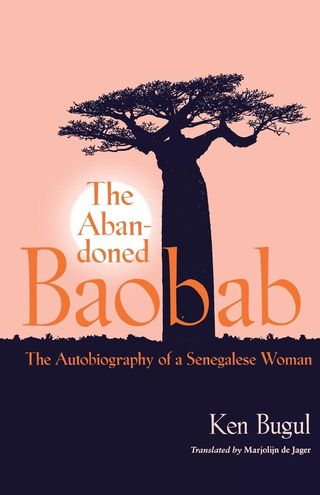
Cover of The Abandoned Baobab

The Abandoned Baobab

Ken Bugul

Original language: French · Paperback · ISBN 978-0813927374

The Abandoned Baobab is an autobiographical narrative by the Senegalese writer who publishes as Ken Bugul, a Wolof phrase meaning roughly the person no one wants. Her editor suggested the pen name because of how candid the material was. The book follows her early years after she was separated from her mother, raised by relatives in Dakar and educated in the French colonial school system.

That schooling gradually loosened her ties to her family and her Muslim upbringing while drawing her toward Europe. Academic success opened a path to study in Belgium, a country she approached as a promised land. There she found herself treated as an exotic object, and the account records a decline into alcohol, drugs and prostitution, set down in plain and direct language without excuse.

The closing section brings her back to Senegal, where the past she left behind cannot simply be entered again and a new life has to be assembled from what remains. The title points to the baobab, a broad, long-lived tree common across Senegal and often a gathering point in village life. The book first appeared in French in 1982 as Le Baobab fou.

Plot

Abandoned by her mother and sent to live with relatives in Dakar, the author tells of being educated in the French colonial school system, where she comes gradually to feel alienated from her family and Muslim upbringing, growing enamored with the West. Academic success gives her the opportunity to study in Belgium, which she looks upon as a "promised land." There she is objectified as an exotic creature, however, and she descends into promiscuity, alcohol and drug abuse, and, eventually, prostitution. (It was out of concern on her editor’s part about her candor that the author used the pseudonym Ken Bugul, the Wolof phrase for "the person no one wants.") Her return to Senegal, which concludes the book, presents her with a past she cannot reenter, a painful but necessary realization as she begins to create a new life there.

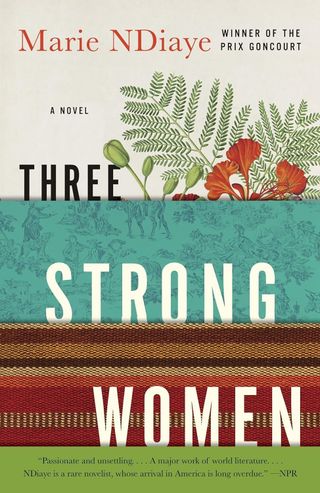
Cover of Three Strong Women

Three Strong Women

Marie NDiaye

Original language: French · Paperback · ISBN 978-0307741332

Three Strong Women follows three women whose lives move between Senegal and France. Norah, a lawyer born in France, travels to Senegal after her estranged father summons her to help resolve a crisis caused by his own failings. Fanta, a teacher content with her life in Dakar, leaves it behind to follow her boyfriend back to France, where his growing depression and sense of displacement erode their shared existence. Khady Demba, a young widow cast out by her late husband's family, sets off toward France with nothing but the name of a distant relative.

Marie NDiaye structures the novel as three linked narratives, each centered on a woman who refuses to surrender her dignity. The stories are distinct in setting and circumstance but connected by the pull between West Africa and Europe, and by the social pressures that bear down on women who lack stable footing in either place. NDiaye won the Prix Goncourt for this novel, becoming the first black woman to receive the prize.

The prose moves at a deliberate pace, tracing each character's inner life in close detail. NDiaye treats ordinary moments with the same careful attention she gives to crisis, building tension through accumulation rather than sudden turns.

Plot

The story of three women who say no: Norah, a French-born lawyer who finds herself in Senegal, summoned by her estranged father to save another victim of his paternity; Fanta, who leaves a contented life as a teacher in Dakar to follow her boyfriend back to France, where his depression and dislocation poison everything; and Khady, a penniless widow put out by her husband's family with nothing but the name of a distant cousin in France. As these three lives intertwine, each woman manages an astonishing feat of self-preservation against those who have made themselves the fastest-growing and most-reviled people in Europe. In Marie NDiaye's stunning narration we see the progress by which ordinary women discover unimagined reserves of strength.

More from Senegal

See the country page for Senegal for its map, facts and largest cities, or browse books from other countries.

Links go to Amazon; Hookito doesn’t sell books. Know a book that belongs here, or spotted a mistake? Write to submissions@hookito.com.