Hookito

Suriname · Books

Books from Suriname

4 books from and about Suriname: what each is about, the plot, and a note from Professor Kogi.

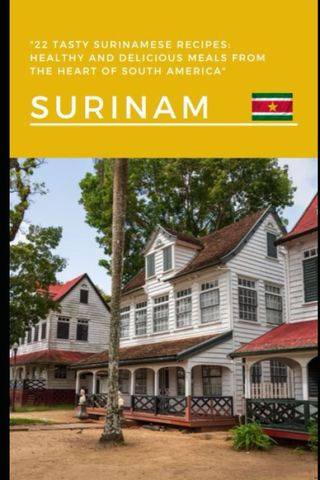
Cover of 22 Tasty Surinamese Recipes

22 Tasty Surinamese Recipes

Allan van Brussel

Original language: English · Paperback · ISBN 979-8375606507

Suriname sits on the northern coast of South America, bordered by Guyana, French Guiana, and Brazil. Its food reflects centuries of contact between Indigenous, West African, Indian, Javanese, Chinese, and Dutch communities, producing a kitchen that draws from several continents at once. Allan van Brussel's cookbook collects 22 recipes from this tradition, covering both well-known and everyday dishes.

The book is designed for accessibility. Recipes use ingredients that are widely available outside Suriname, and the instructions aim to be quick enough for weeknight cooking. Each recipe includes a short note on the dish's origins and cultural background, connecting the food to the people and history behind it.

Beyond the recipes themselves, the book offers context about Suriname as a country. For a place with fewer than 600,000 people, Suriname has an unusually varied food culture, shaped by the different groups who settled there over several hundred years. Van Brussel's collection serves as a compact introduction to that range, organized around dishes that can be prepared at home with relatively little effort.

Plot

With 22 delicious and authentic recipes, this cookbook provides an excellent opportunity for anyone to experience the rich and diverse flavors of Surinamese food. Whether you're a seasoned cook or just starting out, the recipes in this book are designed to be simple and quick to prepare, making them perfect for busy weeknights. The ingredients used in the recipes are widely available, making it easy to recreate the dishes at home. In addition to the recipes, the Surinamese Cookbook also provides a glimpse into the culture and history of Suriname, making it a valuable resource for anyone interested in learning more about this fascinating country. The recipes are accompanied by short descriptions of the dishes' origins and cultural significance, giving readers a deeper appreciation of the food and the people who create it.
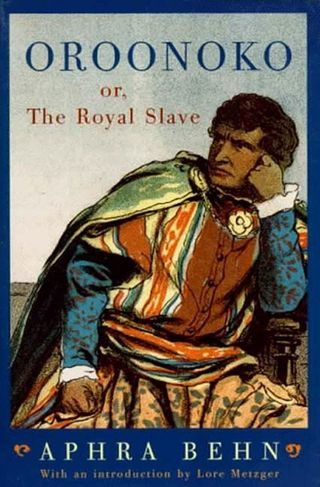
Cover of Oroonoko: or, The Royal Slave

Oroonoko: or, The Royal Slave

Aphra Behn

Original language: English · Paperback · ISBN 978-0393312058

Aphra Behn, often described as one of the first professional English women writers, published Oroonoko in 1688. It follows an African prince, grandson of a king, who loves the daughter of the king's general. The king claims the young woman for his harem, and she is sold into slavery. When Oroonoko tries to follow, an English slave trader captures him and carries him to the same West Indian island.

Much of the story unfolds in the colony of Surinam, where Behn claimed to have spent time. She blends travel writing, romance, and memoir to show a man of high standing reduced to property. The story sets his sense of honor against the cruelty and broken promises of a colonial society that thought itself civilized. His resistance to enslavement forms the central tension.

Behn wrote as English involvement in the Atlantic slave trade was expanding. Oroonoko was reprinted often, imitated by other writers, and later used by campaigners against the slave trade. Thomas Southerne adapted it for the London stage in 1695. The text sits at a crossing point between prose romance and the early English novel.

Plot

The first woman in England to make her living by writing, Aphra Behn (1640-1689) combines memoir, exotic travel narrative, and romance to tell the story of the noble Oroonoko, a black man who begins life as a prince and ends it as a slave. The tale depicts the overthrow of a hero by a civilization that considers itself superior to him. Taken up by reformers in the long battle against the slave trade, reprinted, and imitated countless times, Oroonoko remains a popular tale that introduces powerful themes onto the literary stage.

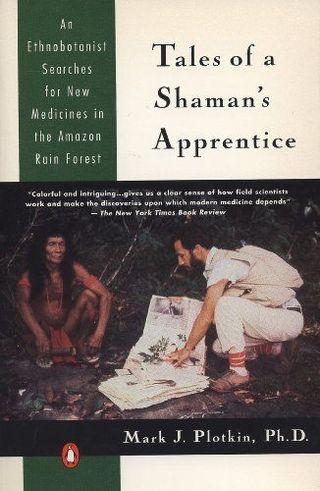
Cover of Tales of a Shaman's Apprentice

Tales of a Shaman's Apprentice

Mark J. Plotkin

Original language: English · Paperback · ISBN 978-0140129915

Mark J. Plotkin is an ethnobotanist, a scientist who studies how indigenous peoples use plants. Over more than a decade, he traveled through the tropical forests of Suriname, Brazil, and Venezuela, working alongside the Trio, Wayana, and Yanomamo peoples to document their knowledge of medicinal and psychoactive plants. This book recounts nine of those expeditions, describing encounters with shamans who served as healers and keepers of botanical expertise passed across generations.

Plotkin's fieldwork unfolded against two converging pressures. Deforestation and development were destroying the ecosystems where these plants grew, while younger generations in indigenous communities were increasingly drawn toward Western material culture, leaving shamanic traditions without successors. The book describes specific plant discoveries, including research into curare, a potent arrow poison, and epena, a hallucinogenic snuff used in spiritual rituals. It also records the healing ceremonies Plotkin observed and the trust he gradually built with the shamans who shared their knowledge.

A recurring concern throughout is the question of how plant-based medical knowledge held by indigenous communities might be preserved and, where possible, patented in ways that direct revenue back to those communities rather than away from them.

Plot

For more than a decade, Dr. Plotkin raced against time to harvest and record new plants before the rain forests' fragile ecosystems succumb to overdevelopment—and before the Indians abandon their own culture and learn for the seductive appeal of Western material culture. Tales of a Shaman's Apprentice relates nine of the author's quests, taking the reader along on a wild odyssey as he participates in healing rituals; discovers the secret of curare, the lethal arrow poison that kills in minutes; tries the hallucinogenic snuff epena that enables the Indians to speak with their spirit world, and earns the respect and fellowship of the mysterious shamans as he proves that he shares both their endurance and their reverence for the rain forest.

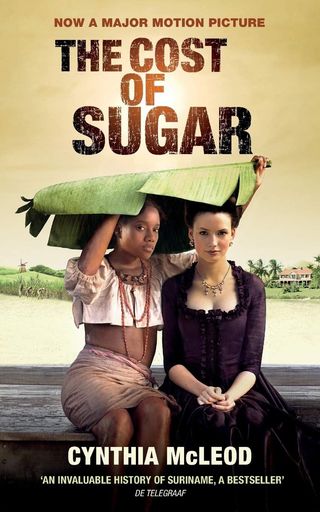
Cover of The Cost of Sugar

The Cost of Sugar

Cynthia McLeod

Original language: Dutch · Paperback · ISBN 978-1908446275

The Cost of Sugar is set in eighteenth-century Suriname, then a Dutch plantation colony on the northern coast of South America. Cynthia McLeod, one of Suriname's best-known novelists, follows the lives of two stepsisters, Elza and Mini-mini, whose different positions in colonial society expose the workings of a world organized around sugar production. Elza is white and European-born; Mini-mini is of mixed heritage. Their fates diverge sharply as each encounters the rigid racial hierarchy that governs everyday life on and around the plantations.

The novel presents plantation society without softening its conditions. Enslaved people, free people of color, plantation owners, and colonial administrators all appear within a system where sugar dictates social order, labor, punishment, and opportunity. McLeod draws on the specific geography and history of Suriname, a colony that remained under Dutch control long after most of South America shifted to other European powers or independence.

Originally published in Dutch as Hoe duur was de suiker? in 1987, the book became widely read in Suriname and the Netherlands. McLeod, born in Paramaribo, is a historian by training, and her fiction draws on archival sources from the colonial period.

Plot

Cynthia McLeod presents a frank exposé of life in a Dutch colony when sugar was king and demanded the consummate allegiance of all—colonists and slaves—regardless of the tragic consequence.

More from Suriname

See the country page for Suriname for its map, facts and largest cities, or browse books from other countries.

Links go to Amazon; Hookito doesn’t sell books. Know a book that belongs here, or spotted a mistake? Write to submissions@hookito.com.