
Hookito

Turkmenistan · Books

Books from Turkmenistan

3 books from and about Turkmenistan: what each is about, the plot, and a note from Professor Kogi.

Cover of Sachak: Traditional Turkmen Recipes in a Modern Kitchen

Sachak: Traditional Turkmen Recipes in a Modern Kitchen

Gyulshat Esenova

Original language: English · Hardcover · ISBN 978-0578814056

Sachak is a cookbook by Gyulshat Esenova that presents fifty traditional Turkmen recipes adapted for use in a modern kitchen. The book pairs its recipes with photographs, maps, and short passages on the cultural and historical background of Turkmenistan, a Central Asian country bordered by the Caspian Sea, Iran, Afghanistan, and Uzbekistan. Much of Turkmen cuisine remains relatively unfamiliar outside the region, and this collection aims to make its dishes accessible to cooks elsewhere.

The recipes are set within scenes of daily and ceremonial life in Turkmenistan. Esenova describes village evenings as desert heat gives way to cooler nights, the atmosphere of a traditional Turkmen sacrifice rite, and the activity of local bazaars during the hot summer months. Photographs contributed by photographers from Europe, the United States, and Canada show landscapes, historical sites, and the natural surroundings tied to each part of the book.

The title, Sachak, signals the book's focus on a food culture shaped by nomadic and settled traditions in arid terrain. By combining practical kitchen instructions with geographic and cultural context, the collection connects its dishes to the specific places and customs they come from.

Plot

It contains 50 traditional recipes, photographs, maps, and some brief cultural and historical information about Turkmenistan. While reading this book, one will be able to visit a village in the evening, when the heat releases its grip and gives way to a cool night, immerse oneself into the atmosphere of the traditional Turkmen rite of sacrifice, enjoy a typical hot summer day in Turkmenistan, and visit a bustling bazaar. The book is filled with beautiful photographs of Turkmenistan’s nature and history provided by photographers from Europe, the USA, and Canada. This allows one to plunge into the world of exotic culture and cuisine largely undiscovered in the West.

Cover of The Tale of Aypi

The Tale of Aypi

Ak Welsapar

Original language: Russian · Paperback · ISBN 978-1784379841

A Turkmen fishing village on the Caspian coast faces the threat of losing its land. The authorities want to seize the territory but dress up the confiscation as a voluntary decision by the villagers themselves. Against this political pressure, one fisherman decides to resist and defend the community's claim to its ancestral shore. His stand is linked to an older story of injustice: centuries earlier, a young woman was put to death there unjustly, and that act remains unresolved.

The novel intertwines political realism with supernatural elements. The spirit of the executed woman reappears during the village's crisis, bringing a force of retribution that falls on the men of the community. Ak Welsapar, a Turkmen author, uses this ghost narrative to connect past violence with present-day dispossession, setting both against the landscape of the Caspian Sea. The relationships among the characters reflect broader tensions between human authority and natural or mystical forces.

The story operates on two timescales at once. One is immediate and concrete: bureaucratic land seizure disguised as local consent. The other reaches back centuries, carrying forward an unpunished act of cruelty. By placing these alongside each other, the novel frames questions about collective memory, resistance, and the costs passed from one generation to the next.

Plot

The Tale of Aypi follows the fate of a group of Turkmen fishermen dwelling on the coast of the Caspian Sea. The fear of losing their ancestral home looms over the entire village. This injustice is being made to look like a voluntary initiative on the part of the fishermen themselves, whilst the ruling powers cynically attempt to confiscate their land. One brave fisherman from the village rises up to confront them and fights for his native shore, as a response to an act of cruelty inflicted on a defenseless young woman centuries ago. This unjustly executed soul returns as a ghost during this troubled time to exact terrible revenge on the men of the village. The relationships among the characters mirror the eternal opposition between the forces of nature, with the intervention of mystical forces ratcheting up the tension

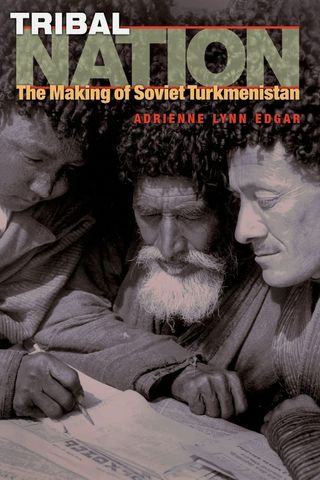
Cover of Tribal Nation: The Making of Soviet Turkmenistan

Tribal Nation: The Making of Soviet Turkmenistan

Adrienne Lynn Edgar

Original language: English · Paperback · ISBN 978-0691127996

On October 27, 1991, the Turkmen Soviet Socialist Republic declared independence from the Soviet Union. Seven decades earlier, the territory that became Turkmenistan had no centralized state. Its population was organized along tribal lines, with loyalties running through kinship networks rather than national institutions. Adrienne Lynn Edgar traces how Soviet authorities set out to build a modern nation from this fragmented landscape, imposing borders, a literary language, and political structures where none had existed in their intended form.

Edgar draws on both Soviet archives and Turkmen-language sources, a combination rarely attempted in Western scholarship on Central Asia. Her account examines how Moscow's nationality policies interacted with local social patterns, including tribal identity, Islamic practice, and the status of women. Rather than treating Turkmen people as passive recipients of Soviet planning, the book follows the ways local leaders, intellectuals, and communities responded to, shaped, and sometimes resisted the project of nation-building.

The result is a study that addresses large questions about nationalism and colonialism through the specific case of one Central Asian republic. It remains one of the few works to approach the Soviet multinational state primarily from a non-Russian viewpoint.

Plot

On October 27, 1991, the Turkmen Soviet Socialist Republic declared its independence from the Soviet Union. Hammer and sickle gave way to a flag, a national anthem, and new holidays. Seven decades earlier, Turkmenistan had been a stateless conglomeration of tribes. What brought about this remarkable transformation?

More from Turkmenistan

See the country page for Turkmenistan for its map, facts and largest cities, or browse books from other countries.

Links go to Amazon; Hookito doesn’t sell books. Know a book that belongs here, or spotted a mistake? Write to submissions@hookito.com.