Hookito

Trinidad and Tobago · Books

Books from Trinidad and Tobago
7 books from and about Trinidad and Tobago: what each is about, the plot, and a note from Professor Kogi.

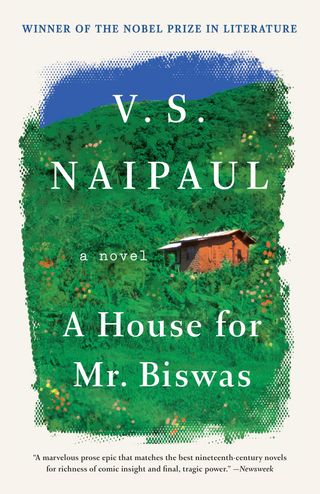
Cover of A House for Mr. Biswas

A House for Mr. Biswas

V. S. Naipaul

Original language: English · Paperback · ISBN 978-0375707162

Mohun Biswas is born into misfortune in rural Trinidad. After the drowning death of his father, an event for which the boy is held partly responsible, he is passed between relatives and temporary homes with little say over his own life. As he grows older, a single ambition takes shape: to own a house, a small but real piece of the island that belongs to him alone.

Marriage pulls him further from that goal. When he enters the large, hierarchical Tulsi family, he finds himself dependent on in-laws whose household runs by collective authority. Mr. Biswas resists this arrangement with stubborn, often comic defiance, picking fights over dignity and small freedoms while struggling to earn enough to stand on his own. His attempts to acquire property meet repeated setbacks, and the novel follows decades of these efforts across changing addresses and shifting family dynamics in Trinidad.

V. S. Naipaul drew on his own father's experiences for the story, setting it against the social landscape of the Trinidad Indian community during the mid-twentieth century. The book traces how colonial structures, family obligation, and limited resources shape one person's long effort to secure something permanent.

Plot

In his forty-six short years, Mr. Mohun Biswas has been fighting against destiny to achieve some semblance of independence, only to face a lifetime of calamity. Shuttled from one residence to another after the drowning death of his father, for which he is inadvertently responsible, Mr. Biswas yearns for a place he can call home. But when he marries into the domineering Tulsi family on whom he indignantly becomes dependent, Mr. Biswas embarks on an arduous– and endless–struggle to weaken their hold over him and purchase a house of his own.

Cover of Lonely Londoners

Lonely Londoners

Sam Selvon

Original language: English · Paperback · ISBN 978-0141188416

The Lonely Londoners follows a group of West Indian immigrants arriving in 1950s London, stepping off the boat train at Waterloo Station into a cold, unfamiliar city. Moses Aloetta, a Trinidadian who has spent years in the capital, serves as an informal guide to newcomers. Among them is Henry Oliver, nicknamed Sir Galahad, whose confidence and energy contrast sharply with Moses's weary outlook. Other characters include Cap, a drifter surviving on charm and borrowed goodwill, and Tolroy, whose entire Jamaican family arrives unannounced to join him.

Sam Selvon, born in Trinidad, wrote the novel in a modified Trinidadian English that carries the rhythms of Caribbean speech throughout. The narrative moves between episodes of daily life: searching for rooms, facing landlords who turn away Black tenants, finding work, and gathering in Moses's basement to swap stories. London itself is a persistent presence, its fog, its parks, its Underground, and its indifferent crowds shaping the characters' experience as much as any single event does.

The book sits between comedy and loneliness. Galahad's stubborn optimism and the group's sharp humor run alongside moments of isolation and casual hostility from the city around them. Selvon published the novel in 1956, drawing on his own move from Trinidad to London in 1950.

Plot

At Waterloo Station, hopeful new arrivals from the West Indies step off the boat train, ready to start afresh in 1950s London. There, homesick Moses Aloetta, who has already lived in the city for years, meets Henry 'Sir Galahad' Oliver and shows him the ropes. In this strange, cold and foggy city where the natives can be less than friendly at the sight of a black face, has Galahad met his Waterloo? But the irrepressible newcomer cannot be cast down. He and all the other lonely new Londoners - from shiftless Cap to Tolroy, whose family has descended on him from Jamaica - must try to create a new life for themselves. As pessimistic 'old veteran' Moses watches their attempts, they gradually learn to survive and come to love the heady excitements of London.

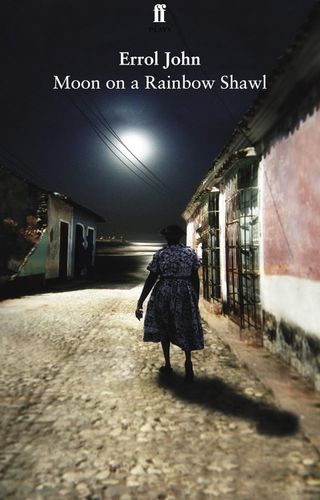
Cover of Moon on a Rainbow Shawl

Moon on a Rainbow Shawl

Erroll John

Original language: English · Paperback · ISBN 978-0571290109

Moon on a Rainbow Shawl is a play by Trinidadian actor and playwright Erroll John, set in a crowded tenement yard in Port-of-Spain, Trinidad. The story takes place in a shared outdoor space where residents live closely together, their private lives constantly visible and audible to one another. Calypso music, hymns, drums, and street vendors create a layered soundscape around the daily friction and warmth of the yard's inhabitants.

At the centre of the action is Ephraim, a young man working a job he sees as a dead end. He is determined to leave Trinidad for England, viewing emigration as his best chance at a different future. His relationship with Rosa, who wants him to stay, puts personal desire in direct tension with his plans to go. Around them, neighbours argue, drink, care for each other, and dream of something beyond their present circumstances. The play captures both the vitality and the confinement of life in this small communal space.

John wrote the play drawing on life in mid-twentieth-century Trinidad, a period when many Caribbean people were emigrating to Britain. The yard functions as a single stage set where public and private life overlap constantly, giving the ensemble cast equal weight alongside Ephraim's central dilemma.

Plot

Esther - if yer have yer head screw on right - No matter where yer go - One night - some time - Yer reach up - yer touch that moon. For the teeming populace of Old Mack's cacophonous yard in Port-of-Spain, Trinidad, it's a cheek by jowl existence lived out on a sweltering public stage. Snatches of calypso compete with hymn tunes, drums and street cries as neighbours drink, brawl, pass judgment, make love, look out for each other and crave a better life. But Ephraim is no dreamer and nothing, not even the seductive Rosa, is going to stop him escaping his dead-end job for a fresh start in England.

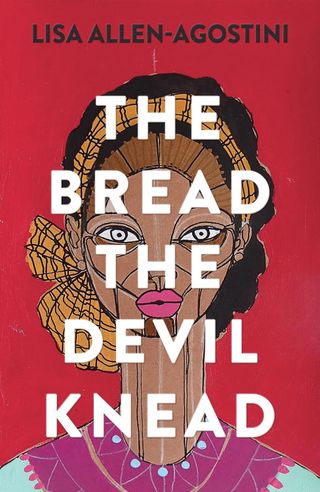
Cover of The Bread the Devil Knead

The Bread the Devil Knead

Lisa Allen-Agostini

Original language: English · Paperback · ISBN 978-1912408993

Alethea Lopez is a woman approaching forty who runs a boutique in Port of Spain, the capital of Trinidad and Tobago. She presents a composed, independent exterior, but privately she hides the physical marks left by an abusive partner. She has also begun an affair with her boss, adding another layer of risk and complication to a life already shaped by secrecy. The novel is narrated in Alethea's own voice, written in Trinidadian English that grounds the story in the rhythms and texture of the island.

A turning point arrives when Alethea witnesses a woman killed by a jealous lover. That act of violence forces her to confront what her own situation could become. As the story moves forward, she begins to revisit memories she suppressed long ago, tracing a line from her childhood to the patterns she has accepted as an adult. The novel unfolds against the backdrop of Trinidad's national festival season and its surrounding music culture, placing questions of gender violence and racism within a specific, living social landscape.

Lisa Allen-Agostini sets the story's difficult subject matter inside daily, recognizable detail rather than melodrama. The portrait of Alethea is built through her observations, choices, and the language she uses to describe her own life.

Plot

Alethea Lopez is about to turn 40. Fashionable, feisty and fiercely independent, she manages a boutique in Port of Spain, but behind closed doors she’s covering up bruises from her abusive partner and seeking solace in an affair with her boss. When she witnesses a woman murdered by a jealous lover, the reality of her own future comes a little too close to home. Bringing us her truth in an arresting, unsparing Trinidadian voice, Alethea unravels memories repressed since childhood and begins to understand the person she has become. Her next step is to decide the woman she wants to be.

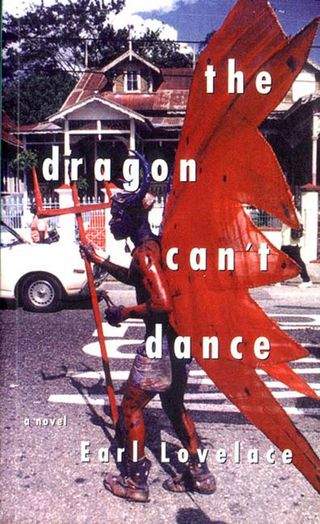
Cover of The Dragon Can't Dance

The Dragon Can't Dance

Earl Lovelace

Original language: English · Paperback · ISBN 978-0892552726

On Calvary Hill, a shantytown above Port of Spain, residents pass most of the year unnoticed by the rest of Trinidad. Carnival changes that. For a few days they take the streets and become someone. Aldrick Prospect turns into a dragon in a costume he prepares for months. Sylvia becomes a princess, Fisheye leads a steel band, and Philo, a calypso songwriter, finally draws a crowd.

The pressures arrive with outside money. A business sponsors Fisheye's steel band. Philo records a hit song and moves toward respectability. Sylvia leaves the Hill with a prosperous older man. For Aldrick, the changes hollow out the masquerade. Costumes and performances once carried identity and defiance; now their power feels borrowed. Warrior contests give way to entertainment shaped for visitors.

Earl Lovelace follows Aldrick and others on the Hill as they try to convert the illusion of power into something real, moving from street performance toward an armed confrontation with consequences that reach beyond Carnival week. The novel looks at how a community organized around one season of ritual holds together when that ritual is bought and sold.

Plot

The people of the shantytown Calvary Hill, usually invisible to the rest of society, join the throng and flaunt their neighborhood personas in masquerade during Carnival. Aldrick, the dashing "king of the Hill," becomes a glorious, dancing dragon; his lovely Sylvia, a princess; Fisheye, rebel idealist, a fierce steel band contestant; and Philo, Calypso songwriter, a star. Then a business sponsors Fisheye's band, Philo gets a hit song, and Sylvia leaves the Hill with a prosperous older man. For Aldrick, it will take one more masquerade―this time, involving guns and hostages―before the illusion of power becomes reality.

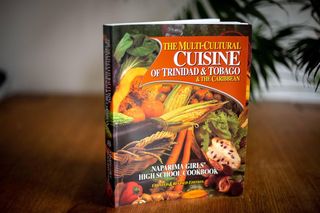
Cover of The Multi-Cultural Cuisine of Trinidad & Tobago & the Caribbean

The Multi-Cultural Cuisine of Trinidad & Tobago & the Caribbean

Naparima Girls' School

Original language: English · Paperback · ISBN 978-9768173652

The Multi-Cultural Cuisine of Trinidad and Tobago and the Caribbean is a cookbook compiled by Naparima Girls' School, a secondary school in San Fernando, Trinidad. It gathers over 500 recipes representing the varied food traditions found across the twin-island nation, including Creole, East Indian, Chinese, Spanish, English, and Syrian Lebanese dishes, along with preparations from other Caribbean islands. Many of these recipes have been passed through families over several generations with only small changes along the way.

The collection reflects the particular demographic mix of Trinidad and Tobago, where successive waves of migration brought cooking techniques and ingredients from South Asia, China, the Middle East, West Africa, and Europe into close contact. Each recipe includes suggestions for alternative ingredients, a practical choice for cooks who may not have access to every item outside the Caribbean. The book contains 32 colour photographs illustrating finished dishes.

Naparima Girls' School has long been associated with this cookbook, which serves as both a kitchen reference and a record of how the country's ethnic communities have shaped its everyday food. The range of traditions covered in a single volume makes it an unusually broad survey of one small nation's cooking.

Plot

Many of the recipes have been handed down from generation to generation and have altered little with time. Recipes included are Creole, East Indian, Chinese, Spanish, English, Syrian Lebanese (middle eastern) as well as those of other Caribbean islands. With more than 500 recipes and 32 colored photographs, this book is a comprehensive guide to Trinidad and Tobago cuisine. Alternative ingredient also offered with each recipe.

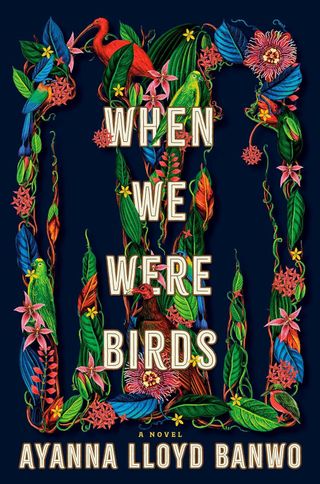
Cover of When We Were Birds

When We Were Birds

Ayanna Lloyd Banwo

Original language: English · Hardcover · ISBN 978-0385547260

In the hills above Port of Spain, where the city presses against Trinidad's rainforest, a young woman named Yejide watches her mother die. With that death comes an inheritance she did not ask for: in each generation of the St Bernard family, one woman is chosen to guide the souls of the dead into the afterlife. Yejide, shaped by years of her mother's neglect and resentment, wants to refuse the role entirely.

Darwin grew up in rural Trinidad, raised by a devout Rastafarian mother whose faith forbids contact with death. He has never attended a funeral or seen a body. When economic pressure drives him to take the only work available, digging graves in the city's cemetery, he crosses a boundary his mother spent his whole life enforcing. The job pulls him into a world he was taught to avoid, and eventually into proximity with Yejide and the St Bernard legacy.

Ayanna Lloyd Banwo's debut novel draws on Trinidadian spiritual traditions and the geography of Port of Spain to build a story where two characters, each bound by inherited rules about death, find their paths converging. The narrative moves between Yejide's hilltop house and the cemetery grounds, connecting questions of obligation, family, and what the living owe the dead.

Plot

In the old house on a hill, where the city meets the rainforest, Yejide’s mother is dying. She is leaving behind a legacy that now passes to Yejide: one St Bernard woman in every generation has the power to shepherd the city’s souls into the afterlife. But after years of suffering her mother’s neglect and bitterness, Yejide is looking for a way out. Raised in the countryside by a devout Rastafarian mother, Darwin has always abide by the religious commandment not to interact with death. He has never been to a funeral, much less seen a dead body. But when the only job he can find is grave digging, he must betray the life his mother built for him in order to provide for them both.

More from Trinidad and Tobago

See the country page for Trinidad and Tobago for its map, facts and largest cities, or browse books from other countries.

Links go to Amazon; Hookito doesn’t sell books. Know a book that belongs here, or spotted a mistake? Write to submissions@hookito.com.