Hookito

United States · Books

Books from United States
43 books from and about United States: what each is about, the plot, and a note from Professor Kogi.

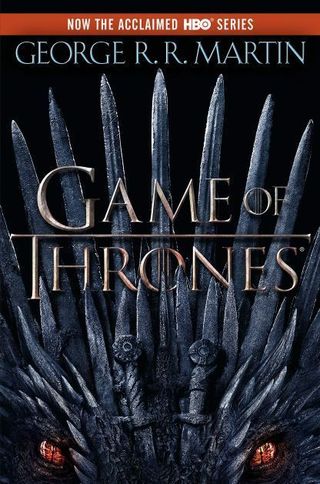
Cover of A Game of Thrones (A Song of Ice and Fire, Book 1)

A Game of Thrones (A Song of Ice and Fire, Book 1)

George R. R. Martin

Original language: English · Paperback · ISBN 978-0553386790

A Game of Thrones opens George R. R. Martin's fantasy series A Song of Ice and Fire. It is set in a world where seasons last years or decades, and a long summer is turning toward winter. At the centre are the Starks of Winterfell, whose lord, Eddard Stark, is called south to serve as Hand of the King after his predecessor dies in unclear circumstances. He leaves behind his wife Catelyn, their children, and his illegitimate son Jon Snow.

The novel divides its attention among several points of view. In the capital, King's Landing, Eddard enters a court shaped by the wealthy Lannisters, including Queen Cersei and her brothers Jaime and Tyrion. Far north, an ancient barrier called the Wall separates the settled kingdoms from wild country where poorly understood forces stir. Across the sea, the exiled Targaryen siblings Viserys and Daenerys plan their own claim to the throne.

Martin builds the book from rotating chapters, each anchored to one character, so events arrive filtered through one person's limited knowledge. Family loyalty, political calculation, and personal survival pull against one another, while the geography, from cold northern strongholds to open plains overseas, keeps the separate storylines distinct. Publishers Weekly named it a best book of 1996.

Plot

Winter is coming. Such is the stern motto of House Stark, the northernmost of the fiefdoms that owe allegiance to King Robert Baratheon in far-off King’s Landing. There Eddard Stark of Winterfell rules in Robert’s name. There his family dwells in peace and comfort: his proud wife, Catelyn; his sons Robb, Brandon, and Rickon; his daughters Sansa and Arya; and his bastard son, Jon Snow. Far to the north, behind the towering Wall, lie savage Wildings and worse—unnatural things relegated to myth during the centuries-long summer, but proving all too real and all too deadly in the turning of the season. Yet a more immediate threat lurks to the south, where Jon Arryn, the Hand of the King, has died under mysterious circumstances. Now Robert is riding north to Winterfell, bringing his queen, the lovely but cold Cersei, his son, the cruel, vainglorious Prince Joffrey, and the queen’s brothers Jaime and Tyrion of the powerful and wealthy House Lannister—the first swordsman without equal, the second a dwarf whose stunted stature belies a brilliant mind. All are heading for Winterfell and a fateful encounter that will change the course of kingdoms. Meanwhile, across the Narrow Sea, Prince Viserys, heir of the fallen House Targaryen, which once ruled all of Westeros, schemes to reclaim the throne with an army of barbarian Dothraki—whose loyalty he will purchase in the only coin left to him: his beautiful yet innocent sister, Daenerys.
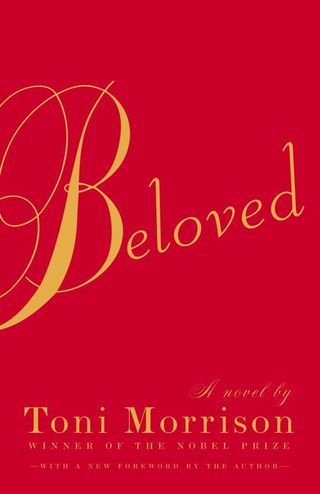
Cover of Beloved

Beloved

Toni Morrison

Original language: English · Paperback · ISBN 978-1400033416

Beloved is set in Ohio after the American Civil War and follows Sethe, a woman who escaped slavery yet remains bound by what she survived. She lives at the edge of town with her daughter Denver and her mother-in-law, Baby Suggs, in a house haunted by her baby, who died without a name and whose gravestone carries only the word Beloved.

Eighteen years after her escape, the farm she fled, called Sweet Home, still presses into daily life. Paul D, once enslaved on the same farm, arrives and begins to speak with Sethe about captivity and their brief glimpses of freedom. Then a young woman who calls herself Beloved appears, and the line between past and present starts to give way.

Morrison shapes the novel around the different ways slavery keeps acting on each member of the household: Denver's fear of leaving the house, Baby Suggs' exhaustion of spirit, and Sethe's daily effort to hold the past at bay. Memory, naming, and love take on physical force here. The book received the 1988 Pulitzer Prize for Fiction.

Plot

Sethe was born a slave and escaped to Ohio, but eighteen years later she is still not free. Sethe has too many memories of Sweet Home, the beautiful farm where so many hideous things happened. And Sethe’s new home is haunted by the ghost of her baby, who died nameless and whose tombstone is engraved with a single word: Beloved.

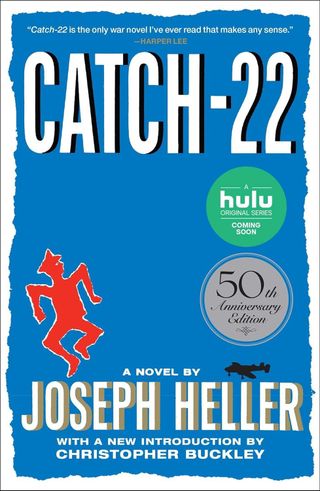
Cover of Catch-22

Catch-22

Joseph Heller

Original language: English · Paperback · ISBN 978-1451626650

Catch-22, published by Joseph Heller, is set during the final months of World War II on an American bomber squadron base off the coast of Italy. The central figure is Yossarian, a bombardier who is angry and afraid because thousands of strangers are trying to kill him in combat. His frustration, however, is directed less at the enemy than at his own military command, which repeatedly raises the number of missions airmen must complete before they can be sent home.

The title refers to a circular bureaucratic rule that traps servicemen in an impossible bind. A pilot who keeps flying dangerous missions can be declared insane, but the moment he asks to stop flying, his request is taken as proof of rational thinking, which means he must continue. The rule feeds on itself: no matter what a person does, the system has already closed the exit. Heller uses this loop as the engine of the novel, building dark comedy out of official logic pushed past the point of reason.

The story moves between comic and grim episodes, with a large cast of officers and enlisted men whose individual schemes, fears, and ambitions collide with the machinery of wartime administration. Bureaucracy, self-preservation, and the gap between institutional language and lived reality run through the book from start to finish.

Plot

Set in Italy during World War II, this is the story of the incomparable, malingering bombardier, Yossarian, a hero who is furious because thousands of people he has never met are trying to kill him. But his real problem is not the enemy—it is his own army, which keeps increasing the number of missions the men must fly to complete their service. Yet if Yossarian makes any attempt to excuse himself from the perilous missions he’s assigned, he’ll be in violation of Catch-22, a hilariously sinister bureaucratic rule: a man is considered insane if he willingly continues to fly dangerous combat missions, but if he makes a formal request to be removed from duty, he is proven sane and therefore ineligible to be relieved.

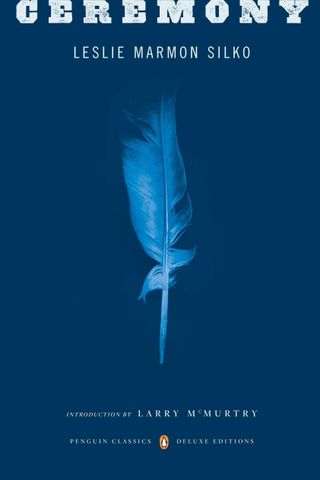
Cover of Ceremony

Ceremony

Leslie Marmon Silko

Original language: English · Paperback · ISBN 978-0143104919

Ceremony follows Tayo, a young man of mixed ancestry, as he returns to the Laguna Pueblo reservation in New Mexico after World War II. He survived captivity as a prisoner of the Japanese, but the experience has left him hollowed out, struggling to function or connect with the world around him. Back home, he finds that his community offers little comfort. Other returning veterans cope through drinking and aggression, and Tayo's own sense of estrangement only deepens.

Rather than following the same path, Tayo begins turning toward the traditions and stories of his people. His search for stability draws him into older ways of understanding illness, evil, and recovery. Leslie Marmon Silko, herself from Laguna Pueblo, weaves oral narrative forms and Pueblo myth through the novel's structure. Poetry and prose alternate, and the ancient stories told within the book run parallel to Tayo's own experiences, linking personal trauma to larger patterns.

The novel's central concern is whether inherited knowledge and ritual practice can address wounds that seem entirely modern. Silko sets this question against the specific landscape and culture of the Laguna Pueblo people in the postwar Southwest.

Plot

Tayo, a World War II veteran of mixed ancestry, returns to the Laguna Pueblo Reservation. He is deeply scarred by his experience as a prisoner of the Japanese and further wounded by the rejection he encounters from his people. Only by immersing himself in the Indian past can he begin to regain the peace that was taken from him. Masterfully written, and filled with the somber majesty of Pueblo myth, Ceremony is a work of enduring power.

Cover of Dune

Dune

Frank Herbert

Original language: English · Paperback · ISBN 978-0441172719

Dune is set on Arrakis, a desert planet where water is scarce and survival depends on strict discipline. The planet's one irreplaceable resource is melange, a spice that can extend human life and heighten awareness. Control of its production makes Arrakis the most politically valuable world in a far-future interstellar civilization, and competing noble houses scheme to secure that control at any cost.

The story follows Paul Atreides, the young heir of House Atreides, whose family is assigned to govern Arrakis. The appointment is fraught with danger: rival powers have held the planet for decades and have no intention of yielding its wealth. When betrayal strikes, Paul is forced from the relative safety of noble life into the open desert, where he encounters the Fremen, Arrakis's indigenous people, who have quietly maintained their own long-term plans for the planet's ecology.

Frank Herbert published Dune in 1965 after it was serialized in the magazine Analog. The novel won the first Nebula Award and shared the Hugo Award. Its scope draws together ecological science, political intrigue, religious manipulation, and questions about messianic leadership, all grounded in the practical details of a world where every drop of moisture matters.

Plot

Set on the desert planet Arrakis, Dune is the story of Paul Atreides—who would become known as Muad'Dib—and of a great family's ambition to bring to fruition mankind's most ancient and unattainable dream. A stunning blend of adventure and mysticism, environmentalism and politics, Dune won the first Nebula Award, shared the Hugo Award, and formed the basis of what is undoubtedly the grandest epic in science fiction.

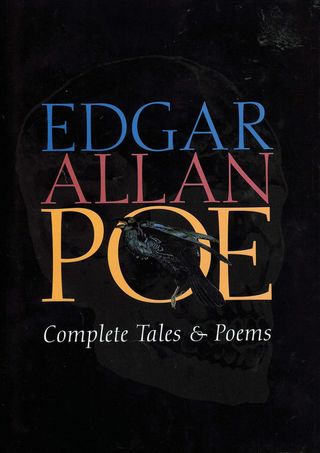
Cover of Edgar Allan Poe: Complete Tales and Poems

Edgar Allan Poe: Complete Tales and Poems

Edgar Allan Poe

Original language: English · Hardcover · ISBN 978-0785814535

This volume gathers 73 stories and 48 poems by Edgar Allan Poe, spanning much of his published short fiction and verse. Among the stories are well-known works such as The Fall of the House of Usher, The Tell-Tale Heart, The Cask of Amontillado, The Pit and the Pendulum, and The Masque of the Red Death. The collection also includes his three detective stories featuring C. Auguste Dupin, starting with The Murders in the Rue Morgue, a form Poe is widely credited with originating.

Beyond the famous psychological and supernatural tales, the book holds satirical pieces, hoaxes, philosophical dialogues, and landscape sketches that show a less familiar side of Poe's writing. Stories like The Balloon-Hoax and Some Words with a Mummy sit alongside critical essays and oddities such as How to Write a Blackwood Article. The poetry section spans early works like Tamerlane through to late pieces including The Raven, Annabel Lee, and Ulalume.

Poe's influence extended well beyond American literature. The French poet Charles Baudelaire translated and promoted his work in Europe, and figures as varied as filmmaker D.W. Griffith and poet Allen Ginsberg later cited him as a creative force. The edition traces how Poe moved between horror, satire, science fiction, and literary criticism.

Plot

The life of American writer Edgar Allan Poe was characterized by a dramatic series of successes and failures, breakdowns and recoveries, personal gains and hopes dashed through, despite which he created some of the finest literature the world has ever known. Over time, his works have influenced such major creative forces as the French poets Charles Baudelaire and Andre Gide, filmmaker D.W. Griffith, and modern literary legend Allen Ginsberg. Best known for his poems and short fiction, Poe perfected the psychological thriller, invented the detective story, and rarely missed transporting the reader to his own supernatural realm. He has also been hailed posthumously as one of the finest literary critics of the nineteenth century.

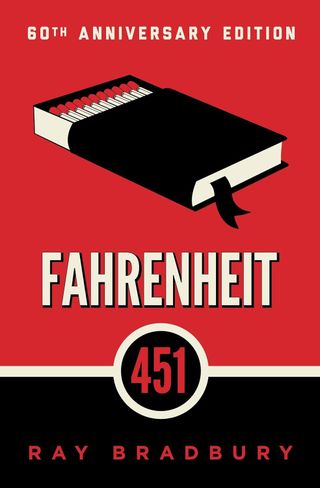
Cover of Fahrenheit 451

Fahrenheit 451

Ray Bradbury

Original language: English · Paperback · ISBN 978-1451673319

In Ray Bradbury's Fahrenheit 451, the title refers to the temperature at which book paper catches fire. The story is set in a future society where firemen do not put out fires but start them, burning books and the houses where they are found. Guy Montag works as one of these firemen, carrying out his duties without hesitation. He returns each evening to a home where his wife, Mildred, spends her time absorbed in wall-sized television screens she treats as family.

Montag's perspective begins to shift when he meets Clarisse, a young neighbor whose curiosity about the world stands apart from the passive, fearful habits of the people around her. Through her, Montag encounters the idea that books once played a central role in how people understood themselves and their surroundings. He starts to question the system he has served and the life he has accepted without scrutiny.

The novel takes place in an invented future, but its concerns are grounded in recognizable tensions: the role of mass media, the suppression of independent thought, and the slow erosion of attention. Bradbury first published the book in 1953, and it has since been translated into dozens of languages.

Plot

Guy Montag is a fireman. His job is to destroy the most illegal of commodities, the printed book, along with the houses in which they are hidden. Montag never questions the destruction and ruin his actions produce, returning each day to his bland life and wife, Mildred, who spends all day with her television “family.” But when he meets an eccentric young neighbor, Clarisse, who introduces him to a past where people didn’t live in fear and to a present where one sees the world through the ideas in books instead of the mindless chatter of television, Montag begins to question everything he has ever known.

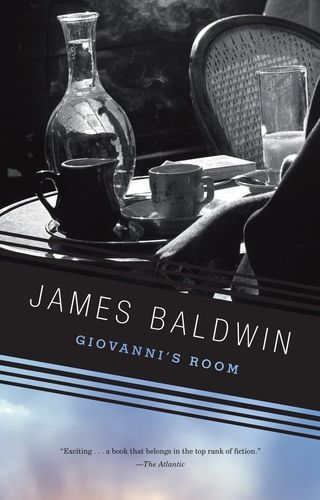
Cover of Giovanni's Room

Giovanni's Room

James Baldwin

Original language: English · Paperback · ISBN 978-0345806567

Giovanni's Room, James Baldwin's second novel, is set in 1950s Paris among a community of American expatriates. David, a young American living abroad, has recently proposed to his girlfriend Hella, who leaves the city for a trip. During her absence, David becomes involved with Giovanni, an Italian bartender he meets in the social world of Parisian bars. The two begin a relationship conducted largely within Giovanni's small, curtainless room, kept deliberately dark for privacy.

The novel turns on the tension between desire and the expectations David carries with him from his American upbringing. His attachment to Giovanni exists alongside his engagement to Hella, and when she returns to Paris, the arrangement collapses. Baldwin presents this conflict with direct, unsparing prose, following the consequences as the situation moves toward tragedy. The story is structured as a love triangle, but its real subject is the cost of suppressing identity under pressure from social convention.

Baldwin wrote the book during his own years as an expatriate in France. Published in 1956, it was one of the few American novels of its era to place a same-sex relationship at the center of the narrative without treating it as a case study or moral lesson.

Plot

In the 1950s Paris of American expatriates, liaisons, and violence, a young man finds himself caught between desire and conventional morality. David is a young American expatriate who has just proposed marriage to his girlfriend, Hella. While she is away on a trip, David meets a bartender named Giovanni to whom he is drawn in spite of himself. Soon the two are spending the night in Giovanni’s curtainless room, which he keeps dark to protect their privacy. But Hella’s return to Paris brings the affair to a crisis, one that rapidly spirals into tragedy.

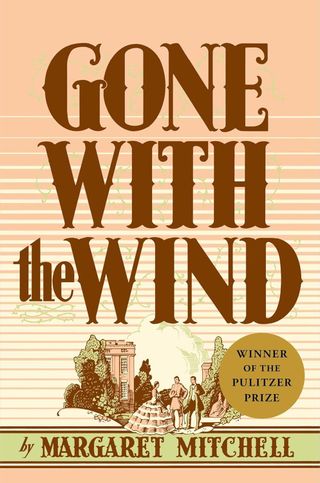
Cover of Gone With the Wind

Gone With the Wind

Margaret Mitchell

Original language: English · Hardcover · ISBN 978-0684830681

Gone With the Wind is set in the red clay country of northern Georgia, beginning in 1861 as the American Civil War approaches. At the center is Scarlett O'Hara, the eldest daughter of a plantation owner, whose comfortable life is upended by the war and the long period of Reconstruction that follows. Scarlett is stubborn, self-interested, and resourceful, and the novel tracks her efforts to hold on to her family's land and status as the social order around her collapses.

Margaret Mitchell published the novel in 1936 after working on it for nearly a decade. It won the Pulitzer Prize in 1937 and sold widely both in the United States and abroad, with reported sales exceeding 28 million copies across more than 37 countries. The 1939 film adaptation became one of the most commercially successful motion pictures ever released.

The book portrays plantation society, the destruction brought by war, and the unstable years that followed, all filtered through the ambitions and attachments of its central characters. Mitchell's portrait of the antebellum South reflects the mythologies and prejudices of its era, and the novel has been the subject of ongoing discussion about how it represents slavery and race.

Plot

Widely considered The Great American Novel, and often remembered for its epic film version, Gone With the Wind explores the depth of human passions with an intensity as bold as its setting in the red hills of Georgia. A superb piece of storytelling, it vividly depicts the drama of the Civil War and Reconstruction. This is the tale of Scarlett O’Hara, the spoiled, manipulative daughter of a wealthy plantation owner, who arrives at young womanhood just in time to see the Civil War forever change her way of life. A sweeping story of tangled passion and courage, in the pages of Gone With the Wind, Margaret Mitchell brings to life the unforgettable characters that have captured readers for over seventy years.

Cover of Gravity's Rainbow

Gravity's Rainbow

Thomas Pynchon

Original language: English · Paperback · ISBN 978-0143039945

Gravity's Rainbow opens in the final months of the Second World War, as German V-2 rockets fall on London. British Intelligence notices a strange pattern: the sexual encounters of Lieutenant Tyrone Slothrop, an American soldier, appear to predict where the rockets will land. The correlation between his personal map and the impact sites sets the novel's plot in motion, sending Slothrop across a devastated Europe in pursuit of a particular rocket designated 00000.

Pynchon's narrative sprawls outward from this premise into a dense network of characters, conspiracies, and technical detail. Engineers, spies, bureaucrats, and profiteers populate the story, many of them entangled in the military and industrial machinery that produced the V-2 program. The novel moves between London, occupied Germany, and other locations, layering science, paranoia, and dark comedy into a structure that resists easy summary. Slothrop's search becomes harder to follow as the book progresses, and the boundaries between individual sections grow less stable.

Published in 1973, the book is often placed alongside works of postmodern fiction from the same period. Pynchon draws on real wartime technology, particularly the development of the V-2 at Peenemunde on the Baltic coast, folding historical detail into an elaborate fictional architecture.

Plot

“A screaming comes across the sky. . .” A few months after the Germans’ secret V-2 rocket bombs begin falling on London, British Intelligence discovers that a map of the city pinpointing the sexual conquests of one Lieutenant Tyrone Slothrop, U.S. Army, corresponds identically to a map showing the V-2 impact sites. The implications of this discovery will launch Slothrop on an amazing journey across war-torn Europe, fleeing an international cabal of military-industrial superpowers, in search of the mysterious Rocket 00000.

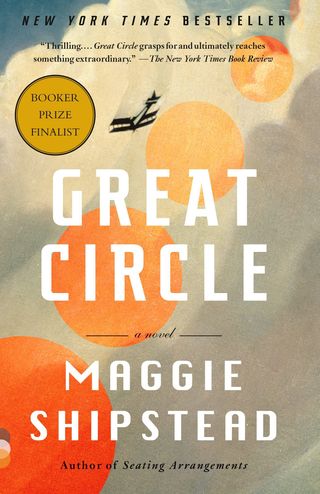
Cover of Great Circle

Great Circle

Maggie Shipstead

Original language: English · Paperback · ISBN 978-1984897701

Marian and Jamie Graves begin life dramatically, rescued as infants from a sinking ocean liner in 1914 and raised by an unreliable uncle in Missoula, Montana. When barnstorming pilots pass through town in worn biplanes, young Marian finds the fixation that shapes her life. At fourteen she leaves school, and a wealthy bootlegger becomes her dangerous patron, paying for a plane and lessons. That arrangement carries a lasting cost.

The novel carries Marian across decades and continents, from Prohibition-era Montana to wartime London, the shores of New Zealand, and the ice of Antarctica. She guards her independence at the expense of close ties, resisting a childhood sweetheart and moving through a series of relationships, while her ambition narrows toward one goal: flying around the Earth over both poles.

A second strand begins more than fifty years later, when Hadley Baxter, a troubled film star, is cast as Marian on screen and finds her research leading somewhere she did not expect. The book was named a Book of the Year by publications including The Times, The Economist, Time, and Oprah Daily. The Telegraph and New Statesman also listed it.

Plot

After being rescued as infants from a sinking ocean liner in 1914, Marian and Jamie Graves are raised by their dissolute uncle in Missoula, Montana. Thereafter encountering a pair of barnstorming pilots passing through town in beat-up biplanes--Marian commences her lifelong love affair with flight. At fourteen she drops out of school and finds an unexpected and dangerous patron in a wealthy bootlegger who provides a plane and subsidizes her lessons, an arrangement that will haunt her for the rest of her life, even as it allows her to fulfill her destiny: circumnavigating the globe by flying over the North and South Poles.

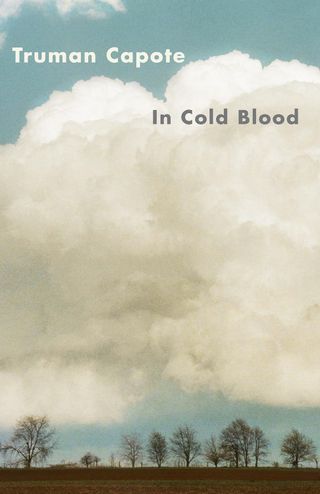
Cover of In Cold Blood

In Cold Blood

Truman Capote

Original language: English · Paperback · ISBN 978-0679745587

On November 15, 1959, two men entered a farmhouse outside Holcomb, Kansas, and killed four members of the Clutter family. Herbert Clutter was a prosperous wheat farmer, well known and respected in the area. No clear motive connected the victims to their killers, and investigators initially had very little to work with. Truman Capote traveled to Kansas shortly after the murders and spent years reporting on the case, interviewing residents, law enforcement officers, and eventually the two men charged with the crime.

Capote structured the resulting book by alternating between the everyday life of the Clutter family before the killings and the movements of the perpetrators in the days leading up to that night. He then follows the long investigation, the capture, the trial, and its aftermath. The writing applies novelistic techniques to documented events, building scenes from interviews and court records rather than invention. Capote described the work as a nonfiction novel, a label that sparked considerable debate about where journalism ends and literature begins.

Holcomb sits in Finney County in the flat wheat-growing plains of western Kansas. The community's small size and relative isolation are central to the book's atmosphere, shaping both the shock of the crime and the texture of the investigation that followed.

Plot

On November 15, 1959, in the small town of Holcomb, Kansas, four members of the Clutter family were savagely murdered by blasts from a shotgun held a few inches from their faces. There was no apparent motive for the crime, and there were almost no clues. In one of the first non-fiction novels ever written, Truman Capote reconstructs the murder and the investigation that led to the capture, trial, and execution of the killers, generating both mesmerizing suspense and astonishing empathy.

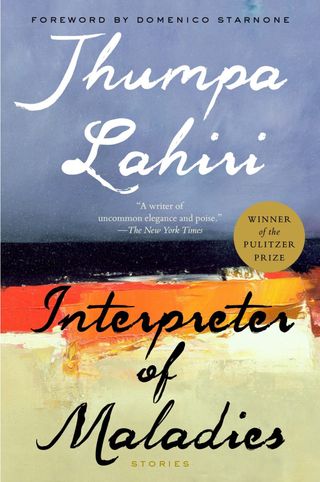
Cover of Interpreter Of Maladies

Interpreter Of Maladies

Jhumpa Lahiri

Original language: English · Paperback · ISBN 978-0358213260

Jhumpa Lahiri gathers nine stories in this book, each following Indian or Indian American characters who live at some distance from where they began. Settings move between Calcutta and suburban America. A couple exchanges confessions during nightly power outages. A young girl watches a family friend follow news of the conflict in East Pakistan while his own relatives remain caught in it. A boy spending afternoons with his Indian babysitter notices her loneliness and her longing for home.

Several stories turn on small encounters that reveal wider strains. In the title story, a tour guide in India drives an Indian American family through the region of their ancestry and becomes the listener for an unexpected disclosure. Elsewhere, newlyweds argue over Christian figurines left in their new house. A sweeper in a Calcutta apartment building loses her place once the residents decide to modernize.

Most of the action happens in kitchens, cars, rented rooms and other ordinary spaces, where the pressure builds through restrained detail. The characters seldom belong wholly to one country, and much of the tension sits in the space between what they say and what they keep back.

Plot

A blackout forces a young Indian American couple to make confessions that unravel their tattered domestic peace. An Indian American girl recognizes her cultural identity during a Halloween celebration while the Pakastani civil war rages on television in the background. A latchkey kid with a single working mother finds affinity with a woman from Calcutta. In the title story, an interpreter guides an American family through the India of their ancestors and hears an astonishing confession.

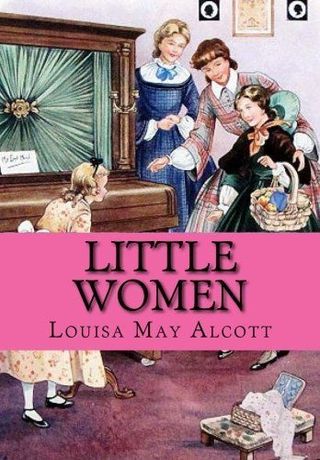
Cover of Little Women

Little Women

Louisa May Alcott

Original language: English · Paperback · ISBN 978-1503280298

Little Women follows the four March sisters, Meg, Jo, Beth, and Amy, as they grow from childhood into young adulthood in a household shaped by their mother's steady presence and their father's absence during the American Civil War. The story is loosely based on Louisa May Alcott and her three sisters, and Alcott wrote it rapidly over several months at the request of her publisher. It was originally published in two volumes, in 1868 and 1869, before being combined into a single edition in 1880.

Each sister carries a distinct temperament. Meg, the eldest, is drawn to domestic life and social standing. Jo is restless, ambitious, and devoted to writing. Beth is quiet and musical, content within the family circle. Amy, the youngest, pursues art and carries a sharp awareness of the world beyond home. Their differences create friction and closeness in equal measure, and much of the novel's structure comes from watching how each one navigates expectations, money, illness, and affection.

The book was an immediate commercial and critical success when it first appeared. Reader demand led Alcott to complete a second volume, originally titled Good Wives, which continued the sisters' stories into early adulthood and marriage.

Plot

Little Women is a novel by American author Louisa May Alcott (1832–1888), which was originally published in two volumes in 1868 and 1869. Alcott wrote the books rapidly over several months at the request of her publisher. The novel follows the lives of four sisters—Meg, Jo, Beth, and Amy March—detailing their passage from childhood to womanhood, and is loosely based on the author and her three sisters.Little Women was an immediate commercial and critical success, and readers demanded to know more about the characters. Alcott quickly completed a second volume, entitled Good Wives. It was also successful. The two volumes were issued in 1880 in a single work entitled Little Women.

Cover of Lolita

Lolita

Vladimir Nabokov

Original language: English · Paperback · ISBN 978-0679723165

Vladimir Nabokov's Lolita centers on Humbert Humbert, a middle-aged European man living in postwar America, who develops an obsessive fixation on twelve-year-old Dolores Haze. The novel is presented as Humbert's own account, written in elaborate, self-justifying prose. Through his narration, Nabokov builds a portrait of a man who reshapes his predatory behavior into the language of romance and devotion, leaving the reader to see through the performance.

The book moves across American highways, motels, and small towns as Humbert pursues and controls Dolores. Nabokov, a Russian emigrant who had lived in Germany, France, and the United States, draws a sharp contrast between Humbert's cultivated European sensibility and the roadside culture of 1950s America. The geographical sweep gives the story a restless, displaced quality that mirrors the characters' circumstances.

Nabokov originally wrote Lolita in English, and several American publishers rejected the manuscript before the Paris-based Olympia Press published it in 1955. It was subsequently banned in France and elsewhere before appearing in the United States in 1958 from G.P. Putnam's Sons. The novel's reception was divided between those who considered it a serious literary work and those who viewed it as obscene.

Plot

Awe and exhilaration—along with heartbreak and mordant wit—abound in Lolita, which tells the story of the aging Humbert Humbert's obsession for the nymphet Dolores Haze. Lolita is also the story of a hypercivilized European colliding with the cheerful barbarism of postwar America. Most of all, it is a meditation on love—love as outrage and hallucination, madness and transformation.

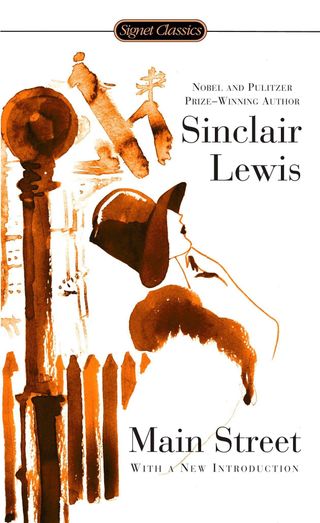
Cover of Main Street

Main Street

Harry Sinclair Lewis

Original language: English · Paperback · ISBN 978-0451530981

Carol Milford is a young college graduate with ambitions to reshape her surroundings. After marrying Dr. Will Kennicott, she moves from the city to Gopher Prairie, a small town on the Minnesota prairie. She arrives expecting to introduce new cultural life to the community, organizing events, proposing civic improvements, and pushing for change. What she encounters instead is a place deeply resistant to outside ideas, where gossip travels fast and conformity is enforced through social pressure rather than explicit rules.

The town itself becomes a central presence in the novel. Lewis populates Gopher Prairie with merchants, professionals, and neighbors whose habits reflect a narrow commercial outlook and a suspicion of anything unfamiliar. Carol's conflicts are not only with specific individuals but with the texture of daily life in a place where ambition beyond the ordinary is treated as pretension. Her marriage to Will, who is comfortable in Gopher Prairie and sees little reason for change, becomes another site of tension as the gap between their expectations widens.

Published in 1920, Main Street was the first of the major novels Sinclair Lewis produced during the decade. It targets conformism, commercialism, and the friction between individual aspiration and community resistance in the American Midwest.

Plot

Young college graduate Carol Milford moves from the city to tiny Gopher Prairie after marrying the local doctor and tries to bring culture to the small town. But her efforts to reform the prairie village are met by a wall of gossip, greed, conventionality, pitifully unambitious cultural endeavors, and—worst of all—the pettiness and bigotry of small-town minds.

Cover of Moby Dick

Moby Dick

Herman Melville

Original language: English · Paperback · ISBN 978-1853260087

Moby Dick follows Ishmael, a common sailor who signs aboard the whaling ship Pequod and finds himself drawn into the single-minded pursuit of Captain Ahab. Ahab lost his leg to a great white sperm whale and has turned the voyage into a personal hunt for the creature. The novel is narrated by Ishmael, whose voice wanders freely across subjects: the anatomy of whales, the mechanics of the whaling trade, the textures of the sea, and the philosophies that surface when people spend months together on open water.

Ahab's obsession drives the plot, but much of the book concerns the ship as a working community. The Pequod's crew is made up of men from different countries, backgrounds, and temperaments, all bound together by shared labor and mutual dependence. Melville uses this arrangement to examine how authority, cooperation, and individual responsibility function under extreme pressure.

Herman Melville published the novel in 1851. It draws on his own earlier experience aboard whaling vessels in the Pacific and incorporates an enormous range of reference, from biblical allusion to technical cetology, the study of whales. The book's structure is unusually loose for its era, mixing narrative chapters with dramatic dialogues, essays, and catalog-like descriptions of whaling equipment and technique.

Plot

Moby Dick is the story of Captain Ahab's quest to avenge the whale that 'reaped' his leg. The quest is an obsession and the novel is a diabolical study of how a man becomes a fanatic. But it is also a hymn to democracy. Bent as the crew is on Ahab s appalling crusade, it is equally the image of a co-operative community at work: all hands dependent on all hands, each individual responsible for the security of each. Among the crew is Ishmael, the novel's narrator, ordinary sailor, and extraordinary reader. Digressive, allusive, vulgar, transcendent, the story Ishmael tells is above all an education: in the practice of whaling, in the art of writing.

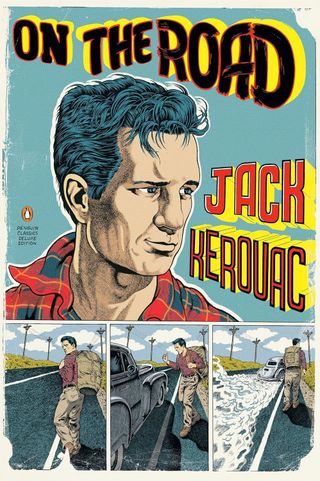
Cover of On the Road

On the Road

Jack Kerouac

Original language: English · Paperback · ISBN 978-0140283297

On the Road follows two characters, Sal Paradise and Dean Moriarty, as they travel back and forth across the North American continent by car, bus, and hitchhiking. The novel draws directly from Jack Kerouac's own experiences with Neal Cassady during the late 1940s, and it maps a restless series of trips between New York, Denver, San Francisco, Mexico City, and dozens of smaller stops along the way. The geography is specific and constant: highways, diners, jazz clubs, fields, and the long spaces between cities.

Kerouac wrote the prose in a style often compared to jazz improvisation, with long rushing sentences and abrupt shifts in rhythm. The book is concerned with movement itself as a form of searching, with friendship tested by compulsion and instability, and with a version of the United States seen from its roads rather than its institutions. Paradise narrates, observing Moriarty's frantic energy while questioning his own desires and direction.

First published in 1957, the novel became closely associated with the Beat movement, a loose group of American writers who challenged mainstream literary and social conventions of the period. The book helped define the term Beat as both weariness and a kind of spiritual openness.

Plot

Inspired by Jack Kerouac's adventures with Neal Cassady, On the Road tells the story of two friends whose cross-country road trips are a quest for meaning and true experience. Written with a mixture of sad-eyed naiveté and wild ambition and imbued with Kerouac's love of America, his compassion for humanity, and his sense of language as jazz, On the Road is the quintessential American vision of freedom and hope, a book that changed American literature and changed anyone who has ever picked it up.

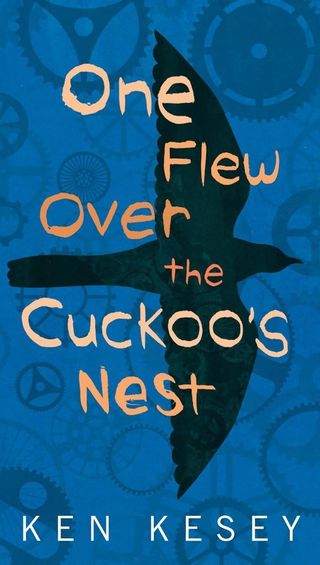
Cover of One Flew Over the Cuckoo's Nest

One Flew Over the Cuckoo's Nest

Ken Kesey

Original language: English · Mass Market Paperback · ISBN 978-0451163967

Ken Kesey's novel is set inside a psychiatric hospital in Oregon, where daily life runs according to strict routine under the control of Nurse Ratched, a calm and methodical authority figure. The story is told from the perspective of the ward's patients, who exist in a state of quiet compliance until a new arrival disrupts the order. Randle Patrick McMurphy, a loud and physical man transferred from a prison work farm, begins testing the boundaries of the ward almost immediately.

McMurphy organizes card games, challenges the daily schedule, and encourages the other patients to push back against rules they have long accepted without question. What begins as small acts of defiance gradually escalates into a direct confrontation between McMurphy and Nurse Ratched. The conflict raises questions about power, control, and what it means to be declared sane or insane within a system that rewards obedience.

The novel examines how institutions shape behavior and how individual resistance can alter the people nearby, even when the cost of that resistance grows severe. Kesey wrote the book in the early 1960s, drawing in part on his own experience working as an orderly at a veterans' hospital in Menlo Park, California.

Plot

In this classic novel, Ken Kesey’s hero is Randle Patrick McMurphy, a boisterous, brawling, fun-loving rebel who swaggers into the world of a mental hospital and takes over. A lusty, life-affirming fighter, McMurphy rallies the other patients around him by challenging the dictatorship of Nurse Ratched. He promotes gambling in the ward, smuggles in wine and women, and openly defies the rules at every turn. But this defiance, which starts as a sport, soon develops into a grim struggle, an all-out war between two relentless opponents: Nurse Ratched, backed by the full power of authority, and McMurphy, who has only his own indomitable will. What happens when Nurse Ratched uses her ultimate weapon against McMurphy provides the story’s shocking climax.

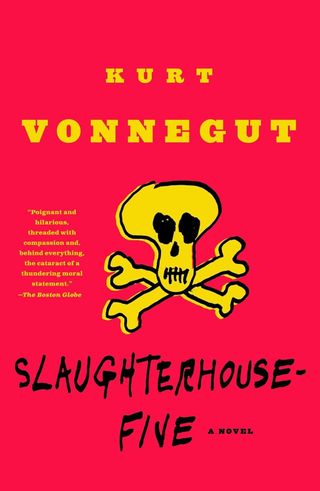
Cover of Slaughterhouse-Five

Slaughterhouse-Five

Kurt Vonnegut

Original language: English · Paperback · ISBN 978-0385333849

Kurt Vonnegut's Slaughterhouse-Five centers on Billy Pilgrim, an American soldier who becomes unstuck in time. He does not live his years in order. Instead he shifts without warning between his capture during the Second World War, his ordinary postwar life, and his encounters with an alien civilization. The scattered structure mirrors the way severe experience can break a person's sense of sequence.

The historical anchor is the firebombing of Dresden in February 1945. Vonnegut was there as an American prisoner of war, held with others in a slaughterhouse building where they sheltered below ground during the raid. Billy's fictional path runs close to that history, though the book filters memory through dark comedy and science fiction instead of plain autobiography.

Billy's alien hosts, the Tralfamadorians, understand all moments as existing at once, which gives him a way to hold events he cannot otherwise reconcile. Vonnegut uses that outlook to look at how people answer mass destruction and private loss. A short flat phrase of resignation returns after every mentioned death, and the repetition becomes part of the novel's shape.

Plot

Slaughterhouse-Five follows Billy Pilgrim, a man who becomes “unstuck in time,” experiencing his life in disjointed moments that move between his experiences as a soldier in World War II, his everyday life afterward, and his encounters with an alien civilization. Through this nonlinear journey, the novel blends dark humor, sorrow, and philosophical reflection, offering a deeply human look at trauma, memory, and the search for meaning in events that feel beyond understanding.

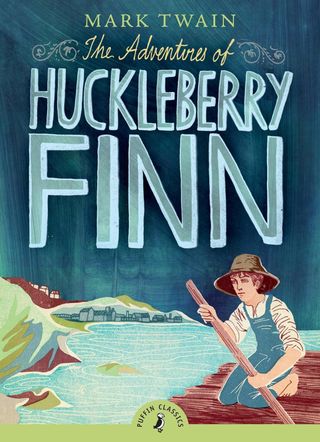
Cover of The Adventures of Huckleberry Finn

The Adventures of Huckleberry Finn

Mark Twain

Original language: English · Paperback · ISBN 978-0141321097

The Adventures of Huckleberry Finn, by Mark Twain, follows a boy who escapes his violent, alcoholic father and flees down the Mississippi River on a raft. His companion is Jim, an enslaved man seeking his own freedom. Along the way they meet floods, gunfights, armed bandits, and the constant risk of being caught by the law.

Huck tells the story himself, in the dialect of a boy with little formal schooling in the American South before the Civil War. At the centre is his growing friendship with Jim, and the conflict that friendship creates. Raised in a society that treated slavery as ordinary, Huck must weigh the rules he was taught against his own sense of right.

Tom Sawyer, Huck's friend from an earlier Twain novel, returns later with a very different approach to the trouble ahead. Nearly all the action stays on or near the water, so the river works as both an escape route and a source of fresh danger. The book is also among the most discussed in American literature for its direct use of period racial language.

Plot

Huckleberry Finn had a tough life with his drunk father, until an adventure with Tom Sawyer changed everything. But when Huck's dad returns and kidnaps him, he must escape down the Mississippi river with runaway slave, Jim. They encounter trouble at every turn, from floods and gunfights to armed bandits and the long arm of the law. Through it all the friends stick together—but can Huck and Tom free Jim from slavery once and for all?

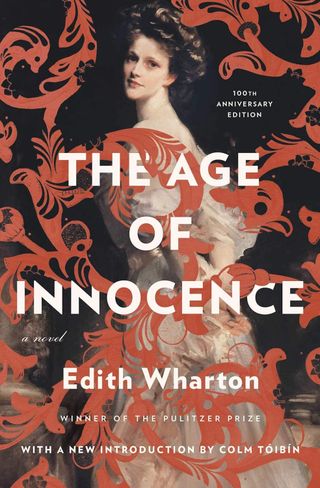
Cover of The Age of Innocence

The Age of Innocence

Edith Warton

Original language: English · Paperback · ISBN 978-0684842370

Edith Wharton set this novel in 1870s New York, drawing on the upper-class society she knew from her own upbringing. The story follows Newland Archer, a well-mannered young man whose engagement to the proper May Welland promises a comfortable, predictable life among the brownstones and ballrooms of old Manhattan. Archer fits neatly into his world, accepting its codes while quietly recognizing how narrow they can be.

That balance is disrupted when May's cousin, Countess Ellen Olenska, returns to New York after years abroad. Ellen has separated from her husband, a fact that unsettles the families around her. She is independent and direct in ways that Archer's circle finds threatening. As Archer is drawn toward Ellen, he faces a growing conflict between the expectations built into his engagement and the less guarded life she represents. The novel traces how social pressure operates not through open confrontation but through small gestures, dinner-table arrangements, and careful silences.

Wharton wrote the book shortly after the First World War, looking back at a society already several decades gone. It won the Pulitzer Prize in 1921, making Wharton the first woman to receive that award for fiction.

Plot

With vivid power, Wharton evokes a time of gaslit streets, formal dances held in the ballrooms of stately brownstones, and society people "who dreaded scandal more than disease." This is Newland Archer's world as he prepares to many the docile May Welland. Then, suddenly, the mysterious, intensely nonconformist Countess Ellen Olenska returns to New York after a long absence, turning Archer's world upside down.

Cover of The Bell Jar

The Bell Jar

Sylvia Plath

Original language: English · Paperback · ISBN 978-0060837020

The Bell Jar follows Esther Greenwood, a talented college student spending a summer working at a magazine in New York City during the 1950s. Esther has earned her position through competition and arrives with high expectations for herself and her future. But the city and the role do not deliver the clarity she hoped for. Instead, she finds herself caught between the life she wants as a writer and the life that 1950s American society expects of young women, centered on marriage and motherhood.

As the summer progresses, Esther's sense of purpose fractures. She grows increasingly unable to reconcile her ambitions with the narrow choices she sees ahead, and her mental health begins to deteriorate. Plath writes this unraveling in sharp, controlled prose, grounding Esther's interior experience in specific, physical detail. The novel traces her path through psychiatric treatment and institutionalization during a period when such care was often blunt and punishing.

Sylvia Plath published The Bell Jar in 1963 under the pseudonym Victoria Lucas, initially in the United Kingdom. It was her only novel. The book draws on elements of Plath's own experiences as a young woman and student in the early 1950s.

Plot

The story chronicles the breakdown of Esther Greenwood, a bright, beautiful, enormously talented college student coming of age in 1950s America, as she navigates the pressures of society along with her own ambitions. While at a prestigious, competitively won position at a New York City magazine one summer, Esther finds herself struggling with the looming expectations of marriage, motherhood, and giving up on her dreams to achieve them. She becomes increasingly disillusioned and her mental health deteriorates, ultimately leading her to undergo harsh treatment and therapy.

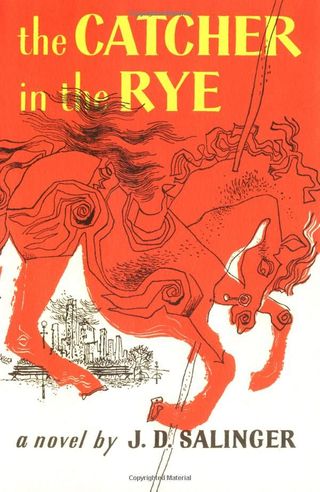
Cover of The Catcher in the Rye

The Catcher in the Rye

J.D. Salinger

Original language: English · Paperback · ISBN 978-0316769488

Holden Caulfield is sixteen, recently expelled from his prep school in Pennsylvania, and unwilling to wait for the term to end. He leaves early and heads to New York City, the city where he grew up, carrying little more than a suitcase and a restless need to make sense of the adult world closing in around him. Over three days he moves through hotels, bars, streets, and brief encounters with strangers and old acquaintances, narrating each episode in a voice that shifts between sharp observation and raw confusion.

Salinger wrote Holden as someone caught between adolescence and adulthood, suspicious of what he calls phoniness yet unable to articulate what he wants instead. His sensitivity runs alongside a streak of negativism that colors nearly every interaction. He is funny, contradictory, and often unreliable in his own telling. The novel, first published in 1951, is set almost entirely within Manhattan and its surroundings during a few winter days. Its first-person narration stays close to spoken American English, giving the story a directness that was unusual for literary fiction at the time of its release.
Plot

The hero-narrator of The Catcher in the Rye is an ancient child of sixteen, a native New Yorker named Holden Caufield. Through circumstances that tend to preclude adult, secondhand description, he leaves his prep school in Pennsylvania and goes underground in New York City for three days.
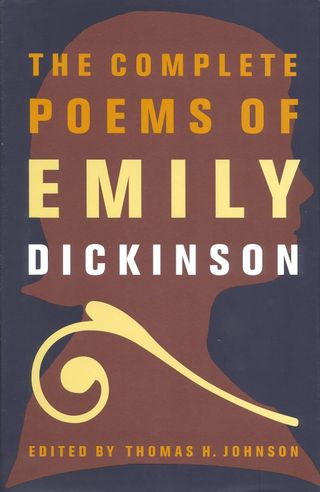
Cover of The Complete Poems of Emily Dickinson

The Complete Poems of Emily Dickinson

Emily Dickinson

Original language: English · Hardcover · ISBN 978-0316184144

Emily Dickinson wrote nearly 1,775 poems during her lifetime, yet only eleven appeared in print before she died in 1886. She lived most of her adult life in Amherst, Massachusetts, where she composed her work in relative seclusion. Her poems were often short, compressed, and built around irregular rhythms and unexpected punctuation. These qualities, which later generations would recognize as distinctive strengths, made her writing difficult to place within the literary conventions of her era.
After her death, several published collections attempted to bring her poetry to a wider audience, but editors frequently altered her lines, smoothing out her unconventional dashes, slant rhymes, and broken meter to fit more traditional expectations. These changes obscured the deliberate choices Dickinson had made in her manuscripts. It was not until 1955, when Thomas H. Johnson compiled a three-volume critical edition, that all of her known poems became available in versions faithful to her original manuscripts.

This single-volume edition draws on Johnson's editorial work to present the full body of Dickinson's poetry in one place. The collection spans her observations on nature, mortality, consciousness, faith, and solitude, subjects she returned to throughout her writing life with a precision that remains unusual in American poetry.

Plot

Only eleven of Emily Dickinson's poems were published prior to her death in 1886; the startling originality of her work doomed it to obscurity in her lifetime. Early posthumous published collections — some of them featuring liberally "edited" versions of the poems — did not fully and accurately represent Dickinson's bold experiments in prosody, her tragic vision, and the range of her intellectual and emotional explorations. Not until the 1955 publication of The Complete Poems of Emily Dickinson, a three-volume critical edition compiled by Thomas H. Johnson, were readers able for the first time to assess, understand, and appreciate the whole of Dickinson's extraordinary poetic genius.

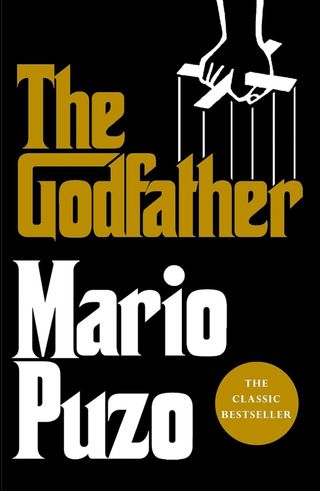
Cover of The Godfather

The Godfather

Mario Puzo

Original language: English · ISBN 978-0099528128

Mario Puzo's The Godfather, first published in 1969 by G. P. Putnam's Sons, follows the fictional Corleone family across a decade from 1945 to 1955. Set primarily in New York City and Long Beach, New York, the novel traces the operations of Don Vito Corleone, a Mafia patriarch whose power extends through multiple layers of American society. The book also reaches back into Vito's early life, charting his path from childhood to his position at the head of the Cosa Nostra.

As Vito ages, the question of succession becomes central. His eldest son Sonny is already embedded in the family's criminal enterprise, while Michael, a World War II veteran, has kept his distance from that world. Rival crime families and law enforcement both sense vulnerability, and the Corleones face threats from multiple directions at once. The tension between loyalty, ambition, and reluctance runs through much of the story.

Puzo chose an epigraph from Honoré de Balzac for the novel: behind every great fortune there is a crime. That line frames the book's sustained interest in how wealth, violence, and family obligation connect. The dedication reads simply to Anthony Cleri.

Plot

Tyrant, blackmailer, racketeer, murderer - his influence reaches every level of American society. Meet Don Corleone, a friendly man, a just man, a reasonable man. The deadliest lord of the Cosa Nostra. The Godfather. But no man can stay on top forever, not when he has enemies on both sides of the law. As the ageing Vito Corleone nears the end of a long life of crime, his sons must step up to manage the family business. Sonny Corleone is an old hand, while World War II veteran Michael Corleone is unused to the world of crime and reluctant to plunge into the business. Both the police and ruthless rival crime lords scent blood in the water. If the Corleone family is to survive, it needs a ruthless new don. But the price of success in a violent life may be too high to bear...

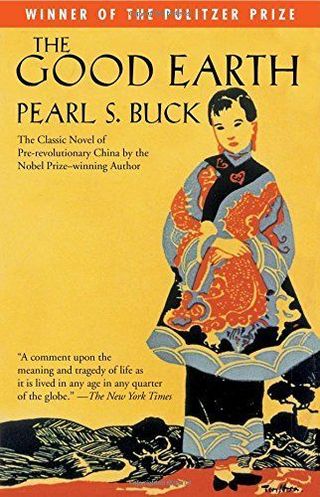
Cover of The Good Earth

The Good Earth

Pearl Buck

Original language: English · Paperback · ISBN 978-0743272933

The Good Earth follows Wang Lung, a farmer in early twentieth-century China, whose life revolves around the plot of land he works. He marries O-Lan, a former servant from the wealthy House of Hwang, and together they build a household through steady, physical labor. Pearl S. Buck sets the story in a period when imperial rule was fading and large-scale social change had not yet arrived in the countryside, though its early signals were already present.

Wang Lung's fortunes shift with the land itself. Flood and drought push his family from the soil and into the crowded life of a nearby city, where they encounter urban poverty, unrest, and the volatile gap between rich and poor. His return to farming and his gradual accumulation of wealth bring new pressures. As Wang Lung prospers, he faces temptations and family tensions that test the values he once held without question. Meanwhile, the old landowning gentry of the House of Hwang decline, mirroring the broader shifts taking place across Chinese society.

Buck, who grew up in China as the daughter of American missionaries, drew on decades of firsthand observation. The novel was first published in 1931 and contributed to her receiving the Nobel Prize in Literature in 1938.

Plot

In The Good Earth, Pearl S. Buck paints an indelible portrait of China in the 1920s, when the last emperor reigned, and the vast political and social upheavals of the twentieth century were but distant rumblings. This moving, classic story of the honest farmer Wang Lung and his selfless wife O-Lan is must read for those who would fully appreciate the sweeping changes that have occurred in the lives of the Chinese people during the last century.

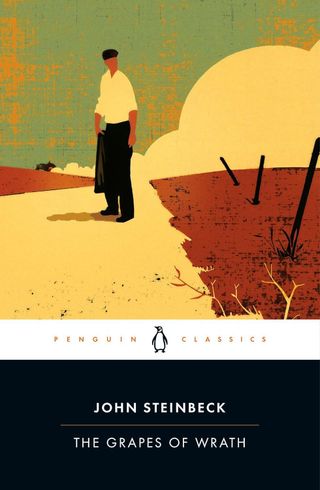
Cover of The Grapes of Wrath

The Grapes of Wrath

John Steinbeck

Original language: English · Paperback · ISBN 978-0143039433

The Grapes of Wrath, first published in 1939, follows the Joad family as they lose their Oklahoma farm during the Dust Bowl and set out for California. Steinbeck traces their route westward along Highway 66 in an overloaded truck, joining thousands of other displaced families searching for work and stability. The novel alternates between the Joads' specific story and broader chapters that describe the social and economic forces reshaping the American landscape during the 1930s.

In California, the Joads discover that the promise of plentiful work is largely false. Migrant camps overflow with families competing for the same low-paying jobs picking fruit and cotton. Steinbeck documents the tension between desperate workers and the growers who profit from their surplus, and he gives sustained attention to the small, practical choices people make under pressure: whether to cross a picket line, whether to share food with strangers, whether to keep moving or stay.

The book won the Pulitzer Prize and played a visible role in public debate about migrant labor conditions. Steinbeck drew on firsthand reporting he had done in California's agricultural valleys, and much of the novel's detail comes from that fieldwork.

Plot

First published in 1939, Steinbeck’s Pulitzer Prize-winning epic of the Great Depression chronicles the Dust Bowl migration of the 1930s and tells the story of one Oklahoma farm family, the Joads—driven from their homestead and forced to travel west to the promised land of California. Out of their trials and their repeated collisions against the hard realities of an America divided into Haves and Have-Nots evolves a drama that is intensely human yet majestic in its scale and moral vision, elemental yet plainspoken, tragic but ultimately stirring in its human dignity.

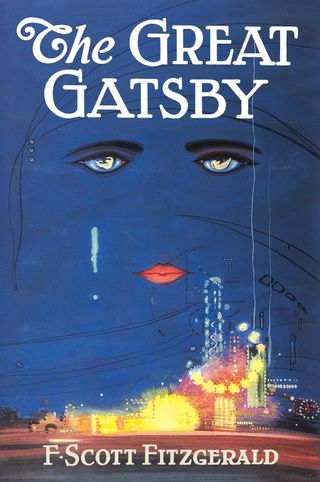
Cover of The Great Gatsby

The Great Gatsby

F. Scott Fitzgerald

Original language: English · Paperback · ISBN 978-1982149482

F. Scott Fitzgerald's third novel, first published by Scribner in 1925, is set on Long Island and in New York City during the summer of 1922. The story follows Jay Gatsby, a young man of mysterious wealth who hosts lavish parties at his mansion in West Egg, a fictional village on Long Island's North Shore. Gatsby's neighbor, Nick Carraway, narrates the events of that summer as Gatsby attempts to reunite with Daisy Buchanan, a married woman he loved years earlier.

Daisy lives across the bay in the more fashionable East Egg with her husband Tom, a former college athlete from a wealthy family. The geography of the novel matters: the distinction between old money in East Egg and new money in West Egg, the ash heaps of the valley between Long Island and Manhattan, and the glittering city itself all carry weight in the story. Fitzgerald uses these spaces to examine class division, aspiration, and self-invention in 1920s America.

The novel is brief, running to fewer than fifty thousand words, and its narrator occupies a careful position as both participant and observer. Fitzgerald completed it while living in France, drawing on his own experiences in the social world of the American Northeast.

Plot

The Great Gatsby, F. Scott Fitzgerald’s third book, stands as the supreme achievement of his career. First published by Scribner in 1925, this quintessential novel of the Jazz Age has been acclaimed by generations of readers. The story of the mysteriously wealthy Jay Gatsby and his love for the beautiful Daisy Buchanan is an exquisitely crafted tale of America in the 1920s.

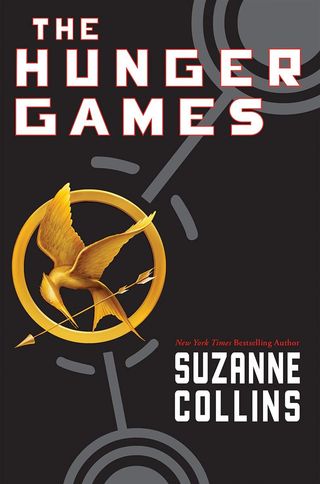
Cover of The Hunger Games

The Hunger Games

Suzanne Collins

Original language: English · Hardcover · ISBN 978-0439023481

The Hunger Games appeared in 2008 from Scholastic and takes place in Panem, a nation standing on the ruins of North America. A wealthy central city, the Capitol, governs twelve surrounding districts. Every year each district must supply two tributes aged twelve to eighteen, one young man and one young woman drawn by lottery, for a televised contest in which only one competitor is meant to leave alive.

The narrator is sixteen-year-old Katniss Everdeen, who steps forward to take her younger sister's place after the lottery names her. Katniss has spent years hunting to feed her family, and those habits matter once the contest starts. Inside the arena she must weigh staying alive against loyalty, compassion, and the alliances forming around her. The event airs live, so her decisions play out before an audience.

Collins has cited Greek mythology, Roman gladiatorial games, and present-day reality television among her sources for the book's themes. Reviewers and fellow writers responded warmly, with particular attention to its plot and characters. It won the California Young Reader Medal and was listed by Publishers Weekly among its best books of 2008. The hardcover, released on September 14, carried cover art by Tim O'Brien.

Plot

Winning means fame and fortune. Losing means certain death. The Hunger Games have begun. . . . In the ruins of a place once known as North America lies the nation of Panem, a shining Capitol surrounded by twelve outlying districts. The Capitol is harsh and cruel and keeps the districts in line by forcing them all to send one boy and one girl between the ages of twelve and eighteen to participate in the annual Hunger Games, a fight to the death on live TV. Sixteen-year-old Katniss Everdeen regards it as a death sentence when she steps forward to take her sister's place in the Games. But Katniss has been close to dead before-and survival, for her, is second nature. Without really meaning to, she becomes a contender. But if she is to win, she will have to start making choices that weigh survival against humanity and life against love.

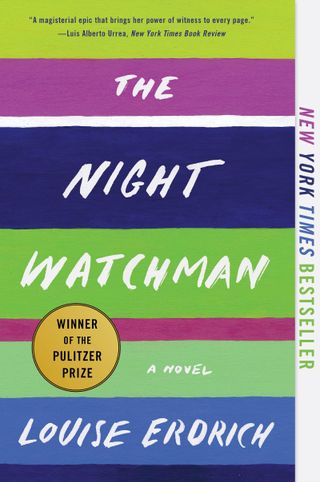
Cover of The Night Watchman

The Night Watchman

Louise Erdrich

Original language: English · Paperback · ISBN 978-0062671196

The year is 1953. Thomas Wazhashk keeps watch at night over a factory that makes jewel bearings, precision parts used in watches and instruments, near the Turtle Mountain Reservation in North Dakota. He also serves on the Chippewa tribal council, where members study a bill heading for Congress. It is called emancipation, but its effect would be termination, ending federal recognition and putting treaty land at risk.

Louise Erdrich based the novel on her grandfather, Patrick Gourneau, who held a similar watchman job and pressed the case against Native land loss as far as Washington. A second thread follows Pixie Paranteau, who has asked everyone to call her Patrice since she left high school. Her pay at the plant barely covers her mother and younger brother, and her father returns at intervals to frighten the family and demand money.

Patrice saves what she can to reach her older sister Vera, who moved to Minneapolis and has not written in months. Her search takes her into the city and into danger. Nearby stand a boxer called Wood Mountain, his mother Juggie Blue, Patrice's friend Valentine, and Hay Stack Barnes, a white teacher and coach. The council's case rests on treaty promises framed to last as long as grass grows and rivers flow.

Plot

Thomas Wazhashk is the night watchman at the jewel-bearing plant, the first factory located near the Turtle Mountain Reservation in rural North Dakota. He is also a Chippewa Council member who is trying to understand the consequences of a new “emancipation” bill on its way to the floor of the United States Congress. It is 1953 and he and the other council members know the bill isn’t about freedom; Congress is fed up with Indians. The bill is a “termination” that threatens the rights of Native Americans to their land and their very identity. How can the government abandon treaties made in good faith with Native Americans “for as long as the grasses shall grow, and the rivers run”?

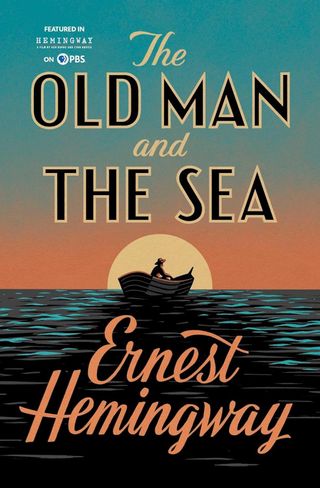
Cover of The Old Man and The Sea

The Old Man and The Sea

Ernest Hemingway

Original language: English · Paperback · ISBN 978-0684801223

Ernest Hemingway published The Old Man and the Sea in 1952 as a novella set in the waters off Havana, Cuba. The story follows Santiago, an aging fisherman who has gone eighty-four days without catching a fish. Accompanied at the dock by a loyal young boy who believes in him, Santiago sails alone far into the Gulf Stream, where he hooks a marlin of extraordinary size. What follows is a prolonged, physically punishing struggle between one man and one fish, carried out over open water with little more than a skiff, a line, and endurance.

Hemingway wrote the book in spare, direct prose, stripping away ornament to keep attention on the fisherman's effort and exhaustion. The narrative stays close to Santiago's thoughts as he speaks aloud to himself, to the fish, and to the sea. Themes of persistence after repeated failure, aging, and solitary effort against forces far larger than oneself run through the story without being stated outright.

The novella was a major commercial success when it appeared and contributed significantly to Hemingway's 1954 Nobel Prize in Literature. It was first published in a single issue of Life magazine, where millions of readers encountered it before the book edition reached stores.

Plot

The Old Man and the Sea is one of Hemingway's most enduring works. Told in language of great simplicity and power, it is the story of an old Cuban fisherman, down on his luck, and his supreme ordeal -- a relentless, agonizing battle with a giant marlin far out in the Gulf Stream. Here Hemingway recasts, in strikingly contemporary style, the classic theme of courage in the face of defeat, of personal triumph won from loss.

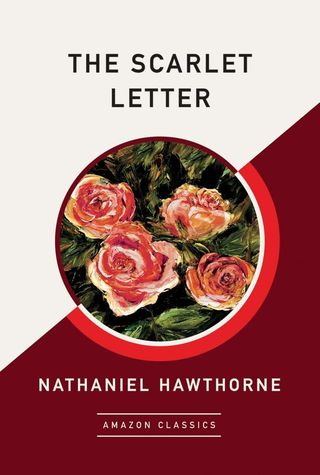
Cover of The Scarlet Letter

The Scarlet Letter

Nathaniel Hawthorne

Original language: English · Paperback · ISBN 978-1542046169

Set in a Puritan settlement in seventeenth-century Massachusetts, The Scarlet Letter follows Hester Prynne, a young mother forced to wear a red letter A on her clothing as public punishment for adultery. Her community demands she name the father of her child, but Hester refuses. The novel traces the years she spends raising her daughter Pearl on the margins of a society governed by rigid religious authority, carrying a secret that weighs on more than one person in the colony.

Nathaniel Hawthorne published the book in 1850, subtitling it a romance. Despite that label, much of its energy comes from the tension between private conscience and public judgment. The ministers and magistrates who enforce moral order in the settlement are themselves shaped by concealment and compromise. Hester's defiance of their authority becomes a quiet form of resistance, and her character stands out against the constrained roles available to women in her world.

Hawthorne drew on the history of colonial New England, a region his own ancestors had helped settle. The story examines how a community built on shared faith can become a mechanism of control, and how shame and secrecy alter the people who carry them.

Plot

The red letter A on her dress marks young mother Hester Prynne among her Puritan neighbors, who demand to know who fathered her child. Rumors swirl, but the shunned and shamed Hester keeps her secret―and his―for years, until a guilt-ridden confession reveals the truth, with unexpected consequences. Set in seventeenth-century Massachusetts, Hawthorne’s masterwork was originally subtitled “a romance,” though its themes include the limits of law, the power of religion, and the nature of sin.

Cover of The Secret History

The Secret History

Donna Tartt

Original language: English · Paperback · ISBN 978-1400031702

Richard Papen, a nineteen-year-old from California, arrives at the small, fictional Hampden College in New England and is drawn into an exclusive circle of five Greek students. The group studies under a charismatic classics professor who teaches only a handful of pupils, keeping them apart from the wider campus. Papen finds himself absorbed by their world of ancient languages, philosophical intensity, and social insularity.

The novel opens by revealing that the group has committed a murder, then moves backward and forward to show how a set of intelligent, privileged young people came to cross that line. Their shared obsession with classical Greek ideals of transcendence pulls them away from ordinary college life and gradually from conventional moral boundaries. The tension in the book comes not from whether the act occurred but from the pressures, loyalties, and fractures that follow it.

Donna Tartt published The Secret History in 1992 as her debut novel. It is set during the late 1980s in a rural Vermont-like landscape, and much of its atmosphere depends on the contrast between the closed, ritualistic life of the Greek students and the mundane routines of the campus around them.

Plot

Under the influence of a charismatic classics professor, a group of clever, eccentric misfits at a New England college discover a way of thought and life a world away from their banal contemporaries. But their search for the transcendent leads them down a dangerous path, beyond human constructs of morality.

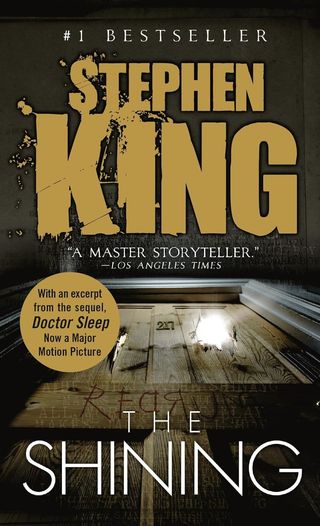
Cover of The Shining

The Shining

Stephen King

Original language: English · Mass Market Paperback · ISBN 978-0307743657

Jack Torrance, a struggling writer and recovering alcoholic, takes a job as the winter caretaker of the Overlook Hotel, a historic property set high in the Colorado Rockies. He brings his wife and young son Danny, hoping the months of isolation will give him space to repair his family life and focus on his work. As heavy snow cuts the hotel off from the outside world, the building begins to exert a disturbing influence. The Overlook has a long, violent history, and its past does not stay quiet.

Danny, who is five years old, has a set of psychic abilities known as the shining. These let him sense things others cannot, including traces of what has happened inside the hotel over the decades. As winter deepens and the family's isolation becomes total, the supernatural presence in the Overlook grows stronger, and Jack's grip on himself begins to slip. The danger facing his wife and son increases steadily.

Published in 1977, The Shining was Stephen King's third novel and his first hardback bestseller. King has said the story drew on his own visit to The Stanley Hotel in Colorado in 1974, as well as his personal struggles with alcoholism. A sequel, Doctor Sleep, followed in 2013.

Plot

Jack Torrance’s new job at the Overlook Hotel is the perfect chance for a fresh start. As the off-season caretaker at the atmospheric old hotel, he’ll have plenty of time to spend reconnecting with his family and working on his writing. But as the harsh winter weather sets in, the idyllic location feels ever more remote . . . and more sinister. And the only one to notice the strange and terrible forces gathering around the Overlook is Danny Torrance, a uniquely gifted five-year-old.

Cover of The Sioux Chef's Indigenous Kitchen

The Sioux Chef's Indigenous Kitchen

Sean Sherman, Beth Dooley

Original language: English · Hardcover · ISBN 978-0816699797

Sean Sherman, an Oglala Lakota chef, wrote this cookbook with Beth Dooley to present a working model of indigenous North American cooking rooted in the Dakota and Minnesota territories. The book deliberately excludes ingredients that arrived with European colonization, including wheat flour, dairy, refined sugar, and domesticated beef and pork. Instead, Sherman builds recipes from foods native to the continent: game such as venison, bison, rabbit, and wild turkey; freshwater fish like river and lake trout; wild plants including purslane, sage, sumac, and timpsula (wild turnip); and fruits such as blueberries and plums.

The recipes range from cedar-braised bison and griddled wild rice cakes to amaranth crackers with smoked white bean paste, roasted corn sorbet, and a three sisters salad based on the traditional combination of corn, beans, and squash. Sherman also covers dried meats, smoked turkey soup, and deviled duck eggs. The approach favors seasonal, locally foraged, and whole-animal preparation methods.

Sherman founded The Sioux Chef as an organization centered on identifying and reclaiming pre-colonial foodways. The cookbook serves as both a practical kitchen guide and a record of ingredients and techniques that predate the foods now commonly associated with Native American cooking, such as fry bread.

Plot

Here is real food—our indigenous American fruits and vegetables, the wild and foraged ingredients, game and fish. Locally sourced, seasonal, “clean” ingredients and nose-to-tail cooking are nothing new to Sean Sherman, the Oglala Lakota chef and founder of The Sioux Chef. In his breakout book, The Sioux Chef’s Indigenous Kitchen, Sherman shares his approach to creating boldly seasoned foods that are vibrant, healthful, at once elegant and easy. Sherman dispels outdated notions of Native American fare—no fry bread or Indian tacos here—and no European staples such as wheat flour, dairy products, sugar, and domestic pork and beef. The Sioux Chef’s healthful plates embrace venison and rabbit, river and lake trout, duck and quail, wild turkey, blueberries, sage, sumac, timpsula or wild turnip, plums, purslane, and abundant wildflowers. Contemporary and authentic, his dishes feature cedar braised bison, griddled wild rice cakes, amaranth crackers with smoked white bean paste, three sisters salad, deviled duck eggs, smoked turkey soup, dried meats, roasted corn sorbet, and hazelnut–maple bites.

Cover of The Sound and the Fury

The Sound and the Fury

William Faulkner

Original language: English · Paperback · ISBN 978-0679732242

The Sound and the Fury follows the Compson family in the American South, once wealthy landowners now struggling to hold on to their standing. The book is divided into four sections, each told from a different vantage point in a distinct style. Among the voices are Benjy, whose sense of time is nonlinear; Quentin, a Harvard student consumed by the family's decline; and Jason, whose cynicism drives the later action.

Faulkner uses stream of consciousness, a way of writing that follows thought as it happens rather than in tidy grammar or chronological order. Benjy's section moves freely between past and present, leaving the reader to assemble events from fragments. A later section turns to Dilsey, the family's Black servant, seen from outside, whose steadiness contrasts with the disorder around her.

The novel is set in Yoknapatawpha County, a fictional part of Mississippi that Faulkner used across many of his books. It was first published in 1929, and its title comes from a speech in Shakespeare's Macbeth. Caddy, the sister at the centre of her brothers' memories, is never given a section of her own, so she is known only through what the others recall of her.

Plot

The Sound and the Fury is the tragedy of the Compson family, featuring some of the most memorable characters in literature: beautiful, rebellious Caddy; the manchild Benjy; haunted, neurotic Quentin; Jason, the brutal cynic; and Dilsey, their black servant. Their lives fragmented and harrowed by history and legacy, the character’s voices and actions mesh to create what is arguably Faulkner’s masterpiece and one of the greatest novels of the twentieth century.

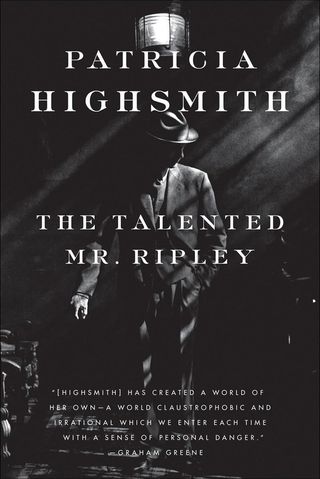
Cover of The Talented Mr. Ripley

The Talented Mr. Ripley

Patricia Highsmith

Original language: English · Paperback · ISBN 978-0393332148

Tom Ripley is a young man in 1950s New York with a murky past and few prospects. When a wealthy industrialist mistakes him for a close friend of his son, Dickie Greenleaf, Ripley accepts a paid commission to travel to Italy and persuade Dickie to come home. Once there, Ripley becomes absorbed by Dickie's leisured expatriate life along the Italian coast and begins to covet it. His fixation sharpens as he watches Dickie's casual attachment to Marge, an American woman living nearby, and what starts as admiration curdles into something far more dangerous.

Patricia Highsmith published this novel in 1955 as the first of five books following Ripley across decades. Rather than building suspense around whether a crime will be solved, the story stays close to Ripley's own perspective, letting the reader watch him calculate, improvise, and rationalize. His talent lies in mimicry and self-invention, skills that make him both effective and unsettling. Highsmith treats his psychology without moral commentary, which gives the narrative an unusual coldness.

The Italian setting, from Rome to the fictional town of Mongibello, grounds the story in specific textures of postwar American life abroad. Class, identity, and the distance between who a person is and who they pretend to be run through every scene.

Plot

It’s here, in the first volume of Patricia Highsmith’s five-book Ripley series, that we are introduced to the suave Tom Ripley, a young striver seeking to leave behind his past as an orphan bullied for being a “sissy.” Newly arrived in the heady world of Manhattan, Ripley meets a wealthy industrialist who hires him to bring his playboy son, Dickie Greenleaf, back from gallivanting in Italy. Soon Ripley’s fascination with Dickie’s debonair lifestyle turns obsessive as he finds himself enraged by Dickie’s ambivalent affections for Marge, a charming American dilettante, and Ripley begins a deadly game.

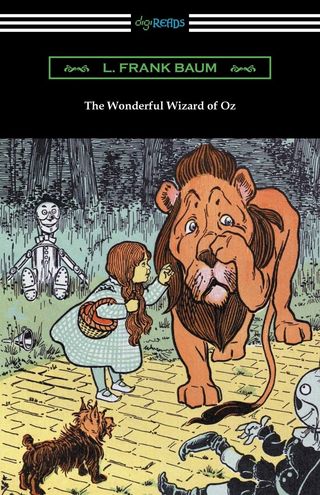
Cover of The Wonderful Wizard of Oz

The Wonderful Wizard of Oz

L. Frank Baum

Original language: English · Paperback · ISBN 978-1420952643

Dorothy lives with her Aunt Em and Uncle Henry on a Kansas farm until a tornado carries her, her house, and her small dog Toto into the Land of Oz. The farmhouse lands in Munchkin Country, and Dorothy finds herself far from anything familiar, wearing a pair of magical Silver Shoes and facing a long road to the Emerald City. She hopes the powerful Wizard who rules there can send her home.

Along the yellow brick road she meets three companions, each seeking something they believe they lack: a Scarecrow who wants a brain, a Tin Woodman who wants a heart, and a Cowardly Lion who wants courage. Together they travel through strange and sometimes dangerous territory, encountering witches both kind and hostile as they press toward the Emerald City and the audience with Oz that each of them needs.

L. Frank Baum first published the story in 1900, and it is often described as the first American fairy tale. Unlike the European folk traditions it drew from, the book set its fantasy in a distinctly American landscape, beginning on the flat prairie of Kansas before shifting into a bright, invented world with its own geography, rules, and politics.

Plot

First published in 1901, “The Wonderful Wizard of Oz” follows the magical adventure of Dorothy, a young girl who lives with her Aunt Em and Uncle Henry on a farm in Kansas. One day when Dorothy is caught up in tornado with her little dog, Toto, she finds her farmhouse has been magically transplanted to Munchkin Country in the mystical Land of Oz. Her house lands on the evil Wicked Witch of the East, killing her, and freeing the Munchkins from her rule. As a reward the Good Witch of the North gives Dorothy the magical Silver Shoes that belonged to the Witch and sets her on her way down the yellow brick road to the Emerald City to ask the Wizard for help in returning to Kansas. Along the way she meets several interesting characters including the Scarecrow, the Tin Woodman, and the Cowardly Lion who join her on her travels to ask the Wizard for help of their own.

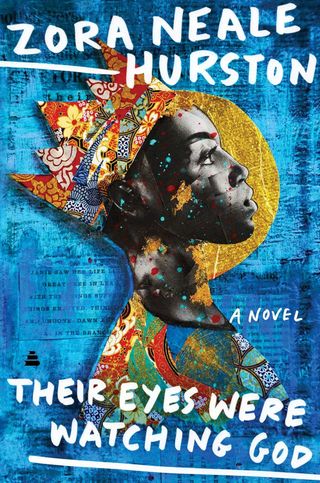
Cover of Their Eyes Were Watching God

Their Eyes Were Watching God

Zora Neale Hurston

Original language: English · Paperback · ISBN 978-0060838676

Their Eyes Were Watching God, published in 1937, is a novel by Zora Neale Hurston set in the rural Black communities of Florida. It is told through Janie Crawford, who returns to her hometown and recounts her life to a friend. Janie moves from a naive teenager through three marriages, each shaping her sense of independence and selfhood. Hurston wrote much of the dialogue in the vernacular speech of the rural South.

Janie's path carries her from a small settlement to the muck farms of the Everglades, where migrant workers harvest beans and sugarcane. A hurricane on Lake Okeechobee becomes a turning point. Throughout, the novel examines what it means for a Black woman in the early twentieth-century South to seek a life defined on her own terms rather than by the expectations of others.

The book met a mixed response when it first appeared and went out of print for decades. After a 1978 reissue, it found a wide readership and became one of the most studied novels in African-American literature. Hurston was also a folklorist and anthropologist who studied at Barnard College under Franz Boas.

Plot

Out of print for almost thirty years—due largely to initial audiences’ rejection of its strong black female protagonist—Hurston’s classic has since its 1978 reissue become perhaps the most widely read and highly acclaimed novel in the canon of African-American literature.

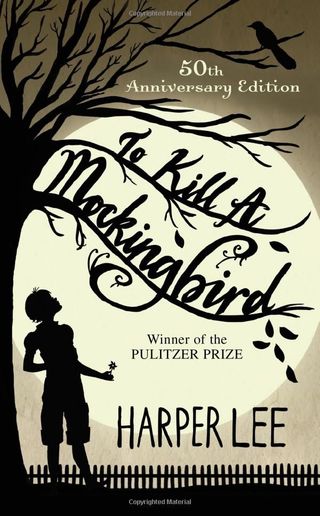
Cover of To Kill a Mockingbird

To Kill a Mockingbird

Harper Lee

Original language: English · Paperback · ISBN 978-0446310789

Set in a small Alabama town during the mid-1930s Depression years, To Kill a Mockingbird follows Scout Finch, a young girl growing up with her brother Jem and their father Atticus, a local lawyer. When Atticus agrees to defend Tom Robinson, a Black man accused of raping a white woman, the family moves to the center of the town's racial tensions. Scout narrates, and her observations record how the adults around her explain themselves.

Harper Lee, an Alabama writer, published the novel in 1960, and it sold strongly from the start. The story sits in a South divided by rigid rules of race and class, where those divisions shaped courtrooms, schoolyards, and ordinary talk between neighbours alike. Lee places humour beside serious material, letting Scout's voice hold both confusion and unusual clarity as she meets situations she cannot yet explain.

Atticus's decision sets his household at odds with much of the community, and the book follows the pressures that fall on the Finch children as well as on their father. Since publication the novel has been translated into more than forty languages and has sold tens of millions of copies worldwide. An American film adaptation followed in 1962.

Plot

Compassionate, dramatic, and deeply moving, To Kill A Mockingbird takes readers to the roots of human behavior - to innocence and experience, kindness and cruelty, love and hatred, humor and pathos. Now with over 18 million copies in print and translated into forty languages, this regional story by a young Alabama woman claims universal appeal.

Cover of We Are La Cocina: Recipes in Pursuit of the American Dream

We Are La Cocina: Recipes in Pursuit of the American Dream

Caleb Zigas, Leticia Landa

Original language: English · Hardcover · ISBN 978-1452167862

La Cocina is a kitchen incubator based in San Francisco that offers affordable commercial cooking space, business guidance, and market access to immigrant women and women of color looking to build food businesses. This book, co-authored by Caleb Zigas and Leticia Landa, collects recipes and personal stories from more than fifty entrepreneurs who have passed through the program. The dishes draw from a wide geographic range, including Mexico, Japan, Brazil, Senegal, Vietnam, and other countries, reflecting the backgrounds of the cooks who developed them.

The collection contains over one hundred recipes suited to different occasions and skill levels. Alongside the food, each contributor shares a narrative about starting a business, adapting to a new country, and working within a supportive community kitchen. Photographer Eric Wolfinger, described in the record as award-winning, provides more than 150 images of the people and their dishes.

The book is organized around the idea that food entrepreneurship can be a practical path toward economic stability for communities that often face barriers to entry in the restaurant industry. Rather than presenting a single cuisine, it maps a network of traditions carried into one city by cooks from many different starting points.

Plot

With 100+ recipes that span the globe from the United States, Mexico, Japan, Brazil, Senegal, Vietnam, and many more: Powerful stories. Beautifully evocative visuals. More than 100 recipes for all occasions, from many cultures. Here, in La Cocina's first cookbook, more than 50 successful La Cocina entrepreneurs share their inspiring narratives—and their delicious recipes! This is the book for cooks who love great global recipes and support organizations that make a big difference. More than 150 photographs from award-winning photographer Eric Wolfinger capture the spirit of the people, the mouthwatering food, and the diversity of the immigrant experience. La Cocina is an incubator kitchen that provides affordable commercial kitchen space, industry-specific technical assistance, and access to market opportunities to women of color and immigrant communities.

Cover of Where the Crawdads Sing

Where the Crawdads Sing

Delia Owens

Original language: English · Hardcover · ISBN 978-0735219090

Kya Clark grows up nearly alone in the coastal marshlands of North Carolina, abandoned by her family one member at a time. The locals in the nearby town of Barkley Cove call her the Marsh Girl, a label that keeps her at a distance from ordinary life. She learns to feed herself, navigate tidal channels, and study the habits of birds and insects with close attention. Her isolation is both a source of pain and a form of education that no school could provide.

In late 1969, a young man named Chase Andrews is found dead, and suspicion falls on Kya. The story moves between two timelines: one follows the murder investigation and the legal case that builds around it, while the other traces Kya's earlier years as she cautiously forms connections with two young men from town. These relationships expose her to affection, betrayal, and the complicated dynamics of a community that has always regarded her as an outsider.

Delia Owens sets the novel in the salt marshes and estuaries of a fictionalized stretch of the North Carolina coast. The landscape functions as both shelter and character, shaping the rhythms of daily survival and the biological knowledge Kya accumulates over years of solitary observation.

Plot

For years, rumors of the “Marsh Girl” have haunted Barkley Cove, a quiet town on the North Carolina coast. So in late 1969, when handsome Chase Andrews is found dead, the locals immediately suspect Kya Clark, the so-called Marsh Girl. But Kya is not what they say. Sensitive and intelligent, she has survived for years alone in the marsh that she calls home, finding friends in the gulls and lessons in the sand. Then the time comes when she yearns to be touched and loved. When two young men from town become intrigued by her wild beauty, Kya opens herself to a new life—until the unthinkable happens.

More from United States

See the country page for United States for its map, facts and largest cities, or browse books from other countries.

Free editions are on Project Gutenberg, matched by title and author. Links go to Amazon; Hookito doesn’t sell books. Know a book that belongs here, or spotted a mistake? Write to submissions@hookito.com.