Hookito

Venezuela · Books

Books from Venezuela
6 books from and about Venezuela: what each is about, the plot, and a note from Professor Kogi.

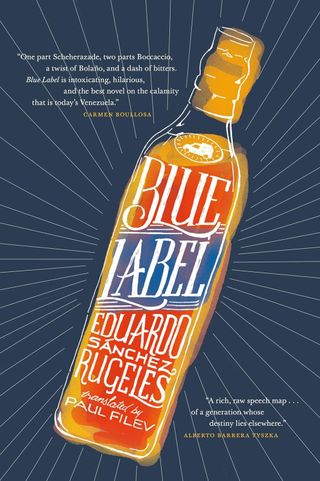
Cover of Blue Label

Blue Label

Eduardo Sánchez Rugeles

Original language: Spanish · Paperback · ISBN 978-1885983572

Eugenia Blanc is a teenager in Caracas with a single fixed goal: to leave Venezuela for good once she finishes high school. To do that she needs documents only her grandfather can provide, and reaching him means setting off on an unplanned road trip in a battered Fiat alongside Luis Tévez, a restless classmate whose company she did not entirely plan on. The two travel through a country shaped by the presidency of Hugo Chávez, and their hesitant, uneasy connection develops against a backdrop of political tension and personal uncertainty.

The novel moves between two periods. One is the present of Eugenia and Luis's trip during the Chávez years. The other reaches back into the 1990s, a decade marked by deep inequality, corruption, violence, and institutional failure across Venezuela. Eduardo Sánchez Rugeles uses that earlier era to trace the conditions that eventually brought Chávez to power, linking the country's recent past to the frustrations driving Eugenia's desire to emigrate.

Blue Label is Sánchez Rugeles's first novel and received a literary prize. The narrative threads a coming-of-age story through national upheaval, grounding broad political questions in the specific choices of two young people on a road with no guaranteed destination.

Plot

Eugenia Blanc, a young Caraqueñan and quintessential teenager at war with the world around her, has one aim: after graduating from high school, to abandon Venezuela definitively. She embarks on a spontaneous road trip in a banged-up Fiat with her rebellious classmate Luis Tévez, in search of her grandfather, the one person who can provide her with the documents that would allow her to leave the country. While Eugenia and Luis’s tentative, troubled romance unfolds during the Chávez era, the story also looks back at Venezuela’s “lost decade” of the 1990s, a time of intractable violence, inequality, corruption, and instability that led to Chávez’s election.
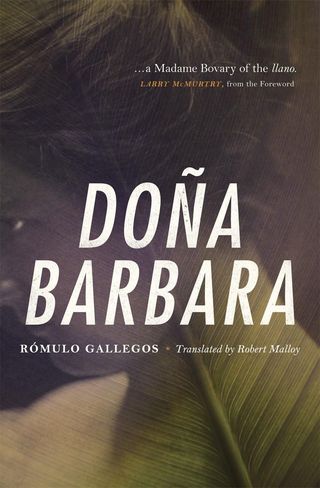
Cover of Doña Barbara

Doña Barbara

Rómulo Gallegos

Original language: Spanish · Paperback · ISBN 978-0226279206

Published in 1929, Doña Barbara is a novel by Venezuelan author Rómulo Gallegos set on the vast llano, the open prairie lands of Venezuela. The story follows a conflict between two cousins over a large estate and ranch. Santos Luzardo, an educated man, returns to the plains to reclaim his land and cattle. He finds himself opposed by Doña Barbara, a powerful and enigmatic woman rumored to possess supernatural abilities and known for her fierce hold over the men around her. Their confrontation plays out through both force and attraction.

The novel frames their struggle as a wider tension between urban and rural life, between intellect and violence. Gallegos renders the Venezuelan plains in close detail, populating them with rough ranchers, resourceful cowboys, and characters drawn in broad, vivid strokes. The landscape itself becomes central to the narrative, shaping the lives and decisions of everyone on it.

Doña Barbara is recognized as an early example of magical realism in Latin American fiction. The novel preceded and influenced later writers in the tradition, among them Gabriel García Márquez and Mario Vargas Llosa. Though widely read in Spanish, the book has been less well known among English-language audiences.

Plot

Following the epic struggle between two cousins for an estate in Venezuela, Doña Barbara is an examination of the conflict between town and country, violence and intellect, male and female. Doña Barbara is a beautiful and mysterious woman—rumored to be a witch—with a ferocious power over men. When her cousin Santos Luzardo returns to the plains in order to reclaim his land and cattle, he reluctantly faces off against Doña Barbara, and their battle becomes simultaneously one of violence and seduction. All of the action is set against the stunning backdrop of the Venezuelan prairie, described in loving detail. Gallegos’s plains are filled with dangerous ranchers, intrepid cowboys, and damsels in distress, all broadly and vividly drawn.

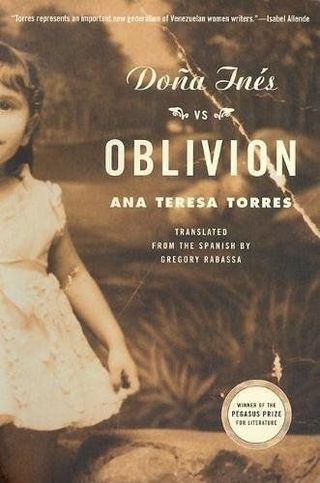
Cover of Doña Inés vs. Oblivion

Doña Inés vs. Oblivion

Ana Teresa Torres

Original language: Spanish · Paperback · ISBN 978-0802137265

In eighteenth-century Caracas, Dona Ines is the matriarch of a prosperous planter family locked in a legal battle over a coastal-province plantation. Her late husband left the land to his illegitimate son, born to an enslaved Black woman, and Dona Ines is determined to reclaim what she considers rightfully hers. She spends her remaining years searching for the original deed, vowing never to give up. When she dies in 1780, the dispute is still unresolved.

Her voice, however, does not stop. As a narrating spirit, Dona Ines continues to observe and comment across two centuries of Venezuelan history: revolutions, natural disasters, shifting racial and social boundaries, and the slow transformation of Caracas from a colonial village into a sprawling modern city. The property conflict persists through generations of her descendants, who gradually lose the resolve she once carried.

Ana Teresa Torres, a Venezuelan novelist, uses this single family grievance as a lens onto the country's larger changes. The story traces how class, race, and law intersect over time, while Dona Ines watches her world become something she can no longer recognize. The Washington Post Book World described the novel as an example of Latin American magical realism from a remarkable voice.

Plot

Dona Ines, matriarch of a wealthy family in eighteenth-century Caracas, is suing to regain the land her late husband bequeathed to his illegitimate mulatto son. Searching in vain for the original deed, she vows not to quit until the dust from the ancient documents rises up and chokes her. In 1780 she dies -- but the spirit of Dona Ines continues her quest through another two centuries of revolution, natural disaster, change, and social turmoil, riding the passionate tide of Venezuelan history to an ultimate conclusion. Beautiful, trenchant, and wickedly funny, it establishes Ana Teresa Torres as an important voice in world literature.

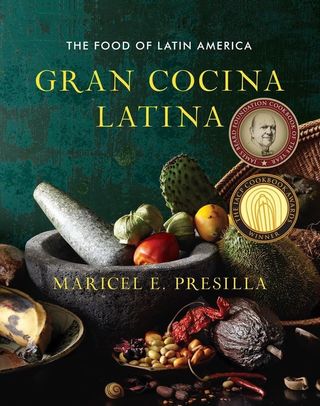
Cover of Gran Cocina Latina: The Food of Latin America

Gran Cocina Latina: The Food of Latin America

Maricel E. Presilla

Original language: English · Hardcover · ISBN 978-0393050691

Gran Cocina Latina gathers more than 500 recipes drawn from across Latin America. Its map runs south from Mexico, takes in the Caribbean islands where Spanish is spoken, and ends in Argentina. Maricel E. Presilla, a trained historian who also co-owns two Latin restaurants in Hoboken, New Jersey, spent over thirty years visiting these countries in person to collect the dishes.

The recipes begin with base preparations: adobos, which are seasoning pastes or marinades, and sofritos, the cooked aromatic mixtures that start many dishes. From there the book moves through empanadas and tamales, ceviches and moles, the stew called sancocho, and sweets including flan and tres leches cake. Equipment notes, drink and serving ideas, and color photographs of finished plates accompany the text.

Presilla's research background shapes how the material is arranged, with notes on where dishes come from and how ingredients and methods shift across borders. Rather than separating national cuisines into sealed chapters, the volume treats the region as one connected cooking area whose shared techniques take on local forms. It is aimed at home cooks, chefs, and readers who travel by page.

Plot

In one volume it gives home cooks, armchair travelers, and curious chefs the first comprehensive collection of recipes from this region. An inquisitive historian and a successful restaurateur, Maricel E. Presilla has spent more than thirty years visiting each country personally. She’s gathered more than 500 recipes for the full range of dishes, from the foundational adobos and sofritos to empanadas and tamales to ceviches and moles to sancocho and desserts such as flan and tres leches cake. Detailed equipment notes, drink and serving suggestions, and color photographs of finished dishes are also included. This is a one-of-a-kind cookbook to be savored and read as much for the writing and information as for its introduction to heretofore unrevealed recipes.

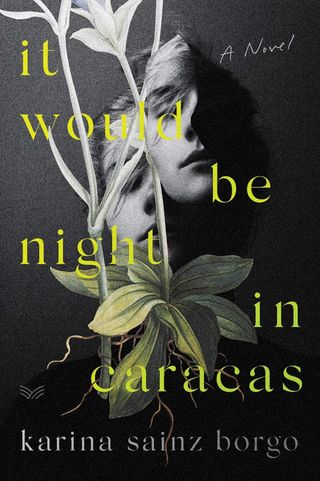
Cover of It Would Be Night in Caracas

It Would Be Night in Caracas

Karina Sainz Borgo

Original language: Spanish · Hardcover · ISBN 978-0062936868

Adelaida Falcón buries her mother in Caracas and worries that thieves will rob the grave before morning. She is now alone, without any remaining family, in a city where even the dead are not safe. Karina Sainz Borgo's debut novel opens at this stark moment and moves between Adelaida's memories of a more stable Venezuela and the violent present closing in around her.

Adelaida grew up in a country that once welcomed immigrants and offered a degree of everyday prosperity. She and her single mother shared a modest apartment in relative calm. The Venezuela she now inhabits is defined by bread lines that run out before she reaches the counter and tear gas that seeps through taped-shut windows at night. When a group of looters acting under the banner of revolution seize her apartment, Adelaida faces a set of dangerous decisions about how far she will go to survive.

Sainz Borgo, a Venezuelan journalist based in Spain, sets the novel against a recognizable collapse of civic order. The story stays close to one woman's perspective, tracing how personal grief and political disintegration press against each other in a city where ordinary routines have broken down. Caracas itself functions almost as a second character, its streets and shortages shaping every choice Adelaida can make.

Plot

In Caracas, Venezuela, Adelaida Falcón stands over an open grave. Alone, she buries her mother—the only family she has ever known—and worries that when night falls thieves will rob the grave. Even the dead cannot find peace here. Adelaida had a stable childhood in a prosperous Venezuela that accepted immigrants in search of a better life, where she lived with her single-mother in a humble apartment. But now? Every day she lines up for bread that will inevitably be sold out by the time she reaches the registers. Every night she tapes her windows to shut out the tear gas raining down on protesters. When looters masquerading as revolutionaries take over her apartment, Adelaida must make a series of gruesome choices in order to survive in a country disintegrating into anarchy, where citizens are increasingly pitted against each other. But just how far is she willing to go?

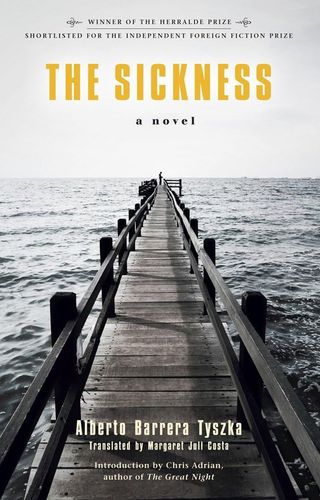
Cover of The Sickness

The Sickness

Alberto Barrera Tyszka

Original language: Spanish · Paperback · ISBN 978-1935639251

Dr. Miranda knows death well enough as a physician, but when his own father is diagnosed with terminal cancer and given only weeks to live, professional familiarity offers no comfort. He faces a specific, painful question: how to tell his father the truth. Meanwhile, one of his patients, Ernesto Duran, is gripped by the conviction that he is gravely ill. Since separating from his wife, Duran has developed persistent symptoms he believes are fatal. His certainty grows into something beyond ordinary hypochondria, and when Miranda stops responding to his letters and messages, Duran begins to follow him.

The two storylines run side by side, contrasting real terminal illness with illness that may exist only in the mind. A third figure, Miranda's secretary, is gradually drawn into Duran's fixation. Despite her own reluctance, she finds herself unable to stay detached from his distress. The novel uses these intersecting lives to examine how sickness reshapes relationships, erodes control, and blurs the line between caretaker and patient.

Alberto Barrera Tyszka is a Venezuelan writer, and the novel was originally published in Spanish. The story is set in a world of clinics, waiting rooms, and unanswered correspondence, where medical authority meets the limits of what any person can manage alone.

Plot

Dr. Miranda is faced with a tragedy: his father has been diagnosed with terminal cancer and has only a few weeks to live. He is also faced with a dilemma: How does one tell his father he is dying? Ernesto Duran, a patient of Dr. Miranda’s, is convinced he is sick. Ever since he separated from his wife he has been presenting symptoms of an illness he believes is killing him. It becomes an obsession far exceeding hypochondria. The fixation, in turn, has its own creeping effect on Miranda’s secretary, who cannot, despite her best intentions, resist compassion for the man.

More from Venezuela

See the country page for Venezuela for its map, facts and largest cities, or browse books from other countries.

Links go to Amazon; Hookito doesn’t sell books. Know a book that belongs here, or spotted a mistake? Write to submissions@hookito.com.