Hookito

South Africa · Books

Books from South Africa
4 books from and about South Africa: what each is about, the plot, and a note from Professor Kogi.

Cover of Cry, the Beloved Country

Cry, the Beloved Country

Alan Paton

Original language: English · Paperback · ISBN 978-0743262170

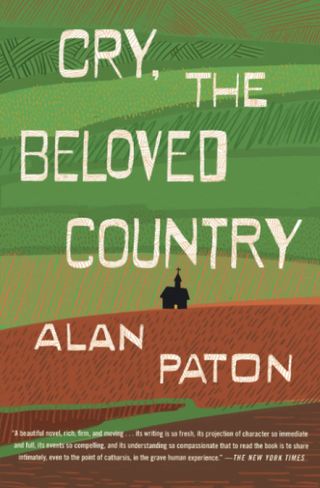
Cry, the Beloved Country follows Stephen Kumalo, a Zulu pastor from a rural village in South Africa, as he travels to Johannesburg in search of his son Absalom. The city he finds is vast and unfamiliar, shaped by the forces of industrialization and segregation under apartheid-era laws. Kumalo's search leads him through neighborhoods where Black South Africans live under tight restrictions, and the story traces how systemic inequality fractures families, communities, and the land itself.

Absalom's path in the city has taken a direction his father did not expect, and much of the novel's tension comes from Kumalo confronting what has happened to his son and to others who left the countryside for Johannesburg. Paton sets the personal grief of one family against the wider breakdown of a society divided by race. The novel moves between rural Natal and the sprawling city, contrasting the rhythms of village life with the pressures of urban poverty and displacement.

First published in 1948, the same year South Africa's National Party came to power and formalized apartheid, the book became an international bestseller. Paton wrote in a lyrical, repetitive prose style influenced by Zulu speech patterns and biblical cadence.

Plot

Cry, the Beloved Country, is the deeply moving story of the Zulu pastor Stephen Kumalo and his son, Absalom, set against the background of a land and a people riven by racial injustice. Remarkable for its lyricism, unforgettable for character, and incident, Cry, the Beloved Country is a classic work of love and hope, courage and endurance, born of the dignity of man.
Cover of Disgrace

Disgrace

J.M. Coetzee

Original language: English · Paperback · ISBN 978-0140296402

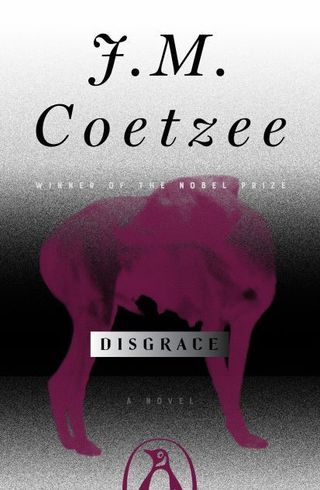
David Lurie, a fifty-two-year-old literature professor in Cape Town, loses his university position after a sexual affair with one of his students. Divorced and now cut off from colleagues and social standing, he drives to the Eastern Cape to stay with his adult daughter Lucy, who lives alone on a small farm. What begins as a temporary visit stretches into something longer as David tries to rebuild a connection with the one person still willing to tolerate him.

On Lucy's property, David begins volunteering at an animal clinic run by a local friend, while Lucy tends her land with the help of a neighbor named Petrus. The rural setting places both father and daughter inside the shifting power structures of post-apartheid South Africa, where questions of ownership, obligation, and historical guilt press on daily life. A brutal attack on the farm forces each of them to respond in sharply different ways, exposing a deep rift in how they understand dignity, justice, and survival.

J.M. Coetzee sets the novel's tensions between personal failure and larger social fractures. Lurie's fall from professional life mirrors a country working through its own unresolved reckonings, and neither story offers comfortable resolution.

Plot

At fifty-two, Professor David Lurie is divorced, filled with desire, but lacking in passion. When an affair with a student leaves him jobless, shunned by friends, and ridiculed by his ex-wife, he retreats to his daughter Lucy's smallholding. David's visit becomes an extended stay as he attempts to find meaning in his one remaining relationship. Instead, an incident of unimaginable terror and violence forces father and daughter to confront their strained relationship and the equallity complicated racial complexities of the new South Africa.

Cover of The Power of One

The Power of One

Bryce Courtenay

Original language: English · Paperback · ISBN 978-0345410054

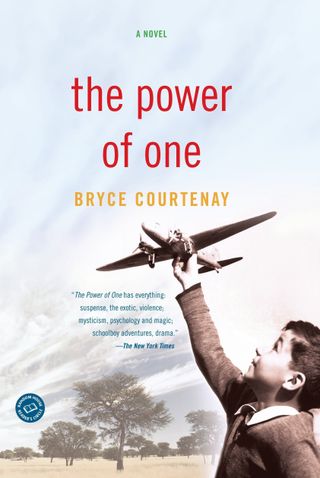
In 1939, as tensions rise in Europe and apartheid begins to tighten its grip on South Africa, a five-year-old British boy named Peekay enters a boarding school. There he faces harsh treatment and isolation from other children. Determined to endure, he makes a private vow to survive and discovers an unexpected source of support: a chicken that becomes his first real friend.

Over the following years, Peekay crosses paths with a diverse group of people who shape his life. A boxer teaches him discipline, a pianist introduces him to music, and several black African prisoners share their knowledge and strength. Each encounter gives him a new perspective on power and survival in a country divided by racial laws and superstition.

The story follows Peekay from age five to eleven, weaving together his growth in the boxing ring and his growing understanding of words as tools for change. Set against the backdrop of World War II and South Africa's emerging apartheid system, the novel explores how one person can find courage and purpose in a world that often seems hostile.

Plot

In 1939, as Hitler casts his enormous, cruel shadow across the world, the seeds of apartheid take root in South Africa. There, a boy called Peekay is born. His childhood is marked by humiliation and abandonment, yet he vows to survive and conceives heroic dreams–which are nothing compared to what life actually has in store for him. He embarks on an epic journey through a land of tribal superstition and modern prejudice where he will learn the power of words, the power to transform lives, and the power of one.

Cover of Traditional South African Cooking

Traditional South African Cooking

Pat Barton

Original language: English · Paperback · ISBN 978-1432303471

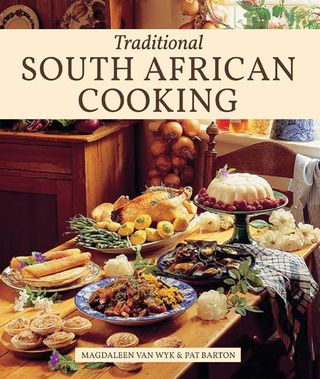
Traditional South African Cooking by Pat Barton is a recipe collection rooted in the country's layered food history. South African cuisine draws from Dutch, French, German, and British settler traditions, as well as from Malay cooking brought by communities who arrived from Southeast Asia. The book gathers dishes that reflect these overlapping influences, presenting them for home cooks working in modern kitchens.

Among the recipes are well-known South African staples such as milk tart (melktert), melkkos (a warm milk-based dish thickened with flour), bobotie (a spiced meat bake topped with an egg custard layer), and vetkoek (deep-fried dough often filled with mince or spread with butter and jam). These are dishes closely tied to family kitchens and handed-down knowledge, and the book aims to record them clearly enough for a new generation of cooks to reproduce them at home.

The collection focuses on preservation rather than innovation. Its purpose is practical: to gather familiar recipes that might otherwise survive only in handwritten notes or memory, and to present them in a single, accessible volume organized for everyday use.

Plot

Anyone who longs for a beloved grandmother’s famous milk tart or melkkos, or a great aunt’s delicious bobotie or vetkoek, should have this book in his or her kitchen! Traditional South African Cooking is a collection of well-known South African recipes that will enable the modern cook to continue the tradition and produce the same delicious meals that our ancestors used to enjoy.

More from South Africa

See the country page for South Africa for its map, facts and largest cities, or browse books from other countries.

Links go to Amazon; Hookito doesn’t sell books. Know a book that belongs here, or spotted a mistake? Write to submissions@hookito.com.