
Hookito

Bolivia · Books

Books from Bolivia

6 books from and about Bolivia: what each is about, the plot, and a note from Professor Kogi.

Cover of Affections

Affections

Rodrigo Hasbún

Original language: Spanish · Hardcover · ISBN 978-1501154799

Affections is a short novel by Rodrigo Hasbún, drawn from the real history of Hans Ertl, a German cinematographer who worked with Nazi propagandist Leni Riefenstahl. After the Second World War, Ertl and his family relocated to Bolivia to begin a new life. The novel follows the family across the 1950s and 1960s, a period of both political optimism and upheaval in South America. Hans remains driven by grand, reckless ambitions, and at one point leads two of his daughters on an expedition into the Amazon in search of the legendary lost Inca city of Paititi. The venture ends badly.

The story traces each family member along a separate path. Hans pursues enormous projects that tend toward spectacular failure. His daughter Monika, who shares his restless temperament, eventually joins Bolivian Marxist guerrillas and becomes known in connection with the legacy of Che Guevara. His wife and two younger daughters are left to manage the damage created by Hans and Monika's choices.

Hasbún uses multiple voices and perspectives to chart how the family gradually comes apart. The title points to the bonds that once held the Ertls together and the slow erosion of those bonds under the pressure of ego, ideology, and distance.

Plot

Inspired by real events, Affections is the story of the eccentric, fascinating Ertl clan, headed by the egocentric and extraordinary Hans, once the cameraman for the Nazi propagandist Leni Riefenstahl. Shortly after the end of World War II, Hans and his family flee to Bolivia to start over. There, the ever-restless Hans decides to embark on an expedition in search of the fabled lost Inca city of Paitití, enlisting two of his daughters to join him on his outlandish quest into the depths of the Amazon, with disastrous consequences.
Cover of Norte

Norte

Edmundo Paz Soldán

Original language: Spanish · Paperback · ISBN 978-0226207209

Norte follows three separate individuals heading north across the Mexico-US border, each making the crossing alone and unaware of the others. Their paths do not overlap at first, but the novel gradually draws connections between them as their experiences begin to intersect. Among the figures who populate their stories are a young serial killer, a waitress who is also a graphic novelist alongside her lover and former professor, and an outsider artist confined to a mental institution.

Edmundo Paz Soldán, a Bolivian writer, constructs the book from multiple voices and fragmented perspectives. The structure mirrors the disorientation of border crossing itself, layering distinct narrators whose accounts slowly converge. Paz Soldán has been identified as part of a newer generation of Latin American authors who work outside the tradition of magical realism, focusing instead on political, economic, and historical conditions. Norte reflects that approach, grounding its fiction in the concrete tensions surrounding migration, violence, and the dividing line between two countries.

The novel shifts between settings on both sides of the border, moving through landscapes shaped by institutional confinement, precarious labor, and creative expression under pressure. Its characters occupy positions of vulnerability, each carrying separate reasons for heading north and separate consequences for arriving.

Plot

Three unconnected people travel north, each passing in isolation over one of the most troubled and controversial dividing lines in the world: the Mexico‒US border. But in a melee of language and blood, their stories and the stories of those they meet—of a young serial killer, a waitress and graphic novelist and her lover (and former professor), and an outsider artist in a mental institution—gradually begin to coalesce. Daring in both its protagonists and its structure, Edmundo Paz Soldán’s Norte is a fast-paced, vivid, and operatic blending of distinct voices. Together, they lay bare the darkness of the line over which these souls—like so many others—have passed.

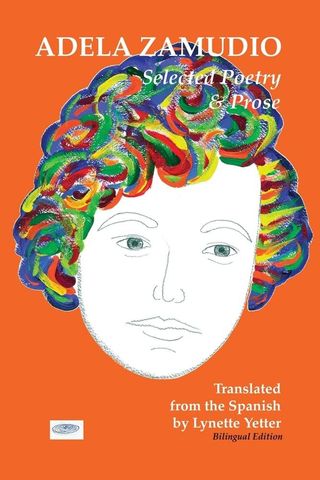
Cover of Selected Poetry & Prose

Selected Poetry & Prose

Adela Zamudio

Original language: Spanish · Paperback · ISBN 978-0984375677

Adela Zamudio (1854-1928) was a self-taught Bolivian writer and educator who became one of the country's most prominent literary figures. This bilingual collection, translated from Spanish by Lynette Yetter, gathers poetry and prose that had largely remained unavailable in English. Zamudio wrote during a period when women in Bolivia had limited access to formal education, and she became an outspoken advocate for women's rights and for Indigenous communities.

The book includes several contextual chapters alongside the translated works. An introduction by Bolivian scholar Virginia Ayllón outlines Zamudio's biography and the cultural setting she wrote within. Her poetry addressed gender inequality with pointed irony, and some of her writing openly celebrated lesbian love. At some point during her lifetime, the President of Bolivia honored her with gold laurel leaves in recognition of her cultural contributions.

Zamudio's work spans lyric verse and prose pieces that mix personal observation with social criticism. The bilingual format places Spanish originals alongside their English translations, allowing readers familiar with either language to compare the two. As the first English-language collection dedicated to her writings, this volume serves as a starting point for encountering her work outside the Spanish-speaking world.

Plot

elf-taught, Zamudio was the mother of feminism and women's education in Bolivia and was active for Indigenous People's rights. The President of Bolivia crowned her with gold laurel leaves in honor of her cultural contributions. Adela Zamudio: Selected Poetry & Prose, translated from Spanish by Lynette Yetter, presents a bilingual overview of Zamudio's work, much of which was previously untranslated. Several chapters, including the Introduction by Bolivian Zamudio scholar Virginia Ayllón, outline Zamudio's biography and the cultural context in which she wrote. Adela Zamudio's celebration of lesbian love and her ironic cultural critiques continue to resonate today.

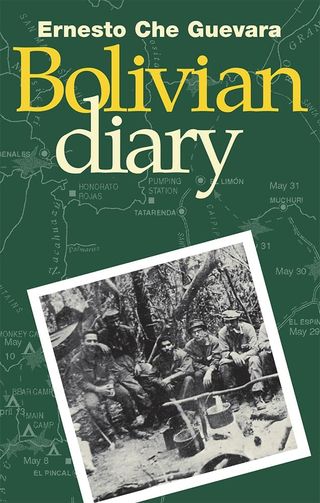
Cover of The Bolivian Diary of Ernesto Che Guevara

The Bolivian Diary of Ernesto Che Guevara

Ernesto Che Guevara

Original language: Spanish · Paperback · ISBN 978-0873487665

Between November 1966 and October 1967, Ernesto Che Guevara led a guerrilla campaign in Bolivia and kept a daily written record of it. His entries track the fight against the country's military government and the larger goal behind it: uniting workers and farmers across the continent in one revolutionary movement that could bring socialist change to South America.

Born in Argentina in 1928, Guevara finished medical school in 1953 and set out to travel the Americas. In Guatemala during 1954 he entered political struggle, backing President Jacobo Arbenz while the CIA worked to bring that elected government down. He escaped to Mexico, joined Fidel Castro's July 26 Movement, and sailed to Cuba on the yacht Granma in December 1956 as the troop's doctor.

Batista fell on January 1, 1959, and Guevara became a central figure in the new government, serving as minister of industry and heading the national bank. He resigned his posts in early 1965 and left Cuba, going first to the Congo. This edition adds excerpts from diaries and accounts by other combatants, including My Campaign with Che by Bolivian leader Inti Peredo, in English for the first time.

Plot

Includes excerpts from the diaries and accounts of other combatants, including—for the first time in English—My Campaign with Che by Bolivian leader Inti Peredo.

Cover of The Latin American Cookbook

The Latin American Cookbook

Virgilio Martínez

Original language: Spanish · Hardcover · ISBN 978-1838663124

The Latin American Cookbook by Virgilio Martínez gathers more than 600 recipes from twenty countries across Central and South America, plus the Caribbean coast. The collection spans Argentina, Belize, Bolivia, Brazil, Chile, Colombia, Costa Rica, Ecuador, El Salvador, Guatemala, Guyana, Honduras, Mexico, Nicaragua, Panama, Paraguay, Peru, Suriname, Uruguay, and Venezuela. Martínez, a Peruvian chef, organizes a geography of cooking shaped by indigenous traditions alongside European, Asian, and other influences that arrived over centuries of migration and trade.

Alongside widely recognized dishes such as empanadas, tamales, arepas, tortillas, quesadillas, and tacos, the book includes lesser-known preparations like Chilean disco fries, Nicaraguan squash stew, and Ecuadorian Easter soup. The recipes are written for home cooks rather than professional kitchens, and the range of dishes reflects both everyday meals and seasonal or regional specialties.

The scope of the book treats Latin America as a single culinary landscape while still marking where individual recipes belong. Ingredients and techniques shift noticeably from the highlands of Bolivia and Peru to the tropical lowlands of Guyana and Suriname, and the collection maps those differences through specific dishes rather than broad generalizations.

Plot

Discover traditional and popular recipes for home cooks from Argentina, Belize, Bolivia, Brazil, Chile, Colombia, Costa Rica, Ecuador, El Salvador, Guatemala, Guyana, Honduras, Mexico, Nicaragua, Panama, Paraguay, Peru, Suriname, Uruguay, and Venezuela, with dishes ranging from iconic - Empanadas, Tamales, Arepas, Tortillas, Quesadillas, and Tacos - to lesser-known specialties - Chilean Disco Fries, Nicaraguan Squash Stew, and Ecuadorian Easter Soup.

Cover of Turing's Delirium

Turing's Delirium

Edmundo Paz Soldan

Original language: Spanish · Paperback · ISBN 978-0618872596

Set in a near-future Bolivia, Turing's Delirium follows Miguel Saenz, known by his codename Turing, a seasoned cryptanalyst working for a covert state agency called the Black Chamber. His job is to break codes and track threats to the government. His current assignment is to locate Kandinsky, a hacktivist figure leading digital attacks against both the Bolivian state and the transnational corporations operating in the country. Kandinsky's campaign is framed as part of a broader antiglobalization movement, and the Black Chamber considers it a serious security risk.

As Turing pursues Kandinsky through layers of encrypted communication and shifting alliances, he encounters murder, manipulation, and institutional secrecy. The trail forces him to reconsider his own role inside the Black Chamber and whether the work he has carried out over the years has served the purposes he assumed. The novel draws on themes of surveillance, political control, and the uneasy relationship between technology and state power.

Edmundo Paz Soldán, a Bolivian writer, sets the story in a version of Bolivia where digital infrastructure and political tension coexist with older patterns of government secrecy. The fictional Black Chamber takes its name from a term historically used for cryptanalysis offices in several countries.

Plot

Bolivia in the near future. Miguel “Turing” Saenz, a veteran cryptanalyst, is the most famous code-breaker in the employment of a secret government organization known as the Black Chamber. He is leading the pursuit of the Chamber’s latest target: Kandinsky, a “cyberhacktivist” leader who is staging a war against both the government and the country’s transnational corporations as part of an antiglobalization revolution. As Turing finds himself drawn into a web of murder, intrigue, and deception, he begins to suspect that his work is not as innocent as he once believed.

More from Bolivia

See the country page for Bolivia for its map, facts and largest cities, or browse books from other countries.

Links go to Amazon; Hookito doesn’t sell books. Know a book that belongs here, or spotted a mistake? Write to submissions@hookito.com.

Where to next?

Back to the globe
Hookito landscape illustration