Hookito

Cuba · Books

Books from Cuba

10 books from and about Cuba: what each is about, the plot, and a note from Professor Kogi.

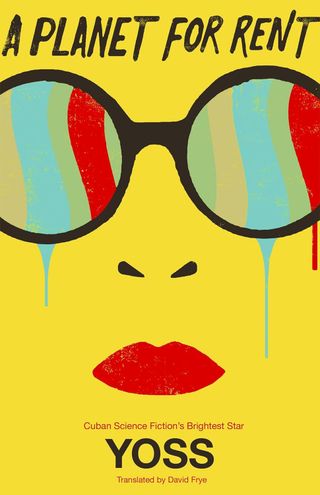
Cover of A Planet for Rent

A Planet for Rent

Yoss

Original language: Spanish · Paperback · ISBN 978-1632060365

A Planet for Rent is a science fiction novel by Yoss, Cuba's most celebrated writer in the genre. It imagines a future Earth overwhelmed by economic collapse and environmental decay, where alien species arrive as supposed rescuers. These powers reshape the planet into a tourist destination under their control, imposing a rigid interstellar bureaucracy on the human population left behind.

Humans in this future occupy narrow and often degrading roles. Some join the colonial police that serve the new rulers. Others survive through black markets, drug dealing, or art. Some sell sex to visiting extraterrestrials. Those who refuse every available path may try to leave the planet aboard makeshift ships with little chance of safe arrival. Each route carries its own cost.

The novel draws direct parallels between its invented interstellar hierarchy and Cuba in the 1990s, when economic crisis narrowed daily choices. Yoss looks at colonialism from the position of the colonized, along with tourism, dependency, and the bureaucratic machinery that decides who may travel and who must stay. A Planet for Rent was his first book to appear in English translation.

Plot

Out of the modern-day dystopia of Cuba comes an instant classic from the island’s most celebrated science fiction author: a raucous tale of a future in which a failing Earth is at the mercy of powerful capitalist alien colonizers. In A Planet for Rent, Yoss critiques life under Castro in the ‘90s by drawing parallels with a possible Earth of the not-so-distant future. Wracked by economic and environmental problems, the desperate planet is rescued, for better or worse, by alien colonizers, who remake the planet as a tourist destination. Ruled over by a brutal interstellar bureaucracy, dispossessed humans seek better lives via the few routes available―working for the colonial police; eking out a living as black marketeers, drug dealers, or artists; prostituting themselves to exploitative extraterrestrial visitors―or they face the cold void of space in rickety illegal ships.
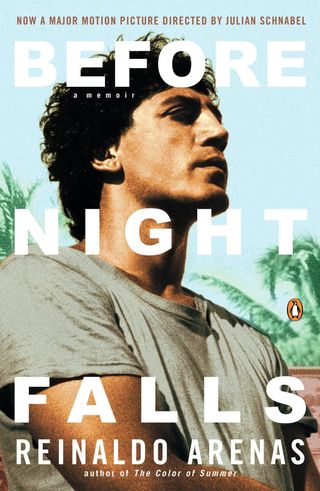
Cover of Before Night Falls

Before Night Falls

Reinaldo Arenas

Original language: Spanish · Paperback · ISBN 978-0140157659

Before Night Falls is the autobiography of Reinaldo Arenas, a Cuban writer who grew up in rural poverty in eastern Cuba during the 1940s and 1950s. As a teenager, Arenas joined the revolutionary movement against the Batista government, but after the revolution he found himself at odds with the new state. His writing drew official suspicion, and his homosexuality made him a target under laws that treated same-sex relationships as criminal. He was imprisoned and, after his release, barred from publishing in Cuba.

Arenas eventually left the island during the 1980 Mariel boatlift, the mass emigration in which roughly 125,000 Cubans departed for the United States. He settled in New York, where he continued to write while living with serious illness. The memoir, composed in direct and unadorned prose, covers the full arc of his life up to his final years in Manhattan.

The book describes censorship, surveillance, and the specific dangers faced by gay people under a system that policed both art and sexuality. Arenas details how manuscripts were confiscated and how he resorted to smuggling texts out of the country to reach publishers abroad.

Plot

Arenas recounts a stunning odyssey from his poverty-stricken childhood in rural Cuba and his adolescence as a rebel fighting for Castro, through his suppression as a writer, imprisonment as a homosexual, his flight from Cuba via the Mariel boat lift, and his subsequent life and the events leading to his death in New York. In what The Miami Herald calls his "deathbed ode to eroticism," Arenas breaks through the code of secrecy and silence that protects the privileged in a state where homosexuality is a political crime. Recorded in simple, straightforward prose, this is the true story of the Kafkaesque life and world re-created in the author's acclaimed novels.

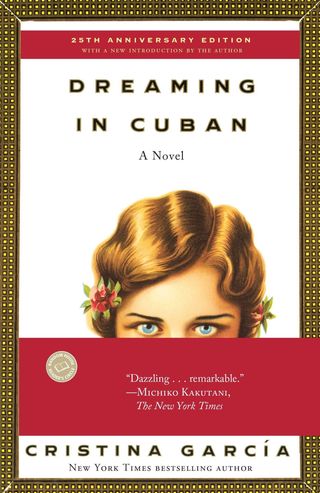
Cover of Dreaming in Cuban

Dreaming in Cuban

Cristina García

Original language: English · Paperback · ISBN 978-0345381439

Dreaming in Cuban follows three generations of the del Pino family, split between Havana and Brooklyn from the 1970s through the 1980s. At the center is Celia del Pino, a woman whose loyalty to the Cuban revolution shapes her daily life on the island. Her daughters and grandchildren carry different attachments: some remain in Cuba, others have settled in the United States. The distance between them is geographic but also political and emotional, and the novel traces how those divides deepen or shift over time.

Cristina García's first novel blends domestic detail with elements of magical realism. The story moves between locations and time periods, and between the interior lives of its characters. Santería, dreams, unsent letters, and personal memory all appear alongside the concrete realities of rationing, exile, and family estrangement. The women of the del Pino family occupy the foreground. Their choices about love, belief, creativity, and allegiance carry the narrative forward, while the men in their lives often recede into the background.

The novel is set against Cuba's post-revolutionary landscape, a place where political idealism coexists with material scarcity. García draws on both Havana and Brooklyn as settings that shape her characters in distinct ways.

Plot

Cristina García’s acclaimed book is the haunting, bittersweet story of a family experiencing a country’s revolution and the revelations that follow. The lives of Celia del Pino and her husband, daughters, and grandchildren mirror the magical realism of Cuba itself, a landscape of beauty and poverty, idealism and corruption.

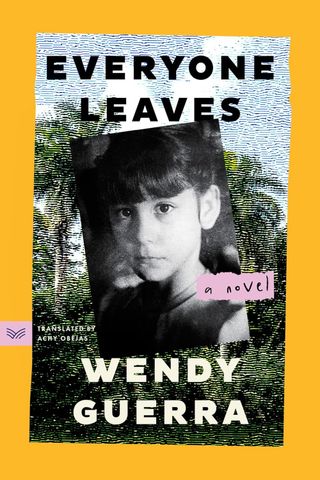
Cover of Everyone Leaves

Everyone Leaves

Wendy Guerra

Original language: Spanish · Paperback · ISBN 978-0063289253

In 1978 Cuba, a girl named Nieve begins keeping a diary. Her parents' relationship is falling apart, and the country around her is unstable. Writing becomes her way of holding on to some sense of order in a life where adults make decisions she cannot influence. She records what she sees and feels with plain honesty, from small domestic moments to larger upheavals she barely understands.

Nieve's childhood unfolds across several settings. She is separated from her mother and from her mother's partner, a man she remembers with warmth. She leaves her home city of Cienfuegos and ends up living with her father, a theater actor whose drinking and abusive behavior shape daily life in the household. She is also enrolled as a Pioneer, the youth organization tied to Cuba's revolutionary project, a process she does not choose for herself. Each change strips away someone or something she cares about.

Wendy Guerra sets these personal losses against the wider pressures facing Cuban women during the Revolution. The novel traces how conformist expectations and patriarchal attitudes within the revolutionary framework limited women's autonomy. Nieve's diary entries serve as the novel's structure, grounding the political landscape in one child's concrete, accumulating experience of powerlessness.

Plot

It is 1978, and Nieve finds herself caught between the tides of her parents' turbulent relationship and a country in turmoil. To try to control her situation, she begins to record the intimate and harsh details of her life in her diary. Becoming her sole means of expression, the diary is her only constant and her only friend. From being torn from her mother, her mother’s free-spirited and loving boyfriend, and her childhood city of Cienfuegos, to living with her abusive father, an alcoholic theater actor, to her forced induction as a Cuban “revolutionary Pioneer,” Nieve records in honest detail a life in which she is powerless as she loses the people and freedom she loves.

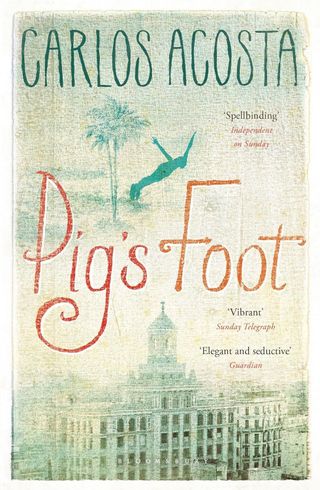
Cover of Pig's Foot

Pig's Foot

Carlos Acosta

Original language: Spanish · Paperback · ISBN 978-1408833728

Pig's Foot is a debut novel by Carlos Acosta, the Cuban-born ballet dancer widely known for his career with the Royal Ballet in London. The story is narrated by Oscar Mandinga, whose family founded a small settlement of wooden shacks and red earth somewhere deep in rural Cuba. Oscar recounts four generations of his family's history, moving through periods of slavery, revolution, and upheaval with a voice that mixes sardonic humor and tall tales.

Oscar wakes one day to find he is the last surviving member of his family line. Alone and uncertain about what comes next, he holds on to his grandfather's advice: that a person cannot understand themselves without first understanding their own past and their country's past. The novel follows this principle, threading personal secrets and local folklore through broader episodes of Cuban history. Acosta brings dark comedy and elements of the fantastical into a narrative that stays grounded in the physical landscape of the Cuban interior, its soil, its villages, and the ordinary domestic spaces where family stories accumulate over decades.

Plot

Oscar Mandinga, great-grandchild of the founders of a small hamlet of wooden shacks and red earth deep in the Cuban hinterland, is a sardonic teller of tales-some taller than others-of slavery, revolution, family secrets, love, and identity, spanning four generations. But one day Oscar wakes to find himself utterly alone in the world. As the sole descendant of his family line, he is not sure what to do or where he should go, but in the midst of this uncertainty, he holds fast to what his grandfather always told him: “No man knows who he is until he knows his past, his history, the history of his country.”

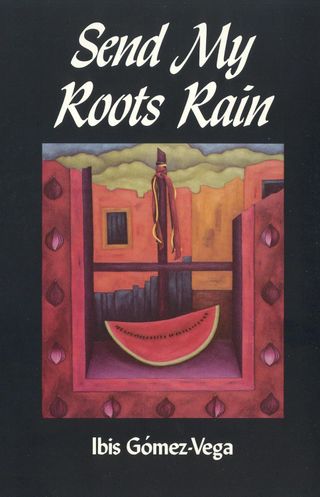
Cover of Send My Roots Rain

Send My Roots Rain

Ibis Gómez-Vega

Original language: Spanish · Paperback · ISBN 978-1879960046

Carole Rio is an artist carrying a painful past when she accepts an invitation to paint murals in a church in a small Texas border town. She arrives to find the church has burned down in a devastating fire, and the commission she expected no longer exists in its original form. What remains is a community weighed down by collective guilt over the disaster, struggling to find a way forward.

Rather than leaving, Carole stays and becomes a figure around whom the town begins to process its grief and rebuild. As she helps the community confront what has happened, she is also forced to face her own recurring nightmares and to reckon with her sexual identity. The novel moves between the town's slow recovery and Carole's personal unraveling, connecting the two through questions about belonging, memory, and the meaning of place.

Ibis Gómez-Vega sets the story along the Texas border, a landscape shaped by cultural crossings and isolation in equal measure. The title draws from a line by Gerard Manley Hopkins, and the narrative explores how unexpected disruption can open space for transformation in both a person and a place.

Plot

Carole Rio, an artist running from her past, is invited to a small Texas border town to paint murals in a church―but the church has burned down in a catastrophic fire. Carole becomes the catalyst for the town's release of its collective guilt, and as the community rebuilds and heals, she faces her own terrifying nightmares and confronts her sexual identity.

Cover of The Cuban Kitchen

The Cuban Kitchen

Raquel Rabade Roque

Original language: English · Paperback · ISBN 978-0375711961

The Cuban Kitchen by Raquel Rabade Roque is a large collection of more than five hundred recipes rooted in the author's family cooking. The book covers home-style Cuban dishes across a wide range of categories, including soups, meats, rice dishes, fried sides, pastries, and drinks. Recipes for familiar preparations such as black bean soup, ropa vieja, arroz con pollo, tostones, empanadas, croquetas, and churros sit alongside less well-known dishes from everyday Cuban tables.

Cuban cooking draws from several distinct culinary traditions. Spanish, Portuguese, Arabian, Chinese, and African influences arrived on the island at different periods and through different routes, shaped by trade, migration, and colonial history. The book traces these connections through the stories behind individual recipes, linking specific ingredients and techniques to the cultures that introduced them.

Roque writes with a domestic rather than restaurant perspective, drawing on recipes passed through her own family. The book is organized to suit everyday cooking, with an emphasis on accessible preparation. Alongside the recipes, short narratives provide context for how particular dishes became part of Cuban household routines.

Plot

What is Cuban cuisine? A delectable intermingling of Spanish, Portuguese, Arabian, Chinese, and African culinary traditions—a true melting pot of all the influences that combine in Cuban culture. Now, Raquel Rabade Roque gives us the definitive book of Cuban cuisine: encyclopedic in its range, but intimate and accessible in tone with more than five hundred recipes for classic, home-style dishes—from black bean soup to pork empanadas, from ropa vieja to black beans and croquetas, from tostones to arroz con pollo, from churros to café con leche—as well as the vividly told stories behind the recipes.

Cover of The Island of Eternal Love

The Island of Eternal Love

Daína Chaviano

Original language: English · Paperback · ISBN 978-1594483790

In a Miami bar, a young Cuban woman named Cecilia meets Amalia, an elderly stranger whose story is so absorbing that Cecilia returns night after night to hear more. Amalia's account follows three families with origins in China, Spain, and the African coast, and their separate histories eventually converge in Cuba under Spanish colonial rule before reaching the present day. A suicide in China sets off consequences across generations, a curse follows certain women in a Spanish town, and on the African coast a young woman is taken from her home to an unfamiliar land.

Cecilia's own life in Miami runs alongside the older narrative. She is preoccupied by a phantom house that appears and vanishes across the city, and her search for its explanation becomes part of the novel's larger structure. Past loves described in Amalia's story begin to echo in Cecilia's present circumstances, linking her personal isolation to the long arc of migration, displacement, and attachment that the three families represent.

Daina Chaviano is a Cuban author, and this novel has appeared in 25 languages, which makes it the most widely translated Cuban novel to date. The story moves between spoken recollection in the bar and Cecilia's own inquiries, so the past arrives mainly through another person's voice.

Plot

In an effort to escape her solitude in Miami, Cecilia seeks refuge in a bar where she meets Amalia, a mysterious old woman whose fascinating tale keeps Cecilia returning night after night. Her powerful story of long-vanished epochs weaves the saga of three families from far-flung pieces of the world. A suicide in China unleashes a chain of family reactions; a strange curse pursues certain women in a Spanish town; and a young woman is seized from her home on the African coast and transported to an unfamiliar world. These characters' lives will become entwined over time, from Cuba under Spanish colonial rule to the present day. Ardent, predestined loves from the past will gain renewed strength in Cecilia, who is also obsessed by the mystery of a phantom house that appears and disappears throughout the city of Miami, and whose secret she is attempting to discover.

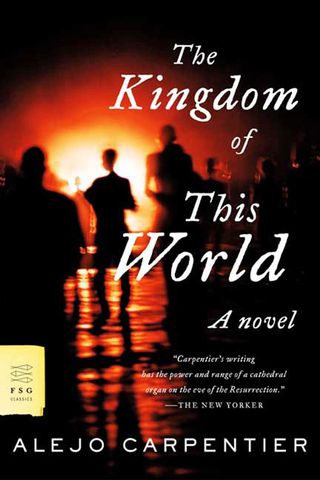
Cover of The Kingdom of This World

The Kingdom of This World

Alejo Carpentier

Original language: Spanish · Paperback · ISBN 978-0374530112

Alejo Carpentier's novel follows the upheavals of Haiti from the final years of French colonial rule through the rise of Henri-Christophe, a formerly enslaved man born in Grenada who became the first Black king in the Western Hemisphere. The story is told largely through the experiences of Ti Noel, an enslaved man whose life spans decades of political violence and transformation on the island. Carpentier, a Cuban writer with deep ties to Caribbean history, published the book in 1949 after visiting Haiti and touring the ruins of Christophe's mountaintop fortress.

The novel traces how the new Haitian regime reproduced many of the same abuses it had overthrown. Christophe's kingdom relied on forced labor to construct grand palaces and a massive citadel, imitating European aristocratic culture while crushing the population beneath it. Carpentier frames these events through a prose style shaped by what he called lo real maravilloso, or the marvelous real, a concept he outlined in the book's prologue. In this approach, the extraordinary elements of Caribbean life and belief, including vodou practice and oral tradition, are presented as ordinary parts of lived experience rather than as fantasy or spectacle.

Plot

A few years after its liberation from the brutality of French colonial rule in 1803, Haiti endured a period of even greater brutality under the reign of King Henri-Christophe, who was born a slave in Grenada but rose to become the first black king in the Western Hemisphere. In prose of often dreamlike coloration and intensity, Alejo Carpentier records the destruction of the black regime―built on the same corruption and contempt for human life that brought down the French while embodying the same hollow grandeur of false elegance, attained only through slave labor―in an orgy of voodoo, race hatred, madness, and erotomania.

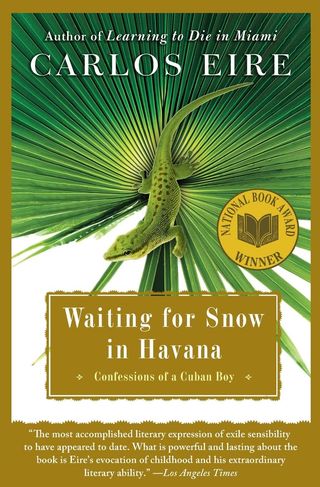
Cover of Waiting for Snow in Havana

Waiting for Snow in Havana

Carlos Eire

Original language: Spanish · Paperback · ISBN 978-0743246415

Carlos Eire grew up in Havana during a time when the city still moved to its own familiar rhythms. His memoir opens onto a childhood shaped by lizards, warm seas, and long afternoon rest hours. On January 1, 1959, Fidel Castro's forces removed President Batista from power, and the country Carlos knew began to change in ways a child could register but not fully understand. Christmas celebrations were banned, political opposition could lead to prison, and families started sending their children abroad.

As friends and neighbors left Cuba, Carlos eventually departed too, arriving in the United States as part of a wave of young exiles. The book traces what it means to grow up carrying two countries at once: the one you live in and the one that stays fixed in memory. His mother had hoped he would adapt to American life, and in practical ways he did. But the memoir is occupied with what adaptation cannot reach, the textures of a specific place and time that resist translation.

The title itself points to something impossible. Snow does not fall in Havana. Eire uses that image to frame the distance between his childhood world and the one that replaced it, between what was ordinary and what became unreachable.

Plot

For the Cuba of Carlos’s youth—with its lizards and turquoise seas and sun-drenched siestas—becomes an island of condemnation once a cigar-smoking guerrilla named Fidel Castro ousts President Batista on January 1, 1959. Suddenly the music in the streets sounds like gunfire. Christmas is made illegal, political dissent leads to imprisonment, and too many of Carlos’s friends are leaving Cuba for a place as far away and unthinkable as the United States. Carlos will end up there, too, and fulfill his mother’s dreams by becoming a modern American man—even if his soul remains in the country he left behind.

More from Cuba

See the country page for Cuba for its map, facts and largest cities, or browse books from other countries.

Links go to Amazon; Hookito doesn’t sell books. Know a book that belongs here, or spotted a mistake? Write to submissions@hookito.com.

Where to next?

Back to the globe
Hookito landscape illustration