Hookito

Cyprus · Books

Books from Cyprus

4 books from and about Cyprus: what each is about, the plot, and a note from Professor Kogi.

Cover of Cyprus Cuisine

Cyprus Cuisine

Christina Loucas

Original language: English · Paperback · ISBN 978-1770503373

Cyprus Cuisine by Christina Loucas gathers more than 75 recipes from the island, illustrated in full colour. They cover a wide span of the Cypriot table: drinks, soups, salads, small bites, breads and pastries, pickles, dips, main courses, and desserts. Many Cypriot families still make their own olive oil each year, and neighbours pass along surplus homegrown fruit, from pomelo and figs to carobs, kumquats, and cactus pears.

Cypriot cooking tends toward mild, aromatic flavours rather than heat. Wild oregano, rosemary, mint, parsley, basil, cinnamon, and coriander appear often in savoury dishes, while sweets and baked goods call for allspice, cloves, mastic, and mehleb powder. Mastic is a resin from a Mediterranean shrub, and mehleb is ground from the seeds of a wild cherry. Both are familiar in eastern Mediterranean baking.

Cyprus sits in the eastern Mediterranean, nearer to the coasts of Turkey and Syria than to mainland Greece. The warm climate supports that long list of fruit and herbs, and the island's position between Greece, Turkey, and the Levant is visible in the pantry. Read together, the chapters sketch home cooking on an island where passing food between households remains ordinary.

Plot

Many Cypriot families still make home-made olive oil every year, and neighbors regularly exchange excess bounty of homegrown fruits and vegetables, including pomelo, grapes carobs, figs, oranges, lemons, cantaloupe, bergamot, medlars, almonds, kumquats, cactus pears, and, of course, olives. Most Cypriot dishes are not particularly hot or spicy, though there is ample use of local herbs such as wild oregano, rosemary, mint, parsley, basil, cinnamon and coriander. Spices such as allspice, cloves, mastic and mehleb powders can be found in many sweets and baked goods.
Cover of Journey Into Cyprus

Journey Into Cyprus

Colin Thubron

Original language: English · Paperback · ISBN 978-0099570257

Journey Into Cyprus is Colin Thubron's account of a six-hundred-mile walk around the island of Cyprus, completed in the final year before the political crisis that divided the country. Thubron, a British travel writer known for long solo journeys through difficult terrain, covered the distance on foot, recording the people, architecture, and landscapes he encountered along the way.

The book moves between layers of time. Thubron weaves observations of contemporary Cypriot life with the island's deep history and its older mythological associations. Villages, ruins, churches, and coastline appear in close detail, and the people he meets along the road become part of the narrative alongside the physical terrain. Because the journey took place just before the Turkish invasion of 1974, everything Thubron describes carries a particular weight of timing. Some of the communities and places he visited were about to change drastically or disappear entirely.

Cyprus sits at a crossroads between Europe, Asia, and the eastern Mediterranean, and its cultural layers reflect Greek, Ottoman, Venetian, and British influences. Thubron's walking pace allows these layers to surface slowly, village by village, as he crosses the island.

Plot

This is the account of a unique journey -- a six-hundred-mile trek on foot around Cyprus in the last year of the island's peace. Colin Thubron intertwines myth, history, and personal anecdotes in a quest from which the characters and places, architecture, and landscape all spring vividly to the reader's eye.

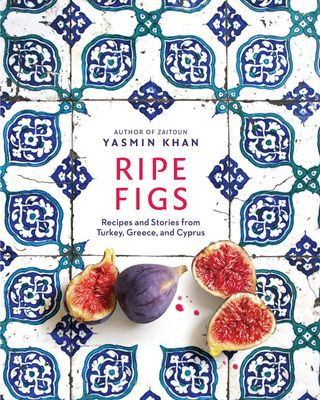
Cover of Ripe Figs

Ripe Figs

Yasmin Khan

Original language: English · Hardcover · ISBN 978-1324006657

Ripe Figs is a cookbook by Yasmin Khan that follows ingredients and food traditions across the eastern Mediterranean, a region shaped by centuries of exchange between cultures. Khan travels by boat and over land, tracing how dishes and flavors have moved through the area from the period of Ottoman rule to the present day, when recent refugee communities have added new layers to local cooking. The book pairs recipes with stories about borders, identity, and migration, grounding these topics in the concrete details of shared meals and kitchen tables.

The recipes lean toward seasonal, vegetable-centered cooking. Dishes include hot yogurt soups, zucchini and feta fritters, pomegranate and sumac chicken, and candied pumpkin with tahini and date syrup. Common threads run through the collection: dill, oregano, citrus, dates, tahini, and cardamom appear again and again, linking recipes from different places and traditions. Khan treats these recurring ingredients as evidence of how interconnected the region has been for a long time, with trade routes and migration carrying flavors across borders that shifted repeatedly over the centuries.

Plot

For thousands of years, the eastern Mediterranean has stood as a meeting point between East and West, bringing cultures and cuisines through trade, commerce, and migration. Traveling by boat and land, Yasmin Khan traces the ingredients that have spread through the region from the time of Ottoman rule to the influence of recent refugee communities. At the kitchen table, she explores what borders, identity, and migration mean in an interconnected world, and her recipes unite around thickets of dill and bunches of oregano, zesty citrus and sweet dates, thick tahini and soothing cardamom. Khan includes healthy, seasonal, vegetable-focused recipes, such as hot yogurt soups, zucchini and feta fritters, pomegranate and sumac chicken, and candied pumpkin with tahini and date syrup.

Cover of The Fragments of Zeno and Cleanthes

The Fragments of Zeno and Cleanthes

Zeno the Stoic

Original language: Greek · Paperback · ISBN 978-1112575563

Zeno of Citium, born around 334 BCE on the island of Cyprus, founded the school of philosophy that came to be known as Stoicism. He reportedly began teaching at the Stoa Poikile, a painted colonnade in the Athenian agora, which gave the movement its name. Cleanthes of Assos succeeded Zeno as head of the school and continued to develop its teachings. Neither philosopher left behind complete surviving works. What remains are fragments: short quotations, paraphrases, and summaries preserved by later ancient writers.

This volume collects those surviving fragments and presents them together. It was originally published in 1891, and the edition described here is a digital reproduction from the Cornell University Library's print collections. The scan was made using an APT BookScan device, so pages may carry marks, marginal notes, and other traces left by previous readers or owners over more than a century of handling.

The fragments cover topics central to early Stoic thought, including logic, physics, ethics, and the idea that virtue is the sole true good. Because the original texts are lost, these collected pieces serve as one of the few direct windows into what Zeno and Cleanthes actually argued. Readers of later Stoics such as Epictetus or Marcus Aurelius can find here the roots of ideas those writers expanded.

Plot

Originally published in 1891. This volume from the Cornell University Library's print collections was scanned on an APT BookScan and converted to JPG 2000 format by Kirtas Technologies. All titles scanned cover to cover and pages may include marks notations and other marginalia present in the original volume.

More from Cyprus

See the country page for Cyprus for its map, facts and largest cities, or browse books from other countries.

Links go to Amazon; Hookito doesn’t sell books. Know a book that belongs here, or spotted a mistake? Write to submissions@hookito.com.

Where to next?

Back to the globe
Hookito landscape illustration