Hookito

Djibouti · Books

Books from Djibouti

4 books from and about Djibouti: what each is about, the plot, and a note from Professor Kogi.

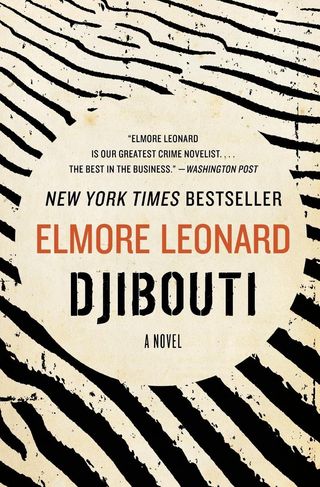
Cover of Djibouti: A Novel

Djibouti: A Novel

Elmore Leonard

Original language: English · Paperback · ISBN 978-0061735219

Dara Barr is a documentary filmmaker with an Oscar for her work on post-Katrina New Orleans. Looking for a new subject, she travels to Djibouti, the small nation on the Horn of Africa, with her collaborator Xavier, a 72-year-old, six-foot-six former seafarer. Their goal is to film modern-day pirates operating in the waters off the coast. What they find is a layered scene of competing interests, where few people turn out to be what they first appear.

Among the figures they encounter are a pirate commander with a reputation for generosity, a diplomat whose connections raise questions, a wealthy playboy holding back information, and an American-born man with plans that go well beyond piracy. The stakes sharpen when a hijacked tanker carrying liquid natural gas enters the picture, attracting attention from several parties at once. Dara and Xavier find themselves caught between factions whose motives overlap and collide in ways their camera cannot easily sort out.

Elmore Leonard sets the novel in a part of the world where international shipping lanes, regional politics, and criminal enterprise converge in a narrow stretch of sea. The story carries his characteristic mix of sharp dialogue, eccentric characters, and shifting alliances.

Plot

Dara Barr, documentary filmmaker, is at the top of her game. She’s covered Bosnian women, Neo-Nazis, and post-Katrina New Orleans (for which she won an Oscar), but now she’s looking for an even bigger challenge. So she and her right-hand-man-a six-foot-six, 72-year-old, African-American man named Xavier-head to Djibouti, on the Horn of Africa, to tackle modern-day pirates. Once they start filming, though, they find a whole lot more than they bargained for. They quickly learn that almost nobody in Djibouti is what he seems. A whole mob of colorful characters patrols the surrounding seas, including a pirate commander who’s more like Robin Hood than Captain Hook; a cultured diplomat with dubious connections; a rich playboy who knows more than he lets on; and an American-born terrorist with lofty ambitions. But then there’s the recently hijacked LNG (liquid natural gas) tanker: just the thing an aspiring terrorist is looking for to blow up something big. What Dara and Xavier don’t know, though, is who’s going to be the one to get the prize and what they’re going to do for it.
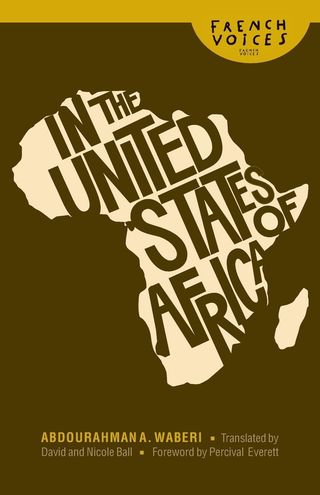
Cover of In the United States of Africa

In the United States of Africa

Abdourahman A. Waberi

Original language: French · Paperback · ISBN 978-0803222625

In this novel by Abdourahman A. Waberi, the global order is reversed. Africa is a unified, prosperous superpower, while Europe and the Americas are impoverished regions marked by conflict and deprivation. Desperate migrants from Western countries cross borders toward African cities in search of safety and opportunity. The premise flips familiar migration patterns and economic hierarchies, placing African nations at the center of wealth, cultural influence, and political stability.

The story follows Malaïka, a young artist who was adopted as a child by an African doctor working on a humanitarian mission in France. Raised in comfort on the African continent, she eventually travels to the struggling land of her birth to search for her biological mother. Her personal quest unfolds against the larger backdrop of this inverted world, where the language of aid, charity, and cultural superiority runs in the opposite direction from what present-day readers recognize.

Waberi, who was born in Djibouti and writes in French, uses satire and speculative geography to examine assumptions about prosperity, migration, and identity. The novel reframes questions that are often discussed in fixed terms by simply switching which continent holds power and which one does not.

Plot

On this reimagined globe a stream of sorry humanity flows from the West, from the slums of America and the squalor of Europe, to escape poverty and desperation in the prosperous United States of Africa. It is in this world that an African doctor on a humanitarian mission to France adopts a child. Now a young artist, this girl, Malaïka, travels to the troubled land of her birth in hope of finding her mother—and perhaps something of her lost self. Her search, at times funny and strange, is also deeply poignant, reminding us at every moment of the turns of fate we call truth.

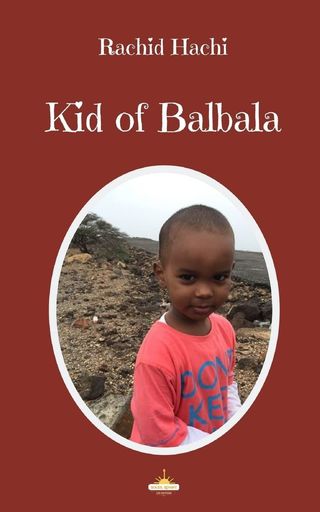
Cover of Kid of Balbala

Kid of Balbala

Rachid Hachi

Original language: French · Paperback · ISBN 979-1097375393

Kid of Balbala follows a young character named Samatalis as he grows up in Balbala, a densely populated district on the outskirts of Djibouti City. The story traces his life from early childhood through to maturity, passing through Koranic school, public school, and first encounters with friendship and affection. It is described as semi-autobiographical, with the experiences of Samatalis closely mirroring those of the author, Rachid Hachi.

At its center is a drive to move beyond familiar constraints and face the unknown. Samatalis navigates the tension between inherited tradition and personal ambition, seeking freedom and a future shaped on his own terms. The narrative maps the stages of a life shaped by the specific geography and social fabric of Balbala, where daily realities press against wider aspirations.

The book is Rachid Hachi's first published work and is noted as the first book from the Republic of Djibouti to be translated into English. Balbala itself is one of the largest and most crowded parts of the Djibouti capital area, a setting that grounds the story in a place rarely represented in translated literature.

Plot

The Kid of Balbala is also about a quest. A quest for freedom, for adventure, for a promising future. An inextinguishable and inexhaustible quest to get rid of the tradi-tional burden, ignore obstacles, distance, trip, to face the unknown.The Kid of Balbala is also similar to an autobiography. The life of Samatalis, the Kid of Balbala, looks like to be mistaken for that of the author’s, Rachid Hachi, who guides us in the mazes of his existence, since his birth until his maturity, via all the stages which mark out his life.The child of Balbala is a book-mirror which sends back every reader in his/ her own past, his first stammering, his first steps to the Koranic school, his first steps in the public school, his puppy loves. It is a unique masterpiece, one- of-a kind, that is read in one breath, and which offers us a mixture of feelings, emotions, so diverse and varied, which until then, had never been explored as well by a Djiboutian author.

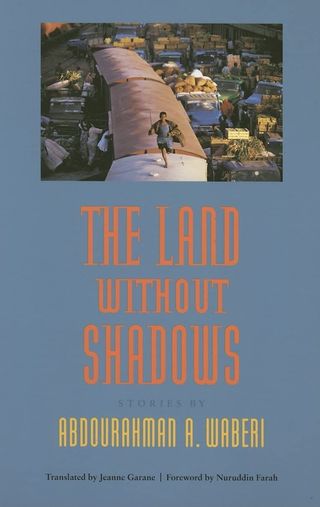
Cover of The Land without Shadows

The Land without Shadows

Abdourahman A. Waberi

Original language: French · Paperback · ISBN 978-0813925080

The Land without Shadows is a collection of seventeen short stories by Abdourahman A. Waberi, first published in France in 1994 as Le Pays sans ombre. Waberi is one of the few francophone fiction writers to emerge from Djibouti, a small state on the Horn of Africa described as confetti-sized. The stories span precolonial life, the colonial era, and the years after independence, forming one of the earliest literary works to present Djiboutian experience from a Djiboutian point of view.

Waberi draws on Somali and Djiboutian oral traditions, folding legend, proverbs, music, poetry, and local history into the fiction. His literary references reach outward to writers including Wole Soyinka, Assia Djebar, Aimé Césaire, Léopold Sédar Senghor, Shakespeare, Baudelaire, Evelyn Waugh, and Samuel Beckett. That double movement, rooted in regional oral culture while in conversation with world literature, places Djibouti in a frame wider than the Horn of Africa.

Immigration and exile run through the book as recurring concerns, and Djibouti stays at the centre of Waberi's work. Before this English translation, the collection circulated in French; Waberi had already received international recognition and prizes in African literature for his stories and a novel.

Plot

One of the first literary works to portray Djiboutians from their own point of view, The Land without Shadows is a collection of seventeen short stories. The author, Abdourahman A. Waberi, one of a handful of francophone writers of fiction to have emerged in the twentieth century from the "confetti-sized state" of Djibouti, has already won international recognition and prizes in African literature for his stories and novel. Because his writing is linked to immigration and exile, his native Djibouti occupies center stage in his work. Drawing on the Somali/Djiboutian oral tradition to weave pieces of legend, proverbs, music, poetry, and history together with references to writers as diverse as Soyinka, Shakespeare, Djebar, Baudelaire, Césaire, Waugh, Senghor, and Beckett, Waberi succeeds in bringing his country into a context that reaches well beyond the Horn of Africa.

More from Djibouti

See the country page for Djibouti for its map, facts and largest cities, or browse books from other countries.

Links go to Amazon; Hookito doesn’t sell books. Know a book that belongs here, or spotted a mistake? Write to submissions@hookito.com.

Where to next?

Back to the globe
Hookito landscape illustration