Hookito

Estonia · Books

Books from Estonia

9 books from and about Estonia: what each is about, the plot, and a note from Professor Kogi.

Cover of Amber & Rye: A Baltic Food Journey

Amber & Rye: A Baltic Food Journey

Zuza Zak

Original language: English · Hardcover · ISBN 978-1623719005

Amber and Rye is a cookbook and cultural guide by Zuza Zak covering the three Baltic states. Its structure follows the capitals of Tallinn, Riga, and Vilnius, all three of which hold UNESCO World Heritage status, with each city treated as an entry point to its country. Zak frames Baltic cooking as shaped by two directions of influence: Scandinavian traditions arriving across the Baltic Sea, and the food habits of Eastern Europe.

The recipes stay grounded in regional staples while taking in contemporary cooking, and they are written for home kitchens rather than professional ones. Alongside them, the book gathers local voices, travel notes, and short pieces of poetry, literature, proverbs, and song, placing each dish in a setting rather than presenting ingredients and methods alone.

The title points to two features of the region: amber, the fossilized tree resin washed up along Baltic shores and long traded from them, and rye, the grain behind the dark breads eaten in Estonia, Latvia, and Lithuania. Zak also treats the area as a crossroads, where northern and eastern European habits meet at the water.

Plot

Amber & Rye explores this exciting part of Eastern Europe, guiding you around the capitals, sharing stories from the locals, and discovering a dynamic, new style of cooking. Contextualized within the Baltics’ rich history and culture, this food journey is a doorway to a deeper understanding of what makes the region so exciting.
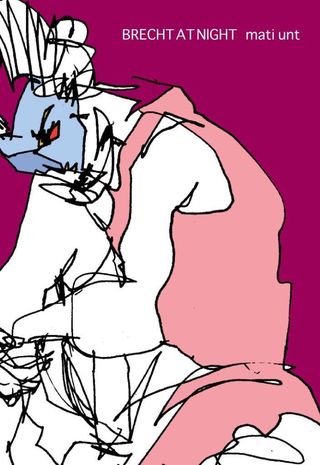
Cover of Brecht at Night

Brecht at Night

Mati Unt

Original language: Estonian · Paperback · ISBN 978-1564785329

In 1940, Bertolt Brecht found himself stranded in Finland. Having left Nazi Germany, the playwright was waiting for a visa that would let him cross to the United States. During this period he lived with his wife and his mistress, who suffered from tuberculosis, enjoying a comfortable existence that sat uneasily beside his public stance as a committed communist. Mati Unt, the Estonian novelist, uses this interlude as the foundation for a book he called a documentary novel.

While Brecht waits in Finland, the Soviet Union is steadily absorbing the three Baltic states of Latvia, Lithuania, and Estonia. Unt threads this political reality through the story, placing the gap between Brecht's private comforts and his radical writings at the center of the book. The tone moves between affection and irreverence, mixing comic styles, excerpts from historical documents, and frequent digressions that are characteristic of Unt's broader body of work.

The novel treats history as something to be questioned rather than simply reconstructed. Unt was one of Estonia's most recognized literary figures, and this book was translated into English as part of a wider effort to bring his writing to new audiences. Its subject is narrow in time but wide in what it asks about artists, politics, and self-contradiction.

Plot

This "documentary novel," the latest of Estonian author Mati Unt's deadpan and playful works to be translated into English, is about a little-known period in the life of the great Bertolt Brecht, when the writer--having fled Nazi Germany-- became stuck in Finland awaiting the visa that would allow him to leave Europe for the United States. As BB, the avowed communist, continues enjoying the bourgeois pleasures of pre-war life with his wife and tubercular mistress, the Soviet Union is not-so-quietly annexing Latvia, Lithuania, and Estonia; and the gulf between Brecht's preferred lifestyle and his inflammatory polemics grows larger and larger. Both affectionate and irreverent, this portrait of one of the twentieth century's great authors mixes together a variety of comic styles, excerpts from contemporaneous documents, and Unt's trademark digressions, producing a kind of historical novel as interested in interrogating the past as simply recreating it.

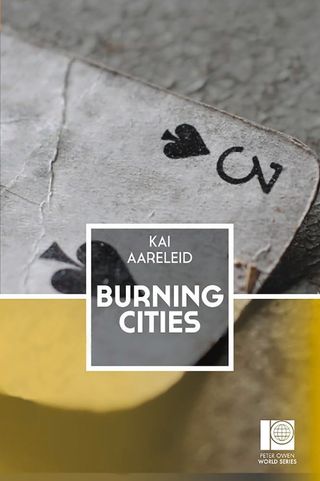
Cover of Burning Cities

Burning Cities

Kai Aareleid

Original language: Estonian · Paperback · ISBN 978-0720620290

Burning Cities follows Tiina as she looks back on the first twenty years of her life in Tartu, Estonia, beginning in the aftermath of World War II. Tartu was heavily damaged during the Nazi invasion and then reshaped under Soviet control, its streets renamed and its buildings reconstructed. In this changed city, Tiina grows up absorbing the secrets of the adults around her, even when she is too young to understand what they mean. Conversations at home are guarded, and the atmosphere is shaped by anxiety and alcohol.

The novel traces both private and public turning points. Stalin's death, the slow unraveling of Tiina's parents' marriage, and the routines of life under Communist rule all register through the eyes of a child who watches from the edges of events she cannot influence. At the center of the story is a family suicide, a loss that defines Tiina's memory of this period. Kai Aareleid's narrative stays close to the texture of daily experience in Soviet Estonia, where political control and personal grief overlap in ordinary rooms. The English translation brought this Estonian novel to a wider readership for the first time.

Plot

Opening up about her family history, Tiina revisits the first two decades of her life following World War II, in Tartu, Estonia. The adult world that makes up Communist society is one of cryptic conversations, dread, and heavy drinking. From the death of Stalin to the gradual separation of her parents, Tiina experiences events from the periphery, and is powerless to prevent the defining tragedy in her life—a suicide in the family.

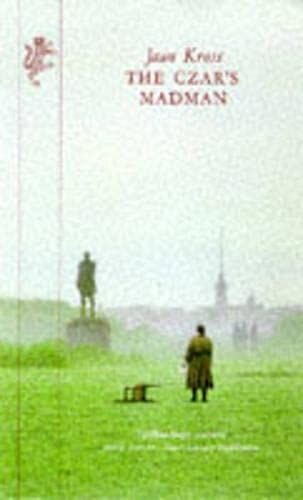
Cover of The Czar's Madman

The Czar's Madman

Jaan Kross

Original language: Estonian · Paperback · ISBN 978-1860465796

Jaan Kross, widely regarded as Estonia's foremost novelist, based The Czar's Madman on the life of a real historical figure. Timo von Bock was a Baltic German baron in the early nineteenth century who dared to address Tsar Alexander I with frank criticism of the imperial order. For this act he was locked away for nine years. The novel begins after his release, when he returns to his estate in Livonia, a historical region spanning parts of present-day Estonia and Latvia.

Freedom, however, is only nominal. Timo is confined to his property and watched constantly by police informers placed inside his own household. His daily life becomes a succession of small humiliations designed to remind him that the state's grip has not loosened. The story is set against the broader tensions of post-Napoleonic Russia, where questions of loyalty, reform, and imperial authority shaped the lives of landowners and serfs alike.

The narrative draws on the overlap between personal defiance and political control. Kross, who himself lived through Soviet-era Estonia, chose a nineteenth-century setting to explore how a government can punish dissent long after the prison door opens. The novel's Livonian landscape grounds these tensions in a specific, layered corner of the Baltic world.

Plot

Timo von Bock's release by the Czar from nine years' incarceration does not spell the end of the Baron's troubles: he is confined to his Livonian estate to live under the constant eye of police informers planted among his own household and is subjected to endless humiliations.

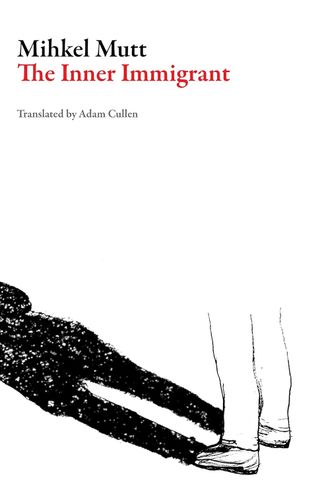
Cover of The Inner Immigrant

The Inner Immigrant

Mihkel Mutt

Original language: Estonian · Paperback · ISBN 978-1943150151

The Inner Immigrant collects essayistic short stories by Estonian writer Mihkel Mutt, written over a span of roughly thirty years. The stories follow Fabian, a recurring character described as a strange and self-indulgent alter ego of the author, as he moves through life in a newly independent Estonia. Fabian serves as a lens for observing the country's transition out of the Soviet period and into a changed political and cultural landscape.

Mutt uses Fabian's experiences to examine the lingering absurdities left behind by decades of Soviet rule, while also turning an ironic eye toward the Estonian intelligentsia and its habits, contradictions, and ambitions. The stories sit somewhere between fiction and personal essay, blending narrative episodes with commentary on social attitudes and cultural identity. The tone is observational and often wry, treating both the old system and the new order with a kind of detached humor.

The title points to a sense of displacement that persists even at home, a feeling of being foreign inside one's own society. Fabian is not an exile in the usual sense but someone who watches his surroundings with the distance of an outsider, even as he remains firmly within them.

Plot

These essayistic short stories, penned over a thirty-year period, follow Fabian, Mihkel Mutt’s strange and self-indulgent alter ego, and his adventures in newly independent Estonia.

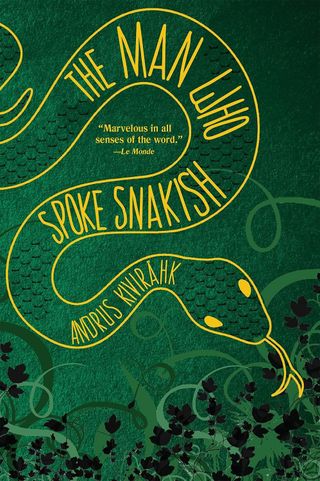
Cover of The Man Who Spoke Snakish

The Man Who Spoke Snakish

Andrus Kivirähk

Original language: Estonian · Paperback · ISBN 978-0802124128

The Man Who Spoke Snakish is set in a fantastical version of medieval Estonia, where forest still covers much of the land. It follows Leemet, a boy raised by a hunter-gatherer family and the last person able to speak Snakish, an old language whose speakers can command any animal. His family hunts and forages rather than farms, and his world runs on the customs of the forest.

Around Leemet the forest is emptying. People leave for villages, where they clear land, grow wheat, and bake bread, and where they pray to a god unlike the spirits honored in the forest's sacred grove. Leemet has been told that bread tastes terrible. The pull between forest and village shapes the book, as fewer and fewer people remember the older way of living.

Andrus Kivirähk wrote the novel in Estonian, and it became a bestseller at home, known well enough that a board game was built around it. Its central idea, a language dying with its last speaker, links the fantastical forest to a real question about how knowledge disappears. Estonian itself is spoken by roughly a million people.

Plot

Set in a fantastical version of medieval Estonia, The Man Who Spoke Snakish follows a young boy, Leemet, who lives with his hunter-gatherer family in the forest and is the last speaker of the ancient tongue of snakish, a language that allows its speakers to command all animals. But the forest is gradually emptying as more and more people leave to settle in villages, where they break their backs tilling the land to grow wheat for their “bread” (which Leemet has been told tastes horrible) and where they pray to a god very different from the spirits worshipped in the forest’s sacred grove.

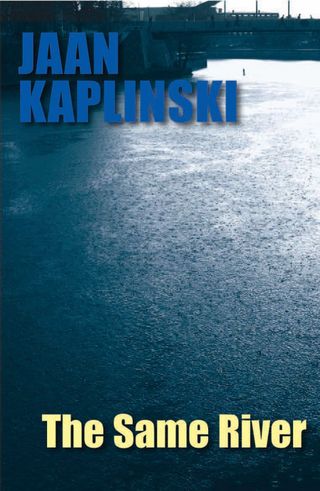
Cover of The Same River

The Same River

Jaan Kaplinski

Original language: Estonian · Paperback · ISBN 978-0720613407

The Same River is a semi-autobiographical novel by Estonian writer Jaan Kaplinski, a Nobel Prize nominee whose poetry and essays have circulated widely in Europe but whose prose has been slower to reach English-language readers. Set in Soviet-era Estonia in the early 1960s, the story follows a twenty-year-old student navigating questions of sex, belief, and political loyalty during a single formative summer. The young man finds an unofficial guide in a retired theologian and poet who has fallen out of favor with the communist authorities, and the two develop an intense, uneasy bond built on shared literary ambition and mutual need.

As the student pursues both erotic experience and a kind of spiritual understanding, his private life begins to attract attention from KGB officers and university officials. The overlap between personal desire and state surveillance gives the novel a persistent undercurrent of tension. Kaplinski draws on his own youth in Tartu to ground the narrative in specific routines, landscapes, and social pressures of early-1960s Estonia.

The book belongs to the Bildungsroman tradition, a coming-of-age form concerned with intellectual and emotional growth. Its pace is slow and cerebral, shaped more by conversation and interior thought than by dramatic events.

Plot

A semi-autobiographical Bildungsroman, set in the early 1960s, this novel narrates the efforts of Kaplinski's youthful alter ego to lose his innocence and attain sexual and mystical knowledge. The 20-year-old protagonist finds an unofficial teacher in a retired theologian and poet, who is out of favor with the communist authorities. After a summer spent in intellectual and erotic soul-searching, the sexual and political intrigues finally overlap, leading to a quasi-solution. As KGB and university apparatchiks take a close interest in the relation of the two poets, the student outgrows his mentor, who despite accusing the human race of puerility, turns out to be a big and jealous child himself.

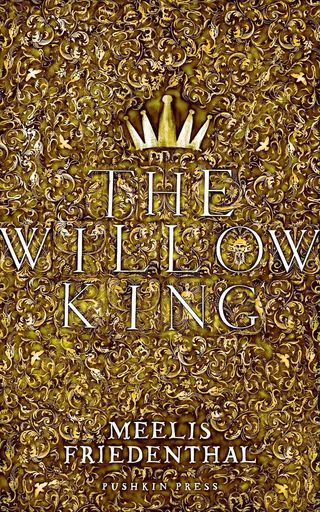
Cover of The Willow King

The Willow King

Meelis Friedenthal

Original language: Estonian · Paperback · ISBN 978-1782271741

At the close of the seventeenth century, a young Dutch student named Laurentius arrives in Tartu, Estonia, on an icy day, carrying little beyond a rose-ringed parakeet and a burden of suspicion. He has fled accusations of heresy and enrolled at the university to study the body, the soul, and the boundary between them. His questions belong to a time when bloodletting, dissection, and the evil eye shared one intellectual space.

Tartu in this era is a small university town ringed by a countryside gripped by famine. The poor press against the city walls, and executions and dissections draw crowds. Laurentius searches for a cure for the melancholy that follows him, yet his inquiries pull him toward the folk beliefs of the rural people, a world he knew as a child. Feverish dreams of a crowned king blur into his waking hours.

Meelis Friedenthal, an Estonian writer, places the novel in a moment when early modern science and inherited magical thinking occupied the same ground, often within one person. Paranoia, hunger, and the search for the seat of the soul run alongside each other, and the border between observation and vision stays unsettled.

Plot

Wrapped into his long coat against the incessant rain and accompanied by a strange parrot, the young Dutch student Laurentius arrives in Estonia on an icy day at the end of the seventeenth century. On the run from a dark past and suspected of heresy, he has fled to Tartu, 'The City of the Muses', to study at the famous university. Laurentius has been searching obsessively for a cure for the mysterious melancholy which torments him, and is desperate to understand where the soul comes from, and how it relates to the body. But the more he searches, the more he is attracted to the world of instinct, superstition and magic of the peasants in the surrounding countryside. A world which he knew as a child, but which now persecutes him in dreams and visions which increasingly blur with reality.

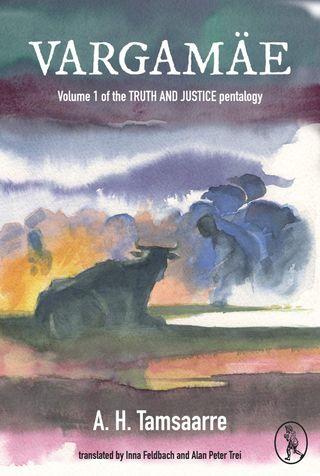
Cover of Vargamae: Volume I of the Truth and Justice Pentalogy

Vargamae: Volume I of the Truth and Justice Pentalogy

Anton Hansen Tammsaare

Original language: Estonian · Paperback · ISBN 978-1908251909

Vargamae is the first volume of Anton Hansen Tammsaare's five-part novel cycle Truth and Justice, widely regarded as one of the central works of Estonian literature. Set in a rural Estonian village during the final quarter of the nineteenth century, when the country was still a province of the Russian Empire, it follows a peasant named Andres who buys a small farm on marshy, difficult land. He arrives with his young wife, and an early incident involving their cow signals the kind of hardship that will define their years ahead.

The story tracks the family's slow, grinding effort to pull itself out of poverty. The marsh demands constant labor, and the weather and soil resist easy yields. Alongside these natural obstacles, Andres faces a persistent human one: his neighbor Pearu, a cunning and unscrupulous figure whose conflicts with Andres run through the novel like a second current. Their disputes over boundaries, water, and status give the book much of its tension.

Tammsaare wrote the pentalogy during the 1920s and 1930s, a period when Estonia had recently gained independence. The full cycle traces the country's transformation from tsarist province to sovereign state, and Vargamae lays its foundation in the physical realities of land, labor, and rural community.

Plot

Andres, an Estonian peasant, purchases a smallholding in a marshy part of the country, which the novel is named after. He takes his young wife, and an incident with their cow sets the tone for a life of struggle in which the family grows and gradually lifts itself out of extreme poverty. They don't only have to strive against the elements, but also against their neighbor Pearu, a wily and ruthless man.

More from Estonia

See the country page for Estonia for its map, facts and largest cities, or browse books from other countries.

Links go to Amazon; Hookito doesn’t sell books. Know a book that belongs here, or spotted a mistake? Write to submissions@hookito.com.

Where to next?

Back to the globe
Hookito landscape illustration