
Hookito

Ethiopia · Books

Books from Ethiopia

7 books from and about Ethiopia: what each is about, the plot, and a note from Professor Kogi.

Cover of Addis Ababa Noir

Addis Ababa Noir

M. Mengiste, A. Reta, M. Shiferraw, L. Yohannes, S. Addonia, M. Hadero, M. Awake, L. Girma, R. Fisseha, S. Hailemariam, G. T. Fantaye, T. N. Tafa, H. Giorgis, B. Seyoum

Original language: English · Paperback · ISBN 978-1617758201

Addis Ababa Noir gathers short stories by fourteen writers connected to Ethiopia, some living in the country and some abroad. Every piece is set in or around the capital, a large and growing city where wealth and poverty, tradition and rapid change sit close together. Contributors include Maaza Mengiste, Sulaiman Addonia and Meron Hadero, and each story takes up a different corner of the city.

The stories are not comforting ones. Characters are drawn as complicated people, caught between loyalty and self-interest or between memory and denial, and the writing resists tidy moral conclusions. Several pieces look at how myth, history and rumour shape private decisions in a city still absorbing decades of political change. Across the anthology the mood is deliberately uneasy, closer to discomfort than resolution.

Addis Ababa sits at roughly 2,300 metres above sea level on the central Ethiopian highlands, which makes it one of the highest capital cities anywhere. It is also the seat of the African Union, so diplomats, migrants from rural regions and long-established residents share the same streets. The stories use that geography and that mix of people as working material rather than scenery.

Plot

"What marks life in Addis Ababa are the starkly different realities coexisting in one place. It’s a growing city taking shape beneath the fraught weight of history, myth, and memory. It is a heady mix. It can also be disorienting, and it is in this space that the stories of Addis Ababa Noir reside . . . "These are not gentle stories. They cross into forbidden territories and traverse the damaged terrain of the human heart. The characters in these pages are complicated, worthy of our judgment as much as they somehow manage to elude it. The writers have each discovered their own ways to get us to lean in while forcing us to grit our teeth as we draw closer . . . "Despite the varied and distinct voices in these pages, no single book can contain all of the wonderful, intriguing, vexing complexities of Addis Ababa. But what you will read are stories by some of Ethiopia’s most talented writers living in the country and abroad. Each of them considers the many ways that myth and truth and a country’s dark edges come together to create something wholly original―and unsettling."

Cover of Cutting for Stone

Cutting for Stone

Abraham Verghese

Original language: English · Paperback · ISBN 978-0375714368

Marion and Shiva Stone are twin brothers born in Addis Ababa to an Indian nun and a British surgeon. Their mother dies in childbirth and their father vanishes, leaving the boys to be raised at a hospital compound in the Ethiopian capital. Both twins develop a deep interest in medicine from an early age, shaped by the clinical world that surrounds them and the absence of the parents they never knew.

The novel follows the brothers through childhood and young adulthood against a backdrop of political upheaval in Ethiopia. Their bond is unusually close, yet differences in temperament gradually pull them apart. Betrayal between them eventually drives Marion across the Atlantic to New York City, where he continues to practice medicine in very different circumstances. The story moves between these two settings, tracing how distance, memory, and unresolved family history press on each brother's choices.

Abraham Verghese, himself a physician, brings detailed medical observation into the narrative. Surgical procedures and hospital life are described with the specificity of someone trained in the field. The Ethiopian setting, from the streets of Addis Ababa to the routines of a mission hospital, grounds the story in a particular place and era rather than treating the country as mere scenery.

Plot

Marion and Shiva Stone are twin brothers born of a secret union between a beautiful Indian nun and a brash British surgeon. Orphaned by their mother’s death and their father’s disappearance, bound together by a preternatural connection and a shared fascination with medicine, the twins come of age as Ethiopia hovers on the brink of revolution.

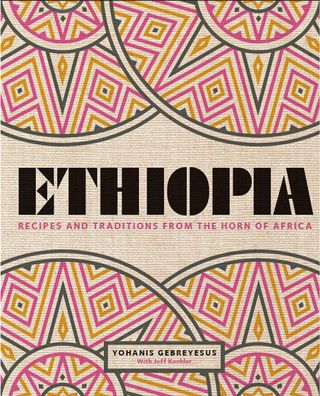
Cover of Ethiopia: Recipes and Traditions from the Horn of Africa

Ethiopia: Recipes and Traditions from the Horn of Africa

Yohanis Gebreyesus

Original language: English · Hardcover · ISBN 978-1623719630

Yohanis Gebreyesus spent years cooking professionally in kitchens outside Ethiopia before returning home to focus on the food traditions he grew up with. This cookbook presents dishes from across the country, organized alongside photography of Ethiopian landscapes and the people who shape its food culture. Cultural and historical context accompanies the recipes, placing each dish within the broader patterns of Ethiopian daily life and celebration.

The recipes cover a wide range of the cuisine. Doro Wat, a chicken stew built on berbere spice, appears alongside Siga Tibs, a quick-fried beef preparation, and Asa Shorba, a spiced fish soup. Vegetarian cooking, which holds a central place in Ethiopian tradition partly due to the fasting practices of the Ethiopian Orthodox Church, is well represented. Gomen features collard greens with ginger and garlic. Azifa is a green lentil salad. Dinich Alicha combines potatoes and carrots in an onion and turmeric sauce.

Gebreyesus structures the book to work both as a practical cooking guide and as an introduction to Ethiopian food for readers unfamiliar with it. Ingredients like berbere, the foundational spice blend used across many Ethiopian dishes, and injera, the sourdough flatbread that often serves as both plate and utensil, receive explanation within the collection.

Plot

In this cookbook, Ethiopia's gourmet guru seeks to spread love for the country’s cuisine. After working as a chef around the world, Yohanis Gebreyesus decided it was time to go home and put his skills to showing off what his home country has to offer. Now, he's dedicating his work to opening the world's eyes to Ethiopian cuisine. The delicious dishes featured here include Doro Wat, chicken stewed with berbere spice, Siga Tibs, flashfried beef, and Asa Shorba, a hearty spiced fish soup, plus vegetarian dishes such as Gomen, collard greens with ginger and garlic, Azifa, green lentil salad, and Dinich Alicha, potatoes and carrots in an onion turmeric sauce. Along with photography of the stunning landscapes and vibrant artisans of Ethiopia—combined with insightful cultural and historical details—this book demonstrates why Ethiopian food should be considered one of the world’s most singular and enchanting cuisines.

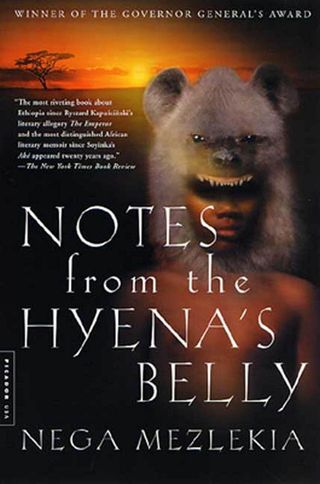
Cover of Notes from the Hyena's Belly

Notes from the Hyena's Belly

Nega Mezlekia

Original language: English · Paperback · ISBN 978-0312289140

Nega Mezlekia grew up in the arid city of Jijiga, in eastern Ethiopia, during the 1970s and 1980s. His memoir opens with childhood in a place where Muslim and Christian communities lived side by side, divided by distinct customs in dress, language, and daily practice. The title draws on a proverb he recalls from youth: children, like donkeys, had to stay on the known path or risk ending up in the hyena's belly. Around him moved a cast of local figures, among them a schoolteacher under constant pressure, a school director who moonlighted as a poacher, and a priest said to know the languages of both heaven and hell.

As Mezlekia grew older, Ethiopia's political order collapsed under competing pressures from western European interests and communist-aligned forces. Civil war, famine, and military juntas reshaped daily life. At eighteen, he joined a guerrilla army. The memoir traces his path through drought, imprisonment, and armed conflict before he eventually left the country and settled in Canada.

The book works as both personal story and social history of the Horn of Africa during one of its most unstable periods. Mezlekia populates his account with specific people and places rather than broad generalizations, grounding large-scale upheaval in the details of one city and one family.

Plot

"We children lived like the donkey," Mezlekia remembers, "careful not to wander off the beaten trail and end up in the hyena's belly." His memoir sheds light not only on the violence and disorder that beset his native country, but on the rich spiritual and cultural life of Ethiopia itself. Throughout, he portrays the careful divisions in dress, language, and culture between the Muslims and Christians of the Ethiopian landscape. Mezlekia also explores the struggle between western European interests and communist influences that caused the collapse of Ethiopia's social and political structure―and that forced him, at age 18, to join a guerrilla army. Through droughts, floods, imprisonment, and killing sprees at the hands of military juntas, Mezlekia survived, eventually emigrating to Canada. In Notes from the Hyena's Belly he bears witness to a time and place that few Westerners have understood.

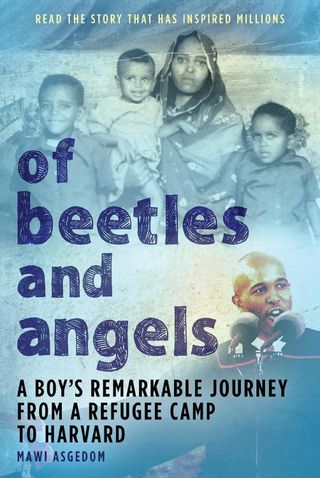
Cover of Of Beetles and Angels

Of Beetles and Angels

Mawi Asgedom

Original language: English · Paperback · ISBN 978-0316826204

Mawi Asgedom was three years old when he left Ethiopia on foot with his mother and brother, fleeing civil war. The family walked to a refugee camp in Sudan before eventually resettling in the United States, where they arrived in a suburb of Chicago. Growing up on welfare in an affluent neighborhood, Mawi faced language barriers, cultural isolation, racial prejudice, and financial hardship. His memoir traces this path from east Africa to the American Midwest with direct, concrete detail.

Central to the book is advice from Mawi's father: to treat all people, even those who seem least worthy of kindness, as if they were angels. This principle guided Mawi through years of adjustment and difficulty, and the memoir examines what it means to hold onto such a belief while navigating an unfamiliar society. Mawi went on to earn a full-tuition scholarship to Harvard University.

The book includes recipes and discussion questions. A fifteenth anniversary edition added a new introduction and afterword from the author along with a discussion guide. Since its first publication, Of Beetles and Angels has been widely used in school and community reading programs across the United States.

Plot

ollowing his father's advice to "treat all people-even the most unsightly beetles-as though they were angels sent from heaven," Mawi overcomes the challenges of language barriers, cultural differences, racial prejudice, and financial disadvantage to build a fulfilling, successful life for himself in his new home. Of Beetles and Angels is at once a harrowing survival story and a compelling examination of the refugee experience. With hundreds of thousands of copies sold since its initial publication, and as a frequent selection as one book/one school/one community reads, this unforgettable memoir continues to touch and inspire readers. This special expanded fifteenth anniversary edition includes a new introduction and afterword from the author, a discussion guide, and more.

Cover of Teff Love: Adventures in Vegan Ethiopian Cooking

Teff Love: Adventures in Vegan Ethiopian Cooking

Kittee Berns

Original language: English · Paperback · ISBN 978-1570673115

Teff Love is a vegan cookbook focused on Ethiopian cuisine, written by Kittee Berns. It is organized around three foundations: berbere, a spice blend central to Ethiopian cooking; injera, the fermented sourdough flatbread that serves as both plate and utensil; and ye qimem zeyet, a plant-based version of traditional clarified butter. Berns explains how to source key ingredients and gives several methods for making injera at home without special equipment.

More than 90 recipes appear here, many drawn from the vegan fasting dishes served on veggie combo platters at Ethiopian restaurants across North America. Ethiopian Orthodox Christian fasting periods have long encouraged plant-based cooking. The book covers saucy wots, or stews, stir-fries, and traditional injera-based meals, plus fusion recipes that apply Ethiopian seasonings to other kinds of food. Most recipes are gluten-free and soy-free, or can be adapted easily.

Practical sections address serving Ethiopian food in the customary way, simplifying preparation, and cooking for a crowd. Berns also works to make the cuisine easier to approach for cooks outside it, explaining ingredients and terms that language and cultural distance can otherwise leave unclear. Teff itself is a fine grain grown widely in the Ethiopian highlands.

Plot

Kittee introduces the holy trinity of Ethiopian cooking: a berbere spice blend, injera (the fermented sourdough staple), and ye qimem zeyet, a veganized clarified butter. Armed with these basics, you'll be ready to dazzle your family and friends with many of the popular dishes found on veggie combo platters in restaurants all over North America. From saucy wots, spicy stews, and succulent stir-fries to traditional injera-based dishes and fusion foods that blend these unique seasonings into a range of family favorites, fans of this cuisine will be thrilled. Recipes are almost entirely gluten- and soy-free, or can be made so with easy adaptions.

Cover of The Shadow King

The Shadow King

Maaza Mengiste

Original language: English · Hardcover · ISBN 978-0393083569

In 1935, Mussolini's forces moved toward Ethiopia in what would become one of the opening conflicts of the wider war that followed. Maaza Mengiste's novel begins in this period, following Hirut, a recently orphaned young woman working as a maid in the household of Kidane, an officer in Emperor Haile Selassie's army. As Kidane prepares his men against the coming invasion, his treatment of Hirut turns cruel when she resists his advances. She is drawn into a situation defined by violation, theft, and fury.

The story extends beyond one household. Italy's technologically superior forces expect a swift campaign, and among the hundreds of thousands of soldiers marching into Ethiopia is Ettore, a Jewish Italian photographer whose own position within the fascist military carries its own contradictions. The novel gives particular attention to women who took part in the resistance against the Italian occupation, figures largely absent from conventional accounts of the conflict.

Mengiste sets the personal against the political throughout. Hirut's struggle within Kidane's home runs parallel to Ethiopia's fight against a foreign army, and the question of who gets recorded in history, and who does not, sits at the center of the book's concerns.

Plot

With the threat of Mussolini’s army looming, recently orphaned Hirut struggles to adapt to her new life as a maid in Kidane and his wife Aster’s household. Kidane, an officer in Emperor Haile Selassie’s army, rushes to mobilize his strongest men before the Italians invade. His initial kindness to Hirut shifts into a flinty cruelty when she resists his advances, and Hirut finds herself tumbling into a new world of thefts and violations, of betrayals and overwhelming rage. Meanwhile, Mussolini’s technologically advanced army prepares for an easy victory. Hundreds of thousands of Italians―Jewish photographer Ettore among them―march on Ethiopia seeking adventure.

More from Ethiopia

See the country page for Ethiopia for its map, facts and largest cities, or browse books from other countries.

Links go to Amazon; Hookito doesn’t sell books. Know a book that belongs here, or spotted a mistake? Write to submissions@hookito.com.

Where to next?

Back to the globe
Hookito landscape illustration