Hookito

France · Books

Books from France

25 books from and about France: what each is about, the plot, and a note from Professor Kogi.

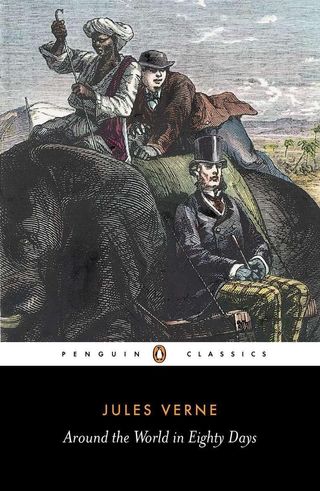
Cover of Around the World in Eighty Days

Around the World in Eighty Days

Jules Verne

Original language: French · Paperback · ISBN 978-0140449068

Phileas Fogg is a wealthy Englishman whose life runs on strict routine. He leaves his house at the same hours, walks the same paths, and expects absolute precision from everyone around him. One evening at the Reform Club in London, a debate about whether the world can be circled in eighty days leads Fogg to stake half his fortune on doing exactly that. He departs the same night, accompanied by his newly hired French valet, Passepartout, who had been looking forward to a quiet position.

The route takes them east through Egypt, India, Hong Kong, Japan, and across the United States. Along the way they travel by steamer, rail, sledge, and at one point an elephant purchased out of necessity in the Indian countryside. A detective named Fix follows them from country to country, convinced that Fogg matches the description of a man who recently robbed the Bank of England. Each delay, missed connection, and unexpected detour tightens the margin between success and failure.

Jules Verne published the novel in 1873, first as a serial in the French newspaper Le Temps. The story reflects a period when new rail lines and the opening of the Suez Canal in 1869 had recently shortened global travel times, making Fogg's wager feel plausible to contemporary readers.

Plot

One night in the reform club, Phileas Fogg bets his companions that he can travel across the globe in just eighty days. Breaking the well-established routine of his daily life, he immediately sets off for Dover with his astonished valet Passepartout. Passing through exotic lands and dangerous locations, they seize whatever transportation is at hand - whether train or elephant - overcoming set-backs and always racing against the clock.

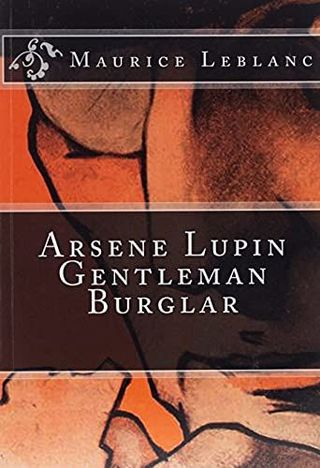
Cover of Arsene Lupin, Gentleman Burglar

Arsene Lupin, Gentleman Burglar

Maurice LeBlanc

Original language: French · paperback

Arsene Lupin, Gentleman Burglar is a collection of stories by Maurice LeBlanc, first published in France in the early twentieth century. The central character is a confident, witty thief who operates among the wealthy and powerful, relieving them of their possessions through elaborate schemes. Lupin is not a common criminal. He targets the rich, often leaving the poor and innocent untouched or even better off through acts of spontaneous generosity. His adventures sit somewhere between detective fiction and caper story, with LeBlanc building each tale around clever misdirection and theatrical plans.

LeBlanc created Lupin during a period when detective fiction was flourishing across Europe. The character has sometimes been compared to Sherlock Holmes, though Lupin stands on the opposite side of the law. Where Holmes solves crimes, Lupin commits them with style and humor, and the tension in many stories comes from the cat-and-mouse dynamic between Lupin and the detectives trying to catch him. The tone is light and playful rather than dark, and the plotting favors surprise and ingenuity over violence.

The stories are set largely in Paris and the French countryside, drawing on the social landscape of early 1900s France. Lupin has remained one of the most recognizable characters in French popular fiction, inspiring numerous adaptations over the decades.

Plot

The suave adventures of a gentleman rogue—a French Thomas Crown Created by Maurice LeBlanc during the early twentieth century, Arsene Lupin is a witty confident man and burglar, the Sherlock Holmes of crime. The poor and innocent have nothing to fear from him; often they profit from his spontaneous generosity. The rich and powerful, and detective who tries to spoil his fun, however, must beware. They are the target of Arsene’s mischief and tomfoolery. A masterful thief, his plans frequently evolve into elaborate capers, a precursor to such cinematic creations as Ocean’s Eleven and The Sting.

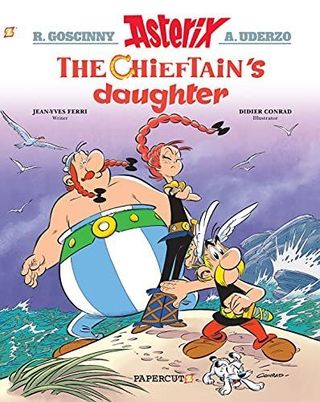
Cover of Asterix #38: The Chieftain's Daughter

Asterix #38: The Chieftain's Daughter

Jean-Yves Ferri, Didier Conrad

Original language: French · hardcover

Asterix and the Chieftain's Daughter is the 38th album in the long-running Asterix series, written by Jean-Yves Ferri and illustrated by Didier Conrad. It is the fourth volume produced by this creative pair, who took over the series after the passing of original co-creator Albert Uderzo. The story begins when Adrenaline, the daughter of a well-known Gaulish chieftain, arrives in the famous village of indomitable Gauls. She is on the run from the Romans, and the village is the one place in occupied Gaul where she can find safety.

Adrenaline is a teenager, and her presence stirs up the small community in ways that go beyond the usual Roman troubles. Obelix in particular seems unsettled by the new arrival, but the disruption spreads wider than any single character. The album plays on generational friction and the chaos that a strong-willed young outsider can bring to a tight-knit group, all within the comic series' familiar mix of wordplay, slapstick, and historical satire.

The story is set, like every Asterix album, in a tiny corner of Gaul around 50 BC, surrounded by Roman camps. Ferri and Conrad continue the visual and narrative style established by Goscinny and Uderzo, keeping the cast and setting consistent while introducing new characters and situations.

Plot

Upheavals and pandemonium are definitely on the horizon! Adrenaline, the daughter of the famous Gaulish chieftain is being hunted down by the Romans. She secretly finds refuge in the village of our indomitable Gauls - the only place in Roman-occupied Gaul that can guarantee her protection. And let's just say that having this very special teenager around will cause plenty of confusion, and not just for Obelix...

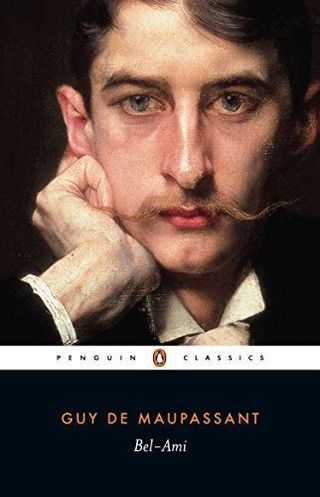
Cover of Bel-Ami

Bel-Ami

Guy de Maupassant

Original language: French · paperback

Georges Duroy is a young man recently returned from military service in North Africa when he arrives in Paris with little money and fewer prospects. A chance meeting with an old army friend leads to a position at a newspaper called La Vie Francaise, and Duroy quickly discovers that charm and good looks can open doors that talent alone cannot. The novel follows his calculated rise through Parisian society during the 1880s, a period of rapid press expansion and colonial ambition in France.

Duroy's advancement depends less on his writing than on his relationships with women, each of whom offers access to a higher social circle, better political connections, or useful information. Maupassant presents the newspaper world as a place where financial interests shape editorial decisions and where journalists, politicians, and speculators operate in close, mutually profitable arrangements. The city itself is rendered in careful detail, from cheap restaurants near the Madeleine to the drawing rooms of the wealthy.

First published in 1885, Bel-Ami appeared as a serial in the newspaper Gil Blas before its release as a complete volume. Maupassant, already well known for his short stories, built the novel around institutions and social habits he had observed firsthand as a journalist and civil servant in Paris.

Plot

Young, attractive, and very ambitious, George Duroy, known to his friends as Bel-Ami, is offered a job as a journalist on La Vie Francaise and soon makes a great success of his new career. But he also comes face to face with the realities of the corrupt society in which he lives - the sleazy colleagues, the manipulative mistresses, and wily financiers - and swiftly learns to become an arch-seducer, blackmailer and social climber in a world where love is only a means to an end.

Cover of Candide

Candide

Voltaire

Original language: French · paperback

Candide is a French satire written by Voltaire and first published in 1759, during the intellectual period known as the Age of Enlightenment. The story follows a young man named Candide who grows up in a comfortable, sheltered estate where his tutor, Professor Pangloss, teaches him that this is the best of all possible worlds. That philosophy draws on the ideas of the German thinker Gottfried Wilhelm Leibniz, who argued that an all-knowing creator would necessarily have chosen the optimal arrangement of things.

Candide's protected life ends abruptly, and from that point the narrative sends him through a long sequence of misfortunes across multiple continents. He encounters war, natural disaster, cruelty, and corruption. Each episode tests the optimistic doctrine Pangloss instilled in him, and the gap between the theory and the visible state of the world grows steadily wider. Voltaire uses the accumulation of disasters partly for comic effect and partly as a pointed philosophical argument.

The book was controversial at the time of publication and was banned in several places, including Geneva and Paris. At roughly 100 pages in most editions, it moves quickly and packs its arguments into a compact frame. Voltaire wrote it under a pseudonym and initially denied authorship.

Plot

It begins with a young man, Candide, who is living a sheltered life in an Edenic paradise and being indoctrinated with Leibnizian optimism (or simply "optimism") by his mentor, Professor Pangloss. The work describes the abrupt cessation of this lifestyle, followed by Candide's slow, painful disillusionment as he witnesses and experiences great hardships in the world.

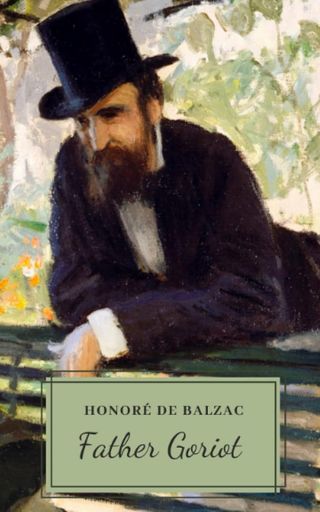
Cover of Father Goriot

Father Goriot

Honoré de Balzac

Original language: French · Paperback · ISBN 979-8391800750

Father Goriot, published in 1835, is set in Paris during the Bourbon Restoration, the period after Napoleon's fall when the old monarchy briefly returned to power. The story takes place largely inside the Maison Vauquer, a run-down boarding house on the Left Bank where a mixed group of tenants share meals and keep secrets. Among them is the elderly Goriot, a retired vermicelli merchant who once held considerable wealth but has spent nearly everything on his two daughters. Both have married into high society and seem reluctant to acknowledge the father who sacrificed so much for them.

Eugène de Rastignac, a young law student from a provincial family in southern France, also lives at the Maison Vauquer. Watching Goriot's situation and meeting figures from the Parisian upper world, he begins to understand how money, status, and personal connections shape life in the capital. Another boarder, the mysterious Vautrin, offers Rastignac a darker shortcut to success, forcing the young man to weigh his own moral limits against his ambitions.

The novel belongs to Balzac's large series La Comédie humaine, a network of linked novels and stories that aimed to map French society across classes, professions, and regions. Father Goriot is one of the earliest entries in that project and introduces several characters who reappear in later volumes.

Plot

Set in Paris during the Bourbon Restoration, the story revolves around the rise and fall of Eugène de Rastignac, an ambitious law student, and his relationship with the enigmatic, tragic figure of Father Goriot. The novel masterfully weaves a captivating tapestry of human relationships, ambition, and desire within the boarding house Maison Vauquer. At the heart of the narrative lies Goriot, a once-wealthy merchant, now a destitute, broken man, driven by the all-consuming love for his two ungrateful daughters. The ever-astute Rastignac finds himself entangled in the cruel machinations of Parisian high society, as he navigates the treacherous terrain of social climbing, wealth, and power. Balzac's incisive, unsparing prose vividly captures the complexity of human nature and the darker corners of 19th-century Paris, with its opulence and squalor, honor and betrayal.

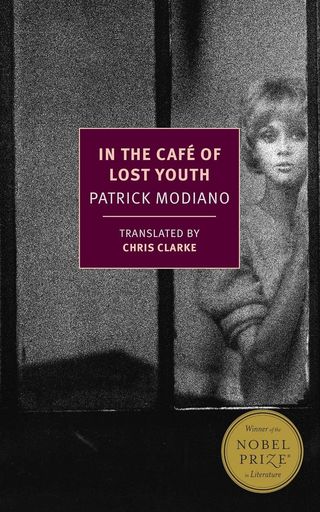
Cover of In the Café of Lost Youth

In the Café of Lost Youth

Patrick Modiano

Original language: French · Paperback · ISBN 978-1590179536

In the Café of Lost Youth is set in a shadowy corner of 1950s Paris, where writers, drifters, petty criminals, and heavy drinkers share the same dim rooms. At the centre is Louki, a young woman who appears in a café and quickly draws the attention of everyone around her, present yet elusive. Four narrators, Louki among them, offer separate versions of who she is.

Modiano arranges these perspectives so that they circle the same events without settling on one truth. The story is shaped by gaps and contradictions, where memory and identity shift depending on who is speaking. The book draws partly on the real-life circle around Guy Debord, a French writer and filmmaker, and the photographer Ed van der Elsken recorded some of those figures.

The novel is short and compressed, moving between voices in brief sections. Each narrator adds detail about Louki while revealing habits of their own, including what they choose to remember and what they let slip away. Alongside them, the book places brief sketches of historical figures who moved through the same streets and cafés.

Plot

The novel, inspired in part by the circle (depicted in the photographs of Ed van der Elsken) of the notorious and charismatic Guy Debord, centers on the enigmatic, waiflike figure of Louki, who catches everyone’s attention even as she eludes possession or comprehension. Through the eyes of four very different narrators, including Louki herself, we contemplate her character and her fate, while Modiano explores the themes of identity, memory, time, and forgetting that are at the heart of his spellbinding and deeply moving art.

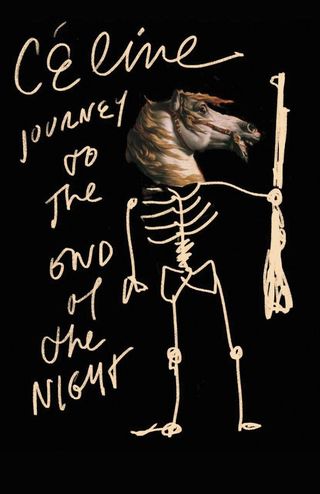
Cover of Journey to the End of the Night

Journey to the End of the Night

Louis-Ferdinand Céline

Original language: French · paperback

Journey to the End of the Night, first published in 1932, follows Ferdinand Bardamu, a largely autobiographical antihero drawn from the lower middle class. The novel opens with Bardamu enlisting impulsively in the French army during World War I, and his time in the trenches leaves him shaken and cynical. From there, he moves through a series of locations that each expose a different face of exploitation and absurdity: colonial Africa, New York City, and the Ford automobile factory in Detroit.

Céline wrote in a style that broke sharply with the literary French of his time. The prose is colloquial, aggressive, and built on long, rolling sentences that mirror spoken language. Bitter humor runs through nearly every scene, directed at institutional hypocrisy, human cruelty, and the gap between public ideals and private behavior. Bardamu eventually returns to Paris and works as a struggling doctor in a poor district, but the novel offers no comfortable arc of recovery or redemption.

The book drew immediate attention and controversy when it appeared. Its unflinching depiction of war, colonialism, and urban poverty is delivered without sentimentality, and Bardamu remains an observer whose failures are as visible as those of the world around him.

Plot

Journey to the End of the Night is a literary symphony of cruelty and violence that hurtles through the improbable travels of the petit bourgeois (and largely autobiographical) antihero, Bardamu: from the trenches of WWI to the African jungle, to New York, to the Ford Factory in Detroit, and finally to life in Paris as a failed doctor.

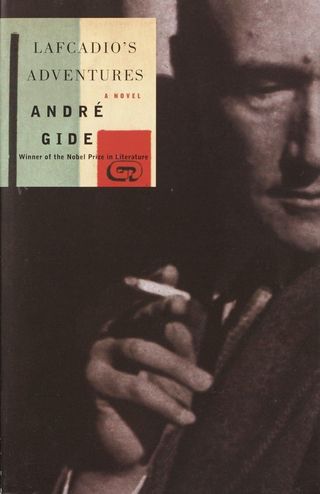
Cover of Lafcadio's Adventures

Lafcadio's Adventures

André Gide

Original language: French · Paperback · ISBN 978-0375713385

Lafcadio's Adventures, published by André Gide, follows Lafcadio Wluiki, a sharp and resourceful nineteen-year-old living in 1890s Paris. When he discovers he stands to inherit a fortune from a dying French nobleman, Lafcadio sets out across Europe, eventually arriving in Rome dressed in newly purchased finery. There he stumbles into a bizarre Church extortion scheme built around the claim that the Pope has been imprisoned and replaced.

The novel assembles a cast of swindlers, aristocrats, pickpockets, and desperate believers around this central fraud. Among them are a dealer in graveyard statuary, an atheist who has recently converted under financial pressure, and Julius de Baraglioul, a well-meaning but ineffectual brother-in-law tangled in his own certainties. Gide uses these figures to stage a detective farce laced with philosophical mischief, circling around what he called the unmotivated crime, an act carried out without personal gain or grievance, purely to test whether it can be done.

The story moves at a brisk pace through the capitals of late nineteenth-century Europe. Gide, who received the Nobel Prize in Literature in 1947, structured the book as a satire that turns the conventions of crime fiction inside out, letting coincidence and moral ambiguity do the work usually assigned to logic and justice.

Plot

When Lafcadio Wluiki, a street-smart nineteen-year-old in 1890s Paris, learns that he’s heir to an ailing French nobleman’s fortune, he’s seized by wanderlust. Traveling through Rome in expensive new threads, he becomes entangled in a Church extortion scandal involving an imprisoned Pope, a skittish purveyor of graveyard statuary, an atheist-turned-believer on the edge of insolvency, and all manner of wastrels, swindlers, aristocrats, adventurers, and pickpockets. With characteristic irony, Gide contrives a hilarious detective farce whereby the wrong man is apprehended, while the charmingly perverse Lafcadio—one of the most original creations in all modern fiction—goes free.

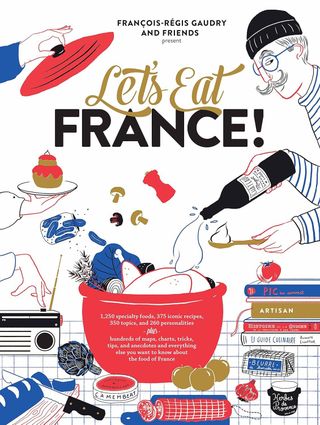
Cover of Let's Eat France!

Let's Eat France!

François-Régis Gaudry

Original language: French · Hardcover · ISBN 978-1579658762

Let's Eat France! is a large-format reference by François-Régis Gaudry that attempts to catalog French food culture through roughly 1,250 specialty foods, 375 recipes, and 260 profiles of notable figures. The book covers classic preparations such as pot-au-feu, blanquette de veau, choucroute, pâté en croûte, and ratatouille, alongside profiles of food-world personalities from Brillat-Savarin to Paul Bocuse and the Troisgros family.

Much of the book's character comes from its visual format. Poster-sized infographics map the breads, wines, oysters, and even the frites found across different French regions. A region-by-region index organizes cheeses, charcuterie, and local dishes. Charts track details like the full range of wine bottle sizes, from the small split up to the Nebuchadnezzar, which holds the equivalent of twenty standard bottles. A family tree of French sauces traces how one base leads to dozens of variations.

The contents are arranged in a deliberately non-linear order. A tutorial on mayonnaise might sit beside a list of restaurants where Balzac once ate. This scattered layout means the book functions less like a traditional encyclopedia read front to back and more like a collection of individual panels, each covering a self-contained topic in food, history, or geography.

Plot

1,250 specialty foods, 375 iconic recipes, 350 topics, 260 personalities, plus hundreds of maps, charts, tricks, tips, and anecdotes and everything else you want to know about the food of France. A book that feels literally larger than life, it is a feast for food lovers and Francophiles, combining the completist virtues of an encyclopedia and the obsessive visual pleasures of infographics with an enthusiast’s unbridled joy.

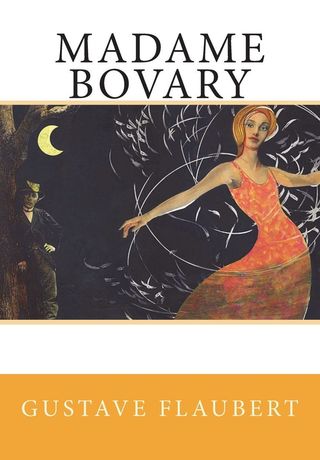
Cover of Madame Bovary

Madame Bovary

Gustave Flaubert

Original language: French · paperback

Madame Bovary, first published in 1856, follows Emma Bovary, the wife of a provincial doctor in northern France. Dissatisfied with the routine of her marriage and the dullness of small-town life, Emma seeks excitement through romantic affairs and reckless spending. The gap between the life she imagines and the one she actually inhabits drives the novel forward, pulling her toward increasingly dangerous decisions.

Gustave Flaubert set the story in Normandy, drawing on the rural landscape and social world he knew well. The book caused a public scandal when it was first serialized in the Revue de Paris, and Flaubert was put on trial for offenses against public morality in 1857. He was acquitted, and the controversy helped make the novel widely read almost immediately after its publication in book form.

Flaubert was known for laboring over every sentence, sometimes spending days on a single page in pursuit of what he called le mot juste, the precise word. This attention to fine detail shaped a style that avoids overt authorial judgment and instead builds meaning through observed particulars, from the texture of fabric to the sounds at a village fair. The method became a reference point for later writers working in a realist mode.

Plot

The story focuses on a doctor's wife, Emma Bovary, who has adulterous affairs and lives beyond her means in order to escape the banalities and emptiness of provincial life. Though the basic plot is rather simple, even archetypal, the novel's true art lies in its details and hidden patterns. Flaubert was a notorious perfectionist and claimed always to be searching for le mot juste ("the precise word").

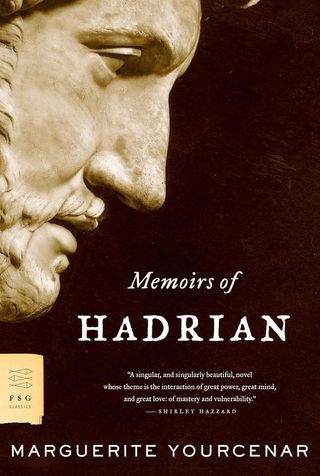
Cover of Memoirs of Hadrian

Memoirs of Hadrian

Marguerite Yourcenar

Original language: French · Paperback · ISBN 978-0374529260

Marguerite Yourcenar, born in Belgium and writing in French, published this historical novel in 1951. It takes the shape of a long letter from an aging Roman emperor to a boy of seventeen, Marcus Aurelius, whom he had brought into the line of succession. Hadrian sets down what he remembers: a hard boyhood, campaigns and reversals, and the slow work of settling an empire after war.

Within that account the emperor turns to poetry and music, to the philosophical questions he carried through office, and to Antinous, the young man from Bithynia in Asia Minor whom he loved. Yourcenar was drawn to a period unsettled in belief, when the old Roman gods commanded less faith and Christianity was not yet established. She connected that condition to Europe after the Second World War.

The historical Hadrian is known to have composed an autobiography, though no copy survives, which left space for invention grounded in research. Yourcenar first imagined the project as a teenager and put it aside, judging it work for someone past forty. Her sentences aim at the measured clarity of Latin prose from Hadrian's own century, and the book met wide acclaim on publication.

Plot

Marguerite Yourcenar reimagines the Emperor Hadrian's arduous boyhood, his triumphs and reversals, and finally, as emperor, his gradual reordering of a war-torn world, writing with the imaginative insight of a great writer of the twentieth century while crafting a prose style as elegant and precise as those of the Latin stylists of Hadrian's own era.

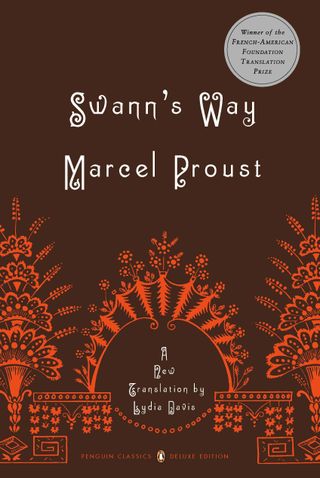
Cover of Swann's Way: In Search of Lost Time, Vol. 1

Swann's Way: In Search of Lost Time, Vol. 1

Marcel Proust

Original language: French · paperback

Swann's Way is the opening volume of Marcel Proust's extended novel In Search of Lost Time, originally published in French as Du côté de chez Swann in 1913. The book follows an unnamed narrator recalling his childhood in the fictional town of Combray, where small sensory details, most famously the taste of a madeleine dipped in tea, trigger vast expansions of memory. Through these recollections, the narrator reconstructs the social world of his family, the landscape of their walks, and the textures of everyday life in late nineteenth-century France.

A large central section shifts focus to Charles Swann, a cultured man from the narrator's parents' circle, and traces his obsessive love for Odette de Crécy. Swann's jealousy, self-deception, and gradual entanglement with Parisian salon society form a sustained study of how desire reshapes perception. Proust builds scenes through long, closely layered sentences that follow the movement of thought rather than the movement of events.

Before publication, the manuscript was turned down by several French publishers, among them Fasquelle, Ollendorff, and the Nouvelle Revue Française. André Gide, advising the NRF on whether to accept it, reportedly skimmed the text, noticed a few minor syntactic errors, and recommended rejection, a decision he later acknowledged as a serious misjudgment.

Plot

Swann's Way was rejected by a number of publishers, including Fasquelle, Ollendorff, and the Nouvelle Revue Française (NRF). André Gide was famously given the manuscript to read to advise NRF on publication and, leafing through the seemingly endless collection of memories and philosophizing or melancholic episodes, came across a few minor syntactic errors, which made him decide to turn the work down in his audit.

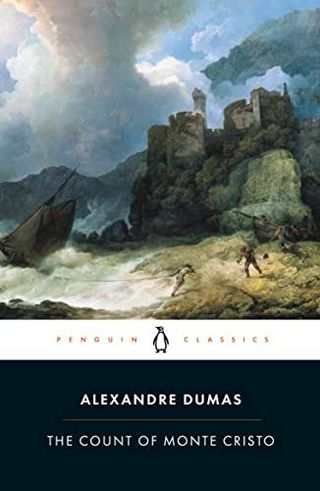
Cover of The Count of Monte Cristo

The Count of Monte Cristo

Alexandre Dumas

Original language: French · paperback

Edmond Dantes is a young sailor in Marseille whose life collapses on the day of his planned wedding. Accused of a crime he did not commit, he is arrested and locked away in the Chateau d'If, a fortress on a small island in the bay of Marseille. Years pass in near-total isolation before a chance encounter with a fellow prisoner changes his fate. From this man he learns of a vast treasure concealed on the Isle of Monte Cristo, and the knowledge reshapes his purpose entirely.

After escaping and recovering the fortune, Dantes remakes himself as the wealthy and mysterious Count of Monte Cristo. He returns to French society with a single aim: to bring ruin upon the three men who engineered his imprisonment. The story follows his elaborate plans as he moves through the salons and financial networks of Paris, manipulating events while concealing his true identity from former friends and enemies alike.

Alexandre Dumas first published the novel as a serial in France during the 1840s, and it drew a large readership from the start. The plot was partly inspired by a real case of wrongful imprisonment that Dumas encountered in police archives. The story is set across Mediterranean locations including Marseille, Rome, and Paris.

Plot

Thrown in prison for a crime he has not committed, Edmond Dantes is confined to the grim fortress of If. There he learns of a great hoard of treasure hidden on the Isle of Monte Cristo and he becomes determined not only to escape but also to unearth the treasure and use it to plot the destruction of the three men responsible for his incarceration

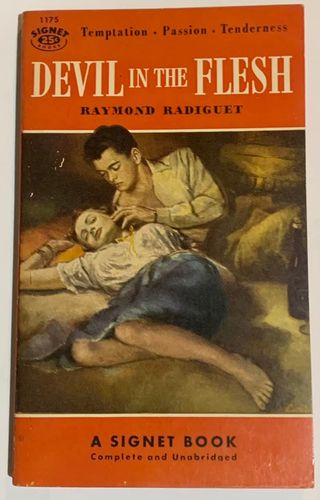
Cover of The Devil in the Flesh

The Devil in the Flesh

Raymond Radiguet

Original language: French · Paperback · ISBN 978-0714534022

The novel unfolds in Paris during the closing year of the First World War. Its narrator, a sixteen-year-old boy, recounts his relationship with Martha Lacombe, a young married woman whose husband is serving at the front. Around them, daily life continues under wartime conditions, with absences, delayed letters, and a loosened sense of routine that gives the boy unusual freedom.

The telling is unusually exact about the narrator's own motives. He records the pride of a boy who feels he is becoming a man, alongside the strain of handling adult attachments he cannot yet control. His self-examination is often unflattering. As the affair becomes visible, friends and neighbours react with disbelief, and the pressure of opinion tightens around the couple.

Radiguet began the book at sixteen and completed it at eighteen, drawing on his own adolescent attachment to an older woman. It appeared in 1923, the same year that typhoid fever ended his life at twenty. The narrow gap between the events described and the writing itself is part of what keeps the voice so close to its subject.

Plot

The narrator, a boy of 16, tells of his love affair with Martha Lacombe, a young woman whose soldier husband is away at the front. With an accuracy of insight that is almost ruthless, he describes his conflicting emotions—the pride of an adolescent on the verge of manhood and the pain of a child thrust too fast into maturity. The liaison soon becomes a scandal, and their friends, horrified and incredulous, refuse to accept what is happening—even when the affair reaches its tragic climax.

Cover of The Elegance of the Hedgehog

The Elegance of the Hedgehog

Muriel Barbery

Original language: French · paperback

In an upscale Parisian apartment building known as a hôtel particulier (a grand private townhouse), the concierge Renée appears to fit every stereotype her wealthy residents expect. She is short, middle-aged, and plain, spending her visible hours watching television soaps and tending to her cat, Leo. What the building's occupants do not suspect is that Renée is a passionate, self-educated student of art, philosophy, music, and Japanese culture, all of which she pursues in private with fierce dedication.

The novel pairs Renée's hidden intellectual life with a second narrator, Paloma, a gifted twelve-year-old girl living in the same building. Paloma, daughter of a prominent family, records her own sharp observations about the adults around her and the social codes that govern their world. The two characters circle each other without quite connecting at first, separated by age, class, and the assumptions that fill the building's hallways.

Muriel Barbery sets the story almost entirely within this single address, using the confined space to examine how people sort one another by appearance, occupation, and social standing. The book became a bestseller in France before reaching English-language readers, and it appeared on the New York Times bestseller list.

Plot

In an elegant hôtel particulier in Paris, Renée, the concierge, is all but invisible―short, plump, middle-aged, with bunions on her feet and an addiction to television soaps. Her only genuine attachment is to her cat, Leo. In short, she’s everything society expects from a concierge at a bourgeois building in an upscale neighborhood. But Renée has a secret: she furtively, ferociously devours art, philosophy, music, and Japanese culture.

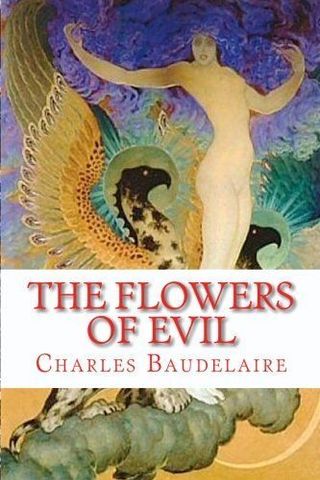
Cover of The Flowers of Evil

The Flowers of Evil

Charles Baudelaire

Original language: French · paperback

Les Fleurs du mal, published in 1857, collects nearly all of the poetry Charles Baudelaire wrote between 1840 and his death in 1867. The French title translates to The Flowers of Evil, and the collection is organized into several themed sections that move through subjects such as beauty, urban life, wine, revolt, and death. Baudelaire wrote mostly in Paris, and the city appears throughout the poems as a place of crowds, loneliness, and sharp contrasts between pleasure and suffering.

The poems address decay, desire, boredom, and the search for sensation in ways that were provocative in mid-nineteenth-century France. Shortly after publication, Baudelaire and his publisher were prosecuted for offending public morality, and six poems were removed from the French edition by court order. A second edition appeared in 1861 with new poems added but the banned pieces still excluded.

The collection became a significant reference point for the symbolist movement in poetry and visual art, and later for modernist writers in several languages. Baudelaire's attention to sound, image, and the uncomfortable edges of city life gave later poets a working example of how verse could hold contradiction without resolving it.

Plot

Les Fleurs du mal includes nearly all of Baudelaire's poetry, written from 1840 until his death in August 1867. First published in 1857, it was important in the symbolist —including painting— and modernist movements.

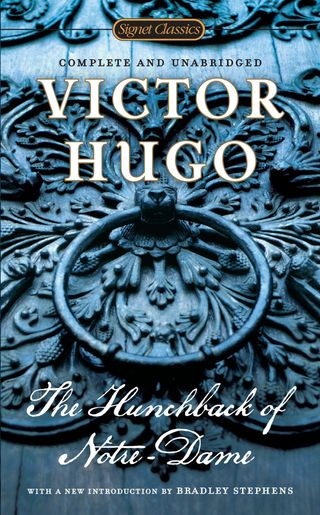
Cover of The Hunchback of Notre Dame

The Hunchback of Notre Dame

Victor Hugo

Original language: French · paperback

Victor Hugo published The Hunchback of Notre Dame in 1831, setting the story in medieval Paris around the cathedral of Notre-Dame. At that time, the real cathedral was deteriorating, and Hugo used the novel in part to draw public attention to the building and to Gothic architecture more broadly. The plot centers on Quasimodo, a deaf bell-ringer who lives in the cathedral's towers, Esmeralda, a young Romani dancer in the streets below, and Claude Frollo, an archdeacon whose obsession with Esmeralda drives him toward cruelty.

The cathedral itself functions almost as a character in the novel. Hugo describes its stonework, gargoyles, and interior spaces in extended passages that anchor the human drama to a specific place. Frollo's inner conflict between religious duty and destructive desire sets the story's tensions in motion, pulling Quasimodo and Esmeralda into danger. The social world around them, including the crowded streets, the courts, and the cathedral's sanctuary traditions, shapes what choices each character can and cannot make.

Hugo wrote the book during a period of active debate in France about preserving historic buildings. The novel contributed to a shift in public opinion that eventually led to major restoration work on Notre-Dame, overseen by the architect Eugène Viollet-le-Duc beginning in the 1840s.

Plot

Victor Hugo unfolds the haunting drama of Quasimodo, the hunchback; Esmeralda, the gypsy dancer; and Claude Frollo, the priest tortured by the specter of his own damnation. Shaped by a profound sense of tragic irony, it is a work that gives full play to the author’s brilliant imagination and his remarkable powers of description.

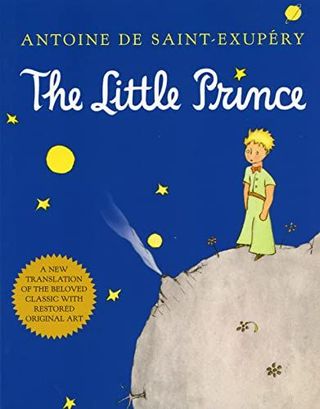
Cover of The Little Prince

The Little Prince

Antoine de Saint-Exupéry

Original language: French · paperback

A pilot stranded in the Sahara Desert meets a small boy who says he comes from a tiny asteroid far away. The Little Prince describes his life there, tending volcanoes and pulling up baobab seedlings before they can overrun his small world, and speaks of a single rose whose demands confused him enough to leave. His travels took him past asteroids where solitary adults sat absorbed in narrow work.

On Earth he meets a fox who explains how bonds are made, and a snake who answers in riddles. Through these meetings the book considers how grown-ups lose track of what matters and how attachment to another living thing can be both costly and necessary. The desert scenes and the imagined planets keep the scale moving between the intimate and the cosmic.

Antoine de Saint-Exupery, a French aviator and writer, first published the story in 1943 and drew the watercolour illustrations himself, including the images of the prince, the rose and the fox. He had crashed in the Sahara in 1935, and that experience sits behind the narrator's situation. The book has since appeared in hundreds of languages and dialects.

Plot

A pilot crashes in the Sahara Desert and encounters a strange young boy who calls himself the Little Prince. The Little Prince has traveled there from his home on a lonely, distant asteroid with a single rose. The story that follows is a beautiful and at times heartbreaking meditation on human nature.

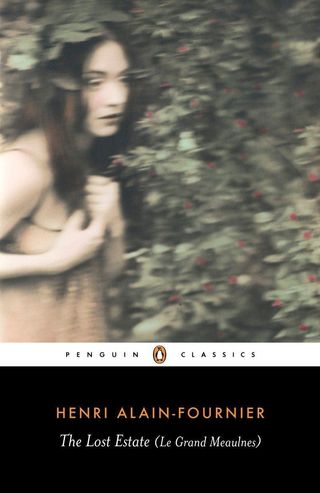
Cover of The Lost Estate

The Lost Estate

Alain- Fournier

Original language: French · paperback

The Lost Estate, originally published in French as Le Grand Meaulnes in 1913, is the only completed novel by Alain-Fournier, who died the following year during the First World War at the age of twenty-seven. The story is set in Sologne, a flat and heavily forested region south of Orléans in central France. It is told not by its central figure but by his quieter school friend, François Seurel, who watches Meaulnes arrive in their rural community and immediately reshape its atmosphere with his confidence and restless energy.

Meaulnes stumbles upon an unusual celebration at a remote and half-ruined country house, where he encounters a young woman who leaves a deep impression on him. The experience marks a turning point. From that moment, Meaulnes becomes consumed by the desire to find the estate and the girl again, dragging Seurel into his obsessive search. The narrative moves between the enchantment of that single encounter and the difficulty of returning to ordinary life after it.

Alain-Fournier structures the novel around the gap between adolescent longing and the compromises of growing up. Sologne itself, with its isolated farms and quiet woods, serves as a landscape where memory and place blur together, making the lost estate feel both real and impossibly distant.

Plot

When Meaulnes first arrives in Sologne, everyone is captivated by his good looks, daring, and charisma. But when he attends a strange party at a mysterious house with a beautiful girl hidden inside, he is changed forever.

Cover of The Myth of Sisyphus and Other Essays

The Myth of Sisyphus and Other Essays

Albert Camus

Original language: French · Paperback · ISBN 978-0679733737

Albert Camus published The Myth of Sisyphus in 1942, writing in French. The book opens with the question he treats as the only serious philosophical problem: whether life is worth living. He frames this less as a psychological matter than as a logical response to a universe that offers no built-in meaning, a collision he calls the absurd.

From there Camus examines figures he considers absurd heroes, among them the literary Don Juan and characters from the fiction of Franz Kafka. Each acts without any guarantee of order or reward. The title essay turns to Sisyphus, condemned in Greek myth to push a boulder uphill forever and watch it roll back, and asks what such a life can still hold.

The volume gathers other essays alongside the title piece, including writing shaped by the Mediterranean coast and Algeria, where Camus grew up. Across them he argues against despair as the only response to a world without order, holding instead to the value of individual existence and to living with dignity and clarity about one's own situation. The essays move between philosophy, literature and place.

Plot

Influenced by works such as Don Juan and the novels of Kafka, these essays begin with a meditation on suicide; the question of living or not living in a universe devoid of order or meaning. With lyric eloquence, Albert Camus brilliantly posits a way out of despair, reaffirming the value of personal existence, and the possibility of life lived with dignity and authenticity.

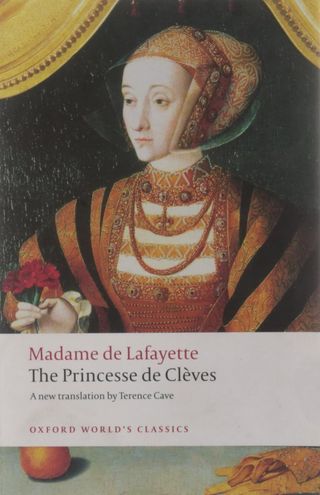
Cover of The Princesse de Clèves

The Princesse de Clèves

Madame de Lafayette

Original language: French · Paperback · ISBN 978-0199539178

Madame de Lafayette published The Princesse de Clèves anonymously in 1678, during the height of French classicism. Set in the royal court of 16th-century France, the novel follows a young married woman who finds herself drawn to a man who is not her husband. The story unfolds against a backdrop of courtly manners, political alliances, and social performance, where every glance and conversation carries risk. What distinguishes the book from earlier French romance fiction is its sustained attention to the inner life of its central character, her efforts at self-understanding, and her struggle between desire and moral principle.

The novel caused sharp debate when it first appeared, particularly over a pivotal scene in which the heroine makes an extraordinary confession. Critics and readers at the time argued about whether such a moment was believable or appropriate. That controversy points to something the book was doing differently: replacing the external adventures of older chivalric tales with a close study of emotion, hesitation, and self-deception.

Lafayette's work is now widely considered a turning point in the development of the European novel and an early landmark in women's writing. It sits at a boundary between two literary traditions, looking back toward courtly romance while opening a path toward psychological fiction.

Plot

Poised between the fading world of chivalric romance and a new psychological realism, Madame de Lafayette's novel of passion and self-deception marks a turning point in the history of the novel. When it first appeared anonymously in 1678--in the heyday of French classicism--it aroused fierce controversy among critics and readers, particularly for the extraordinary confession which forms the climax of the story. It is now regarded as a landmark in the history of women's writing.

Cover of The Red and the Black

The Red and the Black

Stendhal

Original language: French · Paperback · ISBN 978-0199539253

Julien Sorel, the son of a provincial carpenter in Restoration-era France, grows up admiring Napoleon and dreams of rising far beyond his origins. With the military path to glory now closed after Napoleon's fall, he turns instead to the Catholic clergy as a route upward. But his first real position is not in the church. He becomes a tutor in the household of a local mayor, where his intelligence and restless pride quickly create friction with the world around him.

Stendhal sets the novel in the years following Napoleon's defeat, a period when French society was caught between old aristocratic authority and newer ambitions shaped by the Revolution and its aftermath. Julien moves between small-town life and the salons of Paris, and at each stage his schemes collide with romantic attachments he has not planned for. The tension between calculated self-advancement and genuine feeling runs through the story, pulling Julien in directions he cannot fully control.

First published in 1830, the novel draws sharp portraits of class resentment, religious institutions used as instruments of power, and the gap between public manners and private motives. Stendhal wrote with close attention to the psychology of his characters, recording shifts in thought and self-deception with unusual precision for the period.

Plot

The son of a carpenter, Julian Sorel is inspired by the writings of Napoleon to conquer the heights of society. His initial plan to work his way up through the church is, however, thwarted when he is forced to accept employment as a tutor--and this rash social entrepreneur certainly has not considered the dangers of falling in love. Stendhal's novel is an amusing and piquant study of hypocrisy and free will in post-Napoleonic France.

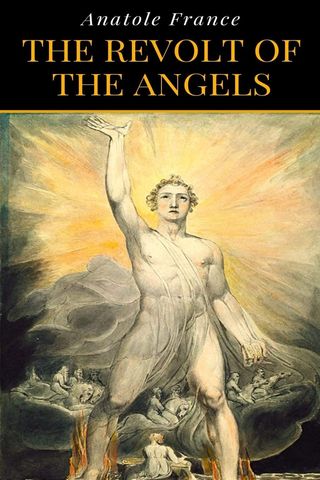
Cover of The Revolt Of The Angels

The Revolt Of The Angels

Anatole France

Original language: French · paperback

The Revolt of the Angels, published in 1914, is a satirical novel by Anatole France, who received the Nobel Prize in Literature in 1921. It begins in a private library in Paris, where a careful librarian notices that books are being displaced from their shelves overnight. The disturbance is the work of Arcade, a guardian angel who has read his way through the library and lost faith in the order he serves.

Arcade is not alone. Across Paris, other angels have also questioned heaven's authority and begun living among humans. They form a conspiracy to overthrow God, recalling the older rebellion of Lucifer but arguing in modern terms drawn from history, theology, and politics. Their plans and debates unfold in early twentieth-century Parisian society.

France uses the premise to examine power, obedience, and the nature of authority. The tone is comic and philosophical rather than dramatic, with long stretches of discussion set beside scenes of ordinary city life. The novel appeared shortly before the First World War, during a period of sharp intellectual skepticism in French letters.

Plot

At seven o'clock on the evening of that day, having, as usual, replaced all the books which had been taken from their shelves, and having assured himself that he was leaving everything in good order, he quit the library, double-locking the door after him. According to his usual habit, he dined at the Crèmerie des Quatre Évêques, read his newspaper, La Croix, and at ten o'clock went home to his little house in the Rue du Regard. The good man had no trouble and no presentiment of evil; his sleep was peaceful.

Cover of The Years

The Years

Annie Ernaux

Original language: French · Paperback · ISBN 978-1609807870

Annie Ernaux's The Years covers the period from 1941 to 2006, but it is not a conventional memoir. Rather than narrating her life through a first-person account, Ernaux replaces the singular I with collective pronouns such as we, they, and one. The effect is a book where private experience and shared French life become difficult to separate. Photographs, advertising slogans, pop songs, television programs, brand names, and newspaper headlines sit alongside diary notes and personal observations spanning six decades.

The book draws on the changing texture of everyday language to mark the passage of time. Local dialect, consumer products, and political catchphrases appear as evidence of how each era shaped the people living through it. Ernaux's own voice surfaces and recedes throughout, giving the impression that time itself is doing the telling. The result is a form of autobiography that feels both deeply personal and strangely impersonal at once.

First published in France in 2008, The Years became a bestseller there and marked a departure from Ernaux's earlier, more conventionally structured work. The English translation brought the book to a wider international readership.

Plot

The Years is a personal narrative of the period 1941 to 2006 told through the lens of memory, impressions past and present—even projections into the future—photos, books, songs, radio, television and decades of advertising, headlines, contrasted with intimate conflicts and writing notes from 6 decades of diaries. Local dialect, words of the times, slogans, brands and names for the ever-proliferating objects, are given voice here. The voice we recognize as the author's continually dissolves and re-emerges. Ernaux makes the passage of time palpable. Time itself, inexorable, narrates its own course, consigning all other narrators to anonymity. A new kind of autobiography emerges, at once subjective and impersonal, private and collective.

More from France

See the country page for France for its map, facts and largest cities, or browse books from other countries.

Free editions are on Project Gutenberg, matched by title and author. Links go to Amazon; Hookito doesn’t sell books. Know a book that belongs here, or spotted a mistake? Write to submissions@hookito.com.

Where to next?

Back to the globe
Hookito landscape illustration