Hookito

Iraq · Books

Books from Iraq

12 books from and about Iraq: what each is about, the plot, and a note from Professor Kogi.

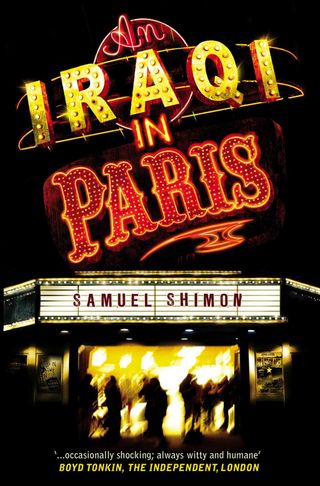
Cover of An Iraqi in Paris

An Iraqi in Paris

Samuel Shimon

Original language: Arabic · Hardcover · ISBN 978-9992142295

An Iraqi in Paris is a semi-autobiographical novel by Samuel Shimon about a young Iraqi writer who leaves his homeland with the ambition of becoming a Hollywood filmmaker. His plans do not unfold as expected. Instead of reaching the film industry, he ends up living as a refugee in Paris, sleeping in a metro station. At the center of his aspirations is a film he wants to make about his deaf mute father, a project that remains unrealized throughout the story.

Along the way, the narrator crosses paths with figures such as Jean-Luc Godard and Samuel Beckett, and encounters a ghost from Pere Lachaise Cemetery. These episodes mix hardship with unexpected humor and a persistent sense of nostalgia. The novel moves between cultures and cities, tracing displacement and the slow reshaping of identity that comes with exile. Shimon draws on his own experience as an Iraqi abroad, and the book sits between memoir and fiction without fully committing to either.

The setting shifts from Iraq to the streets and underground stations of Paris, grounding the story in specific, physical places rather than abstract ideas about belonging. Cultural alienation and stubborn hope run through the narrative side by side.

Plot

An Iraqi in Paris by Samuel Shimon is a semi-autobiographical novel following an Iraqi man’s journey from his homeland to Paris in pursuit of his dream to become a filmmaker. Blending humor, hardship, and nostalgia, the book portrays exile, resilience, and the enduring power of hope amid displacement and cultural alienation.
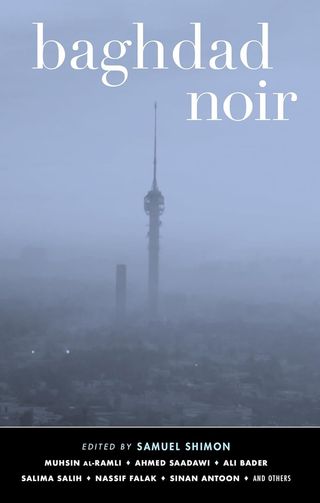
Cover of Baghdad Noir

Baghdad Noir

Samuel Shimon

Original language: English, Arabic · Paperback · ISBN 978-1617753435

Baghdad Noir gathers fourteen new stories about the Iraqi capital, edited by the writer Samuel Shimon. Contributors include Sinan Antoon, Ali Bader, Mohammed Alwan Jabr, Nassif Falak, Ahmed Saadawi, Muhsin al-Ramli, Hadia Said, Salima Salih, and Roy Scranton. Noir, a form built around crime, moral compromise, and bleak city atmospheres, gives each writer a shared frame for one very specific place.

Most stories take place after the American invasion of April 2003. One is set in 1950, and three belong to the 1970s and 1980s, so the collection moves across several decades of Iraqi life. Shimon's introduction links those earlier years to the present, treating recent history as the ground on which today's Baghdad stands. The city itself remains the constant across every period.

In that introduction Shimon also writes about Saddam Hussein's rule, the 1990 invasion of Kuwait, and the damage those years did to ordinary life in Iraq. He states that the 2003 invasion brought an end to the dictatorship while also closing off the possibility of a secular, modern Iraq. The stories work inside conditions that the genre, by Shimon's account, can only approximate.

Plot

Brand-new stories by: Sinan Antoon, Ali Bader, Mohammed Alwan Jabr, Nassif Falak, Dheya al-Khalidi, Hussain al-Mozany, Layla Qasrany, Hayet Raies, Muhsin al-Ramli, Ahmed Saadawi, Hadia Said, Salima Salih, Salar Abdoh, and Roy Scranton. From the introduction by Samuel Shimon: While all Iraqis will readily agree that their life has always been noir, the majority of the stories in Baghdad Noir are set in the years following the American invasion of 2003, though one story is set in 1950 and three are set in the 1970s and 1980s. Yet it is this recent history of Iraq―over the last few decades―that serves to inform its present . . . Cementing the destruction of Iraqi life was Saddam Hussein’s invasion of Kuwait in 1990. But that was hardly the end of Iraq’s noir story. In April 2003, the US invasion, though it precipitated the end of Saddam’s dictatorial rule, killed off any possibility of a secular, modern Iraq once and for all.

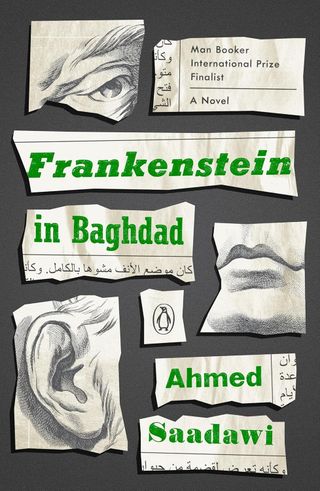
Cover of Frankenstein in Baghdad

Frankenstein in Baghdad

Ahmed Saadawi

Original language: Arabic · Paperback · ISBN 978-0143128793

In U.S.-occupied Baghdad, a scavenger named Hadi collects human body parts from the city's bomb-scarred streets and stitches them together into a single corpse. His stated reason is practical rather than sinister: he wants the government to acknowledge these remains as people and arrange a proper burial. The corpse, assembled from fragments of different victims, is his way of forcing recognition of the dead who might otherwise go uncounted.

When the body disappears from Hadi's home, a string of violent and unexplained killings begins across the city. Witnesses describe a grotesque figure who survives being shot. Hadi comes to understand that his creation has taken on a life of its own and requires human flesh to sustain itself. The creature initially targets those it considers guilty, but that distinction does not hold for long.

Ahmed Saadawi sets the novel against the daily chaos of Baghdad during the occupation, where explosions, checkpoints, and rumor shape ordinary life. The book recasts the classic Frankenstein premise within a city where bodies are already being torn apart by war, blurring the line between the monster's violence and the violence that surrounds it. Dark humor and horror run side by side throughout.

Plot

From the rubble-strewn streets of U.S.-occupied Baghdad, Hadi—a scavenger and an oddball fixture at a local café—collects human body parts and stitches them together to create a corpse. His goal, he claims, is for the government to recognize the parts as people and to give them proper burial. But when the corpse goes missing, a wave of eerie murders sweeps the city, and reports stream in of a horrendous-looking criminal who, though shot, cannot be killed. Hadi soon realizes he’s created a monster, one that needs human flesh to survive—first from the guilty, and then from anyone in its path.

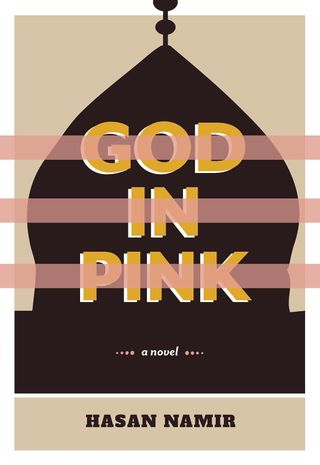
Cover of God in Pink

God in Pink

Hasan Namir

Original language: English · Paperback · ISBN 978-1551526065

God in Pink is Hasan Namir's debut novel, set in Iraq in 2003 during a period of war and upheaval. The story follows Ramy, a closeted university student living under the watchful eye of his older brother and sister-in-law after the death of his parents. Pressured to find a wife and conform to family expectations, Ramy struggles privately with questions about his identity as a gay man within a society shaped by faith and tradition.

Seeking some form of guidance, Ramy turns to Ammar, a sheikh at a nearby mosque. Ammar's role as a religious counselor places him at the center of a conflict he did not anticipate: Ramy's situation pushes against the boundaries of what Ammar believes the Qur'an teaches, forcing the sheikh to reconsider his own convictions. The novel moves between their perspectives, giving weight to both the personal and the theological dimensions of the tension between them.

The book is set against the daily realities of life in Iraq during the early stages of the 2003 conflict, where ordinary decisions about love, family, and belonging carry particular urgency. Namir grounds the story in specific domestic and social pressures rather than broad generalizations about culture or religion.

Plot

Ramy is a young gay Iraqi struggling to find a balance between his sexuality, religion, and culture. Ammar is a sheikh whose guidance Ramy seeks, and whose tolerance is tested by his belief in the teachings of the Qur'an. Full of quiet moments of beauty and raw depictions of violence, God in Pink poignantly captures the anguish and the fortitude of Islamic life in Iraq.

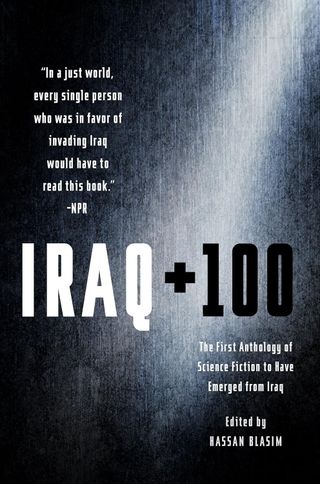
Cover of Iraq + 100

Iraq + 100

Hassan Blasim

Original language: English, Arabic · Paperback · ISBN 978-1250161321

Iraq + 100 is an anthology of speculative fiction edited by Hassan Blasim. It gathers stories by Iraqi writers, some still living in Iraq and others scattered across the global diaspora, and asks each of them to imagine what the country might look like in the year 2103. That date is deliberate: it falls exactly one century after the 2003 invasion that reshaped Iraqi society, infrastructure, and daily life.

The contributors work across science fiction, allegory, and magical realism, building futures for cities and landscapes that have already been transformed by conflict. Some stories picture technological change; others explore shifts in memory, language, or social order. Running through many of them are concerns about family, displacement, and what survives when a culture is forced to rebuild from loss. The collection does not treat Iraq as a single idea but as a place with varied communities and competing visions of what comes next.

Blasim, an Iraqi-born writer and filmmaker who has lived in Finland, shaped the anthology around voices that rarely appear in English-language speculative fiction. The result is a set of futures rooted in specific geography and recent history rather than in generic dystopian conventions.

Plot

Iraq + 100 poses a question to Iraqi writers (those who still live in that nation, and those who have joined the worldwide diaspora): What might your home country look like in the year 2103, a century after a disastrous foreign invasion? Using science fiction, allegory, and magical realism to challenge the perception of what it means to be “The Other”, this groundbreaking anthology edited by Hassan Blasim contains stories that are heartbreakingly surreal, and yet utterly recognizable to the human experience. Though born out of exhaustion, fear, and despair, these stories are also fueled by themes of love, family, and endurance, and woven through with a delicate thread of hope for the future.

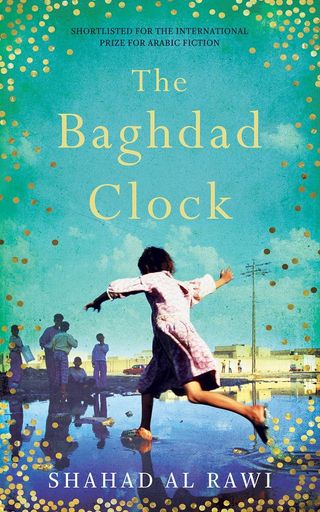
Cover of The Baghdad Clock

The Baghdad Clock

Shahad Al Rawi

Original language: Arabic · Hardcover · ISBN 978-1786073242

Baghdad, 1991. As the Gulf War begins, a young Iraqi girl takes shelter from air raids with her neighbors. In the crowded refuge she meets Nadia, and the two form a close friendship built on shared stories, whispered hopes, and the act of imagining a life beyond the conflict surrounding them. Shahad Al Rawi's debut novel follows these two girls as they grow up in a city under bombardment, where the ordinary details of childhood exist alongside sirens and uncertainty.

As the years pass, international sanctions reshape daily life in Baghdad. Friends and neighbors leave the country one by one, and the familiar city the girls know begins to change around them. The novel traces how war and isolation affect not only buildings and infrastructure but also relationships, routines, and the small freedoms that children take for granted. First loves, family bonds, and neighborhood life all unfold against a backdrop of gradual loss.

Al Rawi wrote the novel originally in Arabic. It was shortlisted for the International Prize for Arabic Fiction in 2018 and became a bestselling title in Iraq, Dubai, and the UAE. The story is set across a period when Baghdad's population experienced successive waves of conflict and economic pressure, and the narrative stays close to the perspective of its young characters throughout.

Plot

Baghdad, 1991. The Gulf War is raging. Two girls, hiding in an air raid shelter, tell stories to keep the fear and the darkness at bay, and a deep friendship is born. But as the bombs continue to fall and friends begin to flee the country, the girls must face the fact that their lives will never be the same again.

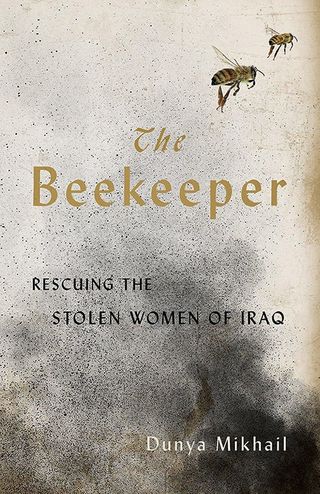
Cover of The Beekeeper: Rescuing the Stolen Women of Iraq

The Beekeeper: Rescuing the Stolen Women of Iraq

Dunya Mikhail

Original language: Arabic · Paperback · ISBN 978-0811226127

Beginning in 2014, Daesh launched a campaign of persecution against the Yazidi people in northern Iraq. Thousands were killed, and young women and girls were captured and enslaved. Dunya Mikhail, an Iraqi-born poet and journalist, conducted extensive interviews with several women who survived captivity. Their accounts describe forced displacement, sexual violence, psychological abuse, and coerced labor, including work related to chemical weapons production.

At the center of the book is a figure known as the beekeeper, a man whose familiarity with the geography of the region allowed him to organize escape routes across Iraq, Syria, and Turkey. He coordinated with a loose network of drivers, local contacts, and former smugglers to move women out of Daesh-held territory one at a time. The routes were dangerous and improvised, relying on trust between people who often had little else in common.

Mikhail structures the book around these individual stories of captivity and flight, letting each woman's experience stand on its own terms. The beekeeper's role emerges gradually through the accounts rather than through a single continuous narrative. The result is a work of nonfiction shaped by firsthand testimony and grounded in specific places across a fractured landscape.

Plot

Since 2014, Daesh (ISIS) has been brutalizing the Yazidi people of northern Iraq: sowing destruction, killing those who won’t convert to Islam, and enslaving young girls and women. The Beekeeper, by the acclaimed poet and journalist Dunya Mikhail, tells the harrowing stories of several women who managed to escape the clutches of Daesh. Mikhail extensively interviews these women―who’ve lost their families and loved ones, who’ve been sexually abused, psychologically tortured, and forced to manufacture chemical weapons―and as their tales unfold, an unlikely hero emerges: a beekeeper, who uses his knowledge of the local terrain, along with a wide network of transporters, helpers, and former cigarette smugglers, to bring these women, one by one, through the war-torn landscapes of Iraq, Syria, and Turkey, back into safety.

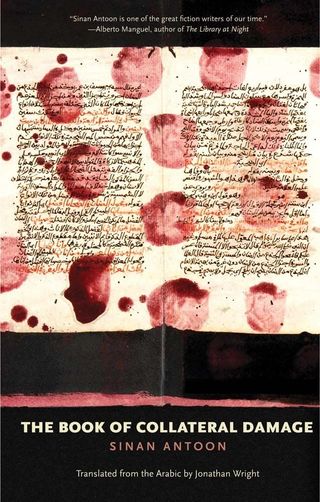
Cover of The Book of Collateral Damage

The Book of Collateral Damage

Sinan Antoon

Original language: Arabic · Hardcover · ISBN 978-0300228946

Sinan Antoon's fourth novel centers on Nameer, a young Iraqi doctoral student at Harvard who is recruited by a film crew to help document the destruction left by the 2003 invasion of Iraq. The assignment takes him back to Baghdad, where he walks the streets of a city shaped by occupation and loss. On al-Mutanabbi Street, long known as the heart of Baghdad's book trade, Nameer meets Wadood, a bookseller engaged in an unusual and consuming project.

Wadood is attempting to compile an inventory of everything the war has destroyed. His catalogue spans objects, buildings, books, manuscripts, plant and animal life, and human beings. The scale of the task is enormous and perhaps impossible, but Wadood pursues it with stubborn dedication. Through the encounter between these two figures, the novel examines how war erases not only people and places but also the records and artifacts that hold a culture's memory. Nameer, living between the United States and Iraq, carries the tension of distance from a homeland undergoing irreversible change.

The story is set partly in Cambridge, Massachusetts, and partly in Baghdad. Antoon, himself an Iraqi-born writer and scholar, draws on that geographic split to frame questions about documentation, responsibility, and what can be preserved when destruction operates on such a broad scale.

Plot

The celebrated author Sinan Antoon’s fourth and most sophisticated novel follows Nameer, a young Iraqi scholar earning his doctorate at Harvard, who is hired by filmmakers to help document the devastation of the 2003 invasion of Iraq. During the excursion, Nameer ventures to al-Mutanabbi street in Baghdad, famed for its bookshops, and encounters Wadood, an eccentric bookseller who is trying to catalogue everything destroyed by war, from objects, buildings, books and manuscripts, flora and fauna, to humans.

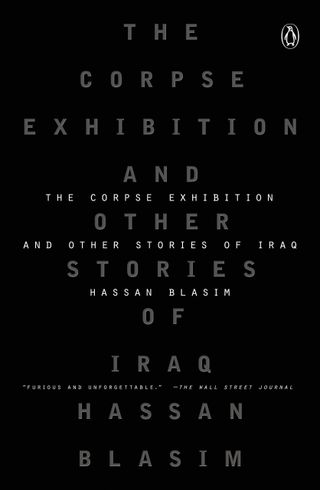
Cover of The Corpse Exhibition

The Corpse Exhibition

Hassan Blasim

Original language: Arabic · Paperback · ISBN 978-0143123262

Hassan Blasim's short story collection presents the Iraq War through the eyes of an Iraqi writer. The stories move between documented reality and surreal invention, placing soldiers, refugees, and car bombers alongside prophets, djinni, and sorcerers. Blasim does not separate these registers neatly. A story may begin in a recognizable Baghdad street and shift without warning into hallucination or myth, leaving the reader uncertain where observed fact ends and dark fantasy begins.

Violence in these pages is frequent and direct, but Blasim treats it with a dry, bitter humor rather than spectacle. The title story follows an instructor who teaches the art of displaying corpses for maximum public shock, a premise that sits uncomfortably close to the images that emerged from Abu Ghraib and from everyday bombings reported during the occupation years. Other stories follow asylum seekers, smugglers, and people caught between militia factions, each narrative compressed and unsettling.

Blasim was born in Baghdad in 1973 and later settled in Finland. The Guardian described him as perhaps the best Arabic fiction writer alive. The collection was originally written in Arabic and translated into English by Jonathan Wright.

Plot

The Corpse Exhibition shows us the war as we have never seen it before. Here is a world not only of soldiers and assassins, hostages and car bombers, refugees and terrorists, but also of madmen and prophets, angels and djinni, sorcerers and spirits. Blending shocking realism with flights of fantasy, The Corpse Exhibition offers us a pageant of horrors, as haunting as the photos of Abu Ghraib and as difficult to look away from, but shot through with a gallows humor that yields an unflinching comedy of the macabre. Gripping and hallucinatory, this is a new kind of storytelling forged in the crucible of war.

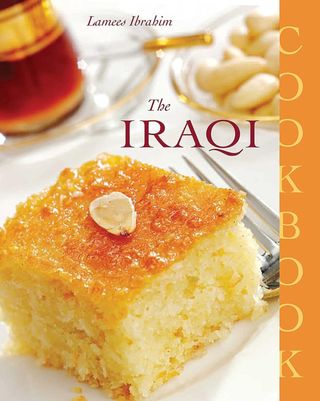
Cover of The Iraqi Cookbook

The Iraqi Cookbook

Lamees Ibrahim

Original language: English · Hardcover · ISBN 978-1566567480

The Iraqi Cookbook gathers recipes that Lamees Ibrahim traces to the household cooking of Iraq, where dishes have been handed down through generations and reshaped over time. It was published as the first Iraqi cookbook to appear in North America, and it sets its recipes beside commissioned photographs and short notes on the history and culture surrounding the food.

Iraqi cooking belongs to the land between the Tigris and Euphrates, the region long called Mesopotamia, where grain farming, date palms, and long-distance trade in spices shaped daily meals. Ibrahim's collection carries influences absorbed across different eras of Iraqi history, and she places brief storytelling and cultural notes next to the cooking so each dish sits within the life of a family table.

The recipes are written in detailed steps for cooks who may be meeting Iraqi food for the first time. Ibrahim names ingredients that are available to readers in Western shops, suggests alternatives when something is difficult to source, and adds practical tips along the way. The book also acknowledges that Iraq's cultural life has often been overshadowed by decades of conflict and war.

Plot

The true richness of Iraqi culture has been hidden for many years, overshadowed by political conflict and war. Yet amid the destruction, Iraq’s culture―and not least its cuisine―has remained intact. The Iraqi Cookbook, the first of its kind to be published in North America, is full of authentic recipes that have been handed down through the generations, developed and enriched over time, and infused with cultures of different eras. The result is a rich mixture of history, health, culture, and storytelling. Throughout the book, Lamees Ibrahim emphasizes only those ingredients available to a Western reader, gives useful tips, and suggests appropriate alternatives where necessary. The detailed, easy-to-follow recipes are adorned with specially commissioned photography throughout, making The Iraqi Cookbook a feast for both the eyes and the diwan. In short, in this book of masterly recipes, and beautiful photographs, Lamees Ibrahim serves up a vision of Iraq and its cuisine that stays with you long after you've left the kitchen.

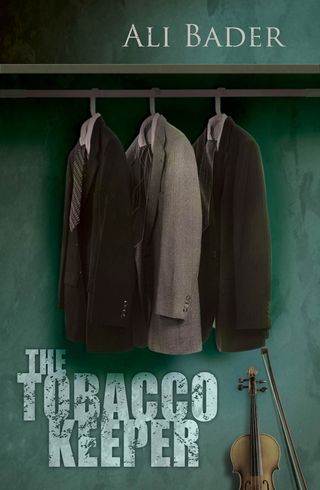
Cover of The Tobacco Keeper

The Tobacco Keeper

Ali Bader

Original language: Arabic · Hardcover · ISBN 978-9992142622

The Tobacco Keeper follows a journalist in Iraq who sets out to piece together the life of a recently deceased musician. The musician was Iraqi and Jewish, and over decades he assumed different identities as the country's political landscape shifted around him. The journalist's research becomes a layered reconstruction, drawing on interviews, documents, and conflicting accounts that do not always align. Each version of the musician's story reveals something different about the society he moved through.

Ali Bader, an Iraqi novelist, uses this fragmented structure to examine how personal identity can dissolve and reform under pressure from war, ideology, and displacement. The novel reaches back into a period when Iraqi cities held diverse communities of Arabs, Kurds, Jews, Christians, and others whose daily lives overlapped in ways that later generations may find hard to imagine. Baghdad's once-cosmopolitan character is central to the book's concerns.

The narrative raises questions about memory and reliability. As the journalist gathers testimony, the musician's biography keeps changing shape, and the distance between fact and invention grows harder to measure. Art, politics, and exile run through the story as recurring forces that reshape both individuals and the historical record they leave behind.

Plot

The Tobacco Keeper by Ali Bader is a complex novel that traces the mysterious life and death of an Iraqi Jewish musician who reinvents himself multiple times amid Iraq’s turbulent history. Through a journalist’s investigation, the story uncovers layers of identity, exile, and loss, revealing how art, memory, and politics intertwine in a fractured society. It is both a meditation on cultural displacement and a portrait of Iraq’s vanished cosmopolitan past.

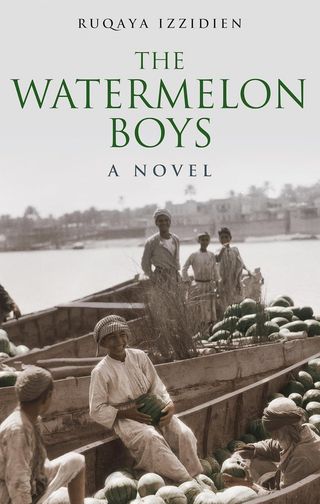
Cover of The Watermelon Boys

The Watermelon Boys

Ruqaya Izzidien

Original language: English · Paperback · ISBN 978-9774168802

In the winter of 1915, the Ottoman Empire still controls Iraq, and the First World War has reached the banks of the Tigris. Ahmad, a young Iraqi man seeking independence from Ottoman rule, leaves his family to join the British-backed revolt. Far away in Wales, a teenager named Carwyn enlists reluctantly and is shipped through Gallipoli and Egypt before arriving in Mesopotamia. Ruqaya Izzidien's novel follows these two lives as they move toward the same conflict from opposite directions.

When Ahmad and Carwyn eventually cross paths, the story draws their fates together. Both face the violence of the campaign, but the novel also traces the forms of discrimination and betrayal each encounters along the way. Ahmad contends with the political reality of exchanging one occupying power for another, while Carwyn deals with the pressures that drove him into a war he did not choose. The parallel structure allows the book to observe how promises of liberation and duty look different depending on where a person stands.

The setting spans several locations across the Middle East and beyond, from the Tigris river valley to Gallipoli and Egypt. Izzidien uses this geography to frame a part of the First World War that receives less attention in English-language fiction than the Western Front.

Plot

It is the winter of 1915 and Iraq has been engulfed by the First World War. Hungry for independence from Ottoman rule, Ahmad leaves his peaceful family life on the banks of the Tigris to join the British-led revolt. Thousands of miles away, Welsh teenager Carwyn reluctantly enlists and is sent, via Gallipoli and Egypt, to the Mesopotamia campaign. Carwyn’s and Ahmad’s paths cross, and their fates are bound together. Both are forever changed, not only by their experience of war, but also by the parallel discrimination and betrayal they face.

More from Iraq

See the country page for Iraq for its map, facts and largest cities, or browse books from other countries.

Links go to Amazon; Hookito doesn’t sell books. Know a book that belongs here, or spotted a mistake? Write to submissions@hookito.com.

Where to next?

Back to the globe
Hookito landscape illustration