Hookito

Kazakhstan · Books

Books from Kazakhstan
9 books from and about Kazakhstan: what each is about, the plot, and a note from Professor Kogi.

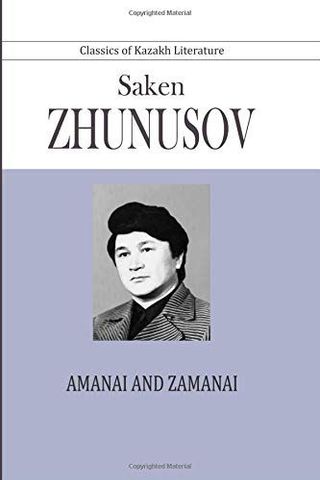
Cover of Amanai and Zamanai

Amanai and Zamanai

Saken Zhunusov

Original language: Kazakh · Paperback · ISBN 978-1725670143

Saken Zhunusov was a Kazakh writer and playwright recognized as a significant figure in Kazakh literature. His novel Amanai and Zamanai, published in 1987 late in his career, is set during the forced collectivisation of the 1930s in Kazakhstan. Collectivisation was the Soviet policy of merging individual farms and herding households into large state-controlled units, a process that uprooted entire communities across Central Asia.

The novel follows people who are separated from their homeland and their familiar social world by these campaigns. Its central characters find that their positions in society have already determined what will happen to them, leaving little room to shape their own futures. Zhunusov places this human story against the landscape of the Kazakh mountains, where glaciers, high winds, and dangerous paths serve as constant reminders of how fragile ordinary life becomes under extreme political pressure. The mountains themselves stand for something lasting and unchanging, set against the sudden disruptions suffered by the people living among them.

The title pairs two names, Amanai and Zamanai, linking individual lives to the larger historical forces surrounding them. Zhunusov wrote both prose and plays, and this novel drew on decades of literary work in the Kazakh language.

Plot

Zhunusov’s outstanding novel “Amanai and Zamanai” was published late in his career, in 1987. It describes the tragedy experienced by thousands of innocent people who were forcibly separated from their homeland and their social milieu by the collectivisation of the 1930s. Predetermined by their place in society, the novel’s protagonists are prevented from deciding their own fate. Nature is also described as a force influencing people’s destinies. The mountains stand as a symbol of eternity and their glaciers, winds and perilous paths underline the dramatic frailty of human life trapped in fatal, socio-historical circumstances.
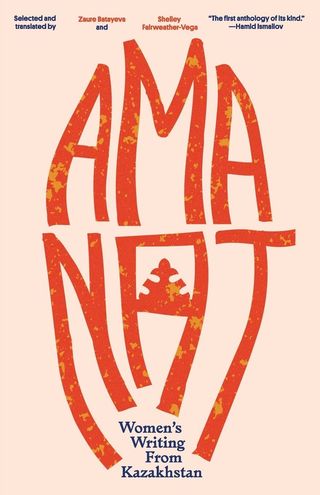
Cover of Amanat: Women’s Writing from Kazakhstan

Amanat: Women’s Writing from Kazakhstan

Zaure Batayeva

Original language: Kazakh, Russian · Paperback · ISBN 978-0999451489

Amanat brings together twenty-four stories by women writers from Kazakhstan, translated into English from both Kazakh and Russian. The collection spans roughly thirty years of the country's independence, a period that began with the dissolution of the Soviet Union in 1991. Editor and translator Zaure Batayeva has assembled voices that reflect a literary culture shaped in part by a long oral storytelling tradition, one that was rarely documented in written form.

The stories address nostalgia, generational memory, and the pressures of modernity on everyday life. Several touch on political and social change in a post-Soviet landscape that remains unfamiliar to many English-language readers. Kazakhstan is the largest landlocked country in the world, stretching from the Caspian Sea to the Altai Mountains, yet its contemporary fiction has had limited visibility outside Central Asia. This anthology offers a cross-section of that fiction through women's perspectives, covering themes of loss, family, and adaptation.

The title word, amanat, carries cultural weight in Kazakh tradition. It refers to something entrusted to another person for safekeeping, suggesting both responsibility and care. That idea of trust and transmission runs through the collection as a quiet organizing thread.

Plot

The twenty-four stories in Amanat, translated into English from Kazakh and Russian,comprise a groundbreaking survey of women’s writing in the Central Asian country over its thirty years of independence, paying homage to the rich but largely unrecorded oral storytelling tradition of the region. Contemplating nostalgia, politics, and intergenerational history in a time altered by modernity, Amanat acutely traces the uncertainties, struggles, joys, and losses of a corner of the post-Soviet world often unseen and overlooked.

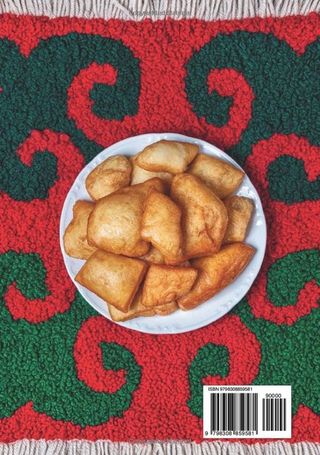
Cover of BAURSAKS, PLOV, AND STORIES WE SHARE

BAURSAKS, PLOV, AND STORIES WE SHARE

Assel Abdrassul

Original language: English · Hardcover · ISBN 979-8308859581

Baursaks, Plov, and Stories We Share is a cookbook by Assel Abdrassul that collects family recipes and food traditions from Central Asia. The book presents over fifty dishes, among them baursaks (rounds of fried dough served at celebrations), plov (a slow-cooked rice dish prepared for special occasions), lagman (a noodle soup with pulled or hand-cut noodles), manty (large steamed dumplings), and shashlik (skewered grilled meat). Each recipe carries a story or tradition that connects food to family life in the region.

Central Asian cooking draws on a wide geography, stretching from the steppe grasslands of Kazakhstan through the mountain valleys of Kyrgyzstan and Tajikistan to the oasis cities of Uzbekistan and Turkmenistan. The cuisine reflects centuries of pastoral herding, farming along irrigated land, and trade along routes that linked East and West Asia. Lamb, beef, horse meat, fermented dairy, root vegetables, cumin, and coriander appear frequently across the tradition.

The book notes that many of the ingredients can be found in ordinary supermarkets outside the region, or replaced with accessible alternatives. This practical approach aims to make Central Asian home cooking workable for people in kitchens far from the places where these dishes originated.

Plot

A Treasure Trove of Recipes – From the golden, crispy baursaks enjoyed at festive tables to the fragrant, slow-cooked plov prepared for special occasions, discover over 50 beloved dishes, including lagman, manty, and shashlik. Easily Accessible Ingredients – While Central Asian cuisine boasts distinct flavors, many ingredients can be found in regular supermarkets or substituted with readily available alternatives, making these dishes approachable for home cooks everywhere.

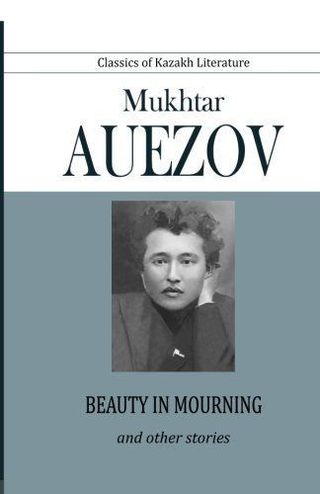
Cover of Mukhtar Auezov

Mukhtar Auezov

Mukhtar Auezov

Original language: Kazakh · paperback

Mukhtar Auezov, born in 1897 and active until his death in 1961, is widely regarded as one of Kazakhstan's most important literary figures. This collection gathers short stories and novellas written during the 1920s, early in his career. Despite being works of his youth, they display a confident command of narrative and subject. The collection is notable as the first translation of Auezov's fiction into English, opening a body of work that had until then remained largely within Kazakh and Russian readership.

The stories draw on the life, customs, and landscape of the Kazakh steppe. Titles such as Gunshot at the Pass, An Orphan's Lot, Beauty in Mourning, Savage Grey, and Turbulent Times are described in the source record as deeply familiar to Kazakh readers. Gunshot at the Pass was adapted into a film. The settings tend toward rural and nomadic communities, and the stories explore questions of loss, conflict, and social change during a period of upheaval in Central Asia.

Auezov is recognized for his lasting effect on Kazakh literature and drama. His writing from this period captures a society shaped by both traditional steppe culture and the political pressures of the early Soviet era, giving the stories a specific historical grounding alongside their personal and dramatic dimensions.

Plot

This collection of short stories and novellas is the first of Auezov's works ever to be translated into English. They were written in the nineteen twenties in the author's youth but have an assurance and maturity that have earned them widespread popularity throughout Kazakhstan and the Soviet Union. Gunshot at the Pass was made into a successful film and An Orphan's Lot, Beauty in Mourning, Savage Grey and Turbulent Times are works, which nearly every Kazakh knows and loves. His works are revered for their seminal influence on Kazakh literature and drama, the fascinating insights they provide on the culture and customs of the steppe but, above all, as truly great, universal stories that have exercised their power over the imaginations of generations of Kazakhs and are now finally available to a worldwide audience.

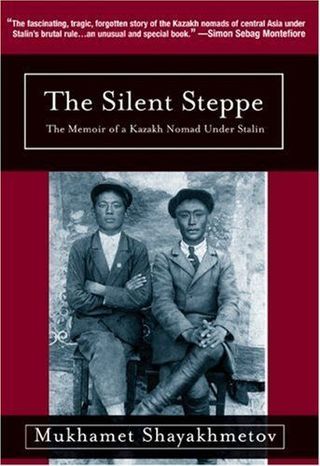
Cover of Silent Steppe

Silent Steppe

Mukhamet Shayakhmetov

Original language: Kazakh · Hardcover · ISBN 978-1585679553

Silent Steppe is a memoir by Mukhamet Shayakhmetov, recounting his childhood and family's survival during the Soviet campaign against Kazakh nomads in the 1920s and 1930s. The Kazakh people had long depended on breeding and herding livestock across the vast grasslands of Central Asia. Their nomadic economy and social structures, shaped by a mix of Islam, shamanism, and older traditions, put them in direct conflict with Soviet collectivization policies that sought to settle and control rural populations.

Shayakhmetov was seven years old when his father was classified as a kulak, a term the Soviet state used for peasants deemed too prosperous and therefore enemies of the new order. His father's possessions were seized, and he was sent to a prison camp, where he died. Left without support, the young Shayakhmetov, his mother, and his sisters traveled thousands of miles on foot across Kazakhstan, relying on the help of relatives to stay alive.

The book records the daily texture of displacement and hunger across a landscape that had sustained nomadic life for centuries. Shayakhmetov writes with a measured tone, setting down events without dramatizing them, and placing one family's experience within the broader destruction of Kazakh pastoral society under Soviet rule.

Plot

Nominally Muslim, the Kazakhs and their culture owed as much to shamanism and paganism as they did to Islam. Their ancient traditions and economy depended on the breeding and herding of stock across the vast steppes of central Asia, and their independent, nomadic way of life was anathema to the Soviets. Seven-year-old Shayakhmetov and his mother and sisters were left to fend for themselves after his father was branded a "kulak" (well-off peasant and thus class enemy), stripped of his possessions, and sent to a prison camp where he died. In the following years the family traveled thousands of miles across Kazakhstan by foot, surviving on the charity of relatives. Told with dignity and detachment, this central Asian Wild Swans awakens the reader to the scale of suffering of millions of Kazakhs, and also astonishes and inspires as a most singular survivor's tale.

Cover of The Dead Lake

The Dead Lake

Hamid Ismailov

Original language: Russian · Paperback · ISBN 978-1908670144

The Dead Lake is a short novel by Hamid Ismailov, set in a remote part of Kazakhstan during the Soviet era. A boy named Yerzhan grows up near a zone used for atomic weapons testing. His world is shaped by the quiet rhythms of a small settlement, the steppe landscape, and the presence of his neighbor's daughter, whom he loves from childhood. The story unfolds as Yerzhan tries to win her attention and prove himself.

One evening, Yerzhan swims in a forbidden lake contaminated by radioactive fallout from the nearby test site. The exposure changes his body in a specific and irreversible way: he stops growing. While the girl he cares for develops normally into adulthood, Yerzhan remains physically a child. This central fact drives the tension of the narrative, turning a local love story into something shaped by Cold War nuclear policy and its consequences for people living in affected regions.

Ismailov, an Uzbek-born writer who has lived in exile, wrote the book in Russian. The story draws on the real history of Soviet nuclear testing at the Semipalatinsk site in northeastern Kazakhstan, where hundreds of tests were conducted between 1949 and 1989. The landscape and its aftereffects form the foundation of the novel.

Plot

Yerzhan, raised in a secluded Kazakhstani region where Soviet atomic tests occur, falls for his neighbor's daughter. To impress her, he dives into a prohibited lake one evening. The radioactive water alters Yerzhan, preventing him from maturing into a man. Meanwhile, the girl he loves blossoms into a beautiful woman.

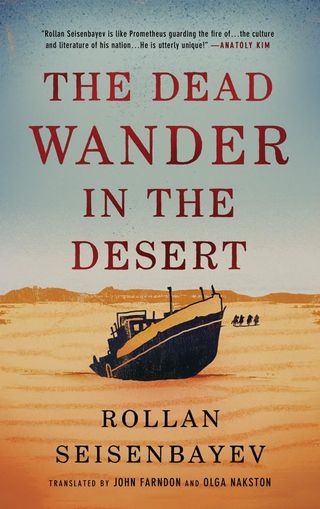
Cover of The Dead Wander in the Desert

The Dead Wander in the Desert

Rollan Seisenbayev

Original language: Russian · Paperback · ISBN 978-1542005395

The Aral Sea was once the fourth-largest lake on Earth, straddling the border between Kazakhstan and Uzbekistan. Beginning in the 1960s, Soviet irrigation projects diverted the rivers that fed it, redirecting water to cotton fields across Central Asia. Over decades, the lake shrank drastically, leaving behind a salt-crusted desert littered with rusting ships. Rollan Seisenbayev's novel follows the people living through this transformation on the Kazakh shore.

At the center of the story is Kakharman, a fisherman who refuses to accept the collapse of the sea and the community that depends on it. He confronts an indifferent bureaucracy while his neighbors, drained of hope, pull away. Alongside him is Nasyr, who turns to faith for answers where practical action has failed. The two responses sit side by side as the water continues to retreat and the surrounding land turns to desert.

The novel draws on a real and ongoing environmental crisis. The title points to the barren landscape left behind as the sea withdraws, a place where livelihoods, traditions, and the physical ground itself have been hollowed out by decisions made far from the shoreline. Seisenbayev, a Kazakh author, wrote the book as his English-language debut.

Plot

Once the fourth-largest lake on earth, it is now an impending environmental catastrophe. Starved of water by grand Soviet agricultural schemes, the sea is drying out, and the land around it is turning into a salt desert. The livelihood of the fishermen who live on its shores is collapsing. Vanishing with the water is a whole way of life. Despite overwhelming odds, Kakharman wages a battle against an indifferent bureaucracy, while Nasyr looks to Allah for guidance. Without the support of neighbors, who have lost hope, Kakharman must travail alone to rescue what literally gives them life. Even as the consequences mount, his quixotic fight proves more daunting. Even the sea itself seems to roil with distress.

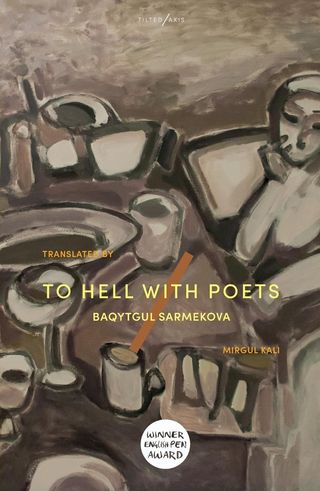
Cover of To Hell with Poets

To Hell with Poets

Baqytgul Sarmekova

Original language: Kazakh · Paperback · ISBN 978-1911284987

To Hell with Poets is the first English-language short story collection by Kazakh writer Baqytgul Sarmekova. The stories follow characters caught between contrasting worlds: urban life and the aul, the traditional rural settlement central to Kazakh culture. Sarmekova writes about daily existence in contemporary Kazakhstan, where postsocialist habits and capitalist pressures sit side by side, often uncomfortably.

The collection carries a tragicomic tone, mixing humor with unease. Characters face the kind of inner friction that comes from living in a society shaped by rapid change, where older customs and newer expectations do not always fit together. Sarmekova's writing is direct and does not soften what she observes. The stories move between settings and social registers, grounding their situations in specific details of Kazakh life rather than broad generalizations.

Kazakhstan is the ninth largest country on Earth by land area, stretching from the Caspian Sea to the Altai Mountains, yet its contemporary literature remains underrepresented in English translation. This collection offers one point of entry into that landscape, presenting fiction rooted in places and tensions particular to the region.

Plot

Vivid, hilarious and unsettling, the tragicomic characters of To Hell with Poets reflect the inner discord of the modern Kazakh. The stories move between the city and the aul, postsocialist and capitalist worlds, tradition and modernity. Incisive and unapologetic, Sarmekova refuses to hold back, offering a sharp and honest rendering of daily life in Kazakhstan.

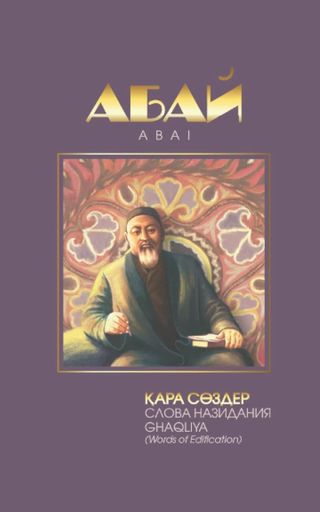
Cover of Words of Edification

Words of Edification

Abay Kunanbayuly

Original language: Kazakh · Paperback · ISBN 979-8799531348

Abay Kunanbayuly, widely regarded as the founder of modern Kazakh written literature, composed Words of Edification as a series of 45 short prose pieces during the 1890s. Each piece addresses a different aspect of personal conduct, social responsibility, or the pursuit of knowledge. The writings do not follow a narrative arc. Instead, they function as self-contained reflections on questions of ethics, education, and what it means to live with purpose in a changing society.

The form Abay chose for these pieces sits outside conventional literary categories. Some entries read as philosophical argument, others as moral instruction or sharp social criticism directed at habits he saw weakening Kazakh communal life. A recurring concern is the value of learning, both from one's own traditions and from the wider world. Abay urges discipline, honesty, and careful thought over passivity and imitation. His tone shifts between patient teaching and pointed challenge, depending on the subject.

Born in 1845 in what is now the Semey region of northeastern Kazakhstan, Abay wrote in Kazakh at a time when most formal literary production in Central Asia used other languages. Words of Edification remains one of the central texts studied across Kazakhstan today.

Plot

“If one is to speak about them as a whole, the legacy of Abai’s, so-translated Ghaqliya “Words of Edification”, differ from literary prose and most likely deserve to be recognized as a unique genre in their own right. These are works that have no narrative and if we are talking about their style and content then this is an aesthetic form that Abai discovered himself, a unique and special form of the artistic word. Sometimes, they resemble philosophical reflections or critical exhortations but more often they are edifying teachings, deep thoughts devoted to moral, ethical problems.”

More from Kazakhstan

See the country page for Kazakhstan for its map, facts and largest cities, or browse books from other countries.

Links go to Amazon; Hookito doesn’t sell books. Know a book that belongs here, or spotted a mistake? Write to submissions@hookito.com.

Where to next?

Back to the globe
Hookito landscape illustration