Hookito

New Zealand · Books

Books from New Zealand
5 books from and about New Zealand: what each is about, the plot, and a note from Professor Kogi.

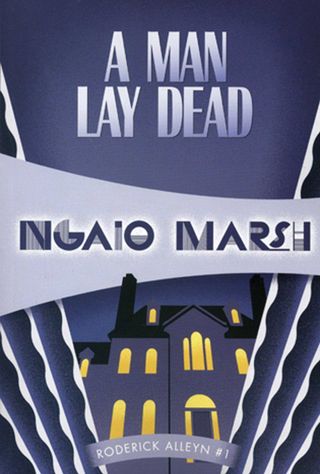
Cover of A Man Lay Dead

A Man Lay Dead

Ngaio Marsh

Original language: English · paperback

A Man Lay Dead, first published in 1934, is Ngaio Marsh's first novel and the book that introduced Inspector Roderick Alleyn of Scotland Yard. The action begins at a country-house weekend hosted by Sir Hubert Handesley, who has invented an elaborate version of a parlour entertainment known as the Murder Game. Guests arrive for cocktails and dinner in the settled comfort of England between the two world wars.

The staged crime is meant to be harmless. When the game leaves behind a real body, the house party becomes a closed circle of suspects, each with a plausible reason to be where they were. Alleyn works through the guests by conversation rather than spectacle, and the tension sits in the gap between the roles people play socially and what they actually did.

Marsh wrote in the Golden Age of detective fiction, roughly the 1920s to the 1940s, when puzzle-shaped mysteries with a fixed set of suspects were widely published in English. She is usually named alongside Agatha Christie, Dorothy L. Sayers and Margery Allingham. She lived much of her life in Christchurch, New Zealand, and worked as a theatre director beside her writing.

Plot

And in true Golden Age fashion, her oeuvre opens with, yes, a country-house party between the two world wars – servants bustling, gin flowing, the gentlemen in dinner jackets, the ladies all slink and smolder. Even more delicious: The host, Sir Hubert Handesley, has invented a new and especially exciting version of that beloved parlor entertainment, The Murder Game.
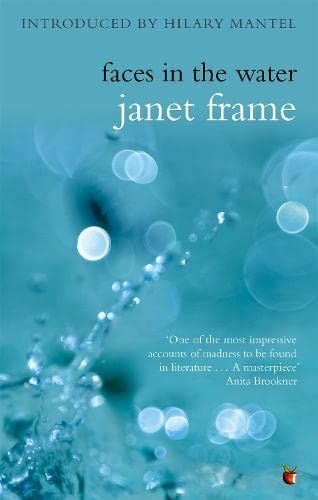

Cover of Faces In The Water

Faces In The Water

Janet Frame

Original language: English · paperback

Faces in the Water follows Istina Mavet, a patient moving through the increasingly grim wards of a psychiatric hospital. The constant threat of leucotomy, a surgical procedure that severs nerve connections in the brain, hangs over her and the other patients. Istina watches the people around her with sharp attention, noticing what the hospital staff have long stopped seeing. Her observations carry both humor and care, and they reveal a mind that questions everything it encounters.

Janet Frame wrote the novel after her own years spent in New Zealand mental institutions during the 1940s and 1950s. A doctor encouraged her to write about those experiences as a way of working through them. The book is fiction, not memoir, but it draws on firsthand knowledge of institutional life, its routines, its textures, and the ways patients lose standing in the eyes of staff. Frame builds her portrait of the hospital system through accumulated small details rather than dramatic set pieces.

The novel was translated into nine languages after publication and found readers well beyond New Zealand. It has also been used as a teaching text in medical schools, valued for its close, interior perspective on psychiatric care and the people subject to it.

Plot

Istina Mavet descends through increasingly desolate wards, with the threat of leucotomy ever present. As she observes her fellow patients, long dismissed by hospital staff, with humor and compassion, she reveals her original and questing mind. This riveting novel became an international classic, translated into nine languages, and has also been used as a medical school text.

Cover of Mister Pip

Mister Pip

Lloyd Jones

Original language: English · paperback

On a tropical island torn apart by civil conflict, most teachers and professionals have already left. The one white man who stays is Mr. Watts, an eccentric figure viewed with suspicion by many villagers. He sweeps out the ruined school and reads aloud from Charles Dickens's Great Expectations to the children. Thirteen-year-old Matilda, the narrator, becomes absorbed by Pip, a young orphan in London.

As the readings continue, the fictional city starts to feel as solid to the children as their own damaged landscape, even while artillery sounds in the mountains. The villagers, at first wary of this foreign book, begin bringing their own tales and inherited mythology into the classroom. Lloyd Jones, a New Zealand author, sets local oral storytelling beside an imported literary text.

The novel follows what happens when a story takes hold in a place where survival is the daily task and imagination carries real risk. Matilda's attachment to Pip and to Mr. Watts sits uneasily with her mother's beliefs and with the pressures of a place at war. The island is copper-rich, echoing Bougainville in the western Pacific.

Plot

On a copper-rich tropical island shattered by war, where the teachers have fled with most everyone else, only one white man chooses to stay behind: the eccentric Mr. Watts, an object of much curiosity and scorn, who sweeps out the ruined schoolhouse and begins to read to the children each day from Charles Dickens’s classic Great Expectations. So begins this rare, original story about the abiding strength that imagination, once ignited, can provide. As artillery echoes in the mountains, thirteen-year-old Matilda and her peers are riveted by the adventures of a young orphan named Pip in a city called London, a city whose contours soon become more real than their own blighted landscape. As Mr. Watts says, “A person entranced by a book simply forgets to breathe.” Soon come the rest of the villagers, initially threatened, are finally inspired to share tales of their own that bring alive the rich mythology of their past. But in a ravaged place where even children are forced to live by their wits and daily survival is the only objective, imagination can be a dangerous thing.

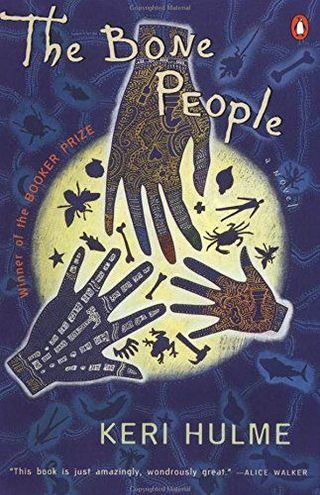
Cover of The Bone People

The Bone People

Keri Hulme

Original language: English · paperback

Kerewin Holmes lives alone in a tower by the sea on the New Zealand coast. She is part Maori, part European, an artist who has stopped making art, cut off from her family and content in her isolation. That isolation ends when a mute young boy named Simon appears uninvited, first attempting to steal from her, then offering her something of deep personal value. Simon is impulsive and hard to read, and his presence pulls Kerewin into an unfamiliar kind of connection.

Simon's foster father, Joe, is Maori. He rescued the boy from a shipwreck and has raised him since, but his care is marked by a disturbing pattern of both affection and violence. The relationship between these three figures forms the novel's core, and each of them carries damage that shapes how they act toward the others. Keri Hulme uses this triangle to explore questions of language, identity, and belonging in a society where Maori and European traditions overlap and collide.

The novel is set in a rural, coastal part of New Zealand and draws on Maori cultural elements throughout its structure and language. It won the Booker Prize and the Pegasus Prize for Literature. Hulme's prose is dense with wordplay, shifting between registers and perspectives as the story moves between realism and symbolism.

Plot

In a tower on the New Zealand sea lives Kerewin Holmes: part Maori, part European, asexual and aromantic, an artist estranged from her art, a woman in exile from her family. One night her solitude is disrupted by a visitor—a speechless, mercurial boy named Simon, who tries to steal from her and then repays her with his most precious possession. As Kerewin succumbs to Simon’s feral charm, she also falls under the spell of his Maori foster father Joe, who rescued the boy from a shipwreck and now treats him with an unsettling mixture of tenderness and brutality. Out of this unorthodox trinity, Keri Hulme has created what is at once a mystery, a love story, and an ambitious exploration of the zone where indigenous and European New Zealand meet, clash, and sometimes merge.

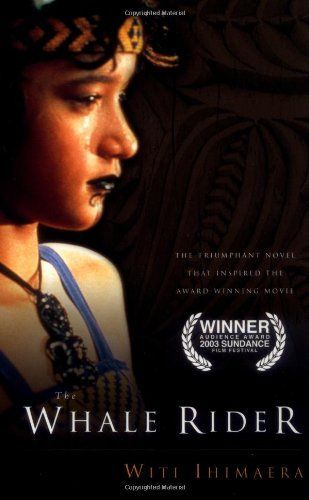
Cover of The Whale Rider

The Whale Rider

Witi Tame Ihimaera

Original language: English · paperback

The Whale Rider is set in Whangara, a coastal settlement on the East Cape of New Zealand's North Island. Written by Witi Ihimaera, the novel follows eight-year-old Kahu, a girl born into a Maori community that traces its ancestry to Kahutia Te Rangi, a figure said to have arrived on the back of a whale. Since that time, leadership of the community has passed through a line of male heirs. Kahu's great-grandfather, the aging chief Koro, is searching for a successor, but no male heir exists in the current generation.

Kahu is Koro's only great-grandchild, and she wants badly to earn his recognition. But Maori custom, as Koro understands it, does not accept a girl as chief. The story centers on this tension between inherited tradition and a child's persistent bond with her people and with the sea. When a mass whale stranding threatens the community, the question of who truly carries the old connection to the whales becomes urgent and unavoidable.

Ihimaera, who grew up in the Gisborne region of New Zealand, is one of the country's most widely published Maori writers. He has produced novels, short-story collections, and edited anthologies, and has taught English and creative writing at the University of Auckland.

Plot

Eight-year-old Kahu, a member of the Maori tribe of Whangara, New Zealand, fights to prove her love, her leadership, and her destiny. Her people claim descent from Kahutia Te Rangi, the legendary "whale rider." In every generation since Kahutia, a male heir has inherited the title of chief. But now there is no male heir, and the aging chief is desperate to find a successor. Kahu is his only great-grandchild--and Maori tradition has no use for a girl. But when hundreds of whales beach themselves and threaten the future of the Maori tribe, it is Kahu who saves the tribe when she reveals that she has the whale rider's ancient gift of communicating with whales.

More from New Zealand

See the country page for New Zealand for its map, facts and largest cities, or browse books from other countries.

Links go to Amazon; Hookito doesn’t sell books. Know a book that belongs here, or spotted a mistake? Write to submissions@hookito.com.

Where to next?

Back to the globe
Hookito landscape illustration